Flavors of Córdoba: where to eat in Córdoba between tradition and history
I don’t know why — even today I still can’t quite explain it — but the first time I visited Córdoba I was in such a rush that I didn’t stop to eat. I grabbed something on the go between one visit and another.
The following times, though, I didn’t make the same mistake: here, food is never just a side note to the journey — it’s a key to understanding. And the more you slow down, the more you realize that every dish holds something much bigger inside.
The gastronomy of Córdoba is born from a continuous blend of cultures. Romans, Arabs, Jews, Christians… all of them have left something in this cuisine, which today is one of the most fascinating in all of Spain. And the beautiful part is that, to truly understand what’s on your plate, you need to know its roots. Let me take you with me on this journey through the flavors of Córdoba.
Here are a few practical tips to help you settle into the rhythm of Córdoba’s traditional taverns and understand local mealtimes, portions and wines.
- Breakfast, lunch and dinner: breakfast is generally served until 11:00 am or noon, lunch between 1:00 pm and 4:00 pm, and dinner after 8:00 pm. Mercado Victoria is a useful option for informal food throughout much of the day.
- Reservations: booking is advisable at popular taverns and restaurants, particularly at weekends, in spring, during Holy Week and during the Patio Festival.
- How people eat: taverns are central to Córdoba’s food culture. You can order tapas, medias raciones and raciones, but a tapa is not automatically included with every drink.
- Drinks: soft drinks, vermouth and mixed drinks are often served with ice. Ask for sin hielo if needed. Wines from Montilla-Moriles range from dry and fortified to sweet.
- Bread, olives and small accompaniments: these may be charged if consumed.
- The bill, payment and tipping: ask for “La cuenta, por favor”. Tipping is not compulsory, and cards are accepted in most places.
- Language: English is fairly common in the Judería and tourist-oriented restaurants, but less certain in traditional taverns.
- Useful words and phrases: una caña means a small draught beer; un fino means a dry fortified wine; ¿Se puede pedir media ración? means “Can I order a half portion?”; ¿Este plato es sin gluten? means “Is this dish gluten-free?”; ¿Este plato es sin lactosa? means “Is this dish lactose-free?”; ¿Qué me recomienda? means “What do you recommend?”; ¿Qué lleva? means “What does it contain?”; para llevar means takeaway.
- One thing not to do: do not expect a traditional tavern to operate like a fast-service restaurant, and avoid ordering several large portions immediately.
Traditional cuisine of Córdoba
When we think about Córdoba’s gastronomy, we often start with the Arabs or the Romans. But the truth is that people were cooking here long before that.
Historians tell us that the first inhabitants of these lands, the Turdetani and other Iberian peoples, already had a well-established culinary tradition. The foundations were roasted meats (as early as the Paleolithic) and gachas, those rustic porridges made from coarsely ground cereals, enriched with legumes, aromatic herbs and probably pieces of meat — the ancestors of today’s sweet gachas. As early as 2000 BC, they had utensils for cooking and eating: amphorae used as storage, iron spits, hand mills, pots and knives.
So when the Romans arrived, they didn’t find an empty land. They found a rich, inhabited territory with its own culinary identity.
What we do owe to the Romans, however, is the large-scale spread of the olive tree throughout the Guadalquivir valley, and Córdoba became one of the main centers for the production and export of olive oil. Even today, the province of Córdoba is the second-largest producer of olive oil in the world, surpassed only by nearby Jaén.
But there is one dish in particular that we owe to the Romans: mazamorra. In De re coquinaria by Apicius — a culinary treatise from the 1st century AD — a preparation is described based on crushed bread, oil, vinegar, water, and garlic. It was a simple yet nourishing food, which legionaries even carried in their canteens during marches.
Today’s Córdoba version has evolved: it is made with bread, almendras crudas (raw almonds), garlic, oil, vinegar, and salt, and served cold with hard-boiled egg and black olives. It’s not the mazamorra of Roman chronicles, but it carries its direct legacy.
You can find it in some restaurants that also offer creative variations: with raisins, diced apple, or — as I tried — a mango version that is absolutely incredible.
Then came the Arabs, and Córdoba became the largest and most advanced city in Europe, capital of the Umayyad Caliphate. A crossroads of cultures where Muslims, Christians, and Jews lived together — a cultural exchange unlike anything else in the Western world.
It was during this period that Córdoba’s gastronomy acquired many of its most surprising features.
The love for sweet-and-savory combinations is the most evident example: berenjenas con miel de caña — fried eggplant with dark cane honey — create a contrast that seems simple but leaves you speechless. The same idea appears in ensalada de naranja y bacalao, an orange and cod salad that brings together sweet and salty in an unexpected way.
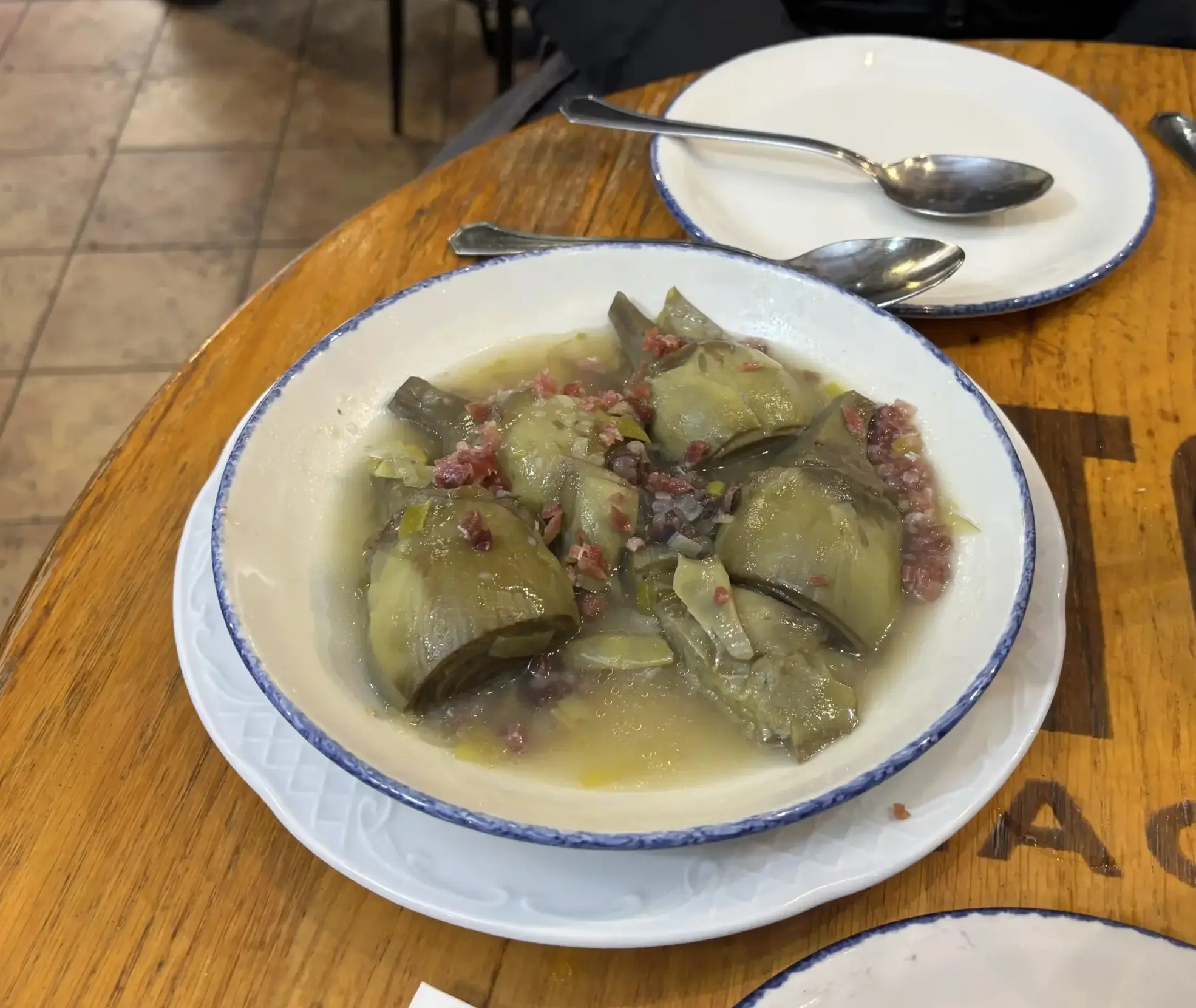
Another fundamental Arab legacy is the role of vegetables: while in many European cuisines they remained just a side dish, in the Arab tradition they become the main course. Alcachofas a la montillana — artichokes cooked with wine from the Montilla-Moriles denomination, garlic, and ham — are a perfect example. You’ll find them all over Andalusia, but Córdoba is their true home. Nuts and spices completed the picture: almonds, pine nuts, and raisins still enrich many Córdoba stews today.
The Jewish presence in Córdoba, on the other hand, has left less-known but equally important traces. Some dishes like guiso de habas secas con berenjenas (stewed dried broad beans with eggplant) and gazpacho blanco de harina de habas (white gazpacho made with broad bean flour) are considered to have Jewish origins.
But the most important legacy is probably the pastel cordobés: a filo pastry filled with cabello de ángel (candied pumpkin strands) and dusted with powdered sugar. It is said to have Jewish origins, and it has become one of the symbols of Córdoba’s pastry tradition.
With the Christian conquest came the most radical change: the introduction of pork, an animal forbidden at the Muslim table. From the matanza del cerdo, the traditional pig slaughter, come the most prized cured meats of the province: jamón ibérico de bellota from Los Pedroches (delicious), salchichón de Pozoblanco, and morcillas de Baena (I don’t like them, but my father, for example, loves them).

From this tradition comes the flamenquín, one of the most beloved dishes among the people of Córdoba: a pork fillet rolled around a slice of jamón serrano, breaded and fried. It sounds simple, but doing it well is an art. Its origin is disputed between the town of Bujalance (Córdoba) and Andújar (Jaén) — in both cases, it’s said to be a recipe born from the meeting of the Christian use of pork, the Arab frying technique, and the final coating. For Córdoba purists, the answer is always Bujalance.
And then there’s rabo de toro, oxtail — a symbolic dish of Andalusia. The earliest records mention its consumption as far back as the Arab period, but it was in the 16th century that it became a popular dish: bullfights were held in the Plaza de la Corredera, and in the nearby mesones, rabo de toro was cooked for the bullfighters and their families. Even today, some matadors claim their own personal recipe.
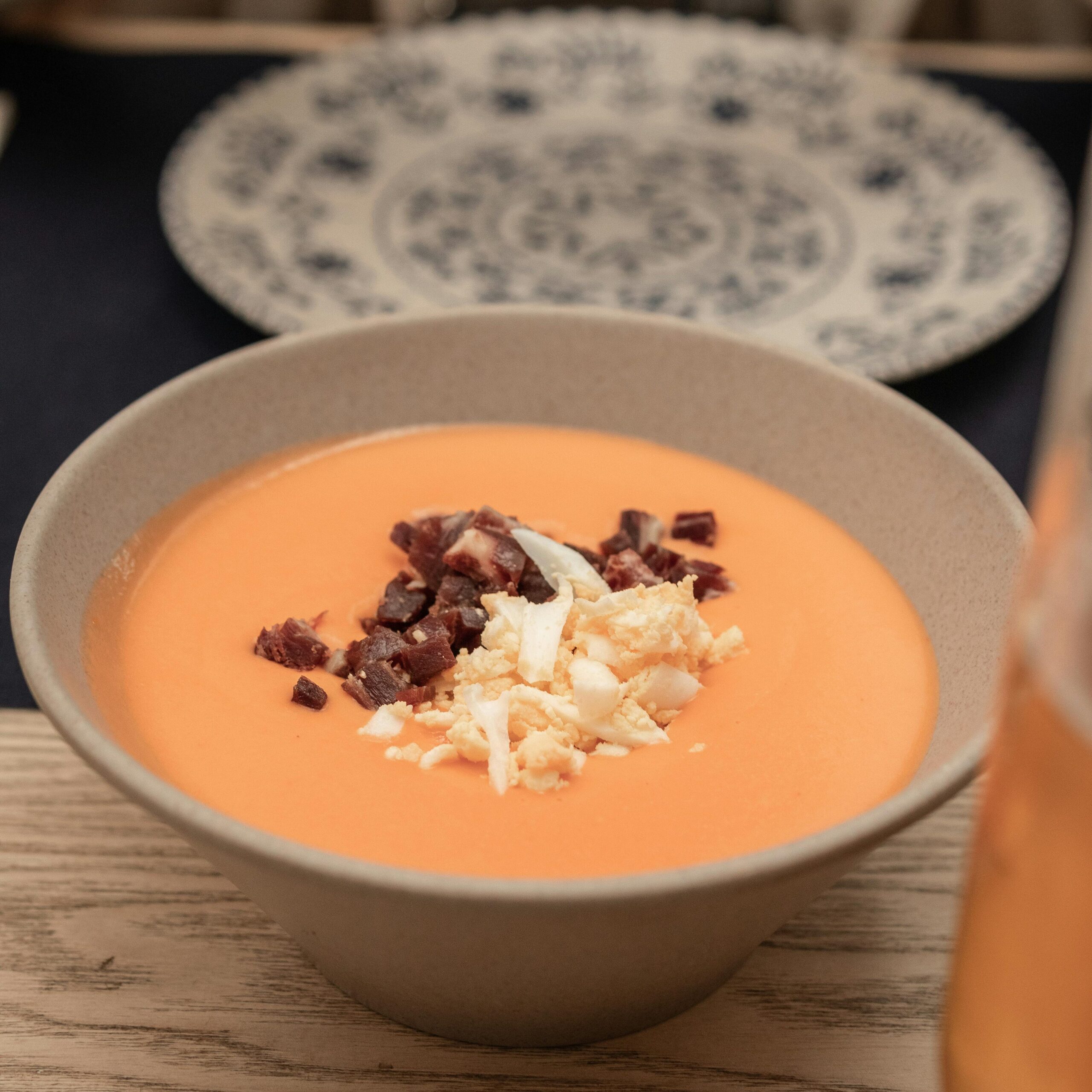
In the 18th century, the tomato arrived from the Americas. When someone had the idea to add it to the old mazamorra, salmorejo was born. The result was a thicker, smoother, more flavorful cream. Today it is the signature dish of Córdoba: served cold in a clay bowl, topped with diced ham and hard-boiled egg. And it’s eaten with a spoon — not drunk.
A quick tip: don’t confuse it with Andalusian gazpacho. Gazpacho is more liquid, more drinkable, perfect for the hottest days — but in Córdoba, the king is salmorejo, and calling it gazpacho might earn you a few strange looks.
My advice? Order everything as media ración (half portions), so you can taste creamy croquetas, thick and juicy tortilla de patatas, ensaladilla rusa, patatas bravas, freshly sliced jamón ibérico, aged cheeses, and something special. And always, always with a local wine.
You can’t talk about Córdoba’s cuisine without talking about its wines. The Montilla-Moriles area is especially famous for Pedro Ximénez: that dark, dense, almost syrupy wine that smells of raisins, dried figs, caramel, and coffee. It’s enjoyed at the end of a meal, in small sips, and is perfect with desserts or drizzled over vanilla ice cream.
But it’s not just sweet. The Finos from Montilla-Moriles are dry, crisp, mineral, and rival the more famous wines of Jerez. The Amontillados — whose name literally means “made in the style of Montilla” — have an extraordinary complexity, the result of long and patient aging.
Did you know that Córdoba has its own version of sambuca? Just a few kilometers from the city, among the mountains of the Sierra Subbética, there’s a town you can recognize by its scent even before you enter: Rute. It has been the Spanish capital of anise for centuries.
Here they produce anisados secos — anise-based distillates made using copper stills, strong (55% ABV), dry, and without sugar. Think of them as an Andalusian grappa infused with anise: not a dessert liqueur, but something to sip slowly, leaving a lasting impression. Alongside the dry anise, there’s also a sweeter, softer version, and a whole family of liqueurs: pacharán, licor de guindas, and rosoli — a surprising blend of anise, lemon verbena, and cinnamon.
If you’re in the area, the Museo del Anís — housed in a century-old distillery — is worth a stop. It’s not a must-see, but it’s one of those places that tells the story of a less obvious Andalusia: the kind that doesn’t make it into guidebooks.
And then there’s the pastry tradition. When I think of the desserts of Córdoba, I think of a heritage that smells of almonds, honey, and cinnamon. It’s an ancient kind of baking, where the blend of cultures becomes even more evident.
The undisputed king is the pastel cordobés, which I briefly mentioned before. It’s the symbolic dessert of Córdoba, the one you see in every shop window, the one locals bring when they want to make a good impression. It looks like a bundle of ultra-thin filo pastry, almost transparent, filled with cabello de ángel — those strands of candied pumpkin that melt in your mouth. It is said to come from Jewish cuisine.
Then there are the pestiños. These are more rustic, more closely tied to festive traditions. They are mainly prepared during Holy Week and Christmas, but nowadays you can find them all year round. They’re fried, diamond-shaped, and dipped in honey. The dough contains anise and sesame. You eat them with your hands, maybe with a glass of Pedro Ximénez on the side, and if they’re well made, they’re not greasy at all.
Alfajores are even older. They date back to the time of Al-Andalus, when the Arabs brought their love for almond-based sweets to Spain. The Córdoba-style alfajor is a small treat made with almonds, honey, and spices like cinnamon and cloves, often wrapped in a thin wafer. It’s intense, almost concentrated, and eaten in a single bite. The name comes from the Arabic al-hasú, meaning “the filling,” and that’s exactly where the magic lies: a soft, fragrant center that lingers on your palate.
And if you’re lucky enough to be in Córdoba in winter, someone might offer you gachas. It’s a humble, traditional dessert, simple but delicious. It’s made with toasted wheat flour, honey, oil, and anise, and eaten warm with a spoon. The texture is thick, almost like a cream, and the flavor has that slightly toasted note from the browned flour. It’s not something you easily find in pastry shops — it’s more of a homemade, grandmother-style dish. But if you get the chance to try it, you’ll immediately understand why locals love it so much.
In Córdoba, there is a way of buying sweets that feels like it belongs to another era. At the Convento de San Clemente, cloistered nuns still prepare desserts today using very ancient recipes, passed down over time without ever really changing.
You won’t find display windows or counters: you ring a bell, speak through a grate, and simply ask what is available that day. Sometimes, you won’t even see who is serving you.
The sweets are simple — honey, almonds, cinnamon — but they tell something that goes beyond flavor. In a city where everything seems exposed, visitable, and photographable, this remains one of the few gestures that are still intimate and hidden.
Where to eat in Córdoba
Córdoba is full of places where you can eat well. As in all tourist cities, there are also traps, but it’s a myth that you eat badly near the Mezquita: you just need to know what to look for and how to spot it.
The best restaurants in the historic center and the Judería
Casa Pedro Ximénez: It’s the first restaurant where I ate in Córdoba, so I always remember it with affection. I knew I was in safe hands because it had been recommended by a restaurateur from Málaga, but I didn’t expect to eat so well so close to the Mezquita. It’s a slightly evolved traditional cuisine, without losing its identity. The mango mazamorra was a wonderful discovery. The interiors are very traditional; in the patio you can stop for tapas, and on summer evenings there’s a terrace where you can enjoy the illuminated bell tower of the Mezquita… even if you haven’t booked outside, go upstairs and take a look!
Taberna Salinas: It’s one of the oldest taverns in the city (since 1879), and its cuisine is truly traditional and 100% Córdoba-style. I went there for tapas, and I have to say everything was excellent. The berenjenas con miel and the bacalao con naranjas are delicious. The atmosphere is also 100% Córdoba, with a charming patio, wine barrels, and flower pots on the walls. Stop by even just for a quick tapa!
Casa Pepe de la Judería: I included this restaurant because it’s a must if it’s your first time in Córdoba. It’s an elegant place, but without being pretentious, offering a wide menu of Andalusian traditional dishes. It’s a bit more touristy than other taverns, and prices are slightly above average, but they match the quality of the food and the location. If you can, ask for a table on the upper terrace. It’s worth having dinner there!
I’ll also leave you with a few other restaurants recommended by a friend: Ágora Mezquita, Taberna Góngora, Bodegas Mezquita Céspedes. I haven’t tried them personally, so I can’t give you a direct opinion, but knowing the source… you won’t be disappointed!
The best restaurants outside the historic center
Casa Pepe, which I mentioned earlier, has two other locations in Córdoba: one in the Santa Marina neighborhood and one in San Lorenzo. Here you’ll find a less touristy version of the restaurant, and it definitely won’t disappoint.
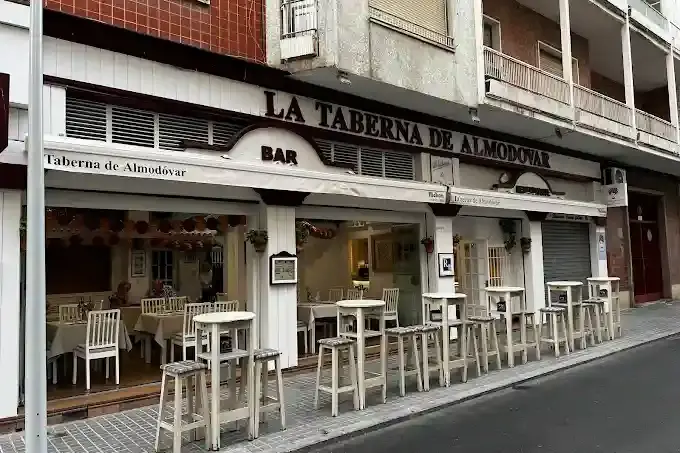
Another option is Taberna de Almodóvar. Hidden in a small street just steps from the historic center, it’s a family-run tavern awarded a Bib Gourmand by the Michelin Guide. It stands out for the quality of local products used in simple yet refined recipes — the croquetas with jamón serrano are a must, as is the paletilla de cordero lechal al horno. I chose other places because the interiors felt a bit plain for my taste, but they say the food is outstanding.
Where to eat in Córdoba for a special evening
If, on the other hand, you’re in Córdoba for a special occasion, all roads lead to Noor. It’s probably the best restaurant in Córdoba and, according to some, in all of Andalusia, with three well-deserved Michelin stars thanks to the talent of chef Paco Morales. The menu retraces the history of Al-Andalus through cuisine — each dish tells a fragment of the city’s Moorish past. The location is deliberately discreet, in a peripheral area that the chef chose to reflect his roots in the neighborhood. The setting is minimalist, the service impeccable, and the prices high but justified (expect around €285 for the tasting menu). Definitely one to add to your list and book in advance if you’re looking for a memorable dining experience.
Mercado de la Corredera and Mercado Victoria
The first is located inside the beautiful Plaza de la Corredera, where bullfights once took place. Today it’s a modern and quite small food market: around twenty stalls where you can eat everything from freshly sliced jamón to berenjenas con miel, from salmorejo to fried fish.
Mercado Victoria, on the other hand, is located outside the historic center. It’s a modern food market, set inside a 19th-century iron and glass structure, right next to the Victoria Gardens.
If you want to try them, go at lunchtime (not too late, ideally by 14:00), order a caña, pick a stall that catches your eye, and keep going like that, tasting a bit from each one.
Personally, I found everything delicious in both places, but I was expecting a different atmosphere… something more typical of Spanish markets.
In any case, they’re the perfect spot if you want to try a variety of dishes without committing to a “classic” sit-down dinner.
Where to have breakfast in Córdoba
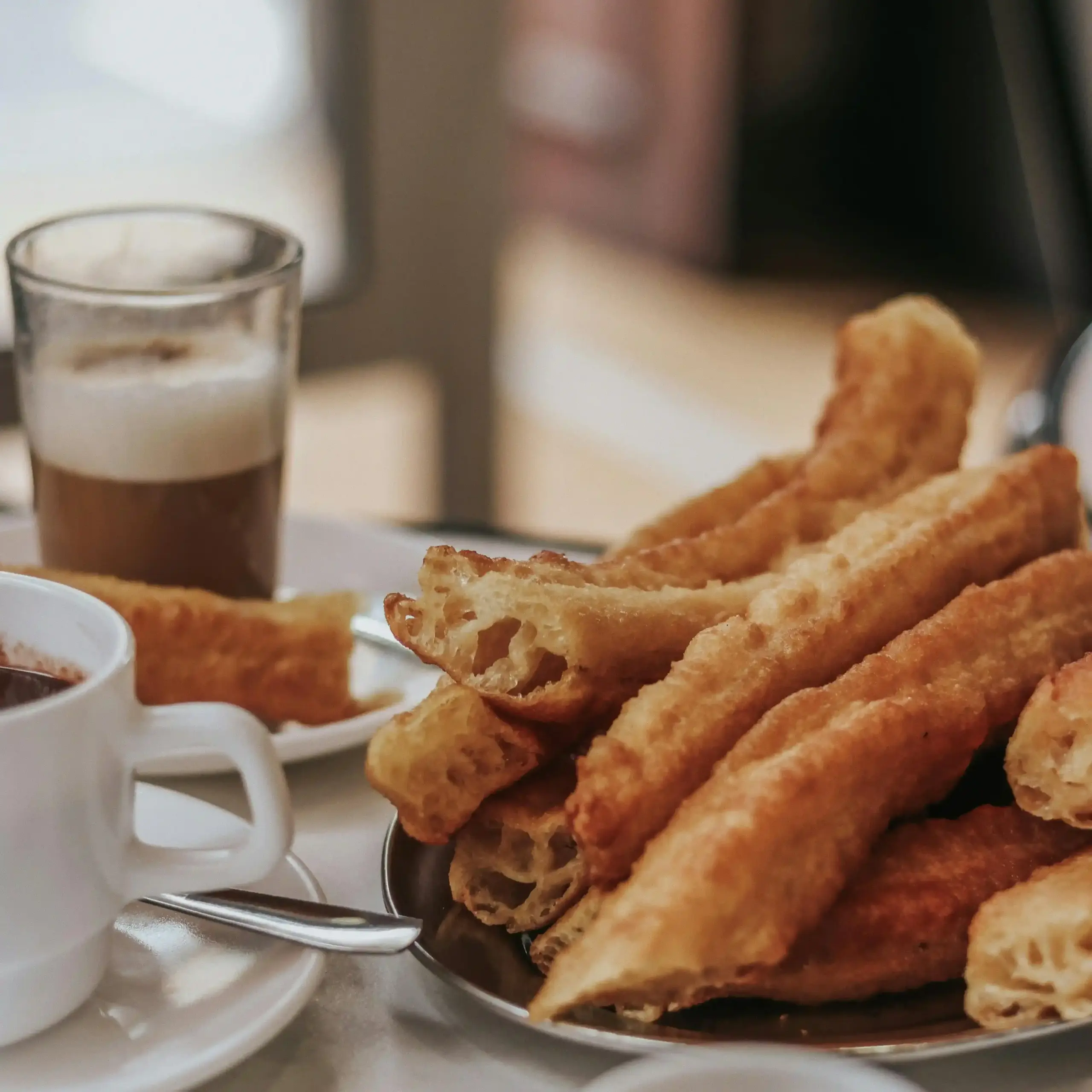
In Córdoba, breakfast is a moment. It’s either early (7:30) or late (10:30), but always unhurried. The classic breakfast is tostada con aceite y tomate: toasted bread with olive oil and grated tomato. Simple, good, filling without being heavy. It’s usually paired with a café con leche.
So if you want a classic breakfast, you should head to Cafetería Don Pepe: it’s not in the Judería nor right next to the Mezquita. It’s located in a more “local” area, close to the modern center. The setting is simple, the service is quick, and there’s no “Instagram effect.” But that’s exactly why it works so well if you want to experience Córdoba in an authentic way.
If instead of coffee you’re in the mood for tea, you can’t miss La Perla Azul Cafetería – Tetería – Restaurante. Here you can take an afternoon break or enjoy breakfast with a wide variety of teas, spiced sweets, or lighter, more aromatic options. If you want to connect with the origins of the city and the Arab soul of Córdoba, this is the right place.
For churros, the place is Churrería Victoria. Properly made churros and thick chocolate. There’s nothing more to add. It’s a must-stop if you love churros.
If you’re looking for something more fun, go to Moja el churro. Mojachurros takes the classic idea of churros and transforms it with toppings, chocolate, sauces, and decorations. It’s closer to modern street food for an afternoon treat than to a traditional churrería.
And so, here it is — the true flavor of Córdoba. Not just the thick salmorejo eaten with a spoon, not just the rabo de toro that melts on the plate, not just the pestiños that taste of honey and celebration. But all of it together: the history on your plate, the calm with which you savor it, the silence of an empty patio, the glass of Pedro Ximénez.
In the end, you go home with a full stomach, of course. But also with something more. With that feeling that in Andalusia, history can truly be seen with your eyes and tasted with your senses. And when a place teaches you that, you don’t forget it.
If Córdoba has whetted your appetite — in every sense — and your journey continues south, don’t stop before reaching Málaga. Named European Gastronomic Capital 2026, it offers a cuisine just as deep but with a different soul: more sea, more sun. I talk about it in Flavors of Málaga, with all my tips to experience it at its best.