Andalusian splendor: exploring the home of flamenco and the joy of living well
A journey through Andalusia is not simply about arriving and visiting the most beautiful cities or the most famous landmarks.
It is more a feeling that slowly takes shape: the changing light, streets that invite you to slow down, the sounds of bars spilling out through open doors, everyday life unfolding at an unhurried pace.
Here, the real journey begins when you stop rushing and start enjoying the hidden corners.
And it is precisely then that Andalusia begins to tell its story: in cities experienced slowly, in white villages stumbled upon almost by chance, in unplanned details that end up being the ones you remember most.
What I will show you is not the usual list of “things to see in Andalusia”, nor a checklist to tick off.
It is a story of places, atmospheres, and discoveries made along the way, step by step, carried by the Andalusian rhythm.
Andalusia, you will see, is not just a region in southern Spain: it is a world of its own.
A place shaped by deep historical layers, striking contrasts, an almost dazzling light, and an identity you can sense immediately, even at first glance. Here, ancient cities coexist with small white villages, Arab-influenced palaces stand alongside imposing Christian cathedrals, visceral flamenco meets the absolute silence of the sierras—a perfect balance that leaves its mark.
In this guide, I will take you with me to discover Andalusia as I encountered it: a journey made of everyday discoveries, simple moments, and places that linger not only in the eyes, but also in the heart.
Here are some practical tips to enjoy Málaga to the fullest. They’re simple, but they can help you save time, money, and a bit of frustration. So keep in mind that:
- Lunch and dinner start late: at around 2:00 pm and 9:00 pm respectively; many places therefore open later than in England.
- The day starts later than in England, so there’s no point in waking up too early if you want to find shops open, people walking around, and street life in general.
- Markets close at 2:00 pm, so if you want to eat there, plan ahead.
- Many museums offer free admission on Sundays after 4:00 pm.
- Renting a car is essential to discover Andalusia’s most intimate places. The main cities, however, are well connected by high-speed trains, making it possible to travel even without a driving licence.
- Andalusia enjoys a perfect climate from September to May. In summer, temperatures can exceed 45°C in cities such as Seville, Granada, and Córdoba. Keep this in mind if you’re planning a trip during the summer months. Other than that… you’ll fall in love! 😉
A bit of history about Andalusia
In Andalusia, history is visible to the naked eye.
The peoples who followed one another over the region’s 25,000 years of history, the wars, religions, and cultures are not locked away inside museums. The past of this land is scattered across the territory, often out in the open and sometimes almost discreet. You only need to walk around to notice it.
Over the centuries, Andalusia witnessed the arrival of Phoenicians, Carthaginians, Romans, Visigoths, and Arabs. All of them left clear traces of their presence, but it is above all the legacy of the Moors that profoundly shaped the region’s identity.
This heritage can be found in Andalusian culture and traditions, starting with the very name Andalusia, which derives from Al-Andalus, the Arab kingdom that ruled the region for about 700 years. Their era was the longest and most prosperous in the Iberian Peninsula—an astonishing fact when you consider that it lasted longer than the period following the Reconquista, in which we still live today.
Long before Al-Andalus, however, this region already had a surprisingly rich and advanced history behind it. Around 1000 BC, Tartessos flourished here, a civilization located roughly in what is now the province of Cádiz and considered by some scholars to be one of the first politically organized societies in Europe. Its importance was such that it was even mentioned in the Bible (likely identifiable with the biblical Tarshish).
The immense wealth of Tartessos, especially its precious metals, soon attracted the great emerging civilizations of the Mediterranean. The Phoenicians were the first to settle in the area, founding the colony of Gadir (modern-day Cádiz), followed by the Carthaginians, who eventually took control.
When Rome defeated Carthage in the Punic Wars, Andalusia came under Roman rule, becoming part of one of the greatest empires in history.
The Romans remained in Andalusia for about six to seven centuries, transforming it deeply. They built roads, bridges, and cities, introduced new architectural forms, and developed agriculture and mining, turning the region into one of the most important areas of the Roman Empire.
This was not a peripheral province, but a rich, strategic, and well-connected territory, essential to the imperial economy. And this presence is still clearly visible today as you walk through its cities.
One of the most emblematic places is Italica, near Seville, where emperors such as Trajan and Hadrian were born, as well as Seneca. Further south, overlooking Playa de Bolonia—one of the most beautiful beaches on the Costa de la Luz—lies Baelo Claudia, an extraordinary Roman site immersed in a natural landscape. In Córdoba, meanwhile, the Roman legacy is literally underfoot: the Roman bridge still dominates the Guadalquivir today.
Walking through historic city centers or even lying on a white beach, you become aware of all this. The scale of the theaters, the mosaics, and the urban layout tell the story of cities of great prestige, designed to endure, to impress, and above all to guarantee Rome the wealth of the land: olive oil, iron, fish, and the famous garum.
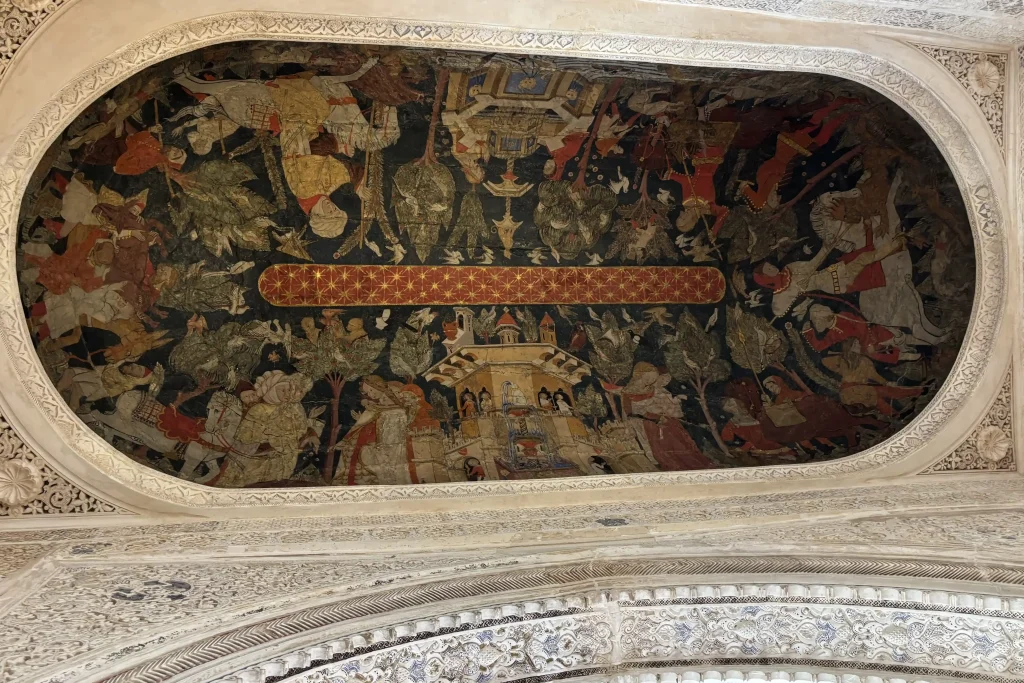
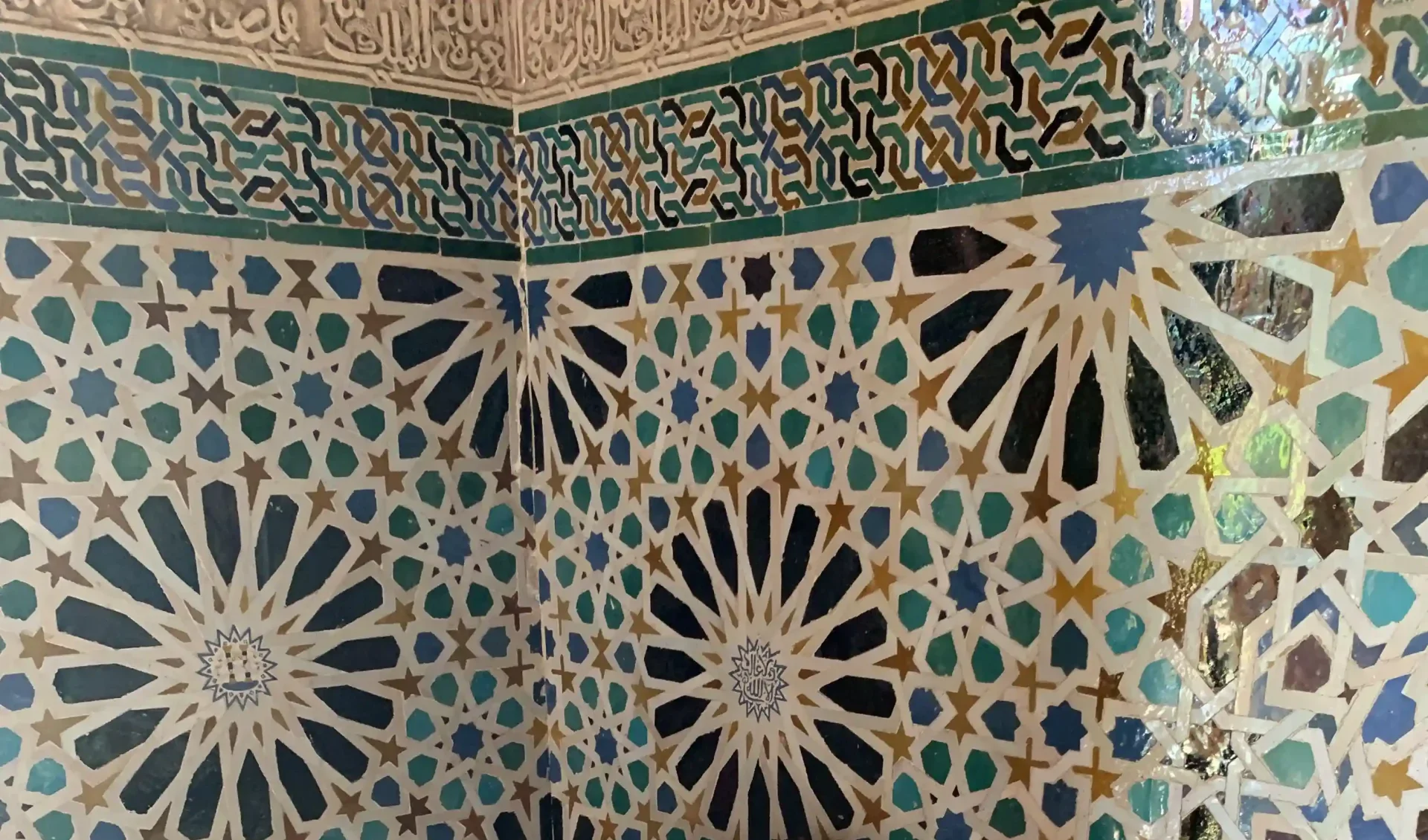
A rare example of cultural layering: Christian figurative art grafted onto the Moorish architecture and decorations of the Alhambra in Granada, Andalusia.
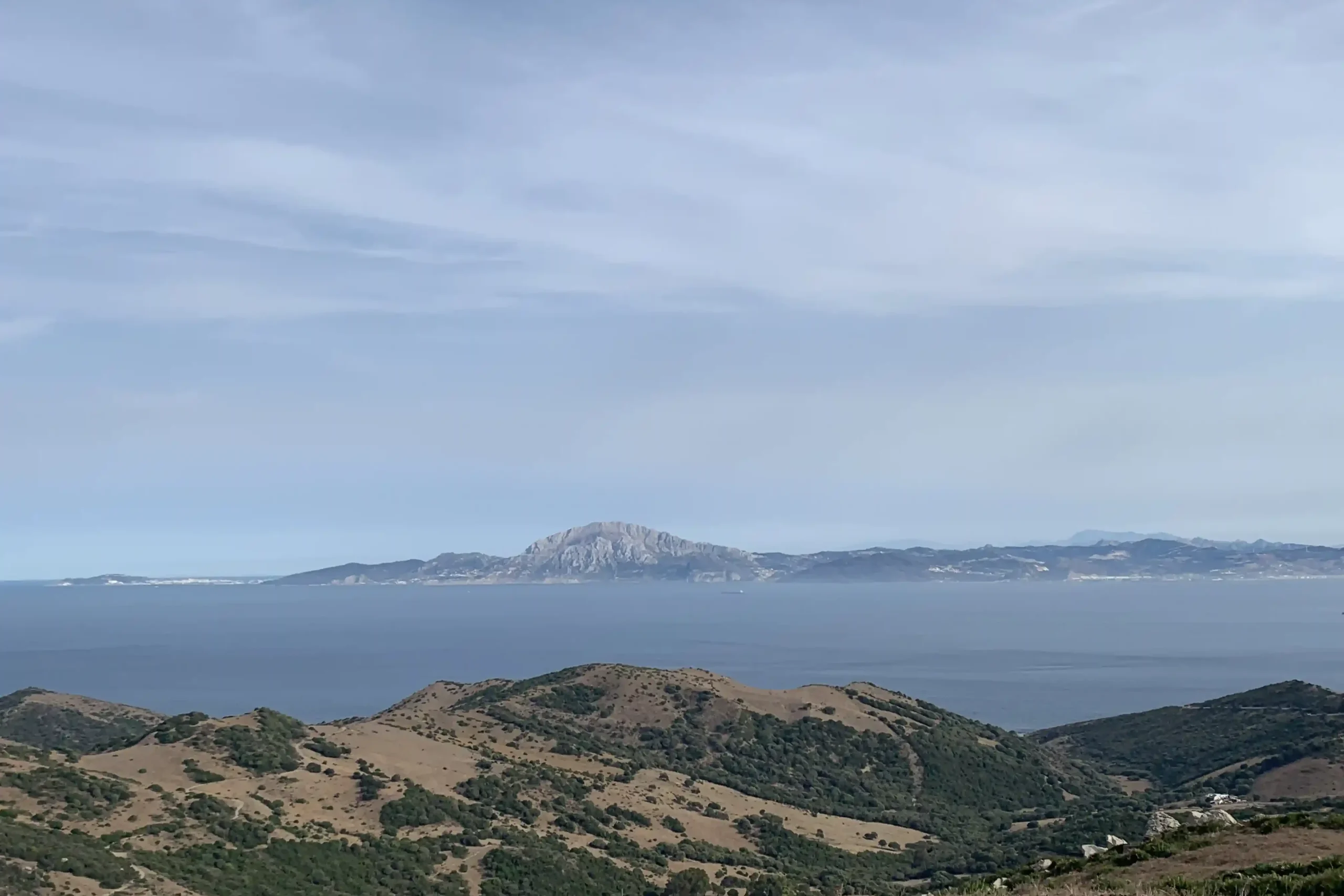
The flag of Andalusia is made up of three horizontal stripes in green and white, with the coat of arms depicting Hercules between the Pillars of Hercules at the center, which according to tradition correspond to the Strait of Gibraltar. The motto “Andalucía por sí, para España y la Humanidad” also appears in the center.
The colors represent the land, hope, peace, and coexistence. We can say that this flag effectively sums up the values deeply rooted in the history and identity of the Andalusian region.
The Roman era came to an end with the arrival of the Vandals and later the Visigoths, who ruled for only about two centuries before being defeated by Arab forces from North Africa at the Battle of Guadalete.
With the arrival of the Arabs in the 8th century, Andalusia changed radically.
The Arabs extended their rule across the entire Iberian Peninsula, but their capital remained in Andalusia: Córdoba.
You can therefore imagine the profound transformation they brought to the region. Spain—and Andalusia in particular—became the most important cultural center and the most sophisticated area of Western Europe, with new agricultural and irrigation techniques, extraordinary architecture, an enlightened system of hygiene, and above all a new way of thinking about life, cities, and space.
Streets became narrower, houses closed themselves off from the outside and opened inward with patios; water and shade became central elements. This was not just an aesthetic choice, but an adaptation to climate and everyday life.
The most powerful and emblematic example of all this is the Alhambra in Granada.
It is not just a palace, but a city within the city: courtyards, gardens, flowing water, and spectacular decorations. It is perhaps the best place to understand what Al-Andalus truly was—a delicate balance between beauty, functionality, and spirituality.
If you also want to understand the importance of certain cities during that period, you can look to the Mezquita-Cathedral of Córdoba. Entering it means crossing through centuries in just a few steps. The endless arches, the filtered light, and the almost suspended silence convey an idea of space that invites calm, contemplation, and slow time.
At the end of the 15th century, with the Christian Reconquista, the face of Andalusia changed once again.
The Catholic Monarchs gradually conquered the kingdoms of Al-Andalus until 1492, the year of the fall of Granada, preceded by the siege of Málaga, considered one of the most brutal in history. New churches, great cathedrals, and new symbols of power emerged.
But 1492 is also important for another reason: it is the year Isabella of Castile financed the voyage of Christopher Columbus. From that moment on, Spain became a transoceanic empire, and the political and economic center of this empire was established in Seville.
The splendor of Seville and Cádiz during this period is still visible and tangible today as you walk through the cities: monumental palaces (not by chance, the Alcázar of Seville is one of the most beautiful and luxurious in Spain), richly decorated churches, and ports whose scale is still impressive.
However, this wealth was not invested evenly across the territory. When the economy tied to the Americas began to decline, Andalusia entered a long period of economic downturn, worsened by the centralization of power under the Bourbons.
Moreover, in the 19th century, as in the rest of Europe, Spain had to face the War of Independence against Napoleon. During this historical phase, Andalusians played a crucial role: they won the Battle of Bailén, the first major defeat suffered by the Napoleonic army.
In those same years, since Cádiz was the only major city free from French occupation, it was here that the Constitution of Cádiz of 1812 was drafted—one of the most modern and revolutionary constitutions of its time.
Despite all these upheavals, the Moorish legacy never truly disappeared. You only need to step into an Andalusian patio—even in a private home—to realize it. That way of inhabiting space—protected, intimate, cool—never vanished; it was simply passed down.
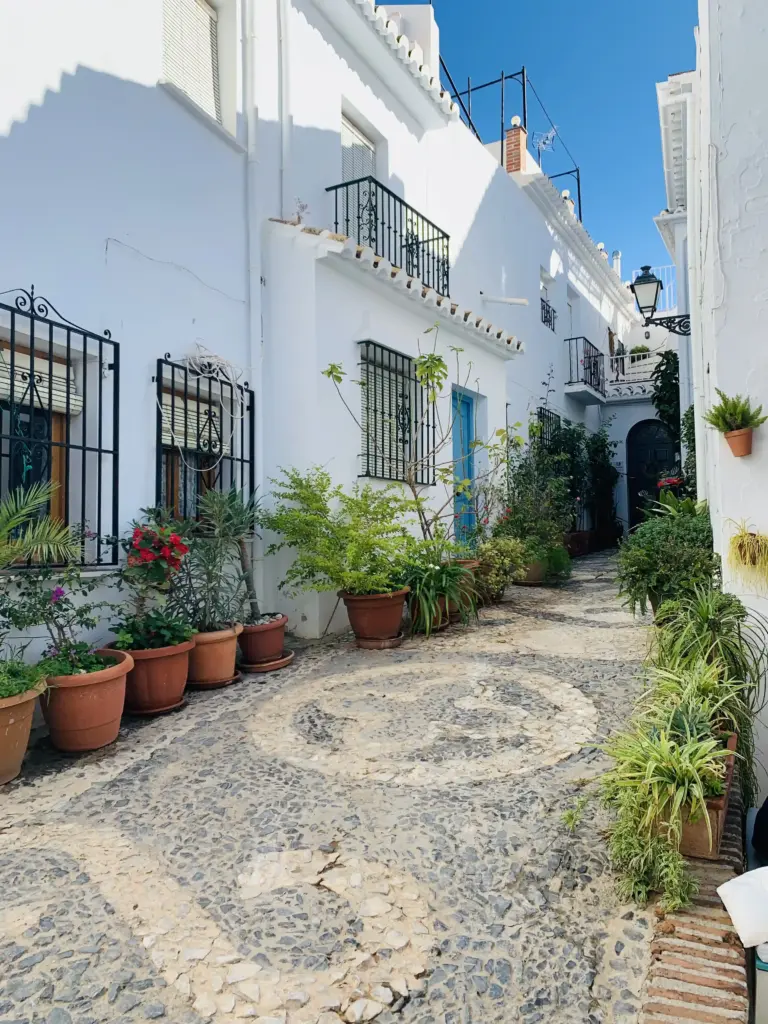
The same applies to the iron grilles on the windows of the whitewashed villages, which give these places such a distinctive and evocative character.
Muslim influence can also be felt in the spoken language.
Although Spanish is a Neo-Latin language, like Italian, derived from Roman Latin, many words come directly from Arabic and are part of everyday speech.
A simple clue to recognizing them is the article “al-”, which in Arabic means “the.”
Knowing the history helps explain why Andalusia is the way it is: why its cities invite slow exploration, why water and shade are ever-present, and why the streets are so narrow.
Andalusia is a land shaped by time, formed by centuries of encounters and transformations that have left a lasting mark.
And this becomes perfectly clear as you walk through cities like Málaga, Seville, Córdoba, Granada, Cádiz, or the pueblos blancos.
And it is from these cities that our journey through Andalusia begins.
It is estimated that thousands of Spanish words derive directly from Arabic, and many of them are part of everyday language.
A simple clue to recognizing them is the article “al-,” which in Arabic means “the.” Some common examples include: almohada (pillow), alfombra (carpet), alcázar (fortified palace), aceite (oil), azúcar (sugar), acequia (irrigation canal), albahaca (basil). Many city, river, and place names in Andalusia also derive from Arabic:
- Guadalquivir comes from al-wādī al-kabīr, “the great river”
- Guadix, Guadalhorce, and Guadiana share the same root
- Almería, Algeciras, and Alcalá clearly retain their Arabic origin
Beyond vocabulary, history also influenced the way people speak. The loss of some final consonants, the softer accent, and the more sing-song intonation are the result of centuries of contact between different languages and a strong oral tradition.
The most interesting thing is that this influence was not erased after the Reconquista: the words remained, became part of Castilian Spanish, and then spread throughout Spain and eventually the world.
All aboard: destination Andalusia!
Andalusia is a region that lends itself to many different kinds of travel, but when people ask me for advice, my answer is always the same: don’t rush.
In Andalusia, the right questions aren’t what to see, what to do, or where to stay. It’s not just about places, but about how you experience them.
That said, it’s a very easy region to visit, even if you have limited time. In a single trip, it’s impossible to see everything this land has to offer. Even today, I still discover something I had missed—a place I had passed by, a breathtaking view simply because I hadn’t given myself the time to stop and look.
So I’ve chosen to share with you a story about the main cities of Andalusia, trying to convey not so much what you will see, but the atmosphere you will experience.
Málaga: the gateway to the Costa del Sol
Our journey through Andalusia begins in Málaga.
This is where most flights, trains, and connections from the rest of Spain and Europe arrive. So if you’re traveling from Europe, chances are you’ll land right here.
Until the early 2000s, Málaga was mainly seen as a large, densely populated port city—the second largest in Andalusia after Seville—but in recent years it has experienced a true cultural revival, turning it into an unmissable stop for anyone traveling in Spain.
To be honest, Málaga won me over almost by chance. It’s not a city that overwhelms you right away, like Seville or Granada; instead, it slowly works its way under your skin, with an irresistible mix of history, sea, culture, and everyday life.
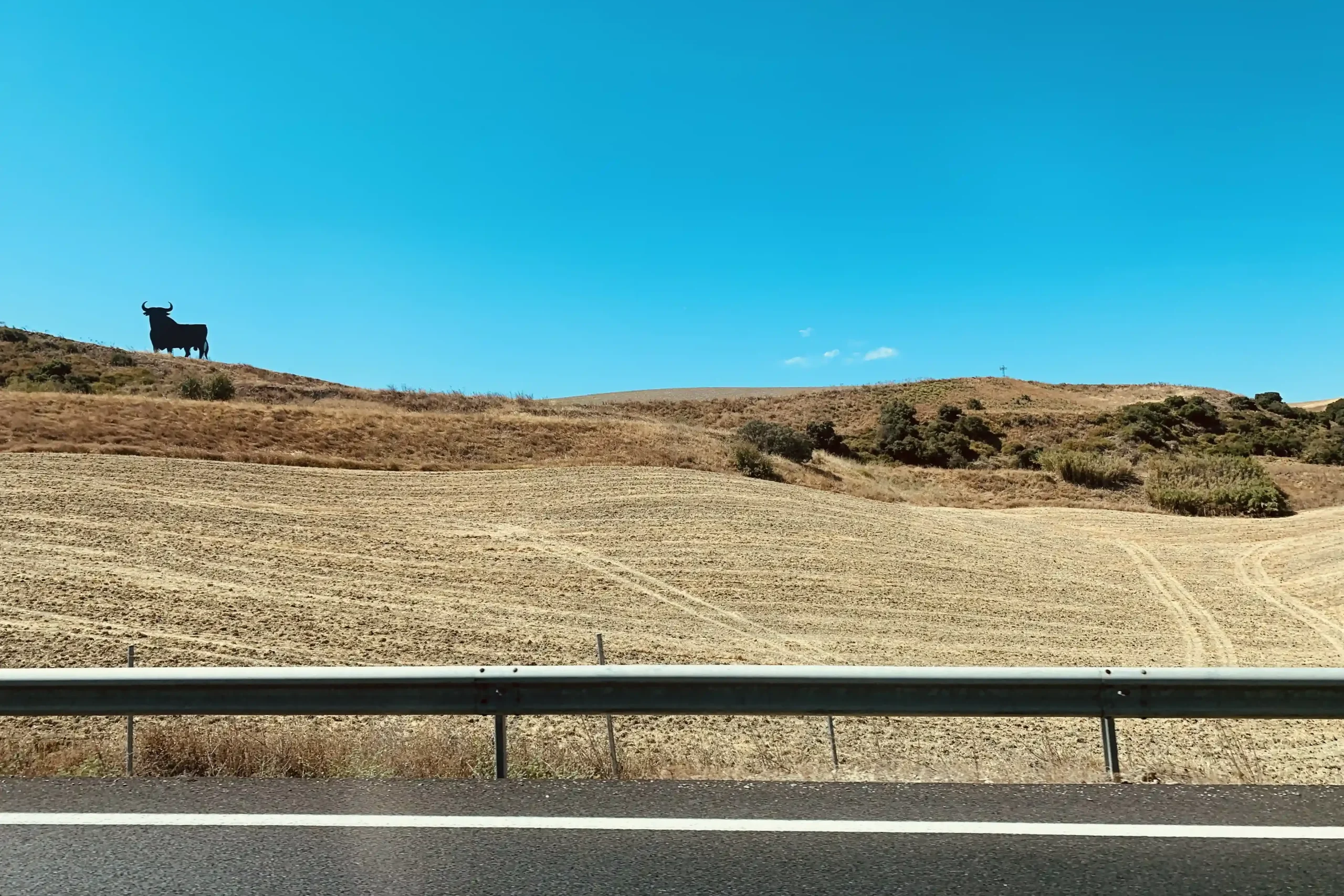
Bullfighting did not originate as a spectacle, nor was it created for pleasure. In Andalusia, bullfighting was never just entertainment: it was identity, social status, symbolic language, and for centuries, also power. The ritual confrontation with the bull is far older than modern Spain. Bull-related games already existed in Roman times, but it was during the Middle Ages that the bull became a symbol of strength, dominance, and honor.
Initially, bullfighting was practiced on horseback, performed by the aristocracy as a military exercise and a display of prestige. The bull was not the focus—the horseman was. Over time, especially between the 17th and 18th centuries, something changed.
Although today it is more strongly associated with the province of Seville, the true historical revolution of bullfighting took place in Ronda, in the province of Málaga. This is where bullfighting on foot was born, along with modern tauromachy. The central figure is Pedro Romero, an almost legendary character. He established the fundamental rules of bullfighting, introduced a sober, upright, and essential style, and transformed a chaotic act into a precise ritual. From Ronda came the idea of bullfighting as a disciplined art, not improvisation.
Bullfighting is divided into three tercios, like a classical drama:
• Tercio de varas – the bull enters, is observed, and its strength is tested
• Tercio de banderillas – rhythm, tension, control
• Tercio de muerte – the most symbolic moment, charged with silence
Each phase follows precise rules, passed down and respected like a code.
Moreover, the fighting bull is not a generic animal. It is a selected breed, raised for strength, endurance, and temperament under very specific conditions, far removed from the idea of intensive farming.
Today, bullfighting is one of Spain’s most controversial issues. In Andalusia, some defend it as cultural heritage, others consider it unacceptable, while many take an intermediate position marked by detachment or disillusionment. Many cities have reduced or abolished bullfighting events, while others maintain them as tradition. Society has changed, and bullfighting is no longer a universal language.
Regardless of my personal opinion, I believe it is something that should be understood if one truly wants to understand Andalusia—and Spain more broadly.
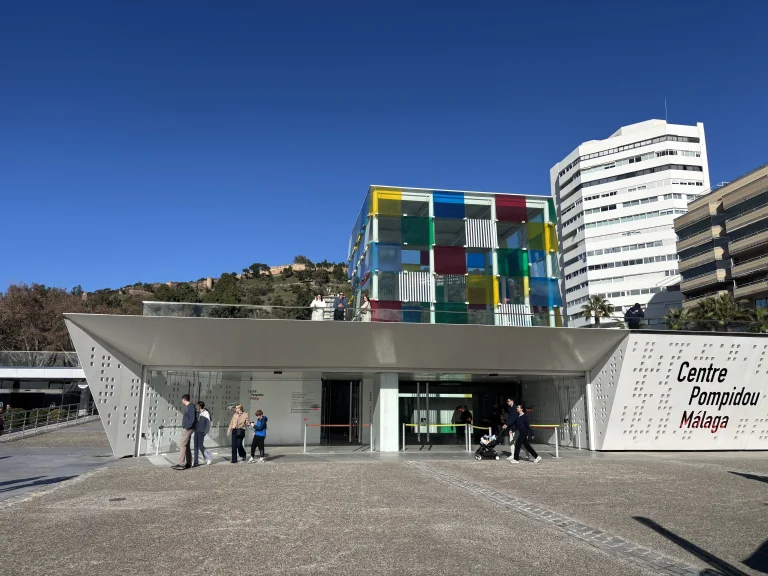
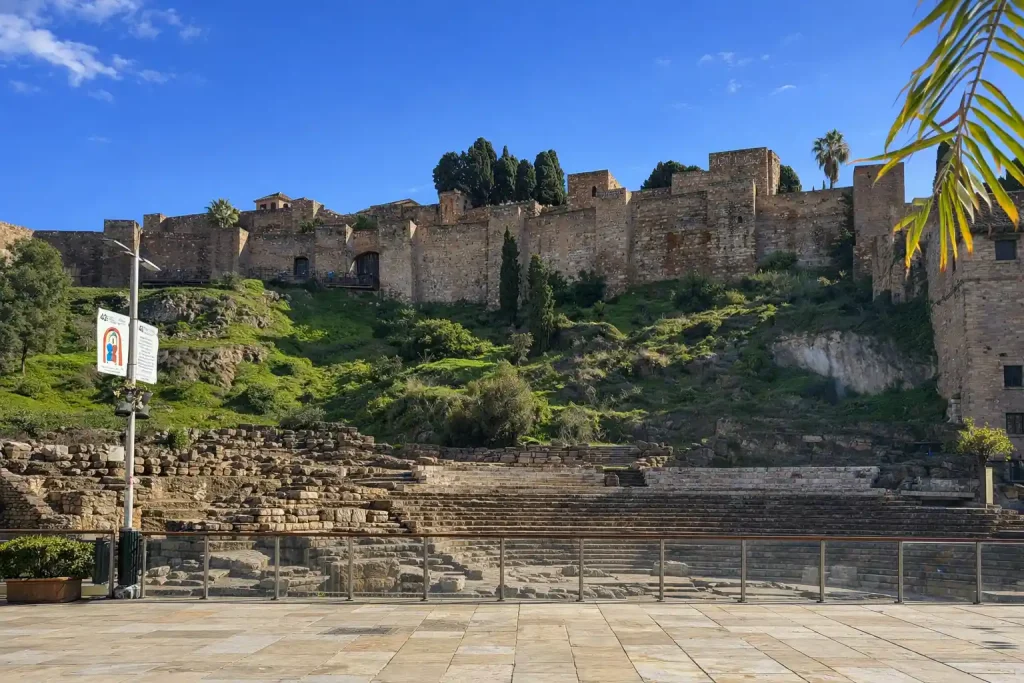
In the city center, Roman remains, Arab walls, Christian monuments, and art history coexist. You absolutely must visit Málaga Cathedral, affectionately known by locals as La Manquita; the Alcazaba, a unique and outstanding example of military architecture in Andalusia; and finally the Museo Casa Natal de Picasso, the only one of its kind in the world.
Lose yourself in creative neighborhoods like Soho, which—without losing the authentic soul of districts outside the historic center—has been reborn as a cultural and artistic hub of the city.
Just a few minutes away on foot or by bus, enjoy the urban beaches and chiringuitos, where you can eat espetos with your feet in the sand and the Mediterranean Sea right in front of you.
Málaga is sunshine, art, sea, culture, and Andalusian atmosphere all wrapped into one lively, vibrant, and unforgettable city.
If you want to know everything about Málaga, in my article Málaga: a surprise flavored with culture, sunshine, and Mediterranean rhythm you’ll find everything you need to know to fully enjoy this unique city.
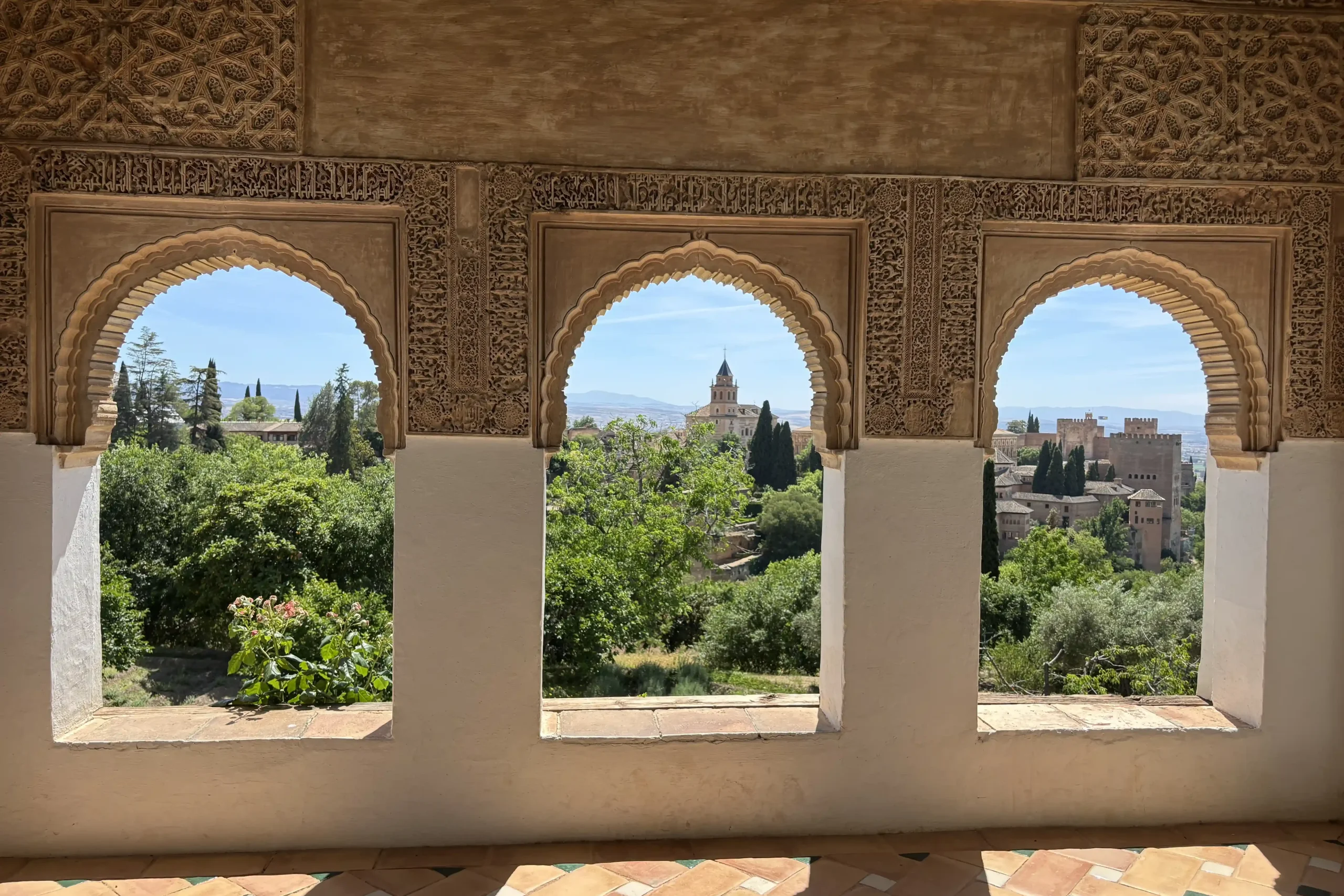
Granada: the city of the Alhambra
Our journey through Andalusia continues toward Granada, a stop that is neither incidental nor optional: Granada is an essential destination when visiting the region.
It is easily reached by train, bus, or car, leaving the coast behind and slowly climbing inland. And it is precisely this change in landscape that makes you realize you are entering a different Andalusia—more intimate and intense.
If Málaga is open, bright, and Mediterranean, Granada is compact, deep, and steeped in history.
It is a city that strikes you immediately with the richness of its past.
There is no sea here, but the Sierra Nevada dominates the backdrop.
There are no beaches, but ancient neighborhoods where time seems to have stood still, and where every step tells stories of coexistence, conquests, and transformation.
Granada is where you can truly understand what Al-Andalus was. This is where the Arab vision reached its peak, and it is here that you will discover the Alhambra.
The Alhambra is one of the most extraordinary monumental complexes in Europe, and it is something you absolutely cannot miss. It is not simply a palace, but a city within a city, a perfect balance of architecture, water, light, and silence.
It is an almost unreal place, where harmony, history, beauty, and lightness coexist, carried by the scent of the gardens and the constant sound of flowing water.
Teterías are mainly concentrated between the historic center and the Albaicín, the neighborhood that more than any other preserves the city’s Arab imprint. Stepping inside means changing pace: low lighting, the scent of mint and spices, cushions, and low tables. These are not places meant for quick consumption, but for lingering—speaking softly or simply sitting in silence.
The most common tea is mint green tea, slowly poured from a teapot held high, according to a tradition that comes from the Maghreb. Alongside it, you’ll find spiced blends, black teas, and sweet infusions, often served with Arab pastries made with honey, almonds, and sesame.
Historically, tea was linked to moments of meeting, reflection, and hospitality. It wasn’t drunk to quench thirst, but to share space and time. This meaning has been preserved in Granada, where the tetería acts as a kind of urban refuge, far from noise, haste, and street life.
Unlike bars, teterías have no rigid schedules and no imposed rhythm. You enter, you stay, you observe. They are frequented by students, locals, and curious travelers, but rarely by loud groups. Conversation is subdued here, and silence never feels uncomfortable.
In a city like Granada, so deeply shaped by Arab history, the tetería represents one of the most authentic ways in which Al-Andalus continues to live on. Not as a historical reconstruction or a tourist attraction, but as a daily habit fully integrated into the present.
Having tea in Granada means allowing yourself a real pause. It’s not an experience to “try,” but time to inhabit. And it is perhaps one of the simplest and deepest ways to tune into the city’s character: introspective, layered, and quiet.
But Granada doesn’t end at the Alhambra. In fact, it truly begins when you come down from there and lose yourself in the neighborhoods that surround it.
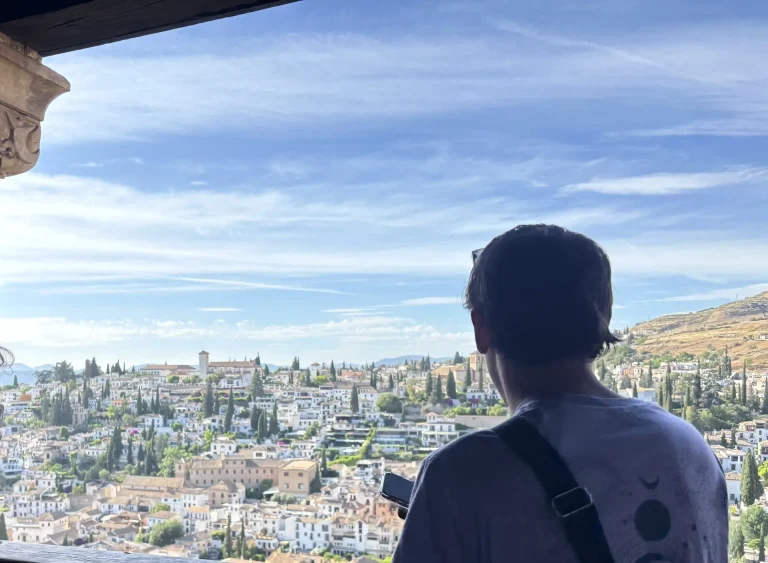
In the Albaicín, with its narrow, winding alleys, you rediscover the city’s Arab soul: white houses, hidden cármenes, and sudden views of the Alhambra that force you to stop, if only to breathe. Just beyond, Sacromonte tells a rougher, more authentic story of Granada—one made of cave houses, lived-in flamenco, and stories that were never written down, only passed on.
Granada is Andalusia distilled into a single city: intense, layered, imperfect, and deeply real.
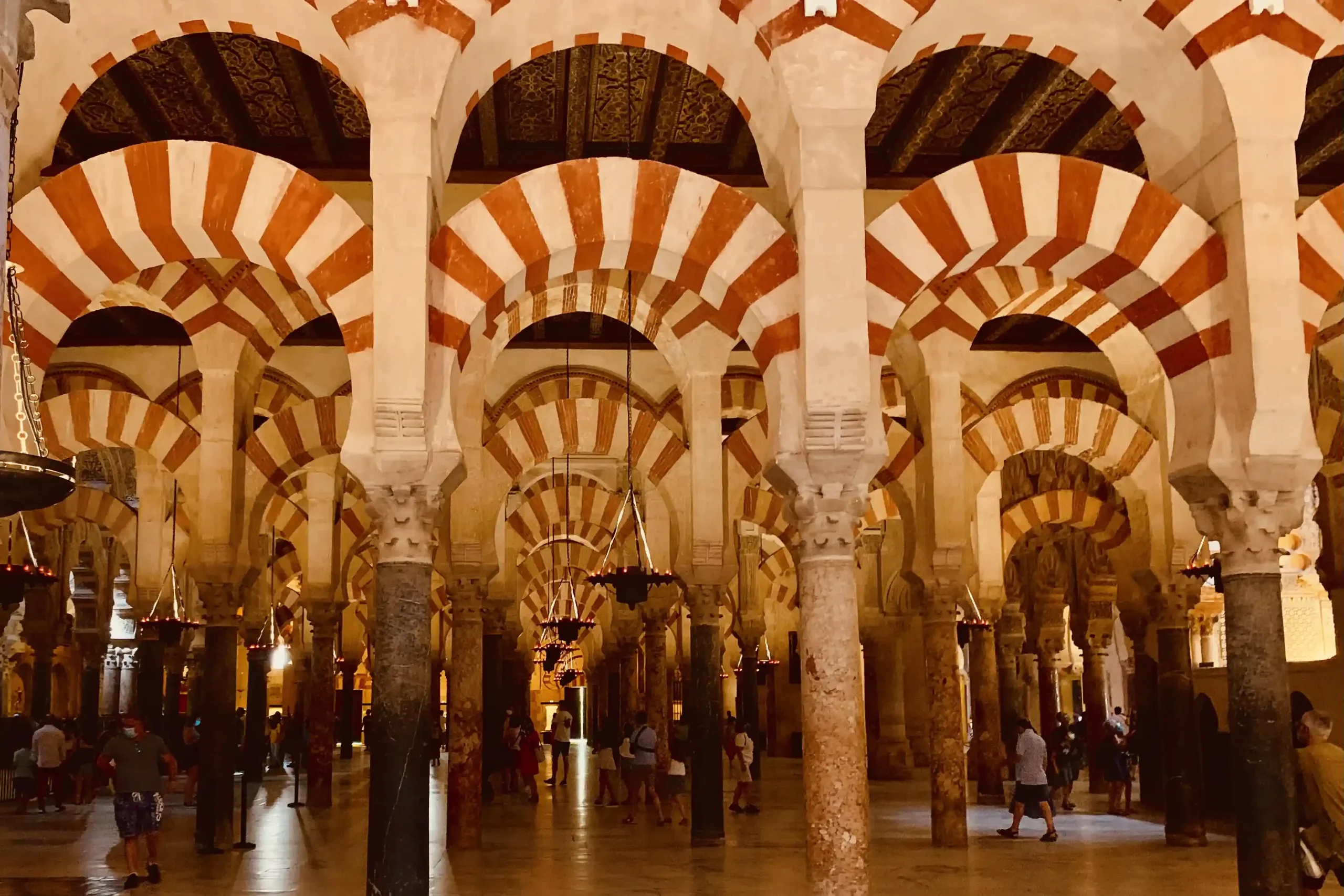
Córdoba: deep and introspective
And now we continue our discovery of Andalusia, heading toward another of its splendors: Córdoba.
Córdoba is also easily reached by train, especially from Málaga, Seville, or Granada, and it’s precisely upon arriving here that you get the sense of entering a different Andalusia—more intimate, more introspective, and more focused.
If Granada captivates with the beauty of the Alhambra and Málaga with its openness, Córdoba strikes you with its depth.
Its unquestionable heart is the Mezquita–Cathedral of Córdoba, one of the most impressive monuments in Europe and something you simply cannot miss. Entering the Mezquita means witnessing, with your own eyes, Arab history giving way to Catholic history: a sea of columns, bi-colored arches, filtered light, and silence. And when, at the center, the Christian cathedral appears, you understand that Córdoba has never been a simple or linear city, but a place of encounter—and confrontation—between different worlds.
Just a short walk away is the Roman Bridge of Córdoba, crossing the Guadalquivir and offering one of the city’s most iconic views, especially at sunset. Right beside it rises the Torre de la Calahorra, a defensive and symbolic reminder of the Islamic past.
As you enter the Jewish Quarter of Córdoba, the rhythm shifts once again. Narrow alleys, whitewashed walls, blue doors, silences broken only by footsteps. Here, you naturally slow down, almost without realizing it. It is one of the most evocative areas of the city, together with the synagogue, one of the few remaining in Andalusia.
Córdoba is also the city of patios—hidden courtyards filled with flowers, water, and shade. They are not mere decorations: they are a way of living, a response to the heat, an idea of home. If you visit at the right time of year, you can discover them one by one, like small private worlds that open up for a few days.
From a technical point of view, an authentic patio can be recognized by a few key elements: the presence of water (fountains or wells), the abundant use of plants, light-colored walls that reflect light, and a layout in which all rooms face inward. In many cases, several families lived around the same patio, sharing the kitchen and wash area on the ground floor, while bedrooms were located on the upper level, reached by stone or lime staircases connecting the two spaces. All of this creates a natural microclimate that lowers the temperature and encourages ventilation.
The origins of this structure date back to the Roman era, but it was refined during Al-Andalus, when attention to shade, water, and privacy became central. The patio is not a transitional space, but a space for living: a place to eat, talk, work, and rest.
Another sign of authenticity is that the patio is never designed to be “seen” from the outside. The entrance to the house is often discreet, almost anonymous, and only once inside does the interior space reveal itself. Even today, many patios in Córdoba are inhabited and private. During the Festival de los Patios, they are opened for just a few days each year—not as a tourist attraction, but as a gesture of domestic pride and cultural continuity.
Climbing slightly uphill, away from the busiest part of the center, you reach the Alcázar de los Reyes Cristianos. Orderly gardens, fountains, towers, and views tell the story of Christian Córdoba, without erasing what came before.
To truly understand the power and refinement of the Caliphate of Córdoba, you should also visit Medina Azahara (about 8 km from Córdoba): a palace-city that offers an even deeper understanding of what Al-Andalus truly was.
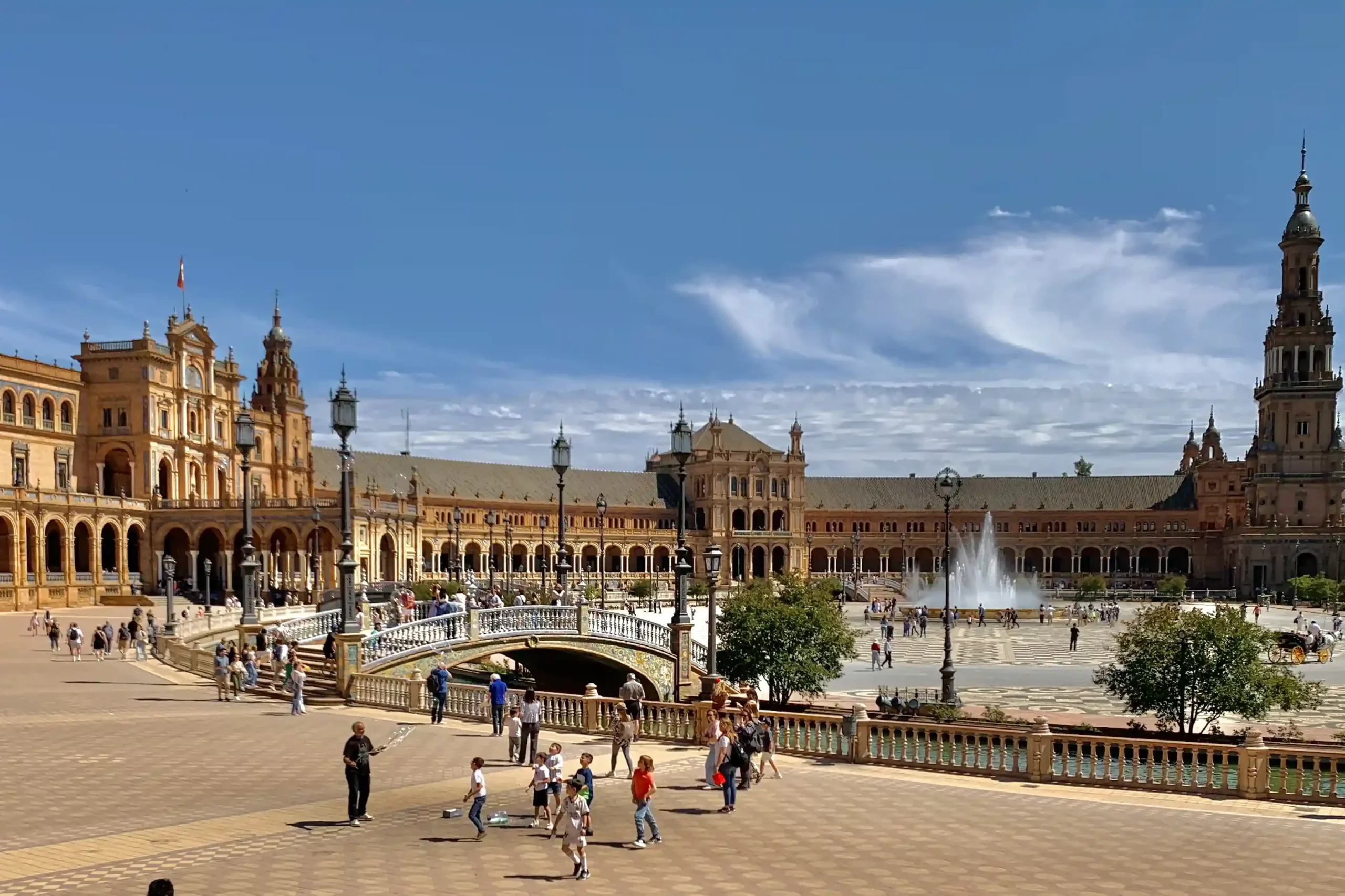
Seville: passion and theatricality
Now it’s Seville’s turn.
Seville is certainly not a discreet city. It doesn’t ask you to relax like Málaga, it doesn’t invite quiet contemplation like Granada, and it doesn’t wait for you to be ready like Córdoba. Seville takes the stage immediately.
It’s easily reached by train from Málaga, Córdoba, or Granada, and—along with Málaga—it’s often one of the first stops for those arriving in Andalusia. But the moment you step outside the station, you realize that Andalusia changes tone here: it becomes more theatrical, more intense, more emotional.
The city’s heart beats inside Seville Cathedral, one of the largest Gothic cathedrals in the world. Entering it is almost a physical experience: vast spaces, light pouring down from above, a silence that feels heavy. And then there is the Giralda—not just a bell tower, but a former Arab minaret transformed, the perfect symbol of a city built on layers of history.
Just a few steps away, you find yourself in the Real Alcázar of Seville, a palace that feels as if it has stepped out of an oriental tale. Decorated halls, azulejos, gardens filled with water and shade: here, the Arab legacy is not a distant memory, but something still alive, visible, and fully integrated. You absolutely must visit it—it is the best preserved of them all.
The central element of flamenco is the cante, especially cante jondo, considered the oldest and deepest form. The lyrics are short, often repetitive, sometimes improvised, and speak of prison, hard labor, loss, love, and marginality. Dance was not born as a decorative element, but as a physical response to the singing.
Flamenco dance is built more on control than on virtuosity. Body movements are often sensual for women and virile for men, but always restrained, and they require an extremely high level of professional and artistic maturity. The arms draw space, the hands speak, and the feet — through zapateado — build rhythm on the floor. Nothing is accidental: every gesture is born from listening to the cante and from the tension of the moment.
Unlike other dances, flamenco does not follow a fixed choreography. It is a dance of dialogue and improvisation, where the body reacts to the voice, the guitar, and silence. For this reason, it requires rigorous technique, built over years of practice, but also a strong emotional presence. It is a dance that is not expressed only through the body, but also through the soul. Without one, the other does not work.
Flamenco has many different styles, known as palos. It also has different nuances depending on the city where it is sung and danced. Seville, for example, became one of the main centers of flamenco because Roma (Gypsy), port, and artisan communities coexist here, all tied to a strong oral tradition that has influenced its style.
Only between the late nineteenth and early twentieth centuries did flamenco enter the cafés cantantes and later the tablaos, gradually transforming into a performance.
Today there are countless venues offering flamenco shows designed mainly for tourists. My advice instead is to look for a Peña Flamenca and attend an authentic evening. Peñas are cultural associations created by flamenco enthusiasts (cantaores, guitarists, dancers, and simple aficionados) with the goal of preserving traditional flamenco, passing on cante jondo to new generations, and offering spaces where flamenco is experienced without tourist filters.
Some historic and still active examples are the Peña Flamenca Juan Breva in Málaga, the historic Peña Flamenca La Platería in Granada, the Peña Flamenca Tío José de Paula in Jerez de la Frontera, and the Peña Flamenca Fosforito in Córdoba.
These are places run by members, often with an annual fee, that organize singing evenings, talks, competitions, and tributes to the great masters. In many peñas it is also possible to enter as a non-member, by paying a small contribution or attending open events. They are also often an excellent place to enjoy some traditional local tapas.
Crossing the historic center, you arrive in the Barrio de Santa Cruz, the city’s former Jewish quarter. Narrow alleys, sudden little squares, bitter orange trees, and low balconies reveal a more contained, almost intimate Seville, one that endures beneath the city’s louder surface.
Then, all of a sudden, everything opens up into Plaza de España.
Vast, theatrical, almost excessive. Canals, bridges, ceramics, towers—a place that doesn’t seek balance, but grandeur, telling the story of an exhibition-era Seville shaped by pride and display.
And finally, there is the Barrio de Triana, on the other side of the Guadalquivir. More popular, more authentic, deeply tied to flamenco, ceramics, and everyday life. Here, Seville lowers its voice, without losing its character.
Seville is heat, noise, and bold colors. It is processions, guitars, squares alive until late, crowded bars, and life spilling into the streets. It’s a city that never leaves you indifferent: you either love it, or it exhausts you—often both.
It’s a city of excess, emotion, and unapologetic beauty. Of traditions and a desire to be seen. And you have no choice but to let yourself be seduced.
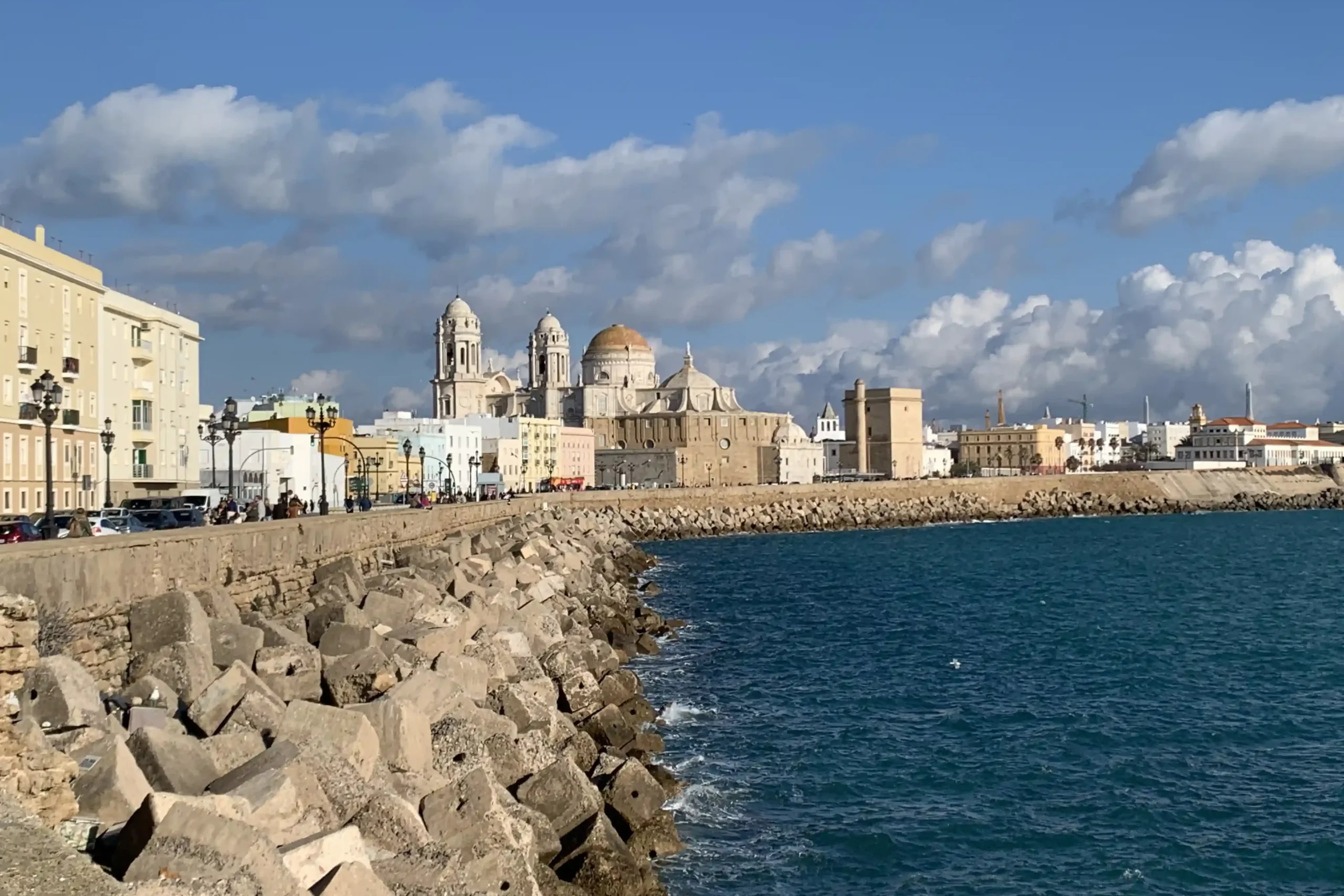
Cádiz: light, ocean, and wind
Our journey through Andalusia continues toward Cádiz.
It is easily reached by car or train from Seville, crossing bridges and strips of land that immediately make one thing clear: Cádiz is different. Surrounded by water and facing the Atlantic Ocean, it feels farther from the heart of classical Andalusia.
It has the soul of a place that lives by the sea, always looking toward the horizon. Accustomed to remaining in the shadow of other Andalusian cities, it is neither resentful nor sad—perhaps just a little melancholic. But it knows that everything passes, like the tides, and that is precisely why it is truly unique.
Cádiz is one of the oldest cities in Europe, founded by the Phoenicians over three thousand years ago. It is a city that has known ancient splendor and distant wealth. For centuries it was a gateway to the world, a place of departure and return, crossed by trade, ships, and ideas. In its palaces, watchtowers, and hidden courtyards, you can still sense the weight of a prosperous past, when the Atlantic was not a boundary, but a promise.
Today, that former grandeur is not flaunted. It remains as a quiet memory, woven into the city’s everyday life—discreet, dignified, and deeply present.
Between the 17th and 19th centuries, sherry became one of the most exported wines in Europe, especially to England, where it was simply called “sherry.” The bodegas were designed like true cathedrals of wine, with high ceilings and windows carefully placed to encourage ventilation. Even today, drinking sherry means entering a culture shaped by time, waiting, and patience, deeply connected to the identity of Cádiz and its hinterland.
Even today, some bodegas can be visited and offer interesting guided tours and tastings.
The historic center is compact, intimate, and surrounded by the sea. You explore it on foot, without haste, guided by the light, the wind, and the sound of the ocean that accompanies every step. Its squares—such as Plaza de las Flores or Plaza de San Juan de Dios—are lively, everyday, authentic, never designed to impress.
Cádiz Cathedral, facing the Atlantic, perfectly reflects the spirit of the city: imposing, yes, but also open, luminous, almost in dialogue with the sea. Climbing Torre Tavira, on the other hand, is the best way to truly understand Cádiz: from above, you see a flat, white city suspended between sky and water, with no sharp boundaries.
But Cádiz is above all the sea. You feel it in the wind that never stops blowing and in the constant sound of the ocean that follows you everywhere. This becomes especially clear when walking along Campo del Sur, the city’s most evocative seafront, running alongside the ancient walls of the old town and opening directly onto the Atlantic, between the Cathedral and the Castillo de San Sebastián. It’s here that, at sunset, I witnessed one of the most striking sunsets in all of Andalusia.
And when I say Cádiz is the sea, I also mean its entire province. Here the coastline opens up into long stretches of white sand, like Zahara de los Atunes, and beaches that are still largely unspoiled, such as Playa de Bolonia near Tarifa, for now spared from mass tourism. This is a different kind of travel—more local, more conscious—chosen by those who seek nature, and a deep connection with the sea and the wind.
Andalusia is a region meant to be experienced out on the streets, on the beaches, and in the sierras. For this reason, when packing your suitcase, it’s better to think about comfort rather than quantity.
The sun is one of the absolute protagonists, at any time of year. A hat, sunglasses, and good sunscreen are essential even in winter: Andalusian light is intense and really makes itself felt, especially during long walks.
You’ll walk a lot, often on stone streets or gentle uphill paths, so a pair of comfortable, well-broken-in shoes is essential. A reusable water bottle is a great ally, especially if you visit places like the Alhambra or the Castillo de Gibralfaro, where shade isn’t always guaranteed. I bought a foldable silicone one at Natura, but I can’t seem to find it on their website anymore. In any case, here you can find a similar one—it helps save space once you’re done using it.
If you’re planning to go to the beach, there’s no need to pack too much: a lightweight towel (I bought this one to always have with me when traveling to a seaside city), a pair of sandals, and a practical bag are more than enough. Andalusia’s beaches—if you avoid Marbella—are informal and perfect even for a spontaneous stop.
Finally, even though the climate is mild, it’s a good idea to bring a sweatshirt or a light jacket for the evening, when the ocean air can cool things down, or if the Sierra Nevada is still white and fresh with winter snow.
Small items like a power bank may seem like minor details, but they make your days much easier, especially if you keep your GPS on to get around and want to capture every corner and beautiful moment of your trip. I was given this one as a gift and it works great for me. There are many different models out there, but regardless of which one you choose, I highly recommend having one with you.
And here our first taste of Andalusia comes to an end.
As you may have gathered, this is a land that asks for time, slow gazes, and a willingness to be surprised along the way. Málaga, Granada, Córdoba, Seville, Cádiz, and the white villages are not just stops on an itinerary, but fragments of a story that gradually takes shape, never revealing itself all at once.
Here, the past is never far away. It coexists with everyday life, with simple habits, and with an intimate relationship with space, light, and time.
And perhaps this is what makes Andalusia so easy to love.
If, after this first glimpse, you feel the desire to go deeper, linger longer in a city, or build your own journey, on viaggiinchiaro you’ll find more articles about Andalusia and its treasures, along with detailed itineraries, practical tips, and travel ideas to discover the region step by step.