What to eat in Andalusia: history turned into flavor
Andalusian cuisine cannot be understood by starting from the dishes.
It must be understood by starting from the climate, from an arid land, from the sea, and from a history that spans centuries, shaped by successive dominations and continuous cultural exchanges.
The Roman legacy, for example, is still visible in salt preservation, in the systematic use of olive oil, and in the central role of bread as a structural element of the meal. The Arabs “added” citrus fruits, almonds, rice, and a more complex use of spices, conceived to balance flavors rather than to mask them.
Even after the Reconquista, many of these habits did not disappear.
This is why many dishes hide distinct flavors that remain in balance with one another. These dishes are, in fact, memory passed through taste: the history of a land transformed into flavor.
Here are a few practical tips to help you navigate local mealtimes, tapas, markets and dining habits, enjoy Andalusian cuisine without complications and save time, money and a little unnecessary frustration.
- Breakfast, lunch and dinner: in Andalusia, breakfast is often eaten at two different times: very early, from around 7:30 am, or during a mid-morning break, generally at around 10:00 or 10:30 am. It may include coffee, toasted bread with olive oil and tomato, churros or something savoury. Lunch usually begins at around 2:00 pm, while dinner is mainly served from 9:00 pm onwards. In the most tourist-oriented destinations, you may find kitchens opening earlier, but in places mainly frequented by local residents you may have to wait until the regular service begins.
- Markets: traditional food-market stalls mainly operate during the morning and, in many towns and cities, begin to close between 2:00 pm and 3:00 pm. If you want to visit when the market is at its liveliest or stop to eat at stalls serving tapas and simple dishes, it is best to arrive before lunchtime. Any gastronomic areas may keep longer hours than the traditional market stalls.
- Reservations: booking is often unnecessary if you simply want a drink or a few tapas at the counter. It is advisable, however, at popular restaurants, panoramic terraces and historic taverns, especially on Friday and Saturday evenings, during Holy Week, local festivals and the busiest periods of the year. Some tapas bars do not accept reservations and allocate seats on a first-come, first-served basis.
- How people eat: tapas, medias raciones and raciones allow you to try several dishes and share the meal. A tapa is generally a small portion, a media ración is an intermediate serving, while a ración is larger and often intended for several people. Quantities can vary considerably from one establishment to another, so it is best to begin with a few dishes and order more later. A tapa is not automatically included with a drink throughout Andalusia: the custom varies depending on the town and the establishment.
- Peñas flamencas: if you would like to experience a more traditional setting, check the programme of the local peñas flamencas. These are cultural associations dedicated to preserving and promoting flamenco, and they organise evenings of cante, performances, talks, competitions and tributes to artists. Some activities are reserved for members, while others are open to the public or accessible by paying a small contribution. At certain peñas and during selected events, you may find tapas or simple local dishes, but food service is not guaranteed: always check the programme and entry conditions before going.
- Drinks: soft drinks, juices, vermouth and mixed drinks are often served with plenty of ice. If you do not want any, ask for sin hielo; if you only want a little, say con poco hielo. Beer is normally served very cold. Wines worth trying include those from Jerez, Montilla-Moriles and the sweet wines produced around Málaga, which differ considerably in style and intensity.
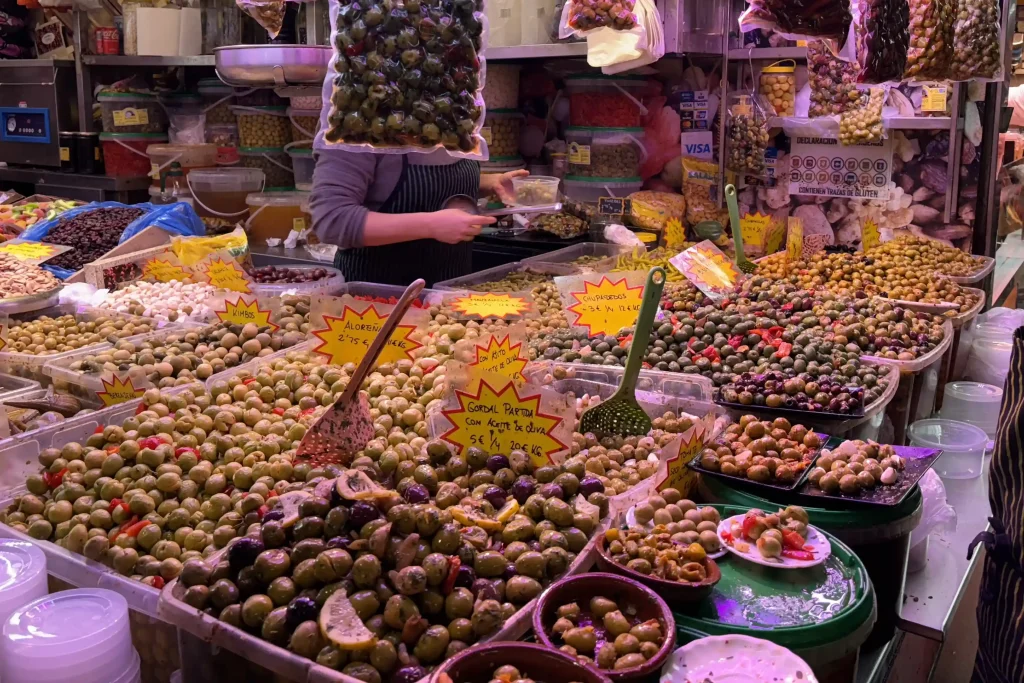
- Bread, olives and small accompaniments: these may be brought to the table at the beginning of the meal, but they are not always complimentary. If consumed, they may be added to the bill. In some establishments, the charge is calculated per person. If you do not want them, you can decline them when they are served.
- The bill, payment and tipping: the bill is not always brought automatically once you have finished eating. Tipping is not compulsory; if you were happy with the service, you can round up the total or leave a few coins. Card payments are widely accepted, but carrying some cash can still be useful in small bars, markets and inland villages. If you want to pay separately, it is best to ask before the bill is processed.
- Language: in the main cities and the most tourist-oriented coastal destinations, English menus and staff accustomed to international visitors are fairly common. In smaller towns, markets and traditional taverns, however, English is not always guaranteed. The names of dishes may also vary from one province to another or refer to local preparations that are difficult to translate literally.
- Useful words and phrases: una caña is a small draught beer; una clara is beer mixed with lemonade or a lemon-flavoured soft drink; media ración means an intermediate-sized portion; ¿Este plato es sin gluten? means “Is this dish gluten-free?”; ¿Este plato es sin lactosa? means “Is this dish lactose-free?”; ¿Qué me recomienda? means “What do you recommend?”; ¿Qué lleva? means “What does it contain?”; ¿Tiene picante? means “Is it spicy?”; para compartir means to share; para llevar means takeaway.
- One thing not to do: do not try to taste everything by ordering several raciones at once. Portions may be larger than expected, and part of the pleasure lies in trying a few dishes at a time, perhaps moving on to another establishment. Avoid treating Andalusian cuisine as a single, uniform tradition: let the products and specialities of the area you are visiting guide your choices.
Olive oil
In Andalusia, olive oil is not a dominant ingredient: it is the very architecture of the cuisine.
Without Andalusian olive oil, many recipes simply would not exist.
The province of Jaén represents an almost unique case in Europe: an entire agricultural economy built around the olive tree. These are not scattered groves, but a continuous agricultural landscape that has shaped not only what people eat, but also the way they eat.
The spread of the Picual variety is not a gastronomic choice, but an agricultural one: it resists drought, yields abundantly, and keeps well. Its bitter and peppery profile is not a flaw, but a direct consequence of its high polyphenol content, which makes the oil stable and suitable for everyday use. But there are many other varieties as well.
Eating bread with olive oil here is completely normal. The oil has an intense aroma and flavor: herbaceous notes, a pronounced bitterness, and a peppery finish. This is why some foods, even when very simple, still have a strong taste.
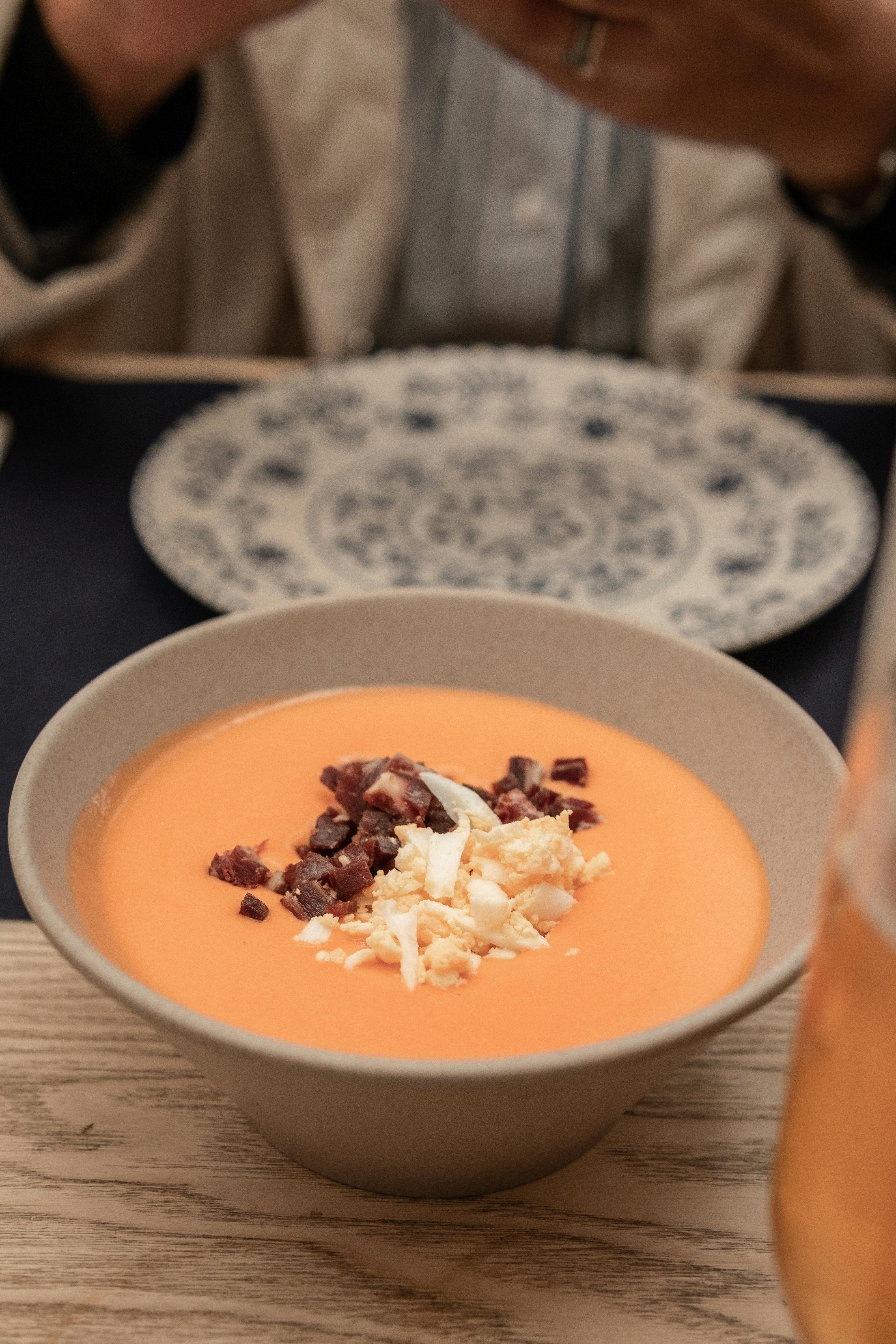
Cold soups
Gazpacho and salmorejo are “traditional recipes,” born out of the need to cope with heat that can sometimes be truly intense.
They emerged in a context where lighting a fire in summer was impractical and agricultural work required meals that were nourishing, hydrating, and quick.
Gazpacho is probably one of the oldest dishes in Spanish cuisine. It is said to have been introduced by the Romans and originally consisted of bread, olive oil, vinegar, and water, reaching its current form with the arrival of tomatoes and peppers thanks to trade with the Americas. It is often consumed as a snack between meals, with a refreshing purpose.
Salmorejo, typical of Córdoba, represents instead a more urban cuisine: less water, more substance, greater caloric density. It is not meant to quench thirst, but to replace a meal. In recent years, various versions have appeared, with mango, almonds, and other ingredients, but I can assure you it always remains delicious.
If you are in Andalusia in summer, you absolutely must add these delicacies to your list of what to eat in Andalusia.
Tuna from Cádiz
Along the coast of Cádiz, bluefin tuna is a centuries-old culture. The almadraba, a fishing technique of Phoenician origin, intercepts tuna during their migration toward the Mediterranean. It is a seasonal and regulated form of fishing, deeply connected to the territory.
It is prepared raw (tartare, sashimi), lightly seared, fried, or preserved (in olive oil or brine), and it is always considered a specialty.
My advice is to enjoy it in Barbate, Zahara de los Atunes, and Conil — these are the best areas.
If you want to take some home, look for preserves that clearly indicate almadraba and the fishing area. These preserves are typically artisanal bluefin tuna in olive oil, and I assure you they will be one of the best Andalusian gastronomic souvenirs.
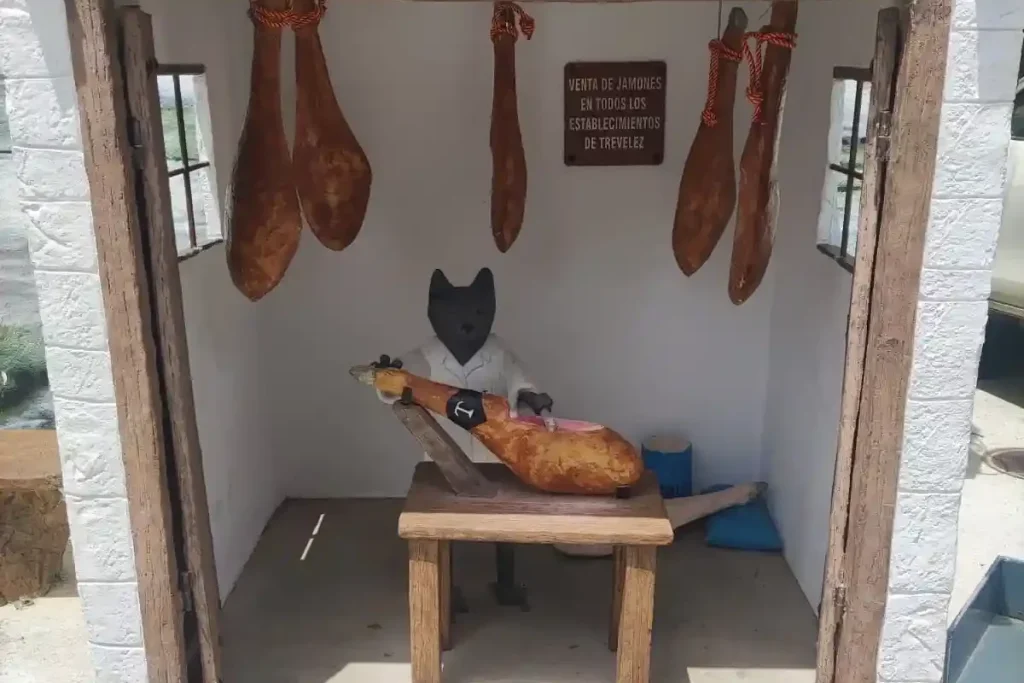
Jamón de Trevélez
Before talking about jamón de Trevélez, we need to clarify one thing: do not confuse generic jamón serrano with Trevélez. The name refers to a method, not just a place. The two types of jamón are not the same!
In Trevélez, the jamón matures thanks to the altitude (it is the highest village in mainland Spain) and the air of the Sierra Nevada. The distinctive factor is not the pig itself, but the altitude, the temperature variation, and the minimal use of salt.
It is a more delicate jamón, less aggressive, sweeter. Personally, I prefer serrano, but tastes vary from person to person.
The real experience would be to taste it directly in the secaderos of Trevélez. It is a small village nestled in the Alpujarra region, devoted to the cult of jamón… it truly has to be seen to be believed.
Sherry, in Spanish Jerez
Few people know this, but sherry is an Andalusian wine, not an English one. It originates in the so-called Sherry Triangle, between Jerez de la Frontera, Sanlúcar de Barrameda, and El Puerto de Santa María, in the province of Cádiz. This is where the earliest sherry production workshop was found, dating back to Phoenician times—over 3,000 years ago.
Sherry is a fortified wine, produced mainly from Palomino, Pedro Ximénez, and Moscatel grapes. Chalky soils, constant sunshine, and Atlantic breezes have created the perfect conditions for producing a wine with such an intoxicating character. Its personality depends more on the production process than on the grape variety itself.
After fermentation, the wine is fortified with alcohol and begins aging in oak barrels through the solera and criadera system. The barrels are stacked in different levels: younger wines are gradually blended with older ones, year after year, enriching them with distinctive flavors. This means there are no true vintages, but rather a continuity over time that makes every sherry the result of decades of history.
A key element is the flor, a natural layer of yeast that forms on the surface of the wine in certain styles of sherry, such as Fino and Manzanilla. This layer protects the wine from oxidation and gives it dry, saline, and very distinctive aromas. Other sherries, like Oloroso, age in contact with air, developing richer and more complex aromas.
Between the 17th and 19th centuries, sherry became one of the most exported wines in Europe, especially to England, where it was simply called “sherry.” The bodegas were designed like true wine cathedrals, with high ceilings and windows carefully planned to promote ventilation. Even today, drinking sherry means entering a culture shaped by time, patience, and waiting—deeply connected to the identity of Cádiz and its hinterland.
Some bodegas are open to visitors and have preserved their original structure, archives, and rooms dating back to the early 1900s. The most famous is Bodega Fundador, which also offers guided tours and tastings. Founded in 1730, it is considered one of the oldest wineries in Spain still in operation and one of the first to bring Jerez wines beyond local borders, turning them into a product known throughout Europe. It is to this bodega and its founder that we owe the birth of sherry as we understand it today.
Because in Andalusia, it’s not only important what you eat, but also what you drink.
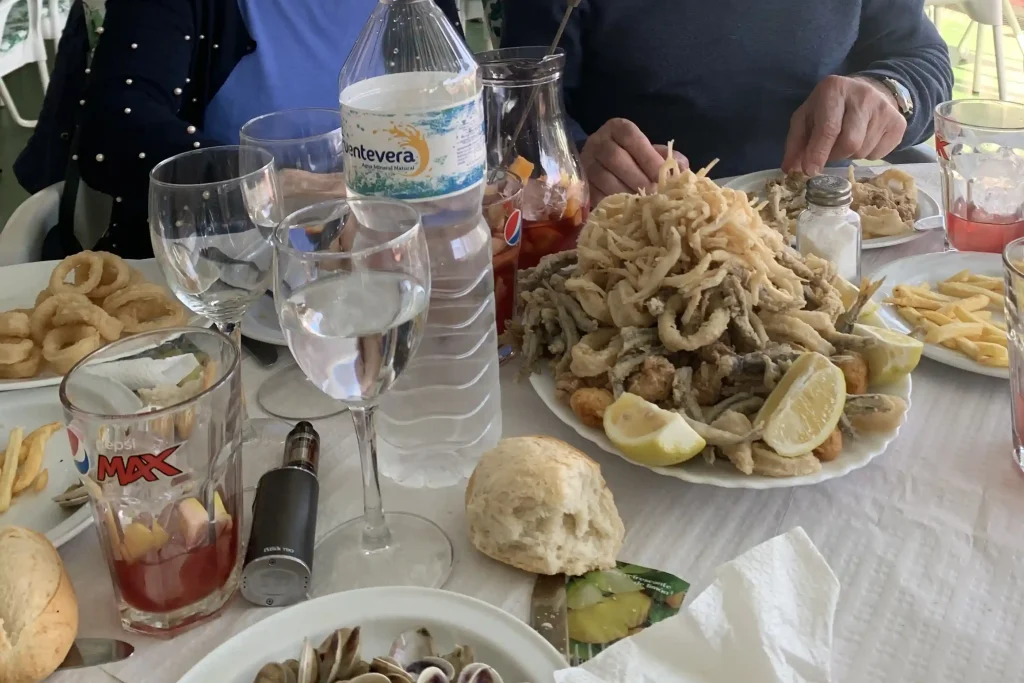
Fritura and espetos
Andalusian fried fish and espeto (sardines grilled over embers) are among the purest expressions of Mediterranean cuisine.
They are types of food meant to be eaten quickly, right on the beach. There is no marinade or special additions—just fresh fish and a great beer.
You can enjoy this delight almost anywhere, but in my opinion the best ones are found in the chiringuitos of Málaga. They’re simply amazing!
Andalusia has an extremely rich and deeply rooted culinary tradition. It is an authentic cuisine, based on local products that are raised, caught, or harvested no more than 10 kilometers from where they are cooked.
When you are in Andalusia, look for the ventas scattered along the roads connecting the cities, or the tabernas that still cook the old way, as well as mesones and cervecerías that continue to treat food as part of tradition. This is how you’ll taste the real flavors — and experience the true Andalusia.