Málaga and Its 30 Museums: a cultural surprise in southern Spain
Málaga is often described as a city of sea, sunshine, and tapas… and it truly is.
But beneath this bright, easy-going surface lies an unexpected soul made of art, history, and creativity: more than 30 museums packed into just a few square kilometres, capable of turning a simple walk into a continuous cultural journey.
You don’t need to be an art expert to be captivated here.
All it takes is stepping into one of these spaces—sometimes by pure chance—to realise that Málaga is not just a postcard destination, but a living, curious, and surprising city, able to blend Picasso with street art, archaeology with contemporary design, world-famous names with small, intimate museums.
And the best part?
Many of these museums appear as you wander aimlessly between the historic centre and the port, almost as if they were a natural extension of the urban landscape itself.
Visiting Málaga’s museums is a real pleasure—and it will be even more so if you know how to plan it properly. These are the tips I wish I’d known before walking into my very first museum:
- Many museums are free on Sunday afternoons, usually from 4:00 pm onwards. With a bit of planning, you can easily visit two or three without spending a cent.
- They close earlier than you might expect: generally between 6:00 pm and 7:00 pm, especially in the low season. Never leave it for “later”.
- Avoid Mondays: it’s the weekly closing day for many museums, or the busiest day for the few that remain open.
- Keep your ticket: some museums allow same-day re-entry—perfect if you want to break up your visit with a tapa.
The must-visit museums of Málaga
Below you’ll find five cultural gems you absolutely shouldn’t miss.
Sometimes, for just €2 or €3, you’ll discover real hidden treasures that don’t appear in any guidebook.
Museo de Málaga
On the official website you’ll find all the necessary information (opening hours, tickets, etc.).
The last time I visited, admission was free for EU citizens, while other visitors paid a symbolic fee of €1.50. The visit takes at least an hour and a half, but if you enjoy archaeology, it’s worth allowing a good two hours.
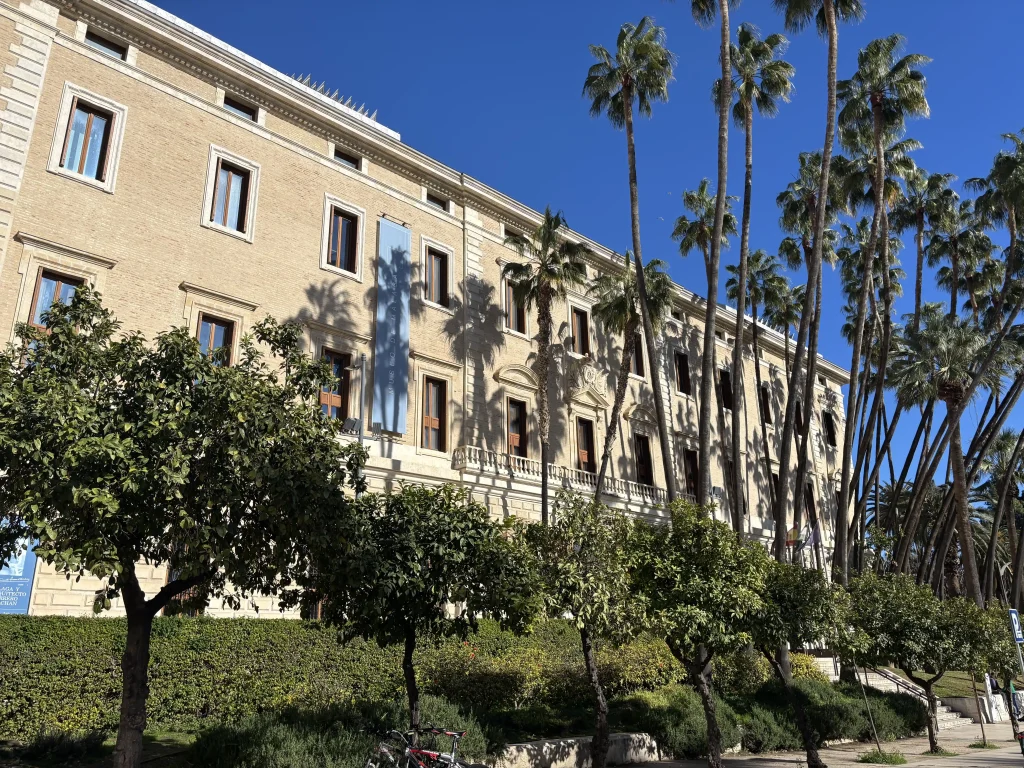
The museum is housed in the magnificent Palacio de la Aduana, a neoclassical building overlooking the Paseo del Parque.
Only in 2016 did it finally become the Museo de Málaga, now the largest museum in Andalusia and the fifth largest in Spain.
The building itself is reason enough to go inside. Don’t miss the grand stairwell, the roof made up of six thousand aluminium panels engraved with images of Málaga, and the central courtyard, where you can still clearly see the original structure of the palace, designed to control and monitor the flow of goods.
If you’d like to learn more about the building, you can read the dedicated section on the Palacio de la Aduana in my article Málaga: a delightful blend of culture, sunshine, and Mediterranean rhythm.
What makes the Museo de Málaga particularly interesting is that it isn’t a “traditional” museum, but two museums under the same roof:
Archaeological Section
From prehistory to the Romans, from the Islamic period to the Christian Middle Ages.
Here you’ll find Roman mosaics, amphorae, coins, sculptures, and everyday objects that reveal what life was like here 2,000 years ago. Many of the archaeological finds come from excavations carried out during urban development works—the city itself is a continuous archaeological site.
One of the most admired pieces among archaeology lovers is the Roman mosaic of the Birth of Venus.
Fine Arts Section
Andalusian painting from the Renaissance to the 20th century, with works that tell the story of bourgeois, religious, and romantic Málaga. The collection includes pieces by both local and national artists, and you’ll also come across works linked to the Málaga School or to artistic movements that influenced the region.
For Picasso enthusiasts, there’s even a small early work by Pablo Picasso, which adds an extra layer of meaning to the visit.
For decades, these collections remained locked away in storage due to a lack of space. Málaga had to wait more than 20 years before this museum could finally open to the public.
The building itself is reason enough to step inside. Don’t miss the grand spiral stairwell, the roof made up of six thousand aluminium panels engraved with images of Málaga, and the central courtyard, where you can still clearly see the palace’s original structure, designed to monitor and control the flow of goods.
If you’d like to learn more about the building, check out the section dedicated to the Palacio de la Aduana in my article Málaga: a delightful blend of culture, sunshine, and Mediterranean rhythm.
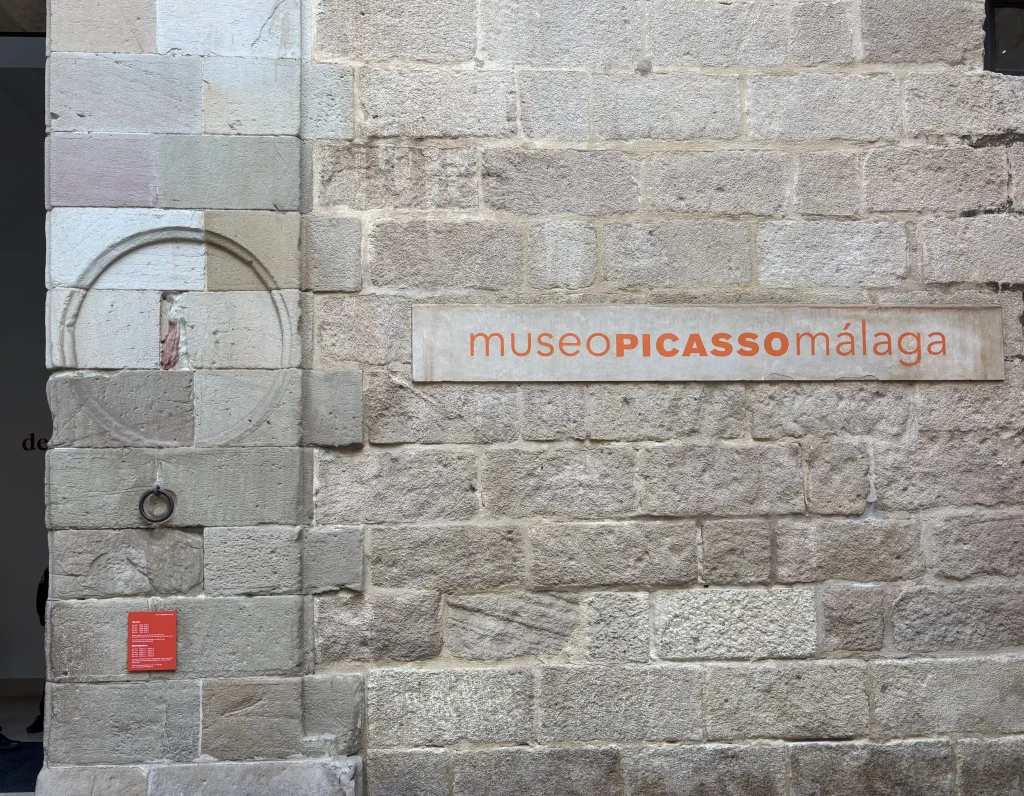
Museo Picasso Málaga
To visit the Museo Picasso Málaga at a relaxed pace, it’s best to allow around 1.5–2 hours. If you’d like to explore temporary exhibitions in depth or use the audio guide, 2–2.5 hours is ideal.
Admission is usually paid, but entry is free every Sunday during the last two opening hours, as well as on certain dates throughout the year, such as 28 February (Andalusia Day), 27 October (the anniversary of the museum’s inauguration), and a few other special occasions. On the museum’s official website you’ll find up-to-date information on collections, exhibitions, opening hours, tickets, and activities.
The museum is housed in the Palacio de Buenavista, an elegant Renaissance building in the heart of Málaga’s historic centre.
Ate core of the museum is a collection of over 200 works spanning the entire career of Pablo Picasso, from his early youthful experiments to full artistic maturity. The collection includes paintings, sculptures, ceramics, and prints, offering a comprehensive overview of his creative journey.
Here you can follow the evolution of his visual language, from early realism to Cubism and beyond—a rare opportunity to observe the development of one of the great geniuses of modern art.
The building itself is part of the experience: a beautifully restored 16th-century palace, with inner courtyards and carefully designed exhibition spaces that enhance the artworks and create a harmonious dialogue between art and architecture.
The museum also regularly hosts high-quality temporary exhibitions, often comparing Picasso with other artists or exploring specific themes within his work.
While it can’t compete with the major Picasso museums in Paris or Barcelona, the Museo Picasso Málaga offers something different: a more intimate and personal Picasso. Many of the works on display were gifts the artist made to family members, friends, or close acquaintances.
Among the most interesting pieces you may encounter are:
- “Restaurant” (1914) – a work on glass that already reveals Picasso’s experimental approach to materials.
- “The Three Graces” – a large-format painting that helps illustrate his treatment of the female figure.
- “The Siesta” (1932) – a fine example of his more mature and reflective phase.
- “Bull’s Head” – a powerful and iconic sculpture, reinterpreting one of the strongest symbols of Spanish culture.
The museum frequently rotates the works on display, allowing visitors to experience different stages of Picasso’s artistic evolution. For this reason, you may find different works from those listed above during your visit.
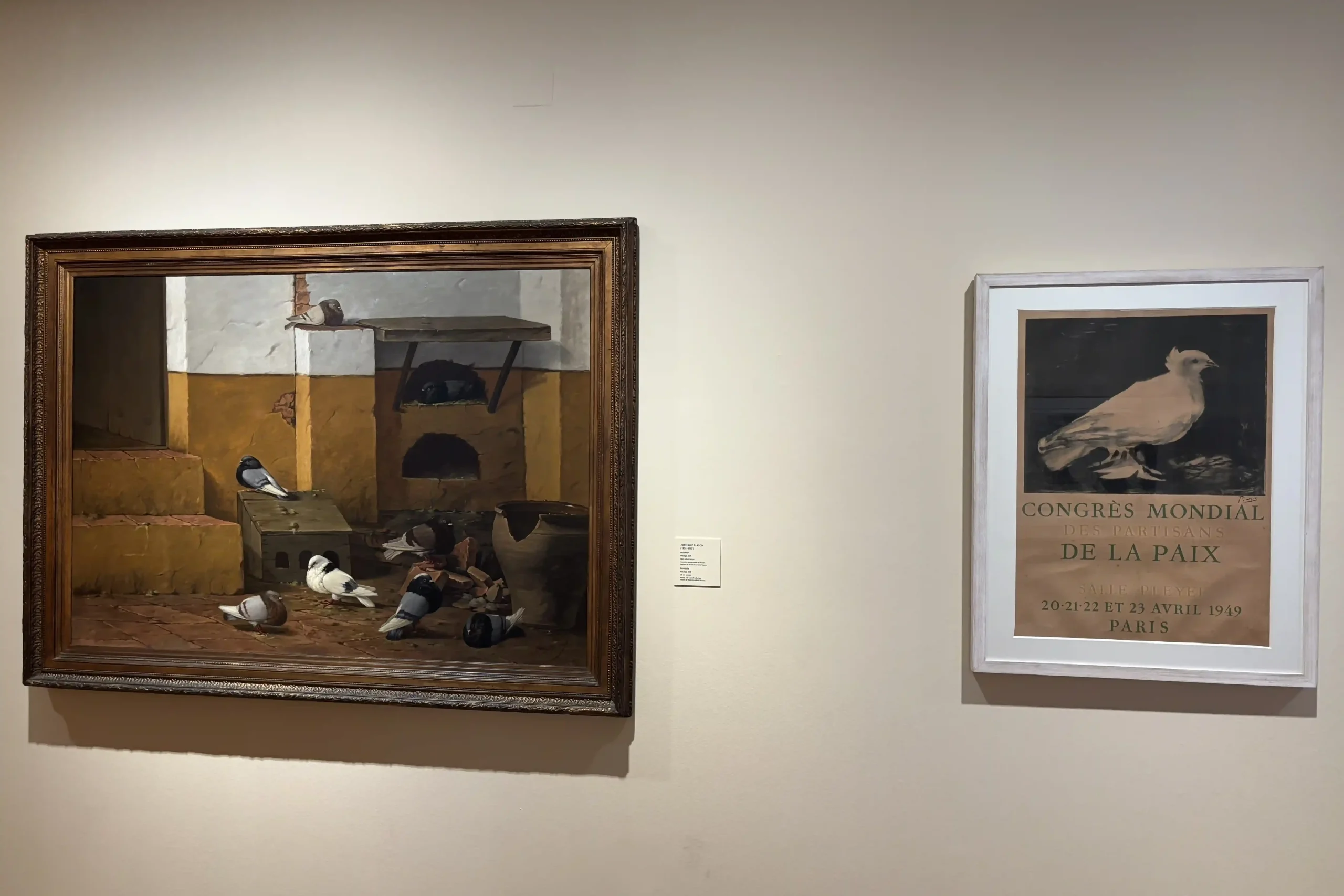
The first was created by his father and later reinterpreted by Pablo Picasso in his honour for the Congrès Mondial des Partisans de la Paix in Paris in 1949, becoming one of the universal symbols of peace of the 20th century.
Museo Casa Natal Picasso
The official website of the Museo Casa Natal Picasso is managed by the City of Málaga and provides up-to-date information on opening hours, tickets, and exhibitions. Admission is free every Sunday from 4:00 pm to 8:00 pm, and there may also be free entry on special dates such as 28 February (Andalusia Day) and during other cultural events linked to the city or the museum itself. A visit usually takes 1–2 hours, depending on how much time you spend in each room. It’s ideal both for a quick visit and for a more in-depth exploration of Picasso’s childhood and local influences.
The Casa Natal de Picasso is the house where Pablo Picasso was born on 25 October 1881, located at number 15, Plaza de la Merced, in Málaga’s historic centre.
The museum offers an intimate look at the life and early formation of the young Picasso, giving a clear sense of who he was before fame.
This is not a “cold” museum: it is the actual house where Picasso was born and spent his earliest years, with rooms that show how people lived at the time.
The exhibition follows a thematic route that links the city of Málaga to Picasso’s artistic identity, through documents and objects that reveal how the local environment, colours, and traditions shaped his early artistic sensibility.
You’ll find photographs, documents, drawings, and family belongings that help trace his evolution from child prodigy to universal genius.
The Casa Natal also frequently hosts temporary exhibitions and special programmes, particularly during Picasso October or on anniversaries connected to the artist’s life.
Personally, I believe this museum is more worthwhile than the more famous Museo Picasso Málaga. Picasso’s works can be found in countless museums around the world, and arguably Málaga does not hold the most famous or celebrated ones. Here, instead—in his birthplace—you have the unique opportunity to discover Picasso as a child, at the moment when he quite literally took his first steps and began to enter the world of art under the guidance of his father.
Pablo Picasso was born on 25 October 1881 in a lively, working-class Málaga, filled with the smells of the sea, workshops, markets, and animals. He was not a particularly strong child: his mother later said that at birth he seemed so frail they feared he might not survive. And yet, inside him there was already a stubborn strength that would never leave him.
It was his father, José Ruiz Blasco, who became the decisive figure in the artist’s life. A drawing teacher and painter—especially of still lifes and pigeons—he was the one who first placed a pencil in his son’s hand. José immediately sensed something different in those early marks. They were not simple scribbles, but observation, focus, intention. He taught him the basics, discipline, and technique… until one almost symbolic moment: seeing a drawing by his son, he realised that Pablo had surpassed the master. From that day on, quietly and generously, the father stepped aside.
Even though Picasso went on to paint the entire world, Málaga continued to echo through his work: the intense light, the sharp colours, figures that always seem to be in motion. The presence of his father also returns again and again. His father’s fascination with palomas is the reason why, in 1949, Picasso drew a dove for the World Congress of Peace in Paris. Thus was born the famous “Dove of Peace”: a stylised white dove that travelled the world and became one of the most recognisable symbols of the 20th century.
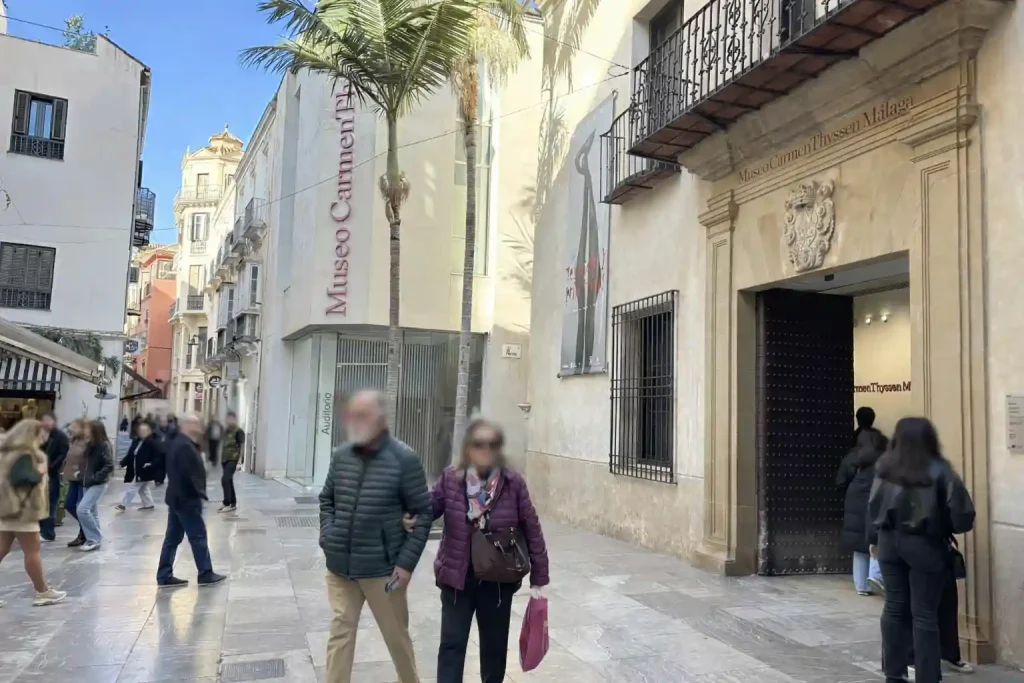
Museo Carmen Thyssen Málaga
On the official website of the Museo Carmen Thyssen Málaga you’ll find up-to-date information on opening hours, programmes, temporary exhibitions, tickets, and activities. On certain days (for example, Sundays from 4:00 pm onwards), on specific holidays such as 28 February (Andalusia Day), and during special periods, free admission or extended opening hours may be available.
A relaxed visit to the permanent collection usually takes around 1–2 hours, allowing time to enjoy the works and read the captions. If you also plan to visit temporary exhibitions or use the audio guide, it’s best to allow 2–2.5 hours.
The museum is renowned for its collection of 19th- and early 20th-century Spanish painting, with a particular focus on Andalusian art.
The collection is based on the holdings of Baroness Carmen Thyssen-Bornemisza and features over 250 paintings, covering key moments in the history of Spanish painting.
Here you’ll find:
- Romantic and landscape painting, with works by Genaro Pérez Villaamil and Manuel Barrón.
- Andalusian costumbrista painting, depicting everyday life and local festivities, offering a vivid portrait of traditional Andalusia.
- Late 19th-century works and early Modernism, with artists such as Joaquín Sorolla, Darío de Regoyos, and other major Spanish names marking the transition towards modern art.
- Works by Old Masters, including the celebrated “Saint Marina” by Francisco de Zurbarán.
This collection makes it easy to understand how Spanish painting evolved in its genres and styles throughout the 19th and early 20th centuries.
The museum also hosts very interesting temporary exhibitions that complement the permanent collection, and I highly recommend checking the official website before your visit to see what’s on.
The museum is housed in the Palacio de Villalón, a beautifully restored Renaissance building that adds a special sense of atmosphere to the experience.
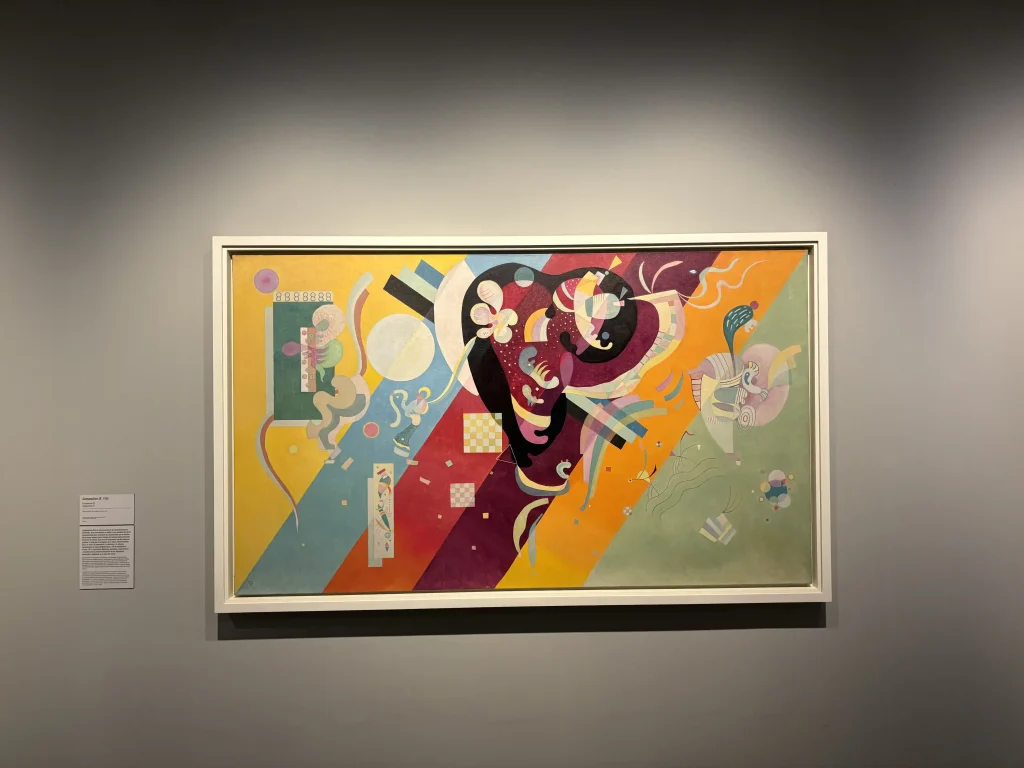
Centre Pompidou Málaga
In the official website of the Centre Pompidou Málaga you’ll find all the latest information on opening hours, exhibitions, tickets, events, guided tours, and special activities. During certain summer periods, opening hours may be extended into the evening. Admission is free on Sundays after 4:00 pm, as well as on a few specific dates throughout the year (such as 28 February, Andalusia Day). Since free-entry schedules may change, it’s always best to check the official website before your visit. I highly recommend using the audio guide (often free or included with a reduced ticket), as it really helps in understanding the meaning and context of the works on display. A comfortable visit to the museum usually takes around 1–2 hours, which is enough time to explore the permanent collection and also take a look at a temporary exhibition or the interactive areas.
The museum presents a selection of around 80–90 works chosen from the vast collection of the Centre Pompidou in Paris, one of the world’s most important collections of modern and contemporary art.
Among the artists you may encounter are some of the greatest names of the 20th and 21st centuries, from pioneers of modern art to contemporary creators: Pablo Picasso, Joan Miró, Francis Bacon, Alberto Giacometti, René Magritte, Paul Klee, and others.
As the works are on loan from its “big sister” in Paris, the collection at the Centre Pompidou Málaga is regularly renewed. This means that some of the artists mentioned above may be joined by new names, while others may bid farewell after finishing their “holiday” on the Costa del Sol.
The Pompidou Málaga is also well known for its carefully curated thematic exhibitions, which may include retrospectives dedicated to major artists or dialogues between different periods and artistic movements. For example, I personally attended the exhibition on Wassily Kandinsky, whom I absolutely adore. The exhibition was impeccably curated, and the interactive section was especially engaging and stimulating.
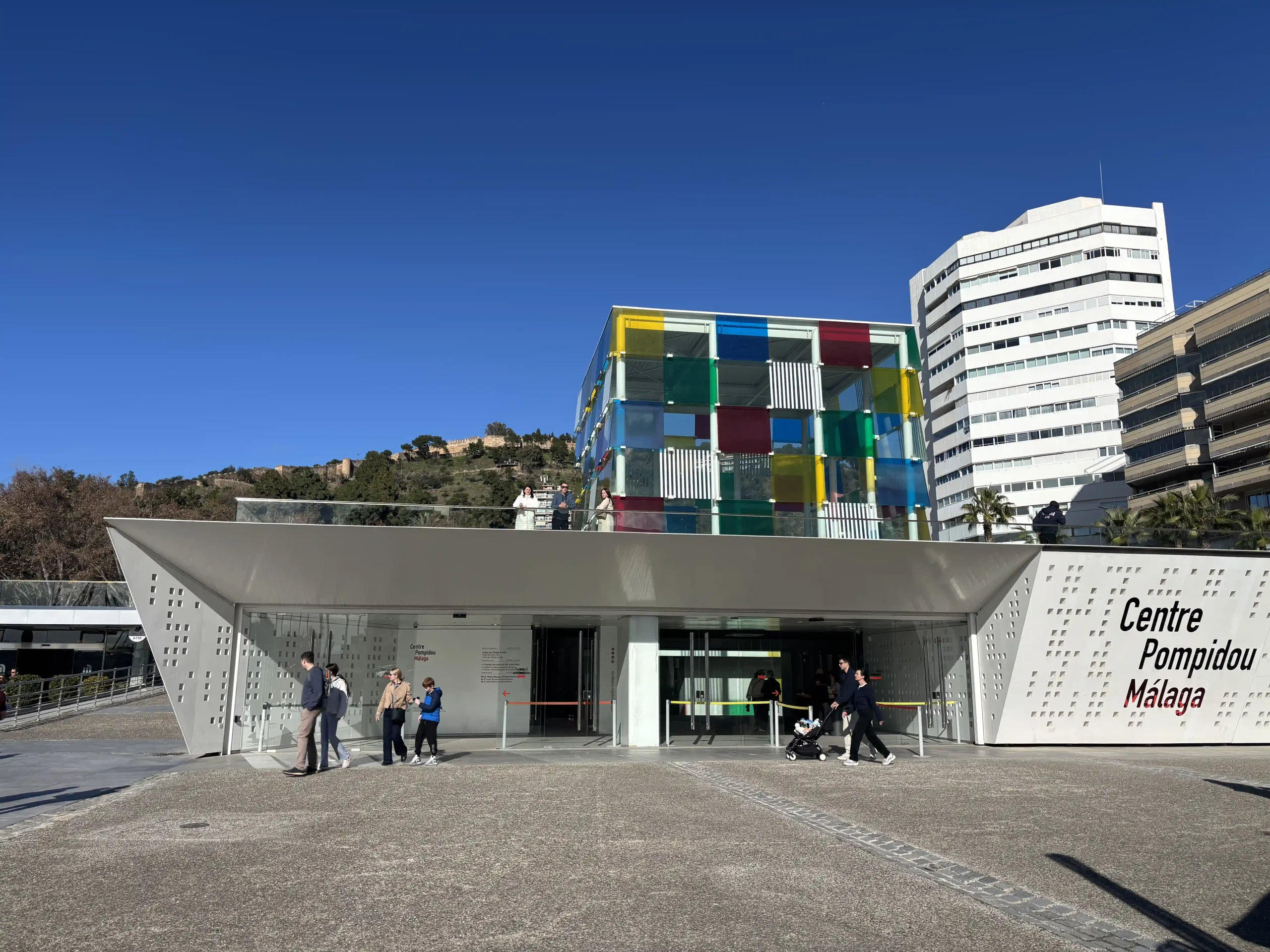
The museum is housed in a striking modern structure in the shape of a glass-and-steel cube on Muelle Uno, Málaga’s redeveloped port area, overlooking the Mediterranean Sea. The contrast between contemporary art and the seaside setting is one of the highlights of the experience.
The museum often includes areas dedicated to younger visitors or participatory activities, making it a great choice if you’re visiting as a family or simply looking for a more dynamic and interactive cultural experience.
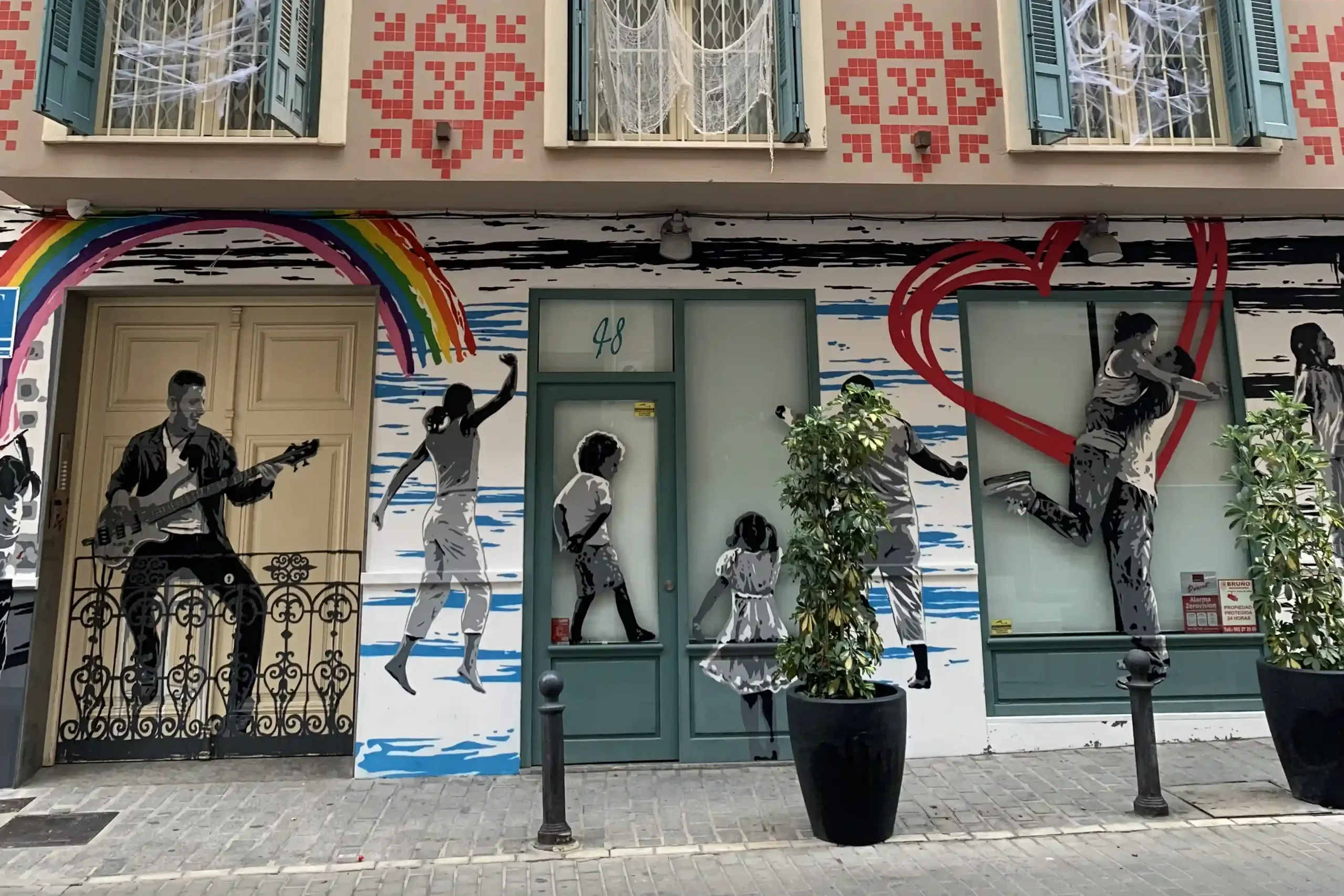
Soho: an open-air museum of street art
Soho Málaga is a neighborhood often referred to as the “Barrio de las Artes” — the arts district — and it is one of the most lively, creative, and surprising areas to visit in the city.
Located between the historic center and the port, in a central area that is easy to reach on foot, it faces the Alameda Principal and stands as clear proof of how urban art can transform the soul of an entire urban area.
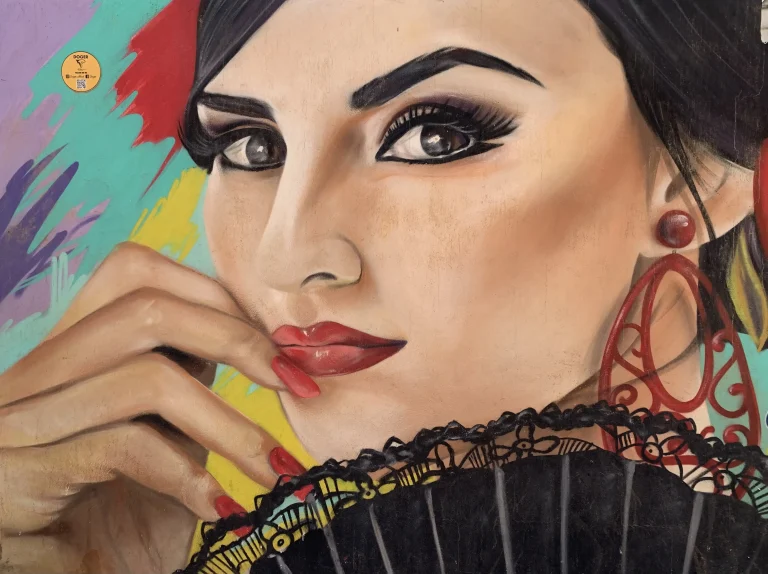
In recent years, Málaga has made a bold choice: instead of covering its walls, it decided to listen to them. Neighborhoods like Soho have become a huge creative laboratory where color has replaced gray, thanks to international names such as Obey, D*Face, Roa, Belin, Flatxl, or Dal East, as well as many local artists like the Málaga-born Doger, who have changed the face of the city with their style.
The real turning point for Soho came with the MAUS Soho project (Málaga Arte Urbano Soho), a street art and urban regeneration initiative that brought international artists to paint walls, buildings, and public spaces.
Walking through Soho feels like entering an open-air gallery. Murals and graffiti color walls, façades, and even bridges, creating a unique route for lovers of urban art.
Below you’ll find an indicative map of the main murals in the Soho district:
📍 Pedestrian bridge near the CAC – the first spot to admire large murals.
📍 Calle Alemania – major murals and works by international artists such as Obey and D*Face.
📍 Calle Tomás Heredia – one of the main streets with numerous artworks.
📍 Hotel Bahía (façade) – a large mural with vivid figures by Okuda and Remed.
📍 Calle Vendeja – famous murals by TV Boy featuring well-known faces from the city.
To this, you can add the street art of Lagunillas. Here there are no big official billboards or glossy projects: just walls, spray cans, and the desire to reinvent the neighborhood. Local artists have colored the area little by little, without haste, and it is precisely this spontaneity that gives it its unique charm.
Many murals have QR codes next to the artworks, so you can stop, scan them, and read information directly about the artist or the meaning of the piece.
Soho is not just street art: it is also a neighborhood of culture, venues, cafés, and galleries. Here you can visit private galleries and artist studios, attend cultural events and creative performances, and discover design shops and artistic workshops. As you can tell, I love Soho, and I talk more about it in the article La Málaga que no te esperas: a la scoperta dei suoi negozi di design, laboratori artigianali e mercati nascosti.
In addition, on the first Saturday of every month, the neighborhood hosts the “Made in Soho” market, dedicated to craftsmanship, design, visual arts, and vintage products.
It is a district that speaks of creativity, urban regeneration, and international collaboration, and it is one of the most Instagrammable places in Málaga.
If you want an interactive map and to learn more about street art in Málaga, I recommend this article. It helped me a lot the first time I approached Soho. It’s written in Spanish, but it’s by a true Málaga local, so it’s a guarantee of heart and honesty.
As you may have realized, Málaga is a city that doesn’t just show you art: it lets you encounter it along the way, through Soho and inside its museums, with both curiosity and rigor.
From the genius of Picasso to the bold forms of contemporary art, every cultural space tells a fragment of the city’s soul — a city capable of being cultured without ever feeling distant.
The beauty is that here culture never feels heavy or rigid. It blends naturally with a walk in the sun, a coffee in a quiet square, or a dinner scented with the Mediterranean.
And perhaps this is Málaga’s true secret: making you feel that art is not just something to admire, but something to live, slowly and with curiosity.
If you’re planning a trip to Málaga, beyond exploring its monuments and flavors, leave room for at least one museum. And if you’re already here, step inside even if just for an hour.
It might be the detail that makes your stay truly unforgettable.