What to buy in Málaga: the city you don’t expect, between markets, craftsmanship, and local design
If you’re looking for a unique souvenir to take home and look back on with nostalgia once your trip is over, Málaga is a surprisingly rich treasure trove.
Beyond its best-known sights, there is a lively network of markets, vintage and mid-century shops, specialist bookshops, artisan workshops and art galleries where you can discover one-of-a-kind pieces, objects with character, local creativity and stories worth telling — often at affordable prices.
A quick note before we start: you won’t find designer stores, new clothing or artisan costume jewellery here — I already have a separate article in the works for that. Here, we’re focusing on the hunt for that small, authentic treasure.
Below you’ll find my favourite places, divided by category, so you can choose according to what you’re looking for, your tastes and the time you have available.
Markets and flea markets: the pleasure of discovery
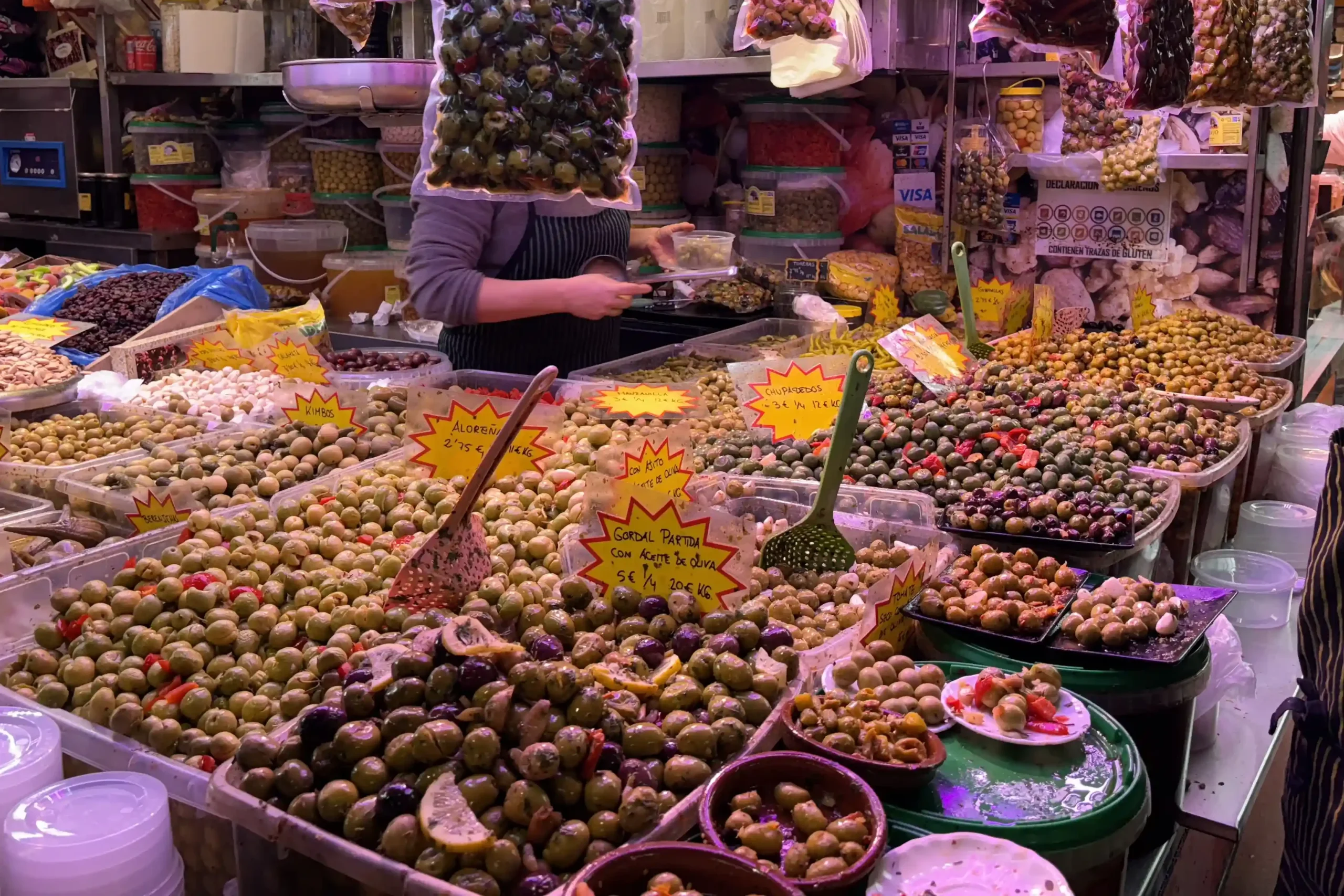
Málaga’s markets and flea markets are perfect if you love browsing, bargaining and letting yourself be surprised. Every stall has its own little story. If you’re wondering where to find the best markets in Málaga, here’s a useful guide.
Mercadillo de Huelin
Opening hours: Wednesday and Saturday, 9:00 am–2:00 pm
What you’ll find: One of the markets most popular with local residents. Stalls selling fresh produce, clothes, household items and small objects. According to many malagueños, prices here are even better than at the Mercado Central. It’s therefore ideal if you’re looking for good-value bargains and an authentic atmosphere, and want to go shopping in Málaga like a true local.
📍 Open the location in Google Maps
Made in Soho
Opening hours: Usually the fourth Sunday of the month, but this may vary, so always check this Instagram page, which is kept up to date.
What you’ll find: Independent design and creative craftsmanship. Illustrations, art prints, handmade jewellery and unique objects created by young Málaga-based artists. Perfect if you’re looking for a creative and contemporary keepsake, an authentic souvenir from Málaga.
📍 Open the location in Google Maps
Mercadillo Cortijo de Torres – 2ª Mano / Argentea
Opening hours: Sunday, 9:00 am–3:00 pm
What you’ll find: The largest flea market in Málaga. Second-hand furniture, vinyl records, books, electronics, vintage objects and genuine random gems. It’s best explored slowly — this is where I found my desk lamp for just €30!
📍 Open the location in Google Maps
El Mercadillo del Inglés
Opening hours: It isn’t held every week on a fixed schedule, but takes place on specific dates announced from time to time — usually on a few Saturdays each year, often in the afternoon or evening. It’s a good idea to check the social media channels of the Cementerio Inglés before planning your visit.
What you’ll find: A charity market with second-hand books, vintage décor, crafts and ceramics, whose proceeds help support the conservation of the place where it is held. A lovely way to buy something unique while also supporting a good cause.
📍 Open the location in Google Maps
The Mercadillo del Inglés takes place inside the Cementerio Inglés, the first Protestant cemetery in mainland Spain and the oldest non-Catholic burial ground in the entire Iberian Peninsula.
Walking among the stalls and historic graves — including that of British consul William Mark, founder of the cemetery, and that of Annie Plews, remembered as “the angel of the Cementerio Inglés” — is a truly unusual experience.

Flavours to take home: ultramarinos, Málaga’s historic food shops
If you’re looking for a souvenir that never disappoints, go for something that wins you over through taste. Málaga still has several historic food shops — known as ultramarinos — where you can find jamón, preserves, local wines and traditional sweets, often in shops with more than half a century of history behind them.
- Ultramarinos Juan de Dios Barba — One of the most authentic ultramarinos in the city, and a direct witness to Málaga’s history: during the Spanish Civil War, in 1936, a bomb destroyed much of the shop, leaving only a painting hanging on the wall intact. What to buy: Málaga wine, raisins and dried figs are among the products most recommended by regular customers, along with cod and jamón de bellota.
- La Mallorquina — Calle Sagasta 1, since 1928: almost a century of history, run by the Palma family. Preserves, oils, wines from the Serranía de Ronda and “moscovitas”, an Asturian sweet speciality that has been sold here for generations.
- El Almacén del Indiano — Recreates the atmosphere of the old-fashioned ultramarinos, right in the city centre: jamón, cheeses, wines and tastings on site, for those who want to try before they buy.
- Paco José — A historic shop specialising in fried potato crisps and nuts, with more than 40 years in business, originally founded as an ultramarinos on Calle Mármoles. Today it has several locations in the historic centre (Sebastián Souvirón 5, Calderería 2) and is recognised by the Diputación’s “Sabor a Málaga” quality label.
- Andares — A small shop on Calle Zapateros 4, a narrow side street near Plaza de la Constitución: Iberian products, cheeses, wines and niche preserves from the Málaga area, difficult to find in the more tourist-oriented shops in the city centre.
The word “ultramarino” comes from the Latin ultra mare, meaning “beyond the sea”. In the 19th century, it referred to shops that sold products brought in from distant lands, such as coffee, cocoa, spices, preserves and other foods that were then considered exotic or difficult to find.
They were small, family-run shops, often recognisable by their white marble counters and shelves packed with jars, bottles and goods preserved in oil or vinegar. They became widespread especially in port cities such as Málaga, Cádiz and Seville, where products from the colonies and overseas trade routes arrived directly by sea.
In some cases, the back room also became a small space where people could have a drink or eat a snack standing at the counter, a custom that still survives today in some historic shops.
With the arrival of supermarkets, many ultramarinos disappeared during the 20th century, but those that remain in historic city centres continue to tell a piece of everyday Spanish life — and are the perfect place to buy an edible souvenir with far more history than a simple fridge magnet.

Vintage and antiques: objects with a second chance
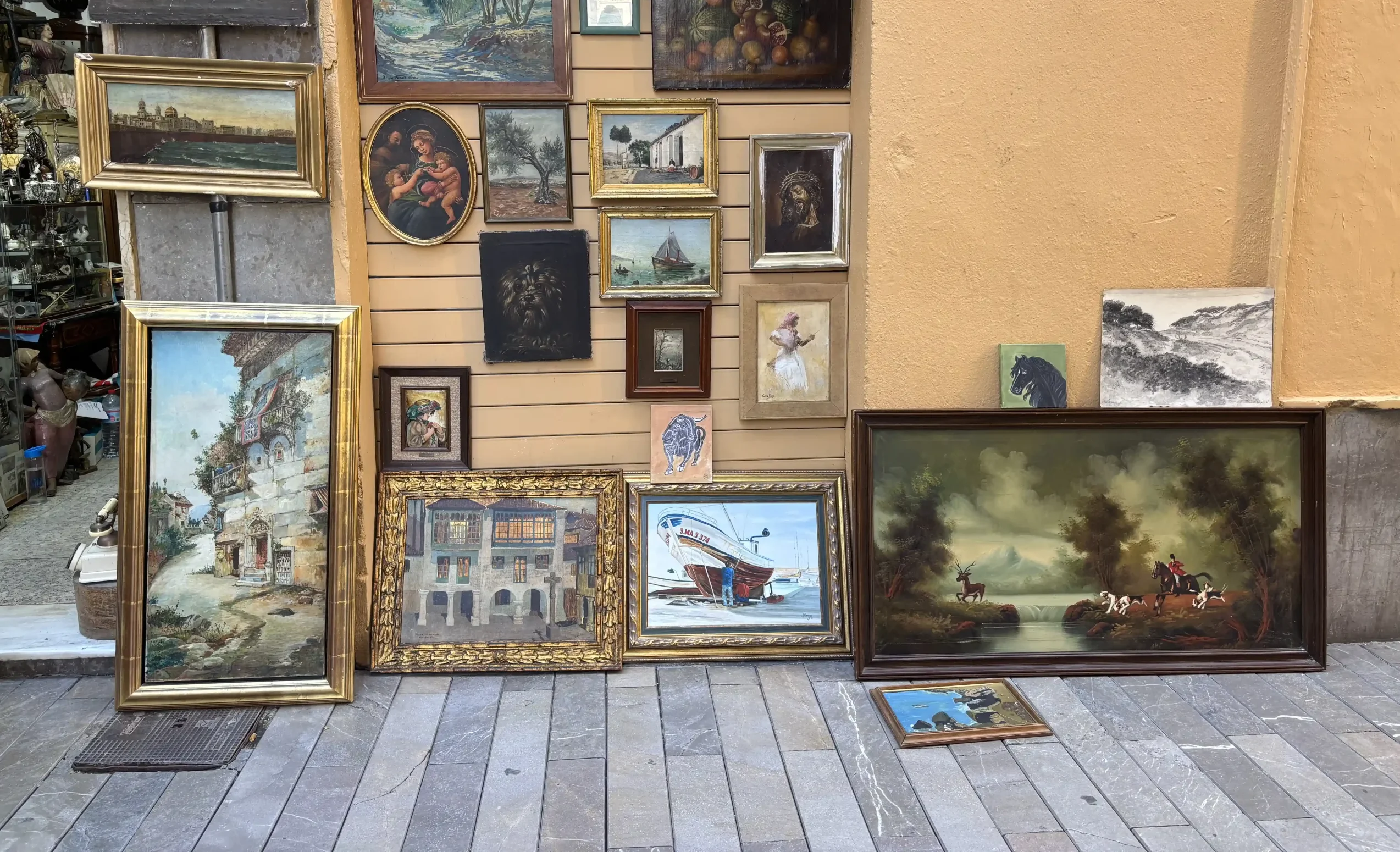
If you love retro style and objects that can tell a story, Málaga has several antique and vintage shops in the historic centre. Here you’ll find antique furniture, paintings, mirrors, lamps, porcelain, frames, jewellery and period home décor. Some places feel like true house museums, perfect even just for browsing and finding inspiration.
If you choose this kind of shopping, shopping in Málaga will be a real adventure.
- La Casa del Cardenal — An antique shop that feels like stepping inside an aristocratic palace: antique furniture, paintings, mirrors, lamps and decorative objects, all housed in a 17th-century building on Calle Andrés Pérez. The name comes from the man who was born there, Cardinal José Moreno Mazón, in 1850 — a detail that alone makes it worth visiting, even if only to browse the pieces.
- Antigüedades Los Remedios — It’s a corridor packed with objects, but in the best possible way: porcelain, frames, silverware and period furniture piled one on top of another like in a small museum. The owner is extremely kind and will tell you the story behind each piece if you ask. You can also go in just to browse without buying anything. I can’t resist it!
- Le Courtois Antigüedades — It’s right in the middle of Málaga’s most touristy area, and stepping inside makes quite an impression: all around you are shops aimed at passing tourists, while here you find genuine pieces — elegant antiques, watches, jewellery, old prints, antique azulejos and collectible items. If you’re looking for a souvenir that isn’t the usual fridge magnet, this is the right place.
- ROTO — The owner, Javier Ruiz, used to be a lawyer before giving it all up for antiques and vintage design. Recently, he took custody of the hats from the old hatmaker Ricardo del Cid, whose shop, opened by his father in 1952, closed after seventy years. Those hats now sit on the shelves at ROTO, alongside creative vintage pieces, retro home accessories and original gift ideas. In Málaga, it’s one of my favourite places.
Se l’antiquariato ti appassiona e hai tempo per una piccola gita fuori Málaga, sulla Costa del Sol c’è un altro indirizzo che merita la deviazione: il Rastro de Fuengirola, considerato uno dei mercati delle pulci più conosciuti della zona.
Nato circa trent’anni fa dall’iniziativa di alcuni residenti stranieri, appassionati dei tradizionali flea market europei, oggi riunisce circa 400 bancarelle e si svolge ogni sabato. Tra mobili, oggetti vintage, libri, dischi, ceramiche, abiti e curiosità di ogni genere, è uno di quei posti in cui si può arrivare senza cercare nulla e tornare a casa con un piccolo tesoro inatteso.
Rispetto al Rastro de Málaga, più comodo da raggiungere se si resta in città, quello di Fuengirola ha dimensioni maggiori e ricorda maggiormente i grandi mercati delle pulci del Nord Europa. Vale quindi la pena inserirlo nell’itinerario soprattutto se ami rovistare con calma tra le bancarelle e andare a caccia di pezzi insoliti.
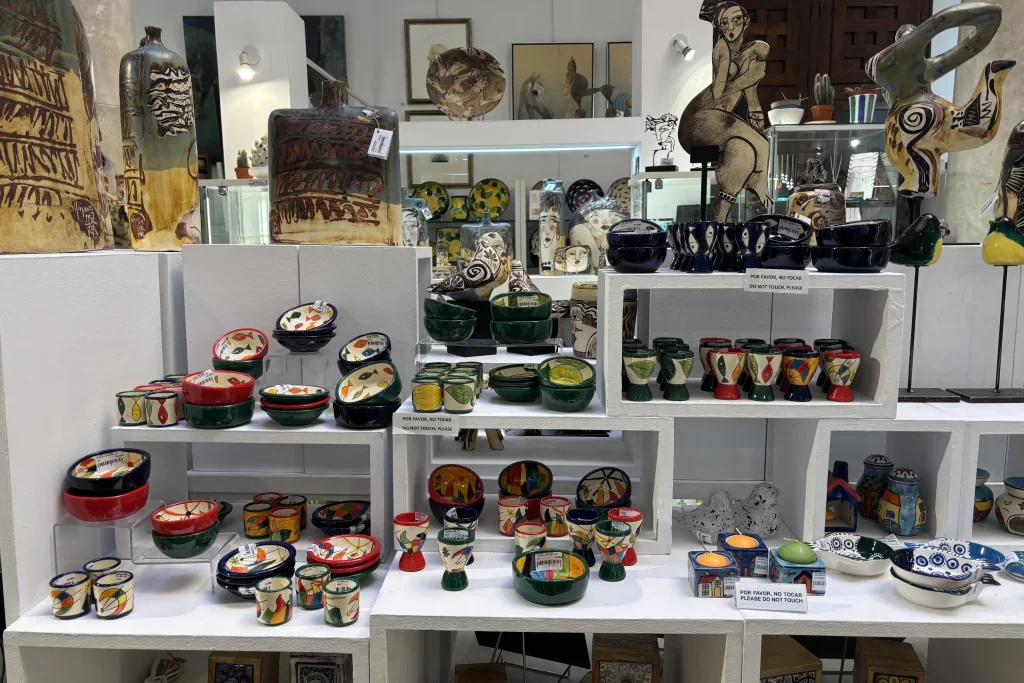
Local crafts and design: shopping beyond the usual souvenirs
For those looking for authentic and original souvenirs from Málaga, local craftsmanship is a safe bet. Hand-painted ceramics, Andalusian tiles, artistic candles, creative notebooks and objects made from recycled materials are perfect as gifts or as keepsakes from your trip. This kind of shopping is ideal if you want to take home something you won’t find in standard shops and that truly represents the spirit of Málaga.
- ALFAJAR Cerámica Artesanal — A family-run shop since 1992, located inside the Palacio de Zea-Salvatierra, a 17th-century Baroque building overlooking the Cathedral gardens — it once housed the Municipal Council under Isabella II and later served as a post office. Hand-painted ceramics, Andalusian plates, decorative tiles and quality souvenirs: the difference compared with the area’s “made in China” shops is immediately obvious.
- Scrappiel — It isn’t a recycling shop, as many descriptions suggest. It is a scrapbooking and leatherworking workshop: two artisans who combine paper and leather to create photo albums, planners, notebooks and handmade decorations. They also run courses for those who want to try making things themselves.
- Alfar Tierra Cocida — Founded almost ten years ago as a small workshop in the Montes de Málaga by its founder, Verónica Núñez. Today it also has a shop at Muelle Uno, among the small units by the port: handmade “ralladores” plates (grater plates), which made the brand famous, as well as tableware and kitchen objects made from handcrafted ceramics.
La lavorazione della pelle, come quella portata avanti da Scrappiel, affonda le sue radici in una lunga tradizione artigianale. La marroquinería andalusa iniziò a diffondersi già nel Quattrocento, soprattutto attraverso la produzione di sandali e petacas, piccole custodie in cuoio utilizzate come borse o portasigari.
Oggi alcuni mestieri più tradizionali stanno progressivamente scomparendo. È il caso della guarnicionería, dedicata alla realizzazione di selle e finimenti per cavalli, e della calzoleria artigianale. A Málaga, però, la lavorazione della pelle in senso più ampio sembra vivere una nuova stagione, grazie alla nascita di botteghe che reinterpretano questo materiale con forme, tecniche e oggetti più contemporanei.
Anche a Mijas Pueblo la pelle è una presenza ricorrente: tra le vie del centro storico si incontrano numerosi negozi e laboratori che espongono borse, cinture, sandali e altri accessori in cuoio. Qui la pelletteria è legata soprattutto alla tradizione artigianale locale e all’offerta destinata ai visitatori.
Se questo mondo ti affascina, sappi che a circa due ore da Málaga, nella provincia di Cadice, si trova Ubrique, considerata la vera capitale spagnola della pelletteria di lusso. Qui sopravvive un sapere artigianale tramandato di generazione in generazione e numerosi laboratori lavorano ancora oggi per alcuni dei più importanti marchi internazionali.
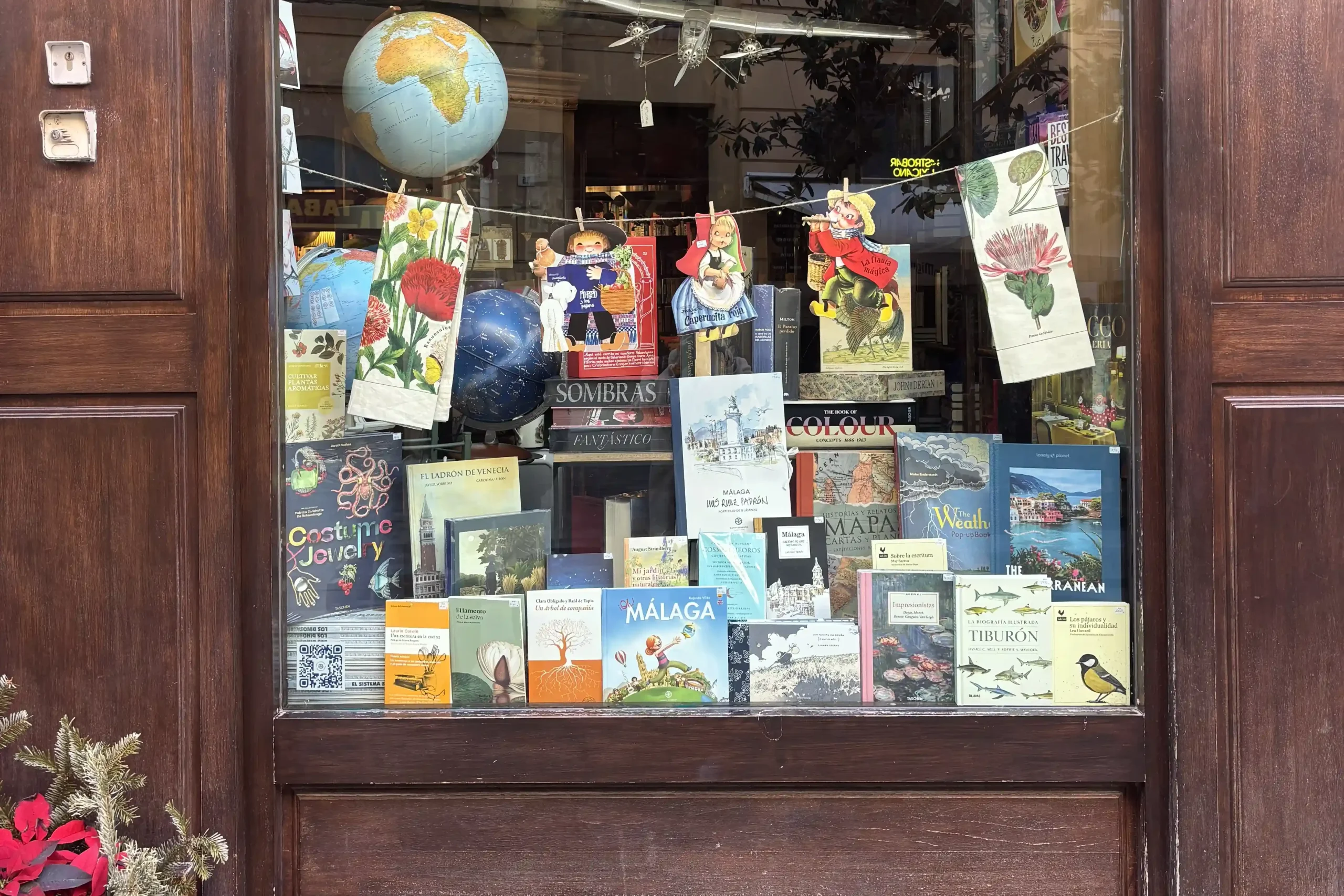
Special bookshops: for those who love coming home with a book in their backpack
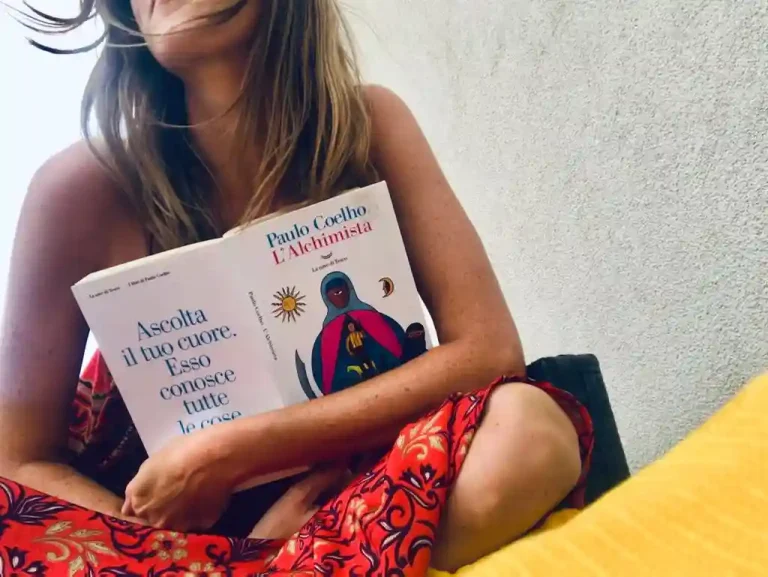
If you’re still not convinced and don’t know what to buy in Málaga, bookshops can also become part of the journey. In Málaga you’ll find independent bookshops specialising in Spanish fiction, travel books, maps, globes, rare editions, poetry and art.
They’re perfect for anyone who loves coming home with a book that carries the scent of travel, or for finding an original gift that tells a story about Málaga. You’ll also find some original inspiration here for books set in Málaga or Andalusia.
- Librería Luces — An independent bookshop since 2003, located on Alameda Principal. One particularly interesting detail: it stands in the building that once housed Imprenta Sur, the printing house that published the early works of many members of the Generation of ’27 — Lorca’s generation, to give you an idea. Spanish fiction, a carefully curated catalogue, and a genuine cultural reference point in the city: book launches, author events and children’s readings almost every week.
- Mapas y Compañía — It is far more than just a travel bookshop: it hosts the Málaga branch of the Spanish Geographical Society and has also played a small role in the local history of the Camino Mozárabe, one of the southern routes of the Camino de Santiago. In 1996, members of the Asociación Jacobea de Málaga initially met here, providing information and issuing pilgrim credentials. Inside, the ceiling is filled with hanging globes and miniature hot-air balloons, while Tintin serves as the shop’s mascot. Founded in the 1990s, it has been located on Calle Compañía since 2007. Travel books, maps, globes, journals — the kind of place where you lose track of time, according to those who have visited.
- ISLA NEGRA Books & Arts — An antiquarian bookshop on Calle Álamos, with books and documents dating from the 16th to the 20th century — some signed by historical figures such as the Gran Capitán or Isabella of Portugal. Its name is a tribute to Pablo Neruda’s house in Chile. As well as rare books and first editions by writers of the Generation of ’27, it is also a gallery of contemporary art and art glass. A place for those who love books that are “sacred and worn”, as Neruda himself might have called them.
Una curiosità per i bibliofili: ogni anno, tra la fine di febbraio e il mese di marzo, l’Alameda Principal si trasforma per alcune settimane in una grande biblioteca a cielo aperto grazie alla Feria del Libro Antiguo y de Ocasión di Málaga .
Le bancarelle riuniscono librerie antiquarie e specializzate provenienti da diverse città spagnole, con scaffali pieni di libri usati, volumi fuori catalogo, prime edizioni, stampe e piccole rarità bibliografiche. Tra gli espositori si trova abitualmente anche Isla Negra, la libreria antiquaria di Málaga di cui ti ho appena parlato.
L’accesso è libero e il bello sta proprio nel curiosare senza fretta: si può passare da un libro economico trovato quasi per caso a una vera chicca da collezione. Un appuntamento da ricordare se visiti Málaga in questo periodo e ami rovistare tra pagine che hanno già una storia.
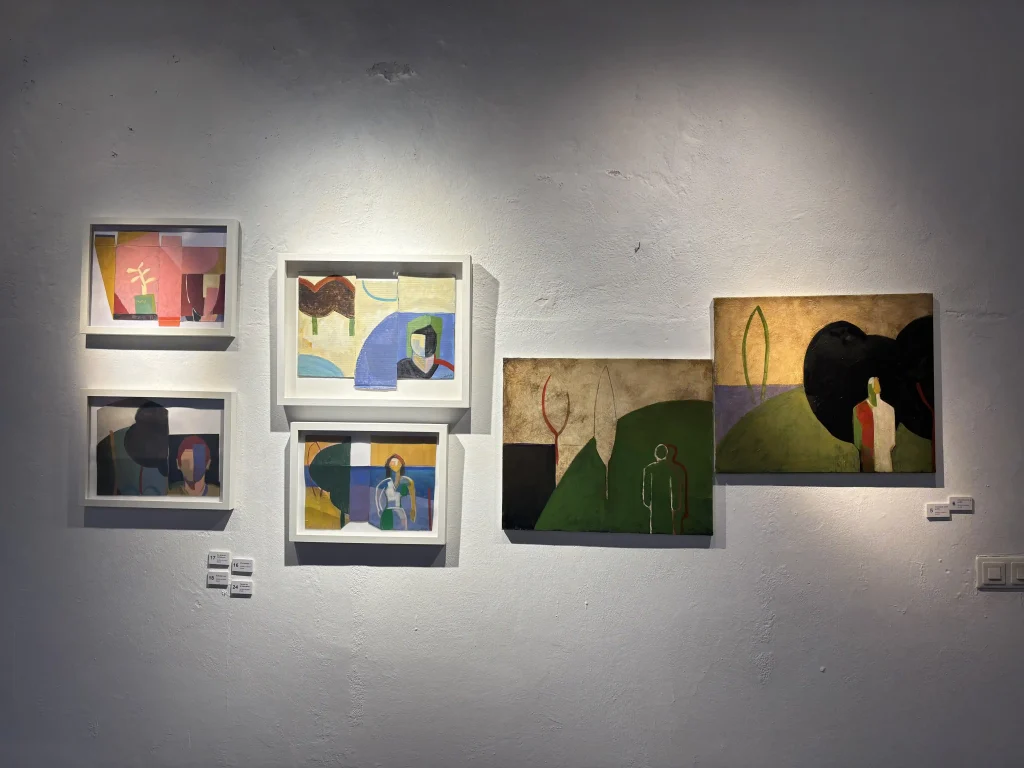
Art galleries: taking home an original work of art
Málaga is a city increasingly connected to contemporary art, and this is also reflected in the galleries where it is possible to purchase original artworks.
Here you’ll find modern painting, graphic art, fine art photography, collage, sculpture and limited-edition prints, often by local or emerging artists. Some galleries also offer works at affordable prices, ideal for anyone looking to start a small collection.
- Galería Javier Marín (JM Galería) — The most “experimental” of the group: international contemporary art, often conceptual, with appearances at ARCO Madrid, Art Basel and Art Dubai. Among the artists who have exhibited here is Isaac Cordal, an internationally known sculptor famous for his tiny concrete figures installed in urban spaces.
- Galería Benedito — A historic gallery, established in 1985 and now run by Eugenia Benedito. Its approach is figurative, more classic and accessible: painting, sculpture and graphic art for those looking for something recognisable and not overly conceptual.
- La Trenza Gallery — Founded by two artists, Marta Troya and Judith Naess, with a clear focus on female voices in contemporary art: painting, sculpture, photography and ceramics. A young, curatorial gallery that gives space to hybrid artistic languages rather than traditional painting.
- Cliché Gallery Málaga — More for inspiration than for buying, but beautiful: it is not a gallery displaying works for sale, but a sensory and interactive museum designed around the experience — infinite mirrors, neon skies — rather than collectible art.
- La Casa Amarilla — One of my favourites. A gallery-shop founded in 2008 by two artists, Sara Sarabia and David Burbano, with the idea of making art accessible: here you don’t feel the distance of a museum, you walk in as you would into any other shop and can take home an original piece by a local emerging artist at an affordable price. It is located at Calle Carretería 23 bis, on the corner of Postigo de Arance, right in the heart of the historic centre.
Málaga non è più soltanto la città di Picasso e della Costa del Sol: negli ultimi decenni ha investito così tanto nella cultura da guadagnarsi il soprannome di “città dei musei”. Oggi ne conta circa trenta, pubblici e privati, concentrati in gran parte nel centro storico e facilmente raggiungibili a piedi l’uno dall’altro.
Uno dei simboli di questa trasformazione è il Centre Pompidou Málaga , inaugurato nel 2015 sul Muelle Uno. È stata la prima sede internazionale del Centre Pompidou aperta fuori dalla Francia e occupa lo spazio situato sotto El Cubo, il grande cubo di vetro colorato diventato uno degli elementi più riconoscibili del porto. Le sue esposizioni permettono di attraversare l’arte del XX e del XXI secolo, passando dalla pittura alla fotografia, dalla scultura alle installazioni.
Ma la scena artistica contemporanea di Málaga non si esaurisce qui: comprende anche il MuCAC, il Museo Centro de Arte Contemporáneo, oltre a gallerie indipendenti, spazi espositivi e interventi di arte urbana, soprattutto nel quartiere del Soho. È proprio questo intreccio tra grandi istituzioni e progetti più piccoli ad aver trasformato la città in uno dei poli culturali più vivaci dell’Andalusia.
E anche quando la visita al museo è finita, resta ancora qualcosa da scoprire. La boutique del Museo Carmen Thyssen Málaga è, per esempio, uno dei negozi museali più graziosi della città: vi si trovano libri d’arte, stampe, cartoleria, accessori e piccoli oggetti ispirati alle opere della collezione, spesso molto più originali dei classici souvenir.
Per conoscere gli altri spazi culturali della città, trovi il percorso completo nel mio articolo dedicato ai musei di Málaga .
Málaga is also this: all you have to do is step away from the most beaten paths to find lively markets, vintage and mid-century shops, specialist bookshops and small workshops where every object tells a story.
If you’re wondering what to buy in Málaga, the answer isn’t just any souvenir, but something that feels like you: a piece of craftsmanship, a book found by chance, a design object that will bring you back here in your memory every time you look at it.
Give yourself time to browse, to walk in without rushing, to talk to the people who create. Because often the most beautiful travel memories are not the ones you planned, but the ones that were waiting for you behind a half-open door.
And if, while wandering among shops and little treasures, you start to feel a bit hungry, don’t let hunger cloud your judgement and make you miss the perfect opportunity. Take a look at my article Sabor a Málaga, dedicated to the flavours of the city, so you’ll already have the right addresses to hand — perhaps just a few steps from your new favourite shop.