
Málaga: a delightful blend of culture, sunshine, and Mediterranean rhythm
The first time I visited Málaga, I won’t hide it — it was almost by chance.
I was looking for an easy-to-reach destination, perfect for a short getaway and, above all, somewhere with good weather to escape the winter. And so, among the many options, I unconsciously chose Málaga.
Without knowing it, I was heading straight into a great love: Málaga and Andalucía.
If, like me at that time, you don’t really know the city yet, you’re wondering what to see in Málaga and you want to treat yourself to a trip that’s truly worth it, you’re in the right place.
In the following lines, I’ll take you with me to explore the best things to see in Málaga, the traditional dishes you have to try, and the unmissable places that will make you fall in love with this unique city — one step at a time.
Málaga is a vibrant city that wins you over slowly.
It’s one of those places that gets under your skin before you even realize it. It doesn’t have the immediate “wow” factor of Seville or Granada, but it has a way of pulling you into its own world — an irresistible blend of history, sea, and culture.
It’s also the gateway to the Costa del Sol. Most flights, trains, and connections from the rest of Spain and Europe arrive here. Until the early 2000s, Málaga was mainly known as a large, densely populated port city — the second largest in Andalucía after Seville. In recent years, however, it has gone through a real cultural awakening, turning it into an essential stop for anyone traveling in Spain.
It doesn’t take much to notice.
In Málaga, you walk among Roman remains like the Theatre, Arab fortifications such as the Alcazaba and the Castillo de Gibralfaro, Catholic churches like the Cathedral, and countless hidden gems scattered throughout the city.
And if you’re craving the sea, from the modern Muelle Uno you can stroll along the seafront promenade all the way to El Palo, an old fishing village now absorbed into the city. Along the way you pass La Malagueta and Pedregalejo — urban beaches where some of the best seafood taverns sit right on the sand. Here, you can eat espetos de sardinas, grilled over open fires on traditional boats, with your feet almost in the sand. Nothing staged, nothing artificial. Just small tables, glowing grills, and the scent of salt and lemon in the air.
And then there are the museums.
Málaga is Picasso’s birthplace, and its museum is genuinely well curated. Just a few steps away you’ll find the Centre Pompidou, the Carmen Thyssen Museum, the CAC for contemporary art, and the Museo de Málaga — all concentrated within a few city blocks. It’s a city where you can do and see a lot without ever feeling overwhelmed.
But if you really want to see the true Málaga — the one that isn’t performing for anyone — all you have to do is step outside the historic centre.
Huelin, El Palo, Ciudad Jardín, Teatinos: neighbourhoods where people live, work, complain about the heat, and laugh loudly in local bars.
And don’t forget Soho, reborn in recent years as an underground district of modern art and lifestyle, full of murals, alternative venues, restaurants, and creative shops — the city’s most contemporary and surprising side.
That’s why Málaga isn’t a city that overwhelms you.
It’s a city that makes you feel good. It brings together history and culture with the sea, sunshine (more than 320 days a year), great food, and a truly unique atmosphere. It’s wonderful to experience, both day and night.
It doesn’t put pressure on you — it walks beside you.
And when you leave, you realize you miss it… without quite knowing why.
And it’s from Málaga that our journey through Andalucía begins.
Here are a few practical tips to enjoy Málaga to the fullest. They’re simple, but they can help you save time, money, and a bit of frustration. So, keep in mind that:
- Lunch and dinner start late: usually from 2:00 pm and 9:00 pm onwards; many places therefore open later than what you might be used to.
- The day starts later than in England. For this reason, there’s no point in waking up too early if you want to find shops open, people out on the streets, and the city truly alive.
- Markets close at 2:00 pm, so if you want to eat there, plan ahead.
- Many museums offer free entry on Sundays after 4:00 pm.
- Rent a car only if you plan to visit the surrounding area. From the airport to the city centre it takes just 12 minutes by train on the C1 line towards Málaga Centro Alameda.
- Free parking in the city can be tricky. Some reasonably close options (about 500 m from Plaza de la Merced) can be found around Plaza de la Paula or near the Faculty of Fine Arts in Plaza de Ejido.
- The public transport network is extremely efficient: there’s really no need to take taxis.
- Enjoy the city without a fixed plan and let yourself follow its rhythm — discover it at night. You’ll have an amazing time! 😉
A bit of history about Málaga
The history of Málaga begins around the 8th century BC, when the Phoenicians founded a colony here called Malaka. Even older archaeological remains have been discovered, but so far there isn’t enough solid evidence to officially consider Málaga an even more ancient settlement. Its Phoenician origins, however, allow it to compete for the title of the oldest city in Spain, and certainly in Andalucía — even if our cousins in Cádiz aren’t entirely convinced 🤣.
The Phoenicians chose Málaga as a safe harbour for Mediterranean trade, and this natural bay was simply perfect. The city therefore grew mainly as a port and a centre for fish trading.
Even today, traces of this past are still visible: beneath your feet, along Calle Alcazabilla and in the basements of some buildings in the historic centre, archaeologists have found the remains of ancient garum factories — the famous Roman fish sauce that actually originated from Phoenician fish-preservation techniques.
After the Romans defeated the Carthaginians during the Punic Wars, in the 1st century BC Malaka became Malaca, an important city in Roman Hispania. Málaga prospered as a commercial port exporting iron, copper, and lead from the nearby Ronda hills, as well as olive oil, wine, and — once again — garum.
The most visible symbol of this period is the Roman Theatre, seemingly wedged by magic between the street and the Alcazaba.
When you walk past it, you are standing exactly where, two thousand years ago, people gathered to watch comedies and tragedies performed in Latin.
In 711, the city fell under Arab rule. Málaga became one of the most important cities of Al-Ándalus, serving as the main port for Granada.
It was during this period that the city’s true icons took shape:
- The Alcazaba, a palace-fortress built in the 11th century, resting against the hillside like a stone serpent.
- The Castillo de Gibralfaro, towering above the city, used to control the harbour and defend Málaga from attacks coming from the sea.
- And the very idea of a compact city, with narrow streets and maze-like neighbourhoods, designed more for shade than for grand squares — a hallmark of the Arab urban world.
At the end of the 15th century, on 19 August 1487, Málaga was conquered by the Catholic Monarchs (Isabella I of Castile and Ferdinand II of Aragon). It was one of the harshest and most dramatic falls in all of Andalucía, with the Alcazaba once again playing a central role.
Although most malagueños aren’t fully aware of it, the Feria de Málaga (also known as the August Fair) was originally created to commemorate this very historical event: the reconquest of Málaga by the Catholic Monarchs in August 1487, when the city was incorporated into the Crown of Castile after centuries under Moorish rule.
For this reason, the Feria takes place every year around this date, usually between the second and third week of August, and lasts about one week (generally 7–10 days).
During Feria week, people often say that there are actually two different celebrations:
- the daytime fair in the historic centre, with music, dancing, lanterns, and street performances
- the nighttime fair held at the Real del Cortijo de Torres, featuring the famous “casetas” (small pavilions set up with live music, tables for eating, games, and more), along with funfair-style rides
There are also countless traditional events filling the programme: from classic Spanish bullfights to concerts, fairs, and the famous fireworks displays.
The Noche de Fuego is undoubtedly one of the most spectacular nights. Fireworks can be seen from many parts of the city, accompanied by music and synchronized events. It is considered one of the highlights of the Feria.
But no matter where you choose to experience the Feria, you’ll see plenty of people wearing traditional Andalusian outfits: the traje de flamenca or traje de gitana for women (colourful dresses with ruffles and flounces), and traditional Andalusian attire for men, usually consisting of shirts, waistcoats, and often boots. It’s a perfect opportunity to experience Andalusian folk traditions firsthand.
Throughout the Feria, you can enjoy typical food and drinks such as rebujito (a mix of fino or manzanilla sherry with lemon soda or Sprite, plus mint), tinto de verano (red wine with lemonade or soda), tapas and pinchos on every corner — but above all, El Cartojal, the most iconic sweet wine of the Feria de Málaga, instantly recognisable by its pink bottle and bright fuchsia cap.
Many mosques were either demolished or converted into churches.
The most important of them became the Cathedral of Málaga, built on the exact site where the city’s main mosque once stood.
But, like many major construction projects, both timelines and budgets quickly ran over. The money ran out before the Cathedral was finished, leaving it incomplete. And so “La Manquita” was born — the one-armed cathedral, with only one tower: ironic and imperfect, just like the city itself.
From this point on, Málaga entered a long period of decline. It weathered the Moorish uprising of 1568, two major earthquakes, a brief recovery at the end of the 19th century, and finally the Spanish Civil War, during which Málaga played a significant role in resistance against Franco’s forces.
After several rather grey decades, the city began to reinvent itself in the early 2000s.
The Picasso Museum opened inside the Buenavista Palace, as Picasso’s family decided to bring some of his most important works back to his hometown.
The colourful cube of the Centre Pompidou appeared in the port.
The old industrial harbour was transformed into Muelle Uno, now an elegant seaside promenade lined with palm trees.
The Soho district filled with murals, galleries, and alternative venues, becoming the creative heart of the city.
Today, Málaga is all of this at once:
Phoenician underground, Roman in its foundations, Moorish in its walls, Christian in its churches, industrial in its neighbourhoods, and creative in its murals.
That’s why Málaga isn’t just a city you visit…
What to See in Málaga
More than just a stopover on the way to the Costa del Sol, you’ll see that Málaga is a vibrant city that blends a rich cultural heritage with the energy of an authentic Mediterranean rhythm. With a 2–3 day visit, you can truly dive into its heart: explore the birthplace of Picasso, stroll through the Alcazaba and the Roman Theatre, and get lost in the colorful streets of the historic center. I’ll do my best to help you really experience Málaga, savoring a perfect mix of culture, food, and street life. Málaga is loved by everyone who visits it—so follow me… let’s not keep it waiting!
From Plaza de la Marina to the Alcazaba de Málaga
🚶🚶 Walking tour of Málaga: from Plaza de la Marina to the Alcazaba
To discover Málaga, I always start from Plaza de la Marina.
It’s a perfectly ordinary square — a modern one — but in the past it looked completely different: right here, there used to be a beach and the sea.
It’s hard to believe, but I recommend stopping for a moment and trying to picture what the landscape looked like two thousand years ago. In ancient times, the sea and the shoreline reached this very spot. The area that today includes Plaza de la Marina, Parque Infantil Platero, and more broadly up to Avenida de Cervantes, was once occupied by the sandy beach and the city’s natural harbour.
Beyond its name, the square still recalls its maritime origins thanks to the bronze statue El Cenachero (the fish seller). It was the first of three bronze statues by Málaga-born sculptor Jaime Pimentel scattered around the city — the other two can be found along the Paseo del Parque.
If you haven’t had breakfast yet, from here you should absolutely head towards the Mercado Central de Atarazanas, walking along Alameda Principal.
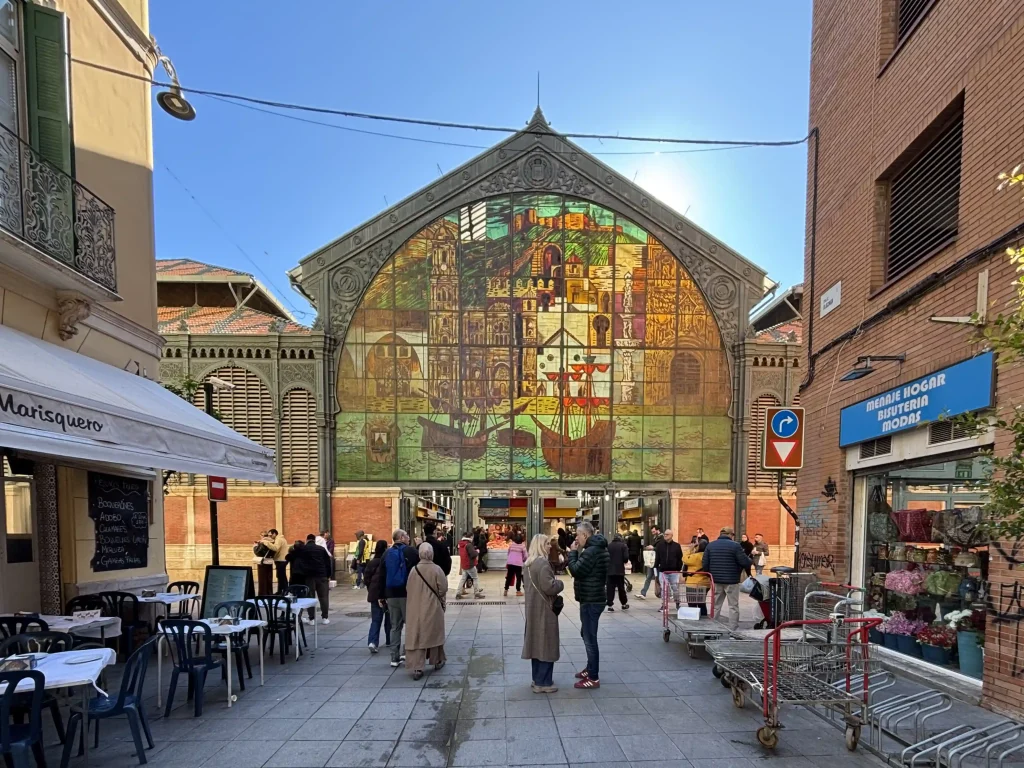
The name Atarazanas comes from the Arabic “Dar as-Sina’a”, meaning house of the arsenal. And indeed, during the Muslim period, tomatoes weren’t sold here… ships were built. The location is no coincidence: you are standing exactly where the sea entered the city centuries ago.
From the original Nasrid atarazanas, one crucial element has survived: the large Moorish arched gate that today serves as the market’s main entrance. Notice the two coats of arms in the upper corners, engraved in Arabic with the words:
“God is the only Conqueror. Let us praise Him.”
When you see it, remember that you are walking beneath a 14th-century gateway.
The current building was constructed in 1879, during the height of the industrial era.
Its style is a fascinating blend of:
- an iron structure, reminiscent of the great European market halls of the 19th century
- stained-glass windows depicting Málaga’s landmarks and everyday scenes: the port, the Alcazaba, the castle, and maritime life. It’s Málaga illustrated in glass.
A personal tip: the market is usually open Monday to Saturday in the morning, and the best time to visit is between 10:00 am and 12:00 pm — lively, but still manageable. Although every malagueño will tell you that, no matter how crowded it gets, the real secret here is not to rush.
Many stalls will prepare the fish for you on the spot: you buy it… and eat it right there.
Make sure to enjoy:
- ultra-fresh boquerones (anchovies)
- Málaga prawns (gambas de Málaga)
- hand-carved jamón
- tropical fruit from the Axarquía: mangoes, avocados, and cherimoya
Let’s now head back towards Alameda Principal.
Today it looks like a wide urban artery, but in reality we’re walking on what used to be part of the coastline. As I mentioned at the beginning, until the 18th century this area wasn’t solid ground at all — it was the sea and the mouth of the Guadalmedina River.
Through massive land-reclamation works, Málaga gradually claimed space from the water and created this avenue as its new urban façade.
In the 19th century, the Alameda became the city’s chic district: bourgeois buildings, elegant cafés, horse-drawn carriages passing beneath rows of exotic trees. If you continue your journey through Andalucía, you’ll notice that the name Alameda appears in many cities that once enjoyed a prosperous past.
That’s no coincidence — the word alameda literally means a tree-lined avenue.
Here, you can enjoy the shade, strolling along and perhaps buying flowers from the small shops scattered along the way.
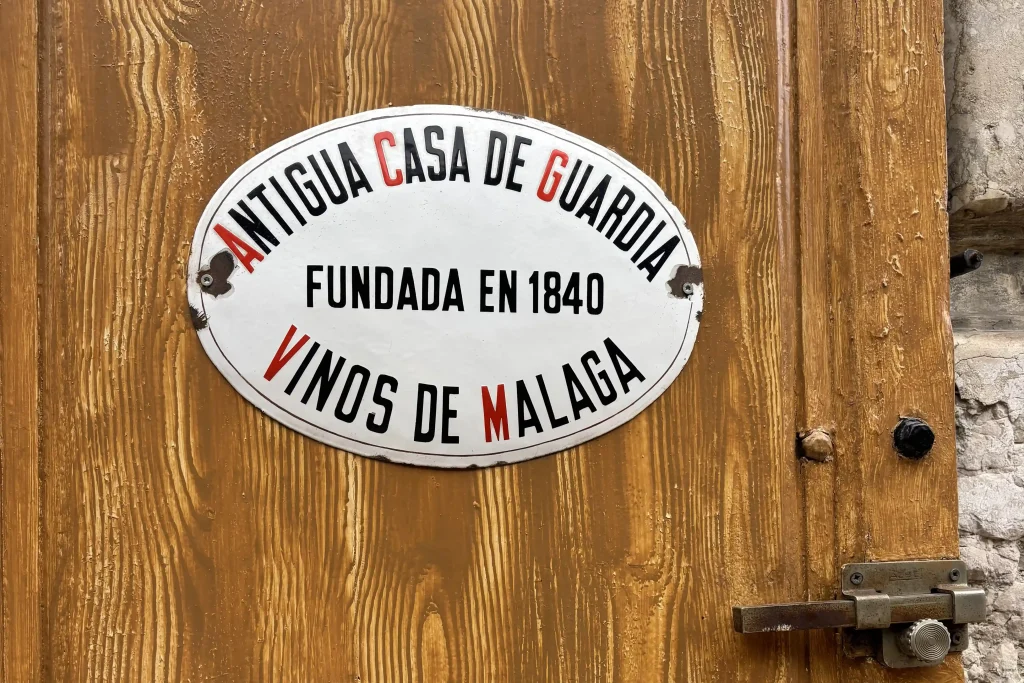
On Alameda Principal you’ll find Antigua Casa de Guardia, a historic tavern founded in 1840.
What’s interesting is that before becoming a tavern, it was quite literally a wine guardhouse, whose role was to prevent counterfeiting, theft, and tax fraud — all in order to guarantee the quality of Málaga’s wines.
Today it’s a tavern, but not just any tavern. There’s no wine list here. You choose your wine by looking at the wooden barrels lined up behind the counter, each with its name handwritten on it: Pajarete, Moscatel, Dulce, Seco, Málaga Virgen…
You order out loud, the bartender grabs a glass, fills it directly from the barrel, and then — just like in the old days — writes your tab with chalk on the countertop right in front of you.
The glasses are small and cost around €1.50 each… so go ahead, taste your way through Málaga’s wines and pick your favourite.
Just a warning: the stools are tall, and Málaga wine is sweet, intense, and deceptively strong!
Keeping the sea on our right and the historic centre on our left, we head towards Plaza de la Aduana.
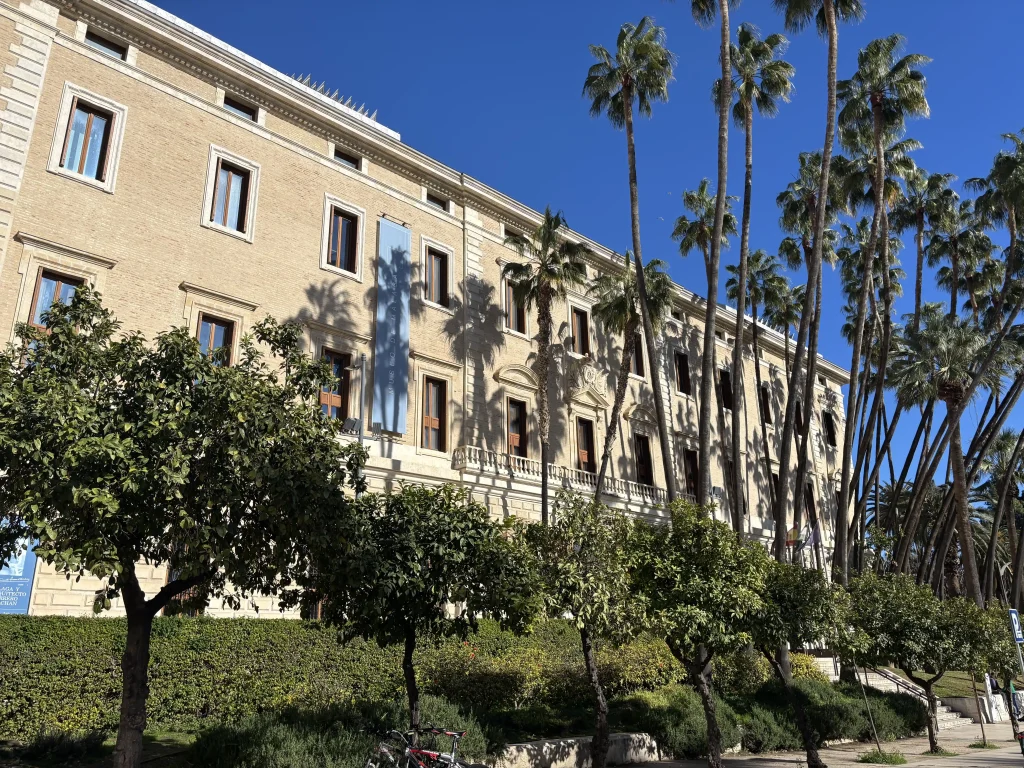
Palacio de la Aduana: Málaga Museum
Ecco la traduzione in inglese, fedele nei contenuti ma adattata a un inglese naturale, fluido e narrativo, coerente con lo stile travel dell’articolo:
A further confirmation of the presence of the sea and the port in this part of the city is the Palacio de la Aduana, located in Plaza de la Aduana.
When the port of Málaga was developed in the 18th century, the city expanded and gradually reclaimed land from the sea. As a result, the old customs house — originally located at the Atarazanas (in the area where the Central Market now stands) — was left separated from the waterfront. For this reason, citizens soon began calling for the construction of a new building: the Palacio de la Aduana, where all goods arriving from Africa, and later from the Americas, were processed and registered before continuing on to continental Europe.
The Palacio de la Aduana has a fascinating — and somewhat unlucky — history.
In 1787, during the reign of Charles III, the construction of a new customs house was approved thanks to Málaga’s intense commercial activity with the Americas. The first stone was laid in 1791, but then… everything came to a halt. In 1810, work was suspended due to the Spanish War of Independence. French troops looted the construction site, stopping the works entirely and making off with materials worth two million reales.
Construction resumed in 1826, this time in a Neoclassical style, inspired by Italian Renaissance palaces, with four wings arranged around a central porticoed courtyard.
Finally, in 1829, the building was inaugurated… but not as a customs house. Instead, it became a Tobacco Factory. Over time, it changed function many times: headquarters of the Public Treasury, the Provincial Council, the Government Sub-delegation… a true bureaucratic chameleon.
Here’s a curious story I was told: in 1862, Queen Isabella II arrived in Málaga with her husband. The city couldn’t find a hotel worthy of hosting them, so they were accommodated right here, in the Palacio de la Aduana. For the occasion, the city purchased extremely luxurious furniture — which was promptly resold immediately after the royal visit. A very practical Málaga mindset 😉.
Not everything, however, was so elegant. In 1922, a devastating fire broke out, killing 28 staff members who lived in the attic. From that moment on, the building lost its upper floor.
During the Franco dictatorship, the palace became the seat of the Civil Government, and its underground levels housed police cells. Many opponents of the regime were tortured here. Even Frank Sinatra ended up in these cells in 1964, arrested for “public scandal” while filming a movie at the Caminito del Rey. The quote attributed to him as he left Málaga the following day is infamous: “I’ll never return to this sh**ty city.”
And yet, he came back the following year — to Marbella. Several people from Málaga have told me this story, so perhaps they still haven’t quite forgiven him.
Fortunately, today the Palacio de la Aduana has completely changed its identity. No more customs offices, prisons, or tobacco — now it’s all about culture. The building now houses the Museo de Málaga, one of the largest museums in Andalucía and the fifth-largest museum in Spain.
It was officially inaugurated on 12 December 2016, after a major restoration project that brought the building back to life:
- the courtyard was reopened as a public square
- the ground floor now hosts a visitable storage area, shop, café, and ticket office
- the first floor is dedicated to Fine Arts
- the second floor focuses on Archaeology
- and the top floor offers a viewpoint and a restaurant
If you have some extra time — or if it’s a rainy day — you can easily spend two hours here, wandering among paintings, fine arts, and archaeological remains from Roman, Phoenician, Arab, and Byzantine periods, gaining a deeper understanding of Málaga’s most ancient past.
For more details, check out the article “Málaga and its 30 museums” and, as always, consult the official website.
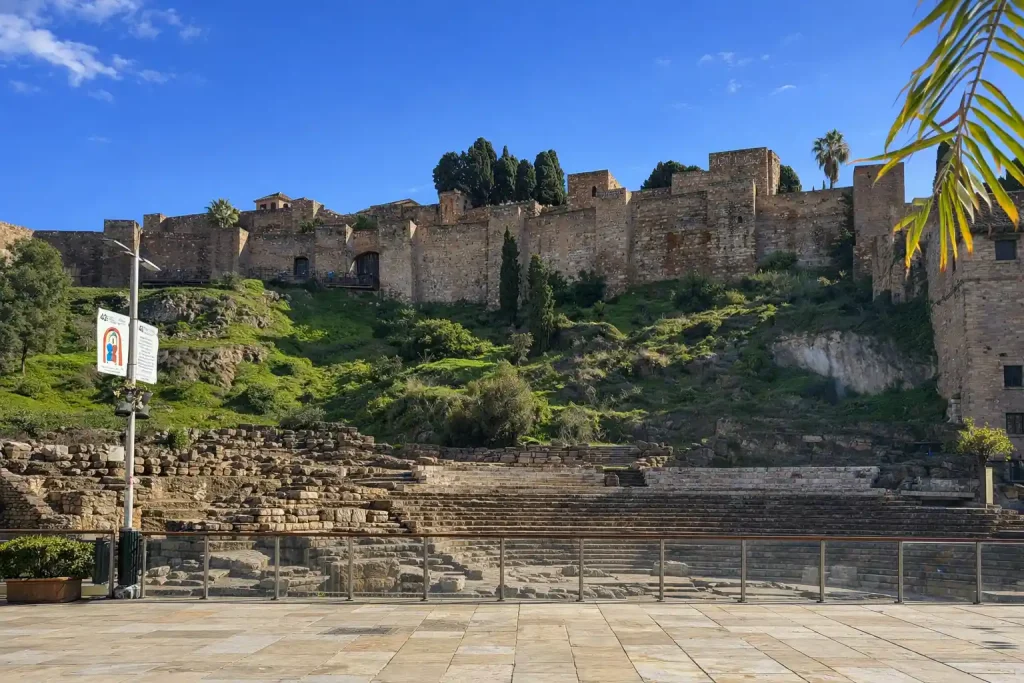
Calle Alcazabilla and the Roman Theatre
Right in Plaza de la Aduana, I recommend stopping for a moment. In this very spot there once stood a large monumental arch, marking the entrance to the city for those arriving from the port. I always invite people to imagine themselves walking through it.
Once you’ve symbolically passed beneath that arch, you enter Calle Alcazabilla. The name itself is already a clue: it’s the street that leads to the Alcazaba of Málaga. Calle Alcazabilla is also known as the city’s “golden mile of history” — a pedestrian street where, within just a few metres, you’ll find the Roman Theatre, the entrance to the Alcazaba, the Málaga Museum, the Cine Albéniz (one of the venues of the Málaga Film Festival), the famous El Pimpi restaurant, and the iconic glass pyramid that protects Phoenician and Roman remains.
This street wasn’t born as an elegant promenade. For centuries, it was the street of fish. Here, the fish caught by Málaga’s fishermen was dried, salted, and marinated. Even today, if you take a look inside the glass pyramid, you can still see the remains of the vats where the famous garum was produced. And beneath your feet, under the current paving, there are dozens of drying containers — tangible proof of how crucial this activity once was to Málaga’s economy.
To our right, just behind the glass pyramid, the Roman Theatre comes into view. Before giving you historical details about the theatre and its structure, let me share one of the stories that struck me most about Málaga: until the 1950s, the city didn’t even know it had such an ancient theatre.
In the 1950s, during construction work to expand the municipal Casa de la Cultura building (which stretched from what is now the cinema to roughly the current entrance of the Alcazaba), ancient walls began to emerge. At first, they were thought to be one of the gates of the Roman city walls. Only later did archaeologists realise they were actually the Aditus Maximus, the main entrance of a 1st-century AD Roman theatre. Despite this discovery, the extension of the Casa de la Cultura was completed anyway, and locals ironically nicknamed it the “House of Inculture”. It wasn’t until the 1990s that the building was demolished, allowing the theatre to be fully uncovered and Málaga’s Roman past to be properly restored and valued.
The first thing to clarify about Málaga’s theatre is this: it is a theatre, not an amphitheatre like the Colosseum. No gladiators here — this was a place for tragedies and comedies.
It’s a medium-sized theatre that preserves much of its cavea (the seating tiers), a richly decorated orchestra paved with large marble slabs, and the scaena, where a wooden floor similar to the original has been reconstructed. At the back once stood a monumental façade — now completely lost — adorned with columns, niches, and statues, of which several fragments have been recovered and are displayed in the Málaga Museum.
The theatre was built after the end of the Roman Republic, with the rise of the Empire, during a period when the city began to monumentalise its public spaces at the emperor’s behest — a political gesture and a means of social control. Administrative buildings, baths, and entertainment venues were constructed. In this context, between the late 1st century BC and the first half of the 2nd century AD, the Roman Theatre was built.
I recommend leaning over the railing: by looking at the ground, you’ll also notice the remains of the bathhouse flooring on top of which the theatre was constructed.
As in all Roman theatres, the materials used for seating — some of which you can still see today — tell a great deal about social stratification.
The upper sections were reserved for the common people, with steps made from simple stone quarried in Torremolinos. The lower rows, instead, were clad in marble — partly from Egypt and partly from other parts of Spain — and were reserved for noble families and prominent figures.
By the end of the 2nd century, however, the theatre began to be gradually abandoned, and by the 3rd century its use had almost completely ceased.
In the late Roman period, the area was occupied by fish-salting factories that remained active until the 5th century. As mentioned earlier, the vats used for garum production are still visible today in the theatre area, beneath the glass pyramid.
Later on, the space was reused as a burial area.
During the Byzantine occupation, there was a brief revival of commercial activity, but by the 7th century the city had shrunk and the population moved towards the hill where the Alcazaba now stands — an area that at the time was little more than woodland.
Finally, after 711, the Arabs arrived. A military enclosure and a mosque were built here, and many Roman columns were reused in the construction of the Alcazaba.
I’ll be honest: for those who have seen Rome, Pompeii, or other Roman cities, the theatre may not be overwhelming at first glance. Still, it is an essential stop in Málaga and a fundamental part of the city’s history.
Admission is free, and the visit includes an adjacent interpretation centre as well as the archaeological site itself, accessible via wooden walkways. It’s open to the public from Tuesday to Sunday, but as always, it’s best to check the official website before visiting.
The theatre has been declared a Bien de Interés Cultural (BIC) since 1972 and is protected with the highest level of heritage status under the city’s urban plan. On special occasions, it is still used for theatrical performances.
Leaving the theatre behind you, on the left side of the garden you’ll notice two large, modern doors (the famous portones), as tall as the entire façade of the building.
These are the headquarters of two of the brotherhoods that play a key role during Holy Week.
Their small museums are usually open and free to visit, and inside you can see the altars where the statues of Christ and the Virgin are kept during the Easter processions.
During the winter months, they also set up some very charming Nativity scenes.
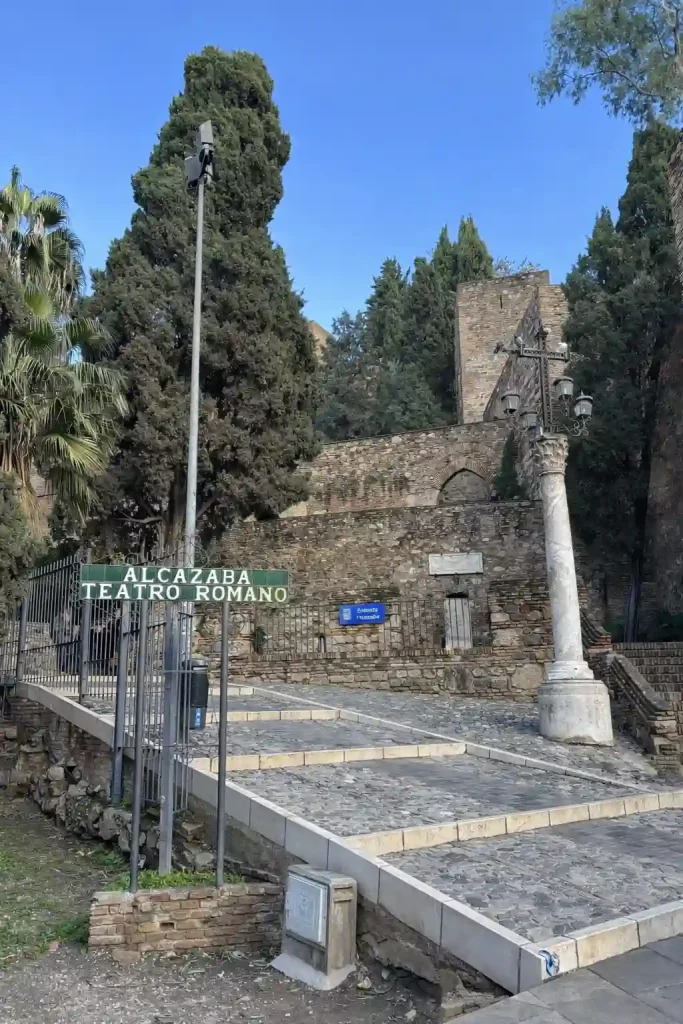
The Alcazaba of Málaga
After our deep dive into Roman Málaga, it’s time to step into Arab Málaga. And here — trust me — the city completely changes its face.
Under Muslim rule, Málaga was an extremely wealthy city, built on trade and the sea. And when a city is rich, as we know, it needs to be well defended. That’s why, around 1100 AD, the Alcazaba was built, on a hill chosen with remarkable strategic intelligence:
- in the heart of the city, to control the entire urban fabric;
- just steps from the sea, to dominate the port;
- directly connected to the Castillo de Gibralfaro, for added security.
It’s no coincidence that it rises right here: from this vantage point, the caliphate could monitor every ship entering or leaving the harbour.
The Alcazaba is the most enduring signature of the Muslim era on the city and one of the most powerful symbols in all of Andalucía.
But what does Alcazaba actually mean?
The word has Arabic origins and is much simpler than it might sound. It comes from the Arabic term القصبة – al-qaṣbah / al-qasaba, which means fortified citadel.
In the cities of Al-Andalus, the alcazaba wasn’t just a palace — or rather, not only that. It was the defensive heart of the city, housing the wali (the governor), soldiers, and administrative offices.
In practical terms, it was the military and political headquarters of the Muslim city.
And make no mistake: Málaga’s Alcazaba is no ordinary fortress. It is considered an impregnable citadel, a masterpiece of military engineering that inspired many other alcazabas — including the one in Granada.
It was a fortress designed to be virtually impossible to conquer…tare con la forza.. e la storia che vi raccontero’ ne e’ la conferma.
La Cruz del Humilladero
Before climbing up and following the military route of the citadel, at the base of the hill you’ll notice a stone structure topped with a cross: this is the Cruz del Humilladero.
It stands exactly on the spot where, on 19 August 1487, after three months of siege, the troops of the Catholic Monarchs entered the city.
Here, the victors knelt, thanked God, and consecrated Málaga to Christianity.
This is where the name humilladero comes from: the place of humble kneeling.
And at this point, a question naturally arises: if the Alcazaba was truly considered impregnable, how did the Catholic Monarchs manage to conquer it?
After numerous failed assaults and partial destruction of the surrounding areas, in 1487 Ferdinand realised one crucial thing: by force alone, he would never break into the Alcazaba. So he changed strategy entirely.
Instead of attacking, he decided to let the city fall slowly.
Málaga was completely surrounded, both by land and by sea, by an army of over 50,000 soldiers. No ships could enter the harbour, no reinforcements could arrive from North Africa, and no inhabitants could leave the city to gather food in the fields. In short, the Catholic Monarchs cut off every possible resource outside the city.
Málaga was isolated from the world.
For about three months, the city collapsed from within: food supplies ran out, diseases spread, and the population sank into total desperation.
And then, one night, the unthinkable happened.
Some Muslim noble families, now without hope, secretly opened the city gates. In exchange for conversion to Christianity and the promise of saving their lives, they handed Málaga over to the Catholic Monarchs.
So it wasn’t force that brought down the Alcazaba…
It was hunger, exhaustion — and betrayal born of despair.
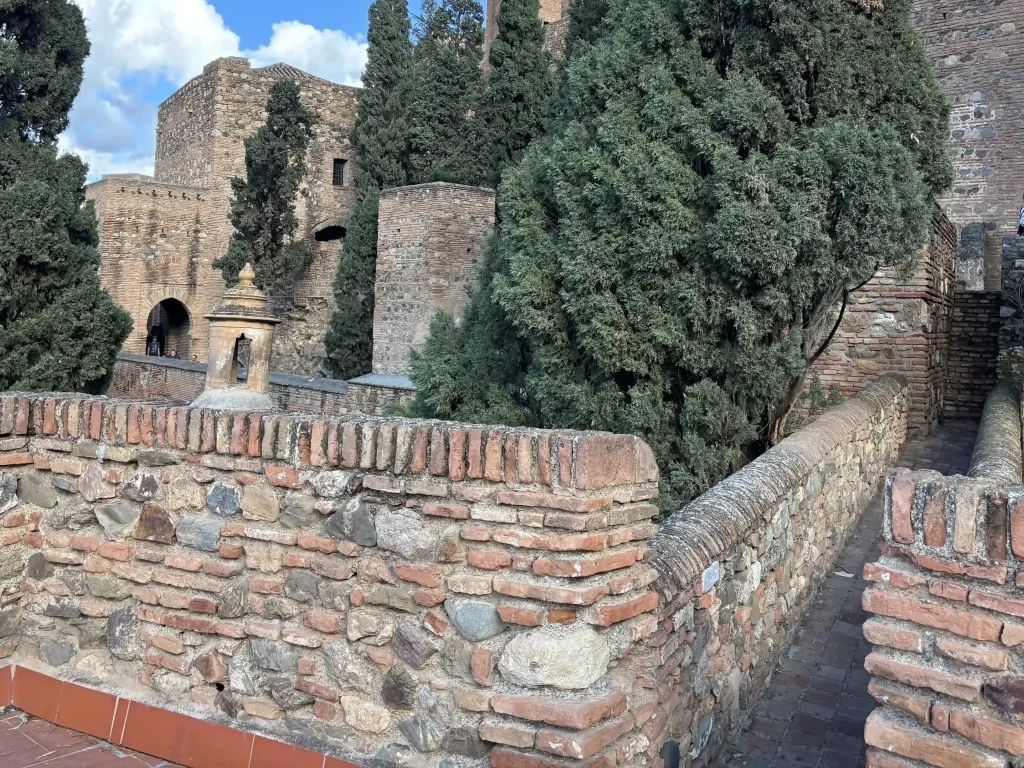
Entering the Alcazaba
Entrance to the Alcazaba requires a ticket. You can buy tickets on the official website or at the self-service machines located at the entrance. If you want to avoid queues, I recommend entering the Alcazaba from the side entrance, just after the uphill path from Gibralfaro. There you’ll find ticket machines and an elevator that takes you directly to the highest point of the monument.
There are also combined tickets available with the Castillo de Gibralfaro. With your ticket, you can download a free audio guide via QR code — I highly recommend using it, as I found it very informative.
Once you’ve bought your ticket and passed through the turnstiles, take a deep breath. You’re not visiting a ruin — you’re walking into a thousand years of history, shaped by wealth and poverty, wars, destruction, and constant transformation. But above all, you’re entering one of the most refined examples of Arab military architecture: a true deadly trap.
The fortress is organised into two defensive rings of walls and was once connected to the Castillo de Gibralfaro by a fortified corridor (no longer accessible).
This was the fortress where the governor received guests, subjects, and officials. However, there was no direct entrance to the palaces. To reach them, one had to pass through a system of:
- bent entrances,
- blind passages,
- tight turns.
If an enemy managed to enter, they would be literally trapped and attacked from above.
We must imagine that at every gateway there were double wooden doors, extremely thick and reinforced with iron. The only one still visible today is the one you encounter at the first arch; the others must be reconstructed in our imagination, using this one as a reference.
As mentioned earlier, the Alcazaba was almost impossible to conquer by force. The passages are narrow, the ascent is always steep, and the route zigzags up the hill, forcing invaders into constant changes of direction — something impossible to manage with the military machinery of the time, such as battering rams, cannons, or similar weapons.
And even if attackers chose to advance on foot or on horseback, the path was designed so that they would always expose their right side — the one less protected by a shield — towards the hillside, where archers were waiting above, ready to strike.
Today we see the Alcazaba in all its splendour, but until the 1960s, this hill was not a monument at all. It was a poor neighbourhood, filled with makeshift houses built directly on the remains of the walls. The open and bright pathways we walk today were once closed rooms where entire families lived.
What we see now is the result of the dedication of Juan Temboury Álvarez, who devoted his life to having the Alcazaba recognised as a historical site. That’s why you’ll find his bust at the beginning of the route.
The Alcazaba is often described as a matryoshka doll, because it’s made up of spaces nested within other spaces. After the first part of the route, you reach a more elegant gate, with a carved key above the arch — a sign that you’re approaching the palace. The atmosphere becomes less austere, brighter, more refined.
Continuing on, you’ll reach a bent passage known as the Arco del Cristo. When the Alcazaba was still a neighbourhood, a small chapel stood here. The niche where a Christ statue once stood is still visible — a statue said to have been “stolen” from another church to protect it and worship it within the district.
This Christ is known as Cristo de los Tres Huevos (Christ of the Three Eggs).
According to one legend, during the siege of 1487, Christian soldiers reached this point exhausted and found only three eggs as their last meal before the final assault. Before eating them, they knelt before the Christ and made a vow: if they conquered Málaga, they would consecrate this place.
But my favourite version is another one. A sailor set off for Africa and promised the Christ a gift if he returned alive. He came back safe and sound — bringing with him three eggs never seen before: ostrich eggs.
That’s why it’s called the Christ of the Three Eggs. And as a friend from Málaga once told me: “You really need tres huevos to steal a Christ from his church!” 😄
As you continue climbing, you’ll notice holes in the ground. They look like wells, but they are actually large cisterns used to store grain and food. The higher you go, the more elegant the architecture becomes: defensive doors disappear, everything feels lighter and more open. You’re approaching the true palace area.
Finally, you reach the palace gardens, once the site of a mosque that was later destroyed. Here, the serenity typical of Arab spaces takes over: water, silence, perfect proportions. The decorations recall the Mezquita of Córdoba and the Alhambra of Granada, and from here you can enjoy beautiful views over the city, the sea, and the historic centre.
Many people say that the Alcazaba of Málaga is the younger sister of the one in Granada.
In reality, Málaga’s Alcazaba is the mother — both chronologically and architecturally.
If you truly want to understand how these citadels worked, visit Málaga first… and only then Granada. The more you grasp the military genius of ancient Arab cities, the more you’ll be able to appreciate and be enchanted by the beauty of the Alhambra’s palaces.
Once your visit is over, you can exit either by retracing the original route or by taking the alternative path that runs along the hillside. Both are clearly signposted.
I’ll leave the choice to you.
The Cathedral and Its surroundings
🚶🚶 Walking tour of Málaga: the Cathedral and its surroundings
Before heading towards the cathedral, I’d like to suggest a small detour for the truly curious: let’s walk towards what was once the Jewish quarter.
Unlike Córdoba and other Andalusian cities, very little remains here of the old Judería, but it’s precisely in this area that a real gem is hidden: the Church of Santiago.
The Iglesia de Santiago Apóstol is one of the oldest and most fascinating churches in Málaga. It’s not just a place of worship — it’s a true bridge between Muslim Málaga and Christian Málaga.
Like many Andalusian churches, it was built on the site of a former mosque. And not just any mosque: it was the first mosque Ferdinand encountered when he entered the city in 1487. For this reason, it was consecrated to Santiago Apóstol, the warrior saint and protector of the Catholic Monarchs.
In the three years following the Reconquista, the church was completely transformed. The original Muslim entrance was walled up — no Christian was meant to pass through where Muslims once had — and the façade was covered with stucco and paint to erase every trace of Islam. The only element that survived was the bell tower, created directly from the former minaret.
A final curious detail: on the façade you’ll find an interesting plaque.
Here, in 1881, Pablo Picasso was baptised. The original baptismal register is still preserved inside the church.
Admission is free, but without fixed opening hours. If you manage to get inside and you’re lucky, you might find the church’s true treasure on display: Cristo Nuestro Padre Jesús “El Rico”.
This Christ is famous because on Holy Wednesday during Semana Santa, he wears a tunic embroidered in solid gold (hence the name El Rico), one of the richest and most precious in all of Spain. It shines so brightly that, as it passes through the streets of the historic centre, it literally looks like “molten gold”.
What’s more, this Christ is linked to a unique privilege in Spain: each year he can grant freedom to a prisoner.
The tradition dates back to the 18th century, when during an epidemic the prisoners asked permission to carry the statue in procession. When permission was denied, they escaped, held the procession anyway… and then voluntarily returned to prison.
When King Charles III was informed of what had happened, he was struck by the prisoners’ behaviour and granted Cristo El Rico a unique privilege: every year, during Semana Santa, one prisoner may be released by royal pardon.
And yes, it still happens today. Every Holy Wednesday, in front of the Christ dressed in gold, the royal decree is read aloud… and someone goes home a free person.
We now head towards the Cathedral, but before reaching it there are a few very important stops along the way.
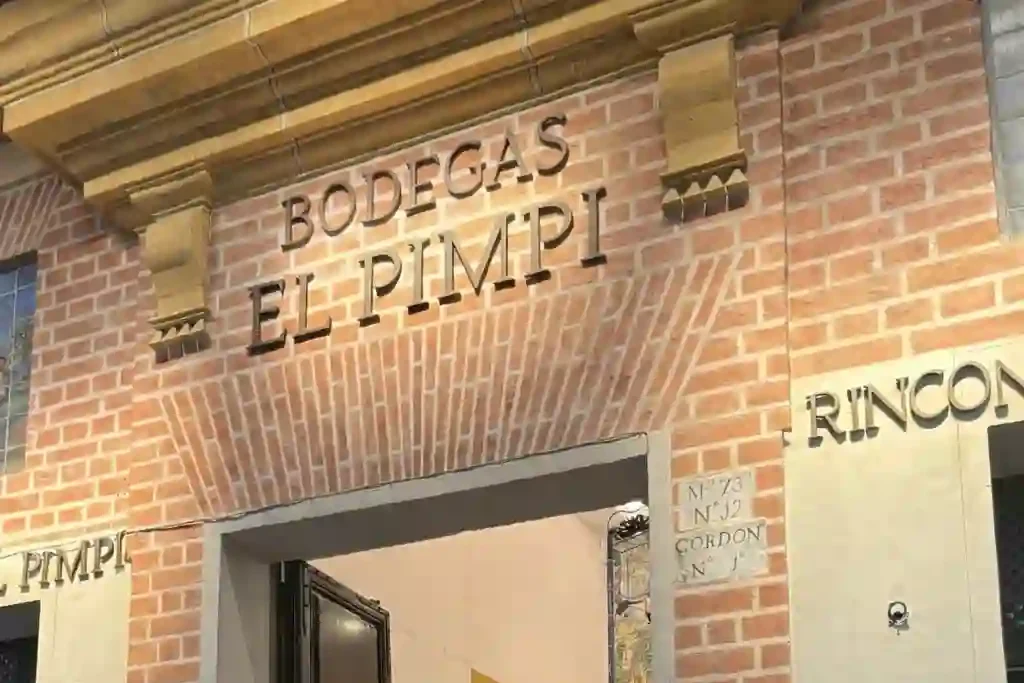
The first is the historic entrance of El Pimpi. This place is not only a restaurant where you can eat extremely well, but also one of Málaga’s historic landmarks. It has preserved its original architecture, and the interiors are in classic Andalusian style. It’s one of the restaurants I always recommend trying at least once. You’ll also find it mentioned in my article Sabor a Málaga, dedicated to the city’s flavours.
Just after that, we come to the Picasso Museum. This is not the painter’s birthplace, but rather a palace purchased by his family to house and display his works. This decision represents a key turning point in modern Málaga. In fact, it was precisely this choice that gave the city the initial push towards the cultural rebirth we see today. For more details, check out the article Málaga and its 30 museums and, as always, consult the official website.
Another interesting stop in Christian Málaga is the Iglesia de San Agustín. It’s a small church that often goes unnoticed by distracted passers-by, but it hides a true Semana Santa treasure: throughout the year, the statues used in the Holy Week processions are prepared, dressed, and restored right here, inside San Agustín.
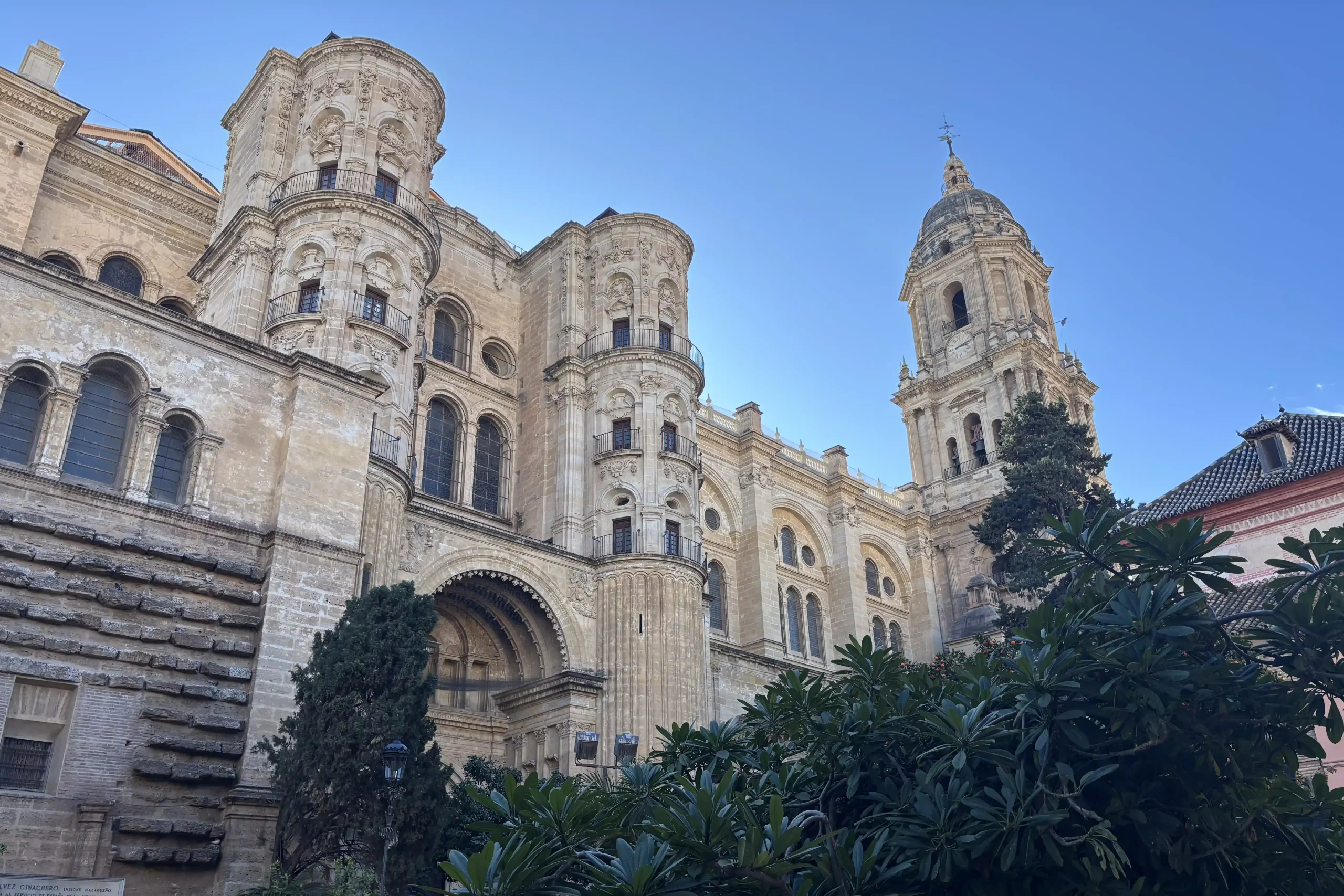
Continuing along Calle San Agustín, we finally reach the entrance of Málaga Cathedral, known affectionately as La Manquita.
The Cathedral
To enter the Cathedral, you need to purchase a ticket on the official website.
Tickets include an audio guide. Opening hours change between the summer and winter seasons and, quite often, night visits are also available — highly atmospheric experiences. For this reason, it’s always best to check the website before planning your visit. Make sure to verify whether your ticket also includes access to the Iglesia del Sagrario.
Tickets for access to the rooftops, from where you can enjoy sweeping views over the city, are sold at the Palacio Episcopal, opposite the main façade. The best time to go is, of course, sunset.
Málaga Cathedral is not just a church — it’s something like an unfinished novel written in stone, full of missing chapters, unexpected twists, and plot holes. Locals affectionately call it “La Manquita”, the one-armed lady, because it’s missing one of its towers. And behind that absence lies one of the city’s most curious stories.
Like most churches in Andalucía, it stands exactly on the site where the main mosque of Muslim Málaga once stood. After the Reconquista of 1487, the Catholic Monarchs decided that this would be the location of the great Christian cathedral, a symbol of the new era.
Construction began in 1528, but Málaga was not as wealthy as Seville. Building a Renaissance cathedral on Islamic foundations turned out to be a long, expensive… and rather chaotic endeavour.
First of all, its position at the very edge of the city, just steps from the port, meant that it had to be designed above all as a solid, defensive structure, capable of withstanding potential attacks. Proof of this can still be seen in the cannons located at the back of the Cathedral, aimed towards the sea. Aesthetics, therefore, were not considered a priority.
Moreover, built over the course of three centuries, the Cathedral was never completed due to a series of misfortunes, earthquakes, and questionable decisions.
For all these reasons — in addition to the unfinished southern tower — the building lacks a single, clearly defined architectural style.
If you walk along Calle Molina Lario, you’ll see the main façade and immediately understand what I mean. Despite its enormous size, the Cathedral lacks strong artistic distinction and, above all, it is missing one of its two main towers. Although there are some noteworthy elements — such as the spiral-shaped columns, the scene of the Annunciation, and the use of marbles in different colours — from the cathedral of a city like Málaga, you might expect much more.
According to legend, the funds intended for the second tower were used to help the American colonies during their war of independence against the British. No one knows how much truth there is to this story, but Malagueños like to believe their cathedral is incomplete because of a noble international gesture.
The fact remains: one tower stands tall and proud, the other… doesn’t exist.
And it’s precisely this flaw that earned the Cathedral its nickname, La Manquita — and the very reason why everyone has grown so fond of it.
In recent years, Málaga’s City Council has once again brought up an idea that always sparks strong reactions here: completing the Cathedral, finishing the main façade, the roof, and above all that tower that was never built. It’s a proposal that leaves no one indifferent, because for Malagueños the Cathedral is not just a monument — it’s almost like a member of the family.
Some dream of seeing it finished at last, grand and elegant, just as it was probably intended to be originally. Others look at it and feel it’s beautiful exactly as it is, with that missing tower that may seem like a flaw, but is actually its crooked smile — the detail that makes it unmistakable.
This is how I feel about it: not incomplete, but simply… unique.
And you? Would you like to see it finally completed, or do you love it too just the way it is, with that missing tower that has now become part of its charm?
Although from the outside it looks like a mix of styles shaped by three centuries of construction — Gothic, Renaissance, and Baroque — inside the Cathedral hides a true treasure: the wooden choir stalls carved by the renowned sculptor Pedro de Mena.
They consist of over 40 seats, each carved individually in the 18th century. No two figures are the same: saints, bishops, animals, ironic faces. If you look closely, you’ll notice that some of them almost seem to mock the faithful.
Then there’s the monumental organ, with more than 4,000 pipes. When it plays, it fills the entire nave like a thunderstorm.
Few people know that it’s also possible to climb onto the Cathedral’s roof. It’s one of the best places to understand just how much Málaga is a mosaic of different eras. The climb involves about 200 steps, leading up to the terracotta-domed rooftops, from where you’re rewarded with a unique view of the city: the Alcazaba on one side, the sea on the other, and the rooftops of the historic centre beneath your feet. Always check the official website to see if and when these visits are available. And if you manage to go up around sunset, you’ll treat yourself to a truly breathtaking moment.
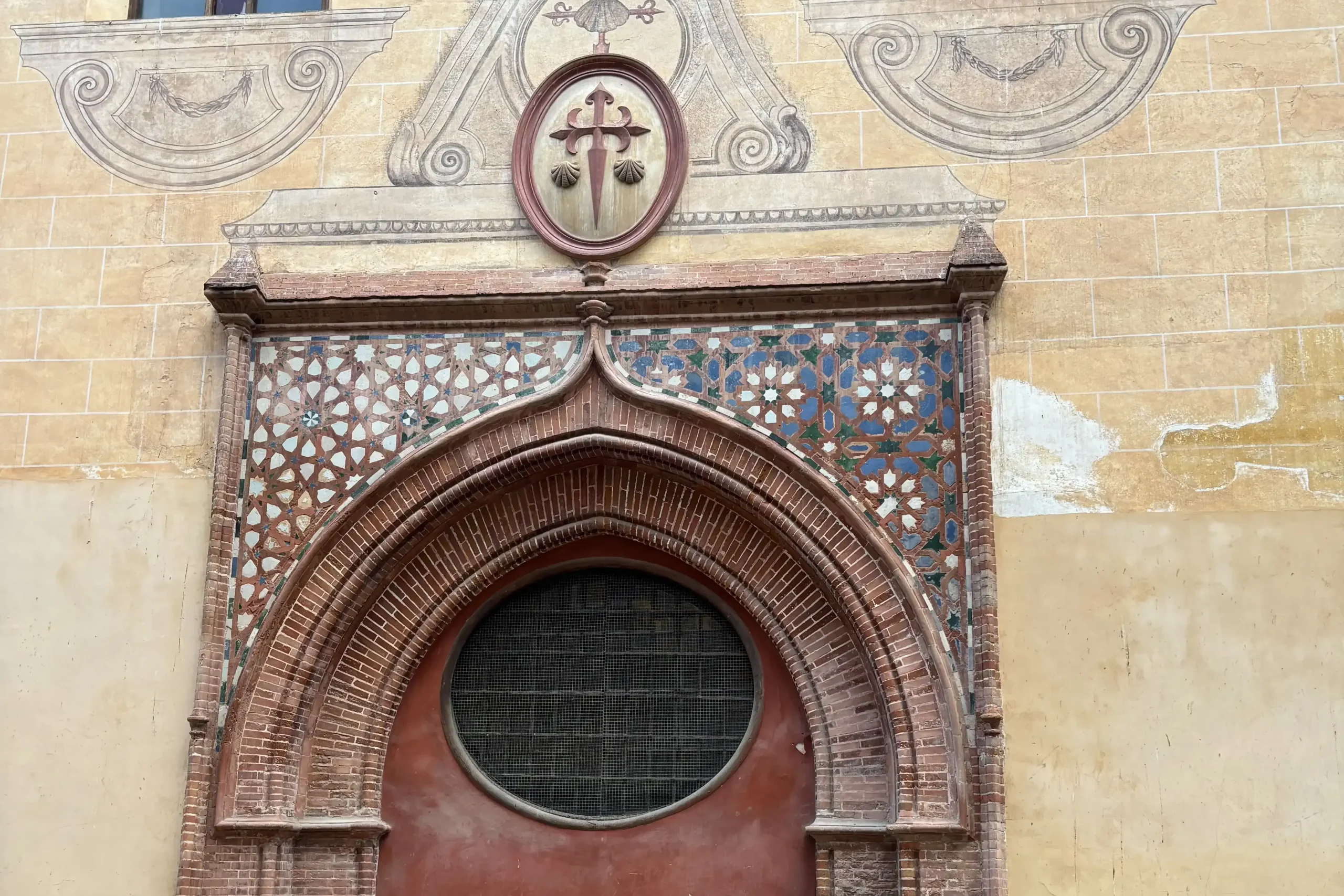
On the north side of the Cathedral, facing the church entrance and looking to the right, set into the wall, you’ll find a beautiful Gothic portal that once belonged to an earlier Isabelline-era church: the Iglesia del Sagrario.
Immediately after the conquest of the city in 1487, the Catholic Monarchs wanted to consecrate a Christian place of worship as soon as possible. So, on part of the great Muslim mosque, the Iglesia del Sagrario was built — in effect, the first Christian church in Málaga.
The most extraordinary feature is its main façade: a Gothic–Mudéjar doorway, carved in stone at the end of the 15th century. This is not just an entrance — it’s a political statement expressed through architecture.
Above the arch you’ll see the coats of arms of the Catholic Monarchs and biblical scenes, yet the structure itself clearly echoes Islamic decorative elements.
The interior is much simpler than that of the Cathedral: a single nave, side chapels, soft light. It’s a church that invites silence, not amazement.
And that’s precisely why it feels so Malagueño: while tourists crowd the Cathedral, here you’ll often find just a few elderly locals sitting quietly in prayer.
Gibralfaro Castle
Admission is ticketed, and you can purchase tickets on the official website; it’s usually best to choose the combined ticket with the Alcazaba.
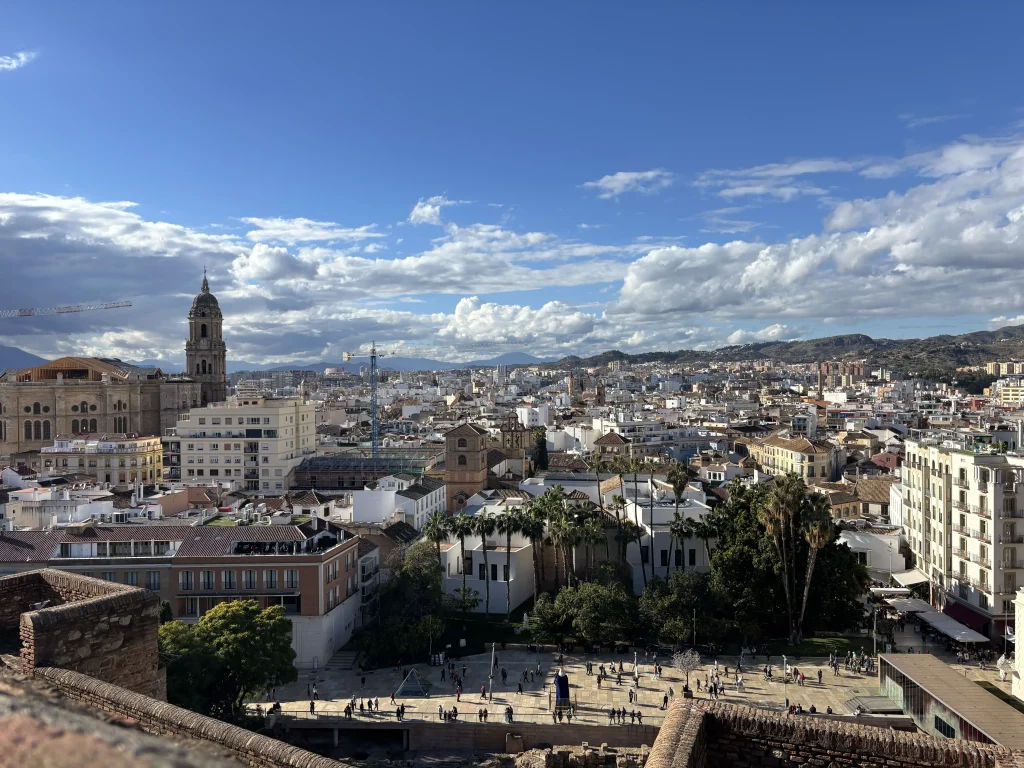
We now complete our Arab route by climbing up to Gibralfaro Castle, Málaga’s great panoramic balcony.
To reach the castle, you have two options:
on foot, via an uphill path of about 1 km… I nearly died doing it, so choose wisely 😅
or by taking bus 35, which stops right in front of the entrance. From the city centre you can catch it from Alameda Principal, Paseo del Parque, or Plaza de la Marina. It runs every 20–30 minutes (depending on the time of day and season), and in about 20 minutes you’ll be there. In Málaga, you can buy your ticket directly on the bus with a credit card, or use the ticket machines available at some stops.
For up-to-date information, you can check:
- EMT Málaga – routes and timetables
- Transit App / Citymapper – real-time transport info
- Red Transporte – fares and schedules
But let’s talk about the castle.
The name Gibralfaro comes from the Arabic Jabal-Faruk, meaning mount of the lighthouse. As far back as Phoenician and Roman times, a lighthouse stood here to guide ships into the harbour.
In the 14th century, under the Nasrid sultan Yusuf I, the castle we see today was built on the hill, connected to the Alcazaba by a double line of walls: the famous coracha, a fortified corridor (now closed) that allowed soldiers to move safely without exposing themselves to the enemy.
The castle had a purely military purpose: to further strengthen the city’s defences.
Over time, the castle lost its military role. It was used as a barracks, then as a storehouse, and eventually became little more than a scenic ruin.
Today, it’s one of the most beautiful places in Málaga for a slow, peaceful walk. Inside, there are no frescoes or marble decorations — just a small exhibition centre that расскаnts the history of the castle and its siege, the daily life of the soldiers, and the defensive system linked to the Alcazaba.
The most thrilling spot is the large viewpoint on the southern side. From here, Málaga opens up beneath you like a map:
- the Alcazaba looks like a fortified garden
- the Cathedral rises above the rooftops
- the port and Muelle Uno sparkle by day and light up beautifully at night
Inside the castle there’s a small bar where you can take a break, but if you want to eat or drink somewhere truly special, I recommend the nearby restaurant hotel Parador de Málaga Gibralfaro (also mentioned in my article Sabor a Málaga, dedicated to the city’s flavours), just about 100 metres from the exit.
And don’t forget: right next to the Parador’s entrance there’s another spectacular viewpoint, perfect for one last photo before heading back down into the city.
One final tip: if you’re in Málaga in mid-August, the viewpoints of Gibralfaro are among the best places to watch the fireworks that kick off the Feria de Málaga!
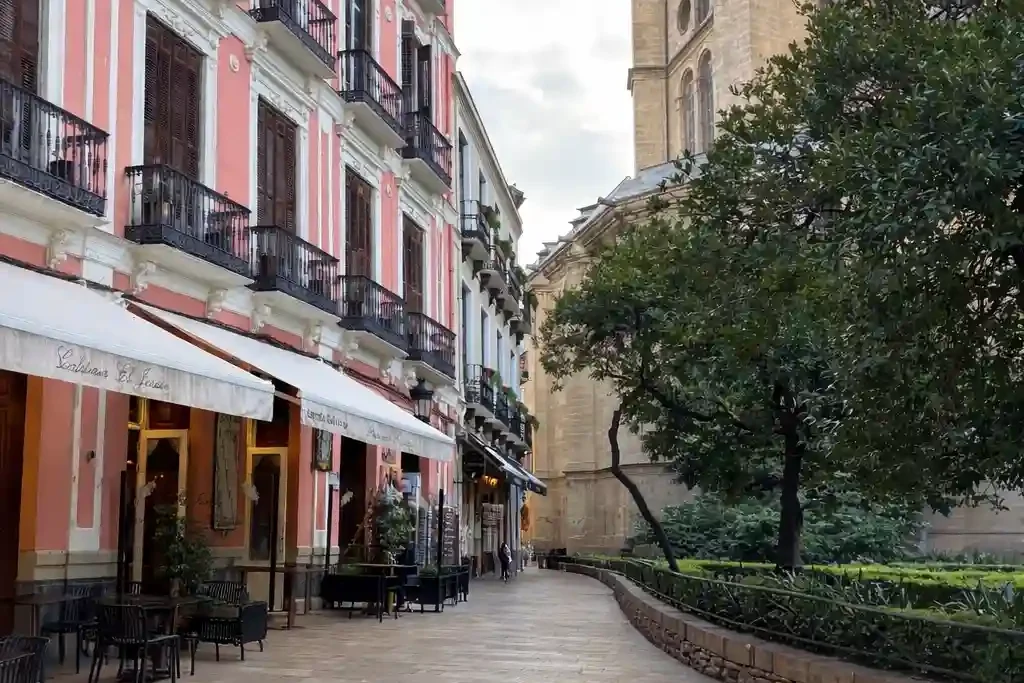
A quiet corner of Málaga’s historic centre: buildings with wrought-iron balconies, outdoor cafés, and the Cathedral peeking out in the background.
Málaga and Its Historic Centre
🚶🚶 Walking tour of Málaga: the Historic Centre
Once you’ve finished your visit to Gibralfaro, it’s time to head back into the city — this time on foot — to enjoy the streets of the historic centre, Muelle Uno, and fully immerse yourself in Malagueño life.
Walking down from Gibralfaro Castle to the centre of Málaga is a completely different story: no sweating 😄, just a relaxed downhill stroll, with the city gradually unfolding before you, step by step.
Leaving from the castle’s main entrance, you follow the Camino del Gibralfaro, a path that gently winds downhill through pine trees and Mediterranean scrub. Every now and then, viewpoints open up over the city — take advantage of them.
After about 15–20 minutes, you reach the bottom, near the Alcazaba tunnel.
Once you pass through it, you’ll find yourself on Calle Alcazabilla, with the Roman Theatre right in front of you and the entrance to the Alcazaba just ahead.
From here, you’re already in the historic centre.
Málaga’s historic centre (casco antiguo) is largely pedestrian, easy to explore on foot and perfect for being unexpectedly surprised by corners, views, and small details. It’s not just a place to see, but a place to experience — a truly sensory journey.
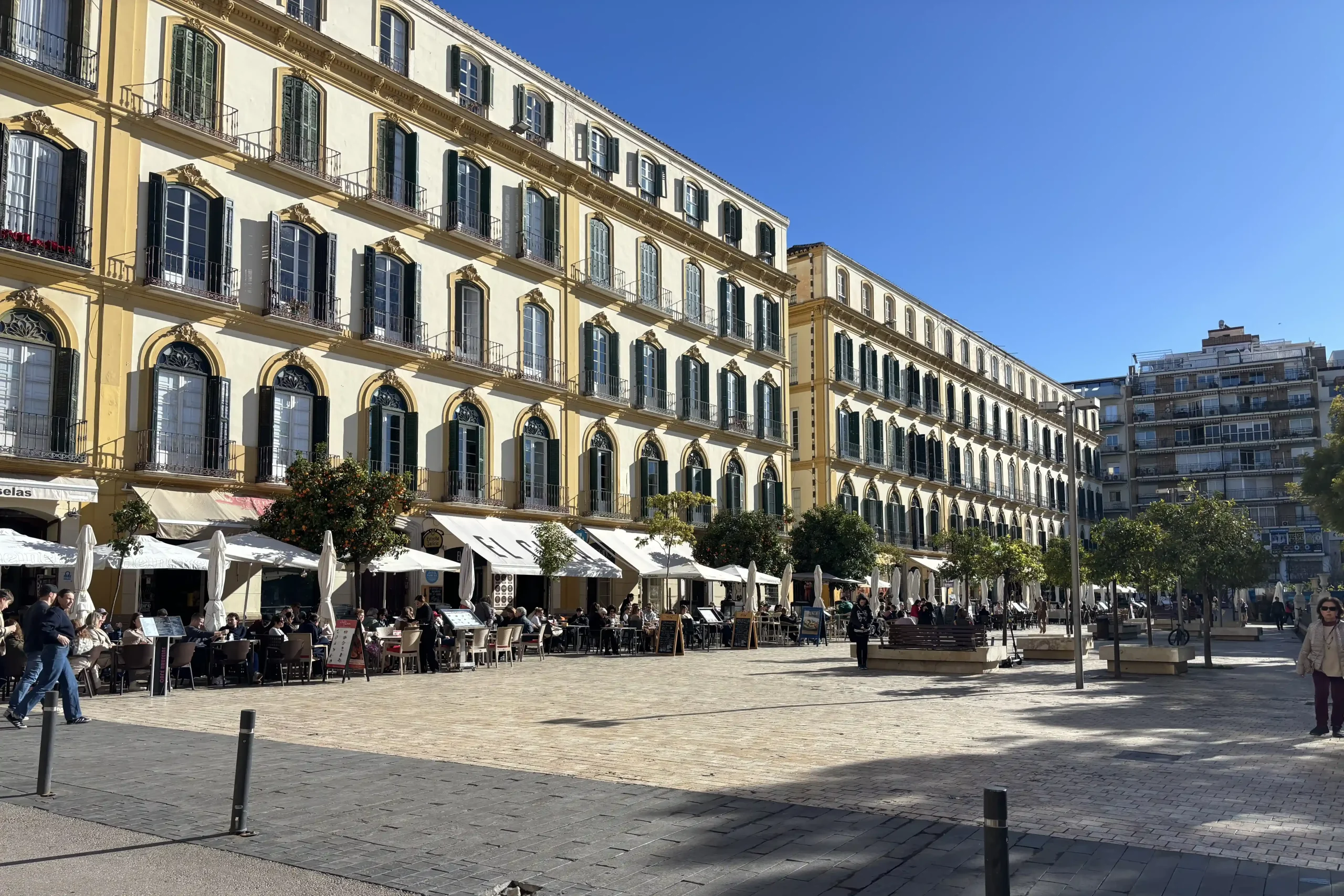
Our route begins at Plaza de la Merced, a bright, popular square where you can still feel the spirit of neighbourhood Málaga.
Unlike the city’s more elegant squares, Plaza de la Merced has always had a lived-in soul. For centuries it served as a market, a meeting place, a setting for celebrations, political proclamations, and even public executions. It was right here that the Catholic Monarchs entered the city on 19 August 1487, passing through the so-called Puerta de Granada, which is no longer visible today.
Originally, the square was nothing more than an open space outside the city walls. After the Christian conquest, it became a market and was known as Plaza del Mercado, later renamed Plaza de los Álamos after the trees planted in the area. In 1507, the Mercedarian order was granted land to build the church that would eventually give the square its name: the Church of Nuestra Señora de la Merced (which no longer exists today, having been destroyed by a fire).
Over time, the square also became a popular promenade for Málaga’s bourgeoisie. At its centre once stood a fountain, later replaced by the monument that now dominates the scene: the Torrijos Obelisk.
This obelisk is often noticed only in passing, perhaps with a beer in hand, but in reality it is one of the most politically powerful monuments in all of Málaga.
It doesn’t celebrate a king, a bishop, or a conqueror: it celebrates a rebel.
José María Torrijos y Uriarte was a Spanish liberal general, a strong opponent of the absolutism of King Ferdinand VII, who, after the war against Napoleon, led the country back into an authoritarian regime by abolishing the Constitution. Torrijos refused to accept this return to the past: he lived in exile and organised a clandestine expedition to restore constitutional freedom in Spain.
In 1831, he and 48 companions landed on the coast of Málaga, convinced they would find support among the population — but it was a trap. They were captured, imprisoned, and executed by firing squad without trial on the beach of San Andrés.
Initially buried in mass graves, they were rehabilitated only years later, with the return of liberal ideas. In 1842, Málaga made a powerful statement: it erected this obelisk in the heart of the city and buried beneath it the remains of the 49 executed men.
It’s truly worth getting closer to the obelisk, because on each side you’ll find commemorative inscriptions dedicated to General Torrijos and his companions. In the heart of the 19th century, carving phrases in a public square that openly accused absolute power was an act of remarkable courage.
On one side, you can read the inscription:
“To the memory of General Torrijos and his companions, sacrificed for freedom.”
Still in Plaza de la Merced, at number 15, you’ll find the Picasso Birthplace Museum, the house where Pablo Picasso was born.
Today it’s an intimate, compact museum, rich in atmosphere. You won’t find the great masterpieces here, but rather family belongings, period photographs, and rooms dedicated to the deep bond between the artist and Málaga. It’s the perfect place to understand where Picasso comes from.
Personally, I believe this museum is more worthwhile than the more famous Museo Picasso Málaga. Picasso’s works can be found in countless museums around the world, and it’s quite possible that the pieces displayed in Málaga are among the least famous.
Here, instead, you have a unique opportunity to get to know Picasso as a child — where he literally took his first steps, and where he first entered the world of art under the guidance of his father. If you’re interested, you’ll find more details in the article “Málaga and its 30 museums”.
Since 5 December 2008, there’s also a seated statue of Picasso in front of the building, calmly watching the comings and goings of his square.
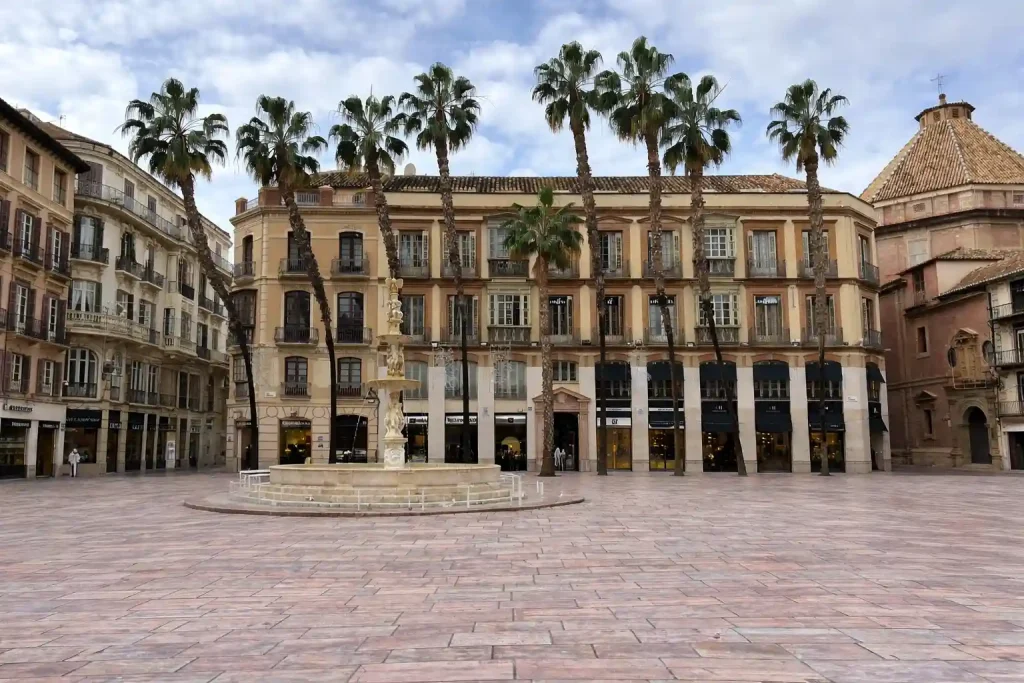
Leaving Plaza de la Merced behind us, we head back towards the centre, walking along the beautiful Calle Granada in the direction of Plaza de la Constitución.
Plaza de la Constitución is one of those squares that seem calm and quiet… but in reality, it has witnessed more revolutions than a history textbook.
If Plaza de la Merced is the rebellious square, Plaza de la Constitución has been, for centuries, the square of civil power in Málaga.
Before newspapers and social media existed, this was where news was announced. Authorities would step out onto the balconies and read new laws aloud to the crowd. Whenever something important changed in Spain, Málaga found out here — surrounded by people applauding… or booing.
This political and informational role is still clearly visible in the paving of the square. Set perfectly among the marble slabs, you’ll find engraved texts that look like stone newspapers, including passages from the 1812 Cádiz Constitution. These are not decorative elements: they are reproductions of real articles and documents that tell key moments in Málaga’s history.
At the centre of the square stands the famous Fuente de Génova, a Renaissance fountain carved in white marble, shipped by sea from Italy in the 16th century.
Legend has it that the fountain was stolen by pirates during the reign of Charles V while it was being transported to its Spanish buyer. When it was finally recovered, the king donated it to the city as a symbol of commercial ties with Italy. Over time, it was moved around Málaga — from the Paseo del Parque to several other squares — before finding its final home here, in Plaza de la Constitución.
Gradually, the square lost its role as the city’s official noticeboard and became the great urban living room we know today.
While wandering around Plaza de la Constitución, passing near the famous pastry shop La Canasta, we come across the Pasaje de Chinitas. It’s one of those places you stumble upon by chance… even though it’s introduced by a beautiful arch.
It’s a short, narrow passage, almost hidden between Calle Granada and Calle Santa Lucía, where in the 19th century stood the Café de Chinitas, one of the most famous venues in all of Andalucía. Flamenco cantaores, bailaores, and guitarists performed here.
It was a place where people drank, sang, argued… and sometimes even ended up fighting. In short: real life.
The café closed in the early 20th century and was eventually demolished, but its name never disappeared thanks to Federico García Lorca, who dedicated one of his most famous poems to it. Part of the poem is reproduced on a plaque outside the former café’s site:
“In the Café de Chinitas
said Paquiro to his brother:
I’m braver than you,
more of a bullfighter and more of a gypsy.”
In other words — I’d say — a true Andalusian.
Today, the Pasaje de Chinitas is one of the most photographed spots in the historic centre, filled with modern venues and lively terraces.
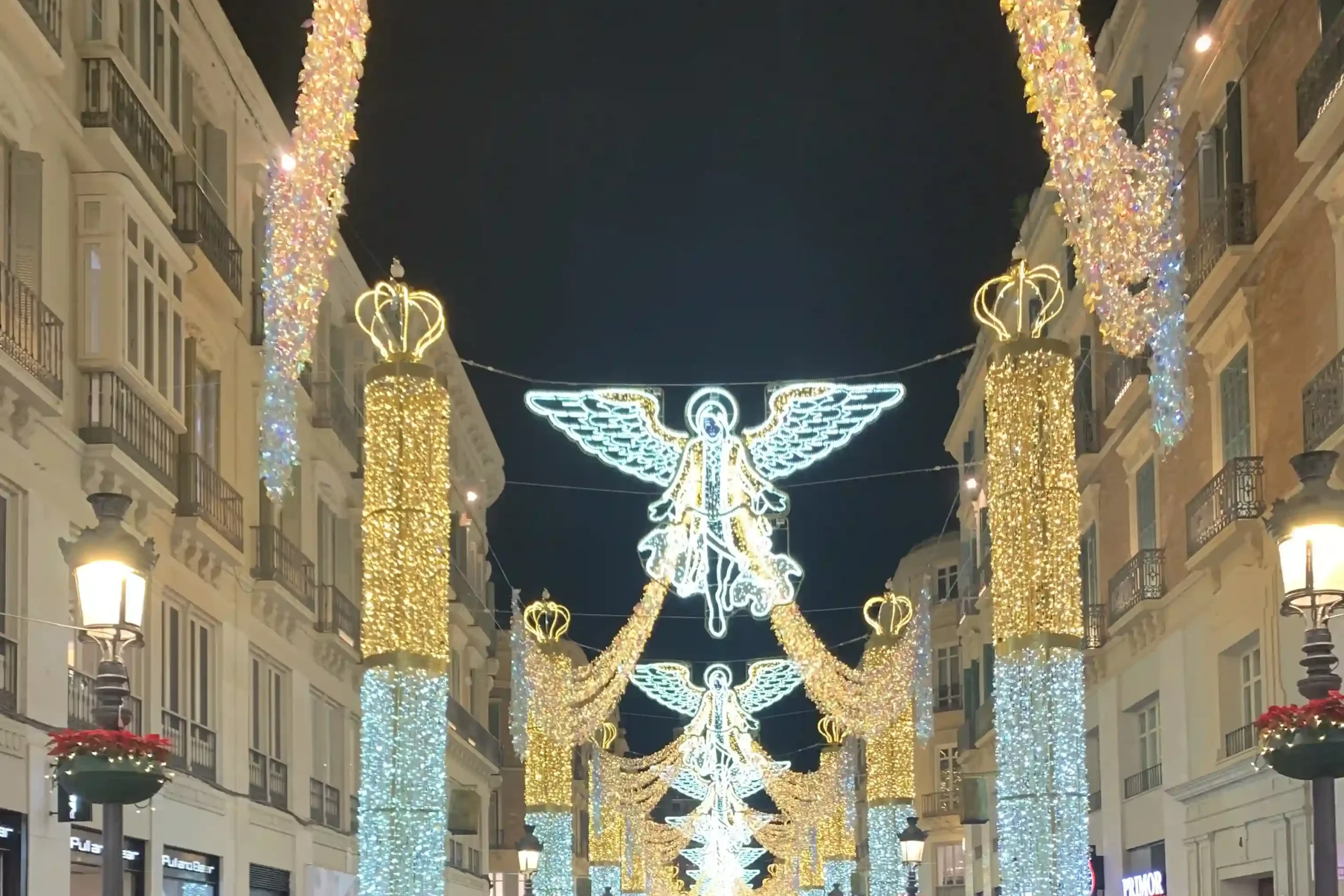
From Plaza de la Constitución, it’s impossible not to admire Calle Marqués de Larios.
This street isn’t just the most elegant avenue in Málaga. When it was inaugurated in 1891, it wasn’t conceived as a simple street, but as the calling card of modern Málaga.
It’s wide, straight, bright, with no bends or alleyways — a rarity in a city shaped by narrow, winding Arab streets. And, of course, that’s no coincidence.
The street takes its name from the Marqués de Larios, the wealthiest man in Málaga at the time, a sugar industrialist and major patron of the city. He financed a large part of the project himself.
In the mid-19th century, Málaga was a maze of medieval alleys — charming, but chaotic, unhygienic, and ill-suited to a modern city.
In 1880, a revolutionary urban plan was drawn up: a grand, straight avenue connecting the port to the historic centre, spacious and elegant, inspired by the great French boulevards.
The operation was so ambitious that an entire working-class neighbourhood was expropriated and demolished. This is how Calle Larios was born, with its symmetrical buildings (the first in the city to feature bathrooms inside the apartments!), uniform façades, and a perfectly aligned perspective stretching all the way towards the sea.
Málaga’s relationship with the Larios family has never been entirely positive. The Larios played a huge role in the city’s development, but they were not loved by everyone.
The Larios arrived in Málaga in the early 19th century, at a time when the city was trying to emerge from centuries of stagnation. In just a few decades, they built a true empire: textile industries, sugar factories, banks, mines, and trade with Latin America. They quickly became the most powerful family in eastern Andalucía.
Their businesses and investments brought major advantages, creating thousands of jobs and contributing to the city’s urban and overall modernization.
But there was also a darker side. The Larios paid low wages in their factories and accumulated almost feudal levels of economic and political power, to the point that when unjust laws were passed, people protested not in front of the Ayuntamiento, but directly outside the Larios family palace.
In the 1930s, amid a climate of social unrest, buildings and properties belonging to the family were destroyed as a protest against oppressive capitalism. The statue of the Larios family you’ll find at the beginning of the street (on the opposite end from Plaza de la Constitución) has been beheaded several times and even thrown into the sea.
Commissioned by the family itself, the statue represents Málaga personified as a woman, offering her child — symbolising the people of Málaga — to the Marquis. On the other side, there is a worker holding a pickaxe at the nobleman’s feet, clearly defining each role. You can now understand why the statue is not particularly loved.
In any case, walking along Calle Marqués de Larios means crossing the point where Málaga decided to stop being a provincial city… and started to see itself as the capital of the western Mediterranean.
For better or worse, the Larios family didn’t just leave behind a street.
They permanently changed the city’s identity.
At the time, strolling along Calle Larios was a true social event. Bourgeois families would dress up just to hacer Larios — walking back and forth to show off new clothes and hats. A kind of 19th-century Instagram, long before social media existed.
From the original version of the street, you can still find an old pharmacy, preserved with its original furnishings, an antique cash register, and the atmosphere of the old apothecaries. Hard to believe, but it’s still there.
And it’s not just an impression: Calle Larios was designed with proportions that slow you down. It’s wide, bright, harmonious… it invites you to stroll, not to rush.
As you walk between Calle Larios and Plaza de la Constitución, you’re also crossing the former underground course of the Guadalmedina River, now channelled beneath the city. Once, it split Málaga in two; today, it flows invisibly beneath the historic centre.
One of the city’s most beloved curiosities is that Calle Larios is never the same:
- at Christmas, it becomes a tunnel of futuristic lights, with a spectacular show of light and music;
- in summer, it fills with white sails that provide shade;
- during the Feria, it’s covered in traditional lanterns and comes alive with music, flamenco, and red flowers.
Walking along Calle Larios, we finally reach Alameda Principal — right back where our journey began. But if you have time and feel like it, wander behind Calle Larios and lose yourself among ancient alleyways, small churches, and hidden corners. Málaga always knows how to surprise you with something unexpected!
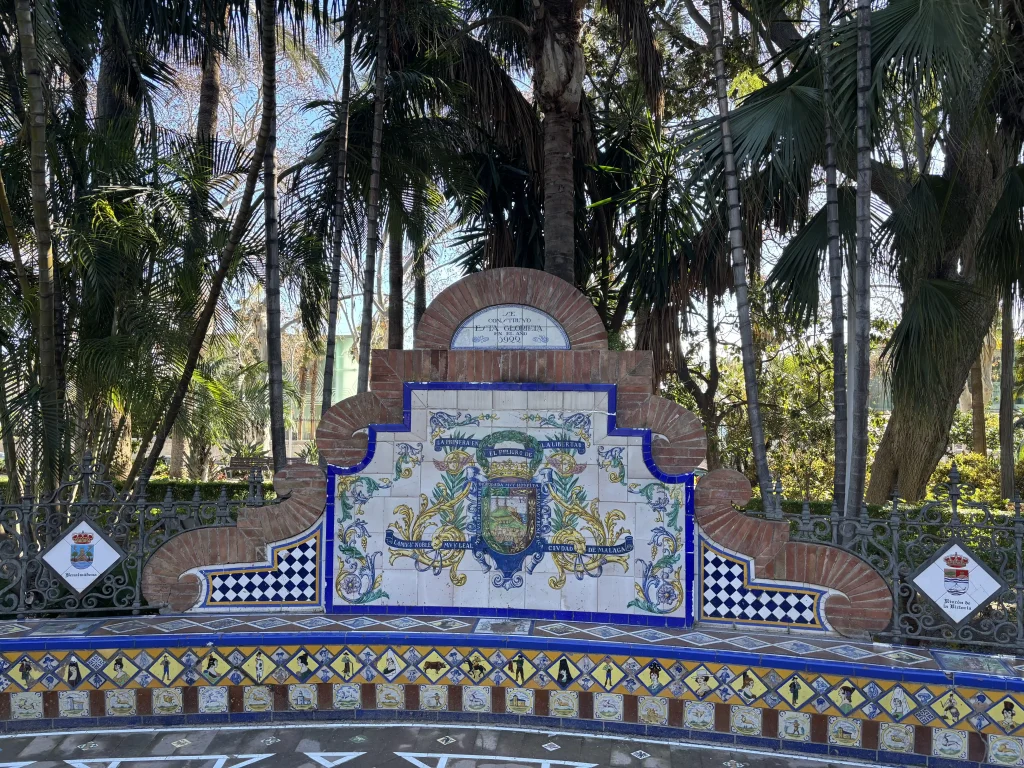
Paseo del Parque and Muelle Uno
Another ideal place for a shaded walk is the Paseo del Parque, which runs along the historic centre on one side and the port on the other.
Today it’s crossed by busy roads, but in the heart of the 19th century it was a much quieter place. At that time, Málaga wanted to present itself as a modern, cultured city, on a par with the great European capitals. The idea, therefore, was not to create a simple avenue, but a true urban botanical park, filled with plant species from all continents, as well as fountains, benches, and statues designed to make strolling a pleasure.
Along the city-facing side of the boulevard you can spot what locals call the “ABC of Málaga”:
- the Ayuntamiento de Málaga, a delightful two-tone Art Nouveau building;
- the Banco de España;
- and the former Correos building, now part of the Universidad de Málaga (on one side you can still see the old letter slots where Malagueños once posted their mail).
In the nearby rose garden, you’ll also find two more bronze statues by Jaime Pimentel:
El Biznaguero (the jasmine seller) and El Verdialero, a tribute to verdiales musicians — a traditional form of music and dance from the Alpujarras.
On the opposite side of the Paseo del Parque lies El Palmeral de las Sorpresas, which runs alongside Muelle Uno.
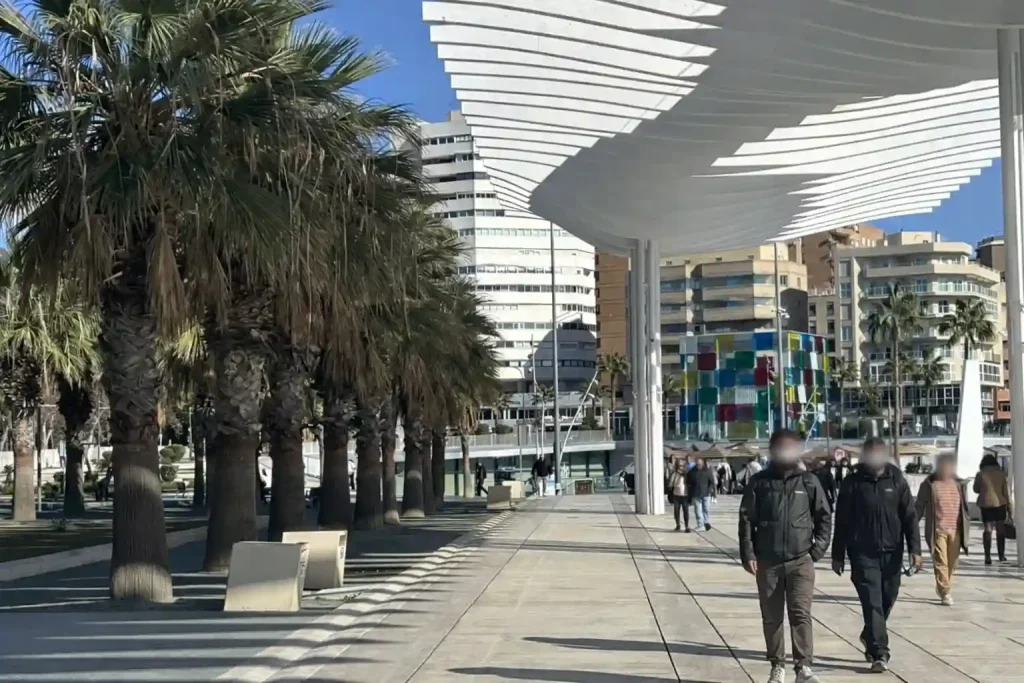
A stroll along Muelle Uno, among palm trees and modern architecture, with the Centre Pompidou Málaga in the background.
Muelle Uno is one of the most beloved spots in the city, offering beautiful views over the harbour and the sea.
For centuries, this area was exclusively a commercial port: containers, warehouses, trucks, fences. You could see the sea, but you couldn’t really reach it.
In the early 2000s, Málaga decided to change direction and launched one of the most important urban regeneration projects in its history. This led to the creation of Muelle Uno, inaugurated in 2011 as the first section of the port opened back up to the public.
One of Muelle Uno’s most recognisable landmarks is the large colourful glass cube: the Centre Pompidou Málaga, an outpost of the famous Parisian museum. As a lover of modern art, I can only recommend a visit. The museum hosts temporary exhibitions as well as a permanent collection, with works often rotating and being exchanged with those in Paris. If you’re in Málaga on a Sunday afternoon after 4:00 pm, admission is free — though, as always, it’s best to check the official website to be sure.
Today, at Muelle Uno you can stroll among boats and yachts, enjoy an aperitif at one of the many bars, or walk all the way to the La Farola Lighthouse, one of the oldest lighthouses in Spain still in operation.
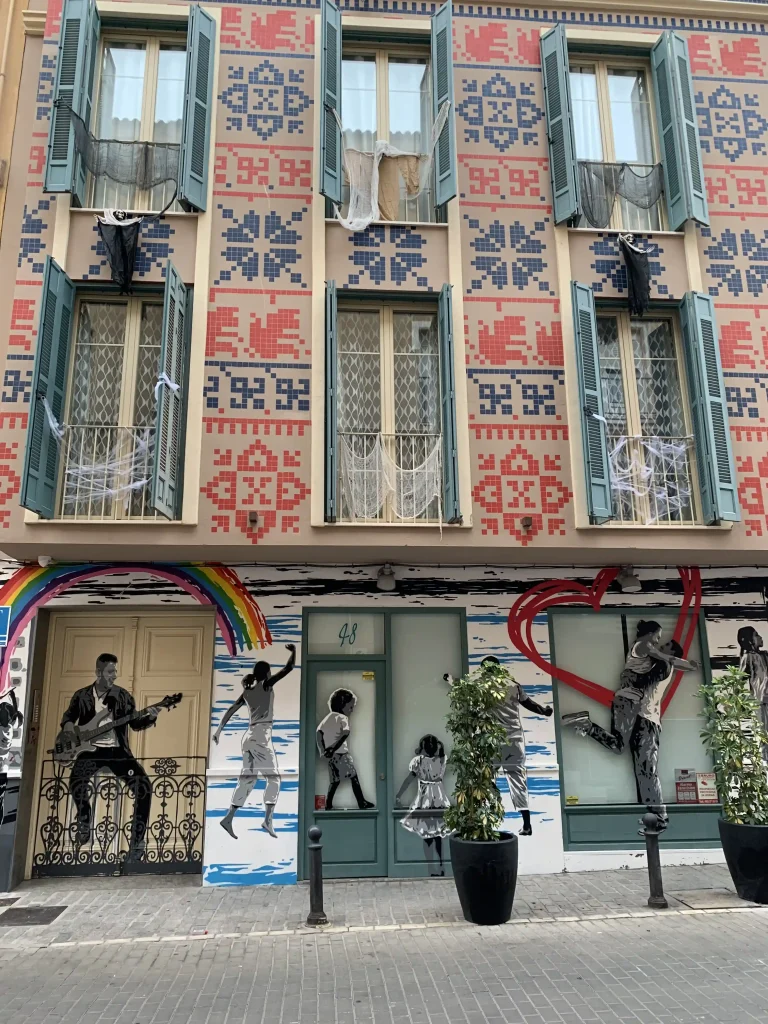
Soho Málaga: Málaga’s Underground District
🚶🚶 Walking tour of Málaga: Soho street art
Soho Málaga is often described as the “Barrio de las Artes” — the Arts District — and it’s one of the most vibrant, creative, and surprising areas to visit in the city.
Located between the historic centre and the port, in a central area that’s easy to reach on foot, it opens onto Alameda Principal and stands as clear proof of how urban art can transform the soul of an entire neighbourhood.
In recent years, Málaga has made a bold choice: instead of covering its walls, it decided to listen to them. Neighbourhoods like Soho have become vast creative laboratories, where colour has replaced grey thanks to international names such as Obey, D*Face, Roa, Belin, Flatxl, and Dal East, alongside many local artists — including the Malagueño Doger — whose styles have reshaped the city’s visual identity.
The real turning point for Soho came with the MAUS Soho project (Málaga Arte Urbano Soho), an urban regeneration and street art initiative that brought international artists to paint walls, buildings, and public spaces throughout the district.
Walking through Soho feels like stepping into an open-air gallery. Murals and graffiti cover walls, façades, and even bridges, creating a unique route for lovers of street art.
Below is a rough guide to some of the main mural spots in the Soho district:
- 📍 Pedestrian bridge near the CAC – a great starting point to admire large-scale murals
- 📍 Calle Alemania – major murals and works by international artists such as Obey and D*Face
- 📍 Calle Tomás Heredia – one of the main streets, lined with numerous artworks
- 📍 Hotel Bahía (façade) – a large, vivid mural by Okuda and Remed
- 📍 Calle Vendeja – famous murals by TV Boy featuring well-known local figures
Added to this is the street art of Lagunillas. Here there are no official billboards or glossy projects — just walls, spray cans, and the desire to reinvent oneself. Local artists have coloured the neighbourhood slowly, organically, and it’s precisely this spontaneity that gives it such a unique charm.
Many murals are accompanied by QR codes placed next to the artworks, allowing you to scan them and read information about the artist or the meaning behind the piece.
But Soho isn’t just about street art. It’s also a cultural district, full of bars, cafés, and galleries. Here you can visit private galleries and artist studios, attend cultural events and creative performances, and discover design shops and artistic workshops. As you can probably tell, I love Soho — and I talk about it in more detail in the article “The Málaga You Don’t Expect: discovering its design shops, artisan workshops, and hidden markets.”
In addition, on the first Saturday of every month, the neighbourhood hosts the “Made in Soho” market, dedicated to craftsmanship, design, visual arts, and vintage products.
It’s a district that speaks of creativity, urban regeneration, and international collaboration, and it’s also one of the most Instagrammable places in all of Málaga.
To discover specific works, I rely—as always—on the collaborative platform StreetArtCities, where enthusiasts from all over the world (and you too, if you wish) geolocate murals.
However, if you want to learn more about Málaga’s street art scene, I recommend checking out this article. It helped me enormously the first time I explored Soho. It’s written in Spanish, but it’s by a true Malagueño — and that’s a guarantee of authenticity and heart.
A Bit of Sea and Sunshine
Málaga is one of those cities that makes you want to leave the house without a plan.
You set out to visit a museum and end up eating sardines on the sand. And that’s exactly its charm: you can go from the Cathedral to your first swim in the sea… practically in flip-flops.
Just step outside the historic centre and, within minutes, you’ll find yourself facing the Mediterranean, with the smell of espetos in the air and a blue sky that always looks almost unreal.
The beach closest to the historic centre is Playa de la Malagueta.
It’s the beach everyone pictures when they think of Málaga. Located immediately east of the old town, the most incredible thing is how easy it is to reach: just a 15-minute walk from Calle Larios, crossing the Paseo del Parque. If you prefer the bus, lines 3, 11, 32, and 34 all stop nearby.
Here you’ll find everything you need: fine sand, calm waters, showers, pedal boats, sunbeds, and historic chiringuitos such as El Tintero or El Cachalote. In the background, the Alcazaba of Málaga watches over you while you’re still in your swimsuit.
It’s the perfect beach if you’re spending just a couple of days in the city, or if you want to alternate between culture and sea without any stress at all.
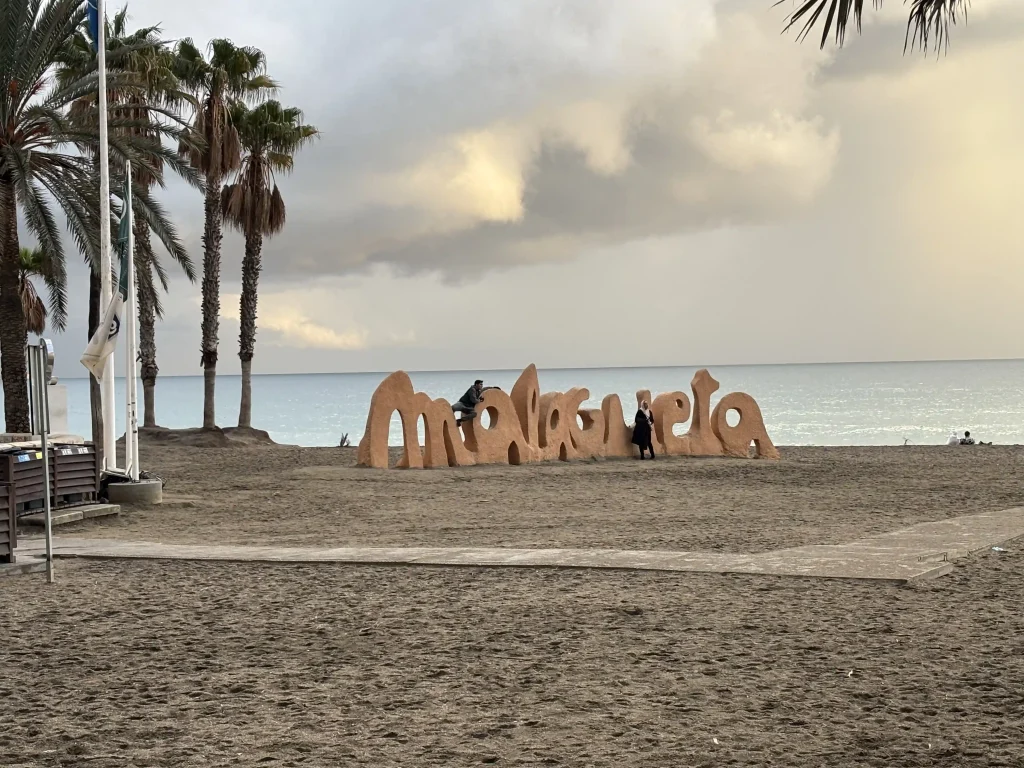
The famous “Malagueta” sign is a work by artist Machú Harras, known for capturing Málaga through numerous pieces of urban art. It’s made up of large sculptural letters, about 2.6 metres high and 1.10 metres wide, located on Playa de la Malagueta — Málaga’s urban beach par excellence.
The letters stand along the seafront promenade, near Plaza del Padre Ciganda, and are one of the most photographed spots in the city, loved by both visitors and locals for selfies and travel memories.
Continuing eastward, you’ll come across a succession of beaches that gradually become less crowded.
If you ask any Malagueño, they’ll tell you to skip the first beaches altogether and head straight to Playa de El Palo or Playa de Pedregalejo.
This is where locals go to truly enjoy sea, sun, and salt.
Playa de El Palo, in my opinion, deserves a special mention. It’s one of the most loved beaches among people who live in Málaga (and by me too 😉), and a true institution along the eastern coastline. Located in a historic fishermen’s neighbourhood, it can be reached from the city centre in about 30 minutes by urban bus line 11 (which connects the centre directly to El Palo), or with a pleasant one-hour walk if you feel like exploring the coast on foot.
Here you’ll find a genuinely local atmosphere: real Malagueños, families with coolers, elderly men playing cards, runners at sunset, and seaside restaurants where espetos are practically a religion.
In fact, this is one of the best places to experience Málaga’s true seaside food culture — fresh fish, local specialities, and restaurants with views over the Mediterranean.
If you’d like to dive deeper, keep reading below or immerse yourself in my article Sabor a Málaga, dedicated entirely to the city’s flavours.
Where to Taste the Flavours of Málaga
Dopo esserci saziati di storia, arte e architettura, direi che è arrivato il momento di pensare anche allo After filling up on history, art, and architecture, I’d say it’s finally time to think about our stomachs too 😄
You simply can’t leave Málaga without trying its taverns and bars. Even though the city has modernised over time, Málaga has managed to preserve its authentic spirit, both in its atmosphere and in its cuisine.
Below you’ll find a few quick recommendations for lunch or dinner in the historic centre. If you’d like to explore further and have more time, I recommend reading Sabor a Málaga, an article entirely dedicated to the city and its flavours.
- El Pimpi — touristy but iconic… you have to go at least once! It’s part of Málaga’s history.
- Casa Lola (several locations in the centre) — simple and quick. Great mini burgers and the classic egg with jamón.
- El Tapeo de Cervantes — excellent menu overall. I especially recommend the tuna with cauliflower cream.
- La Tranca — what can I say? Just try it and you’ll understand!
One last note for those heading towards El Palo who, between a swim and a cold beer, want to experience the true cult of fish. In El Palo you’re truly spoiled for choice, but if you’re looking for an experience worth telling stories about, I recommend El Tintero — a one-of-a-kind experience.
There’s no real menu here. Waiters walk through the dining area carrying ready-made dishes, and you’ll have to fight a little to grab what you want among the many customers. The prices of each dish you eat are written directly on the paper tablecloth, and at the end they simply add everything up and give you the bill — chaotic, fun, and unmistakably Málaga.
Málaga is a city that invites you to spend time outdoors, to walk without rushing, and to live your days between the historic centre, the sea, and authentic neighbourhoods. That’s why, when packing your suitcase, it’s better to think about comfort rather than quantity.
The sun is one of the city’s absolute stars, at any time of year. A hat, sunglasses, and a good sunscreen are essential even in winter: Andalusian light is intense and you really feel it, especially during long walks.
You’ll walk a lot, often on stone streets or gentle uphill paths, so wearing a pair of comfortable, well-tested shoes is essential. A reusable water bottle is a great ally, especially if you visit places like the Alcazaba or Gibralfaro Castle, where shade isn’t always guaranteed. I bought a foldable silicone one at Natura, but I can’t find it on their website anymore. Anyway, here you can find a similar one — it saves space once you’ve used it.
If you’re planning to go to the beach, there’s no need to bring half your house with you: a lightweight towel (I bought this one so I always have it with me when travelling to seaside cities), a pair of sandals, and a practical bag are more than enough. Málaga’s urban beaches are informal and perfect for an impromptu break between visits.
Finally, even though the climate is mild, it’s worth bringing a hoodie or a light jacket for the evening, when the sea breeze can make the air cooler.
Small items like a power bank may seem like minor details, but they make your days much easier, especially if you’re using maps to get around and want to capture every corner and moment of your trip. I was given this one as a gift and I’m very happy with it. There are many different models out there, but regardless of which one you choose, I definitely recommend having one with you.
And with this, we’ve reached the end.
Málaga is one of those cities that can’t truly be described.
You can talk about its places, its colours, its scents… but its soul — that’s much harder to put into words. I only hope I’ve managed to pass on at least a small part of what it has to offer. If not everything, then at least un poquito.
Before saying goodbye, though, I’d like to leave you with one last piece of advice: Málaga needs to be lived in all its forms.
By day and by night, without rushing, letting yourself be guided by its rhythm. Go along with it and it won’t let you down. It’s a city that doesn’t impose itself, but slowly reveals itself, showing you how to live well between culture, sunshine, and a Mediterranean atmosphere — easing tensions one by one.
And then something strange happens.
One day, without even realising it, you’ll think about Málaga and a genuine smile will appear on your face. And in that moment, you’ll understand that Málaga has changed you, just a little.
And that from then on, you’ll be a new you.
If after Málaga you want to continue your journey in the surrounding area, Frigiliana and Nerja are among the most beautiful villages in Andalusia, perfect for a day trip.
Málaga is often one of the first stops on an Andalusia itinerary, which can then continue to Granada, Córdoba or even Cádiz. If instead you are planning a broader trip, you can take a look at the Andalusia page, where I’ve gathered cities, itineraries and practical tips.