The Basque Country: a land with a unique heart
For several summers, I’d been craving a different kind of experience. Not the usual mix of culture, heat, beach and sea, but a journey that would truly surprise me.
Something that stepped off the well-worn tracks of the most obvious destinations.
I wanted a road trip, but far from chaos and crowds and, why not, with a more humane temperature too.
And that’s exactly how, almost naturally, I started thinking about the Basque Country.
I have to admit, the idea didn’t immediately spark much enthusiasm within my travel group.
The Atlantic climate, the cold sea, a recent history often told only through its harshest chapters… none of this makes it an “easy” or instantly appealing destination for everyone at first glance.
And yet, for me, the Basque Country had always held a special kind of fascination.
Looking back, I can say it without hesitation: it was one of the most beautiful surprises I’ve ever experienced while traveling. Truly.
The assumptions often made about the Basque Country are deeply unfair, because if you think it’s just another region, be ready to discover a world of its own. A land of linguistic mysteries, Michelin-starred cuisine, breathtaking landscapes, and a culture unlike any other in Europe.
So trust me: if you want to eat incredibly well, immerse yourself in authentic nature, and discover the most proud, independent and slightly rebellious side of Spain, this is the journey for you.
As always, I’ll try to share everything I’ve studied, learned and discovered along my Basque path: a unique land for its history, its ancient language (Euskera), its landscapes and, above all, its people.
And if you’ve already visited Andalusia or Catalonia, forget them.
The Basque Country is something else entirely. You’ll meet a people who are proud, welcoming and deeply rooted in their traditions, yet also modern, innovative and open.
If you’re curious, a foodie, and a lover of culture and nature without giving up comfort, hold on tight… the Basque Country is waiting for you!
Here are a few practical tips to enjoy the Basque Country to the fullest. They’re simple, but they can help you save time, money and a bit of frustration. So keep in mind that:
- Lunch and dinner start late: usually from 2:00 pm and 9:00 pm onwards; many places therefore open a little later than you might expect.
- The day starts about one hour later than in Italy, so there’s no point in waking up too early if you want to find shops open, people walking around and, in general, some street life.
- Markets close at 2:00 pm, so if you want to eat there, plan ahead.
- Many museums offer free entry on Sundays after 4:00 pm.
- Renting a car is essential. The alternative is the train or the bus, which connect the main cities but make getting around a bit too slow and complicated if you want to explore nature.
- Free parking in cities can be tricky, but with a bit of clever planning, it’s doable.
- The cuisine is considered one of the best in the world. This is the land of pintxos, and San Sebastián has the highest number of Michelin stars per square meter in the world.
- From May to September is the best time to visit. July and August are a bit more crowded. Spring and autumn are wonderful for their colors.
A bit of history of the Basque Country
One of the first things you’ll notice when you arrive in the Basque Country is that everything feels different from the rest of Spain: shop signs are written in an indecipherable language, the atmosphere is different.
Not just from the rest of Spain, but—at times—from the whole of Europe.
Here, local pride runs incredibly deep. More than anywhere else.
The reason lies in a history that stretches back millennia, shaped by resistance, mystery and a tenacious identity. Let’s discover it together, because it truly is an epic story—and it begins far back in time.
Before the Romans, before the Celts, even before Europe had a name, these lands were already inhabited.
Until around 500 BC, the region was known as Vasconia and its inhabitants as the Vascones. There was no state and no unified kingdom: instead, there were autonomous communities, small yet interconnected, moving freely on both sides of the Pyrenees (including what is now the French Basque Country).
This was a perfect place in prehistoric times.
The natural caves in the mountains offered shelter from the cold and from animals, and it’s no surprise that some of the oldest cave paintings in Europe have been found here, along with tools for hunting and gathering.
Agriculture arrived late—much later than elsewhere.
Not due to a lack of ability, but because this is not a land that is easily tamed. Mountains, steep slopes and an Atlantic climate made large-scale farming difficult, while at the same time keeping “outsiders” at bay.
This is where one of the deepest traits of the Basque character was born: isolation, not as closure, but as protection.
For this reason, many scholars consider the Basques to be direct descendants of those prehistoric populations. Genetic and linguistic studies strongly suggest this: they are a true cultural island, having survived every major European invasion.
When the Romans arrived, history seemed to take the same direction it had elsewhere.
They built roads, bridges, aqueducts, introduced new agricultural techniques and founded cities. Among them was Pompaelo, today’s Pamplona, which almost certainly owes its name to Pompey the Great, the Roman general who consolidated control over the area in the 1st century BC.
And yet, beneath the surface, something never truly changed.
Despite centuries of Roman presence, the Basques continued to speak their own language, organize themselves according to their own rules and recognize themselves as a distinct community. Romanization was superficial, especially in the mountainous areas.
After around 600 years of Roman rule, the Visigoths arrived and conquered parts of the Iberian Peninsula, though with a lighter touch.
It was the Franks who represented the first real threat to the Basques. Remember the Battle of Roncevaux? That battle marks the moment when the Basques proved that knowing one’s land can be more powerful than any army. The Pyrenees, an obstacle for others, became a weapon for them.
Meanwhile, from the south, another great power was advancing: Islam. Al-Andalus was born, spreading northwards from Andalusia.
The Vascones thus found themselves caught between two worlds: Franks to the north, Arabs to the south. To survive, they needed better organization.
This led to the birth of the Kingdom of Pamplona, which would later become the Kingdom of Navarre.
And it is at this moment that something truly unique happens.
While medieval Europe was structured according to the classic hierarchy God → King → Nobles → People, in the Basque territories a completely different model took shape: the fueros.
The fueros were not laws imposed by a sovereign.
They were ancient rules, born from the everyday life of local communities and later written down. They established that the population governed itself, without foreign officials; that taxes were decided locally; that no one could be conscripted outside the territory; and that justice was administered on the spot.
Above all, any king had to swear to respect them if he wished to be recognized.
Here, power worked in reverse: Community → Local laws → King (only if he accepted the pact).
The fueros didn’t just protect rights.
They protected identity.
You’ll often find yourself looking up at menus, signs and advertisements and noticing words that don’t resemble anything you’ve ever seen before.
They’re not Spanish, not French, not even Latin. They seem to come from another world.
You’ve just encountered Euskera, the greatest linguistic mystery in Europe.
Euskera, a co-official language in the Basque Autonomous Community and in parts of Navarre, is a true linguistic rebel: it is a language isolate.
It is neither Indo-European, nor Latin, nor Germanic, nor related to French or Spanish — not even remotely.
It is the only one of its “kind” on the entire continent. It has no living close relatives.
It’s as if it were the last survivor of a prehistoric language family, probably spoken in Europe before the arrival of Indo-European languages, over 5,000 years ago.
Some scholars link it to the languages of the continent’s earliest inhabitants, the same people who painted the caves of Altamira, not far from here.
Others, going much further, have even tried to relate it to the Maya — a fascinating idea, but one with no concrete evidence.
The truth is that Euskera remains, even today, an open mystery.
Its structure is also completely different from that of the most common European languages.
Euskera follows a logic of its own, based on an ergative system, which to speakers of languages like Italian, Spanish or French can feel almost “backwards.”
It’s as if it played by its own rules, written in another time.
Like Latin or German, it uses cases to decline words, but here things get interesting:
while Latin has six, Euskera uses at least twelve, adding small particles to the end of words to indicate place, direction, origin or accompaniment.
A simple example:
- Etxe = house
- Etxea = the house
- Etxean = in the house
- Etxera = towards the house
The word stays the same: it’s the world around it that changes.
Today, Euskera is spoken by around one million people, out of a population of just over three million.
Its presence varies greatly: you’ll hear it everywhere in Donostia (San Sebastián) and in small inland villages, less so in Bilbao or Vitoria, where Spanish is more dominant.
One thing is certain, though:
even if you speak Spanish or French fluently, you won’t be able to guess a single word.
It’s a true secret code.
Ahhhh… Euskara ederrak!
What a beautiful language, Basque is.
For centuries, this balance held. Navarre grew, expanded and controlled territories far larger than those of today. Then, slowly, it began to retreat, squeezed by the rise of Castile on one side and Aragon on the other. It lost land, adapted, but never disappeared.
And this situation lasted for about 200 years. In the 15th century, the Iberian Peninsula was divided into four major kingdoms: Castile, Aragon, Granada and Navarre.
With the marriage of Isabella and Ferdinand, Castile and Aragon united, creating a new Catholic superpower. The pressure on Navarre became immense.
Although it’s often said that the Reconquista ended in 1492 with the conquest of Granada, the truth is that Navarre resisted until 1512. Even after that, it retained a form of self-government that granted it broad autonomy, while still recognizing the authority of the Catholic Monarchs.
It was a delicate coexistence, never total submission.
This position allowed the Basques to preserve their own rules, but also to take advantage of the opportunities offered by the new empire: the Americas (it’s said that Christopher Columbus recruited his first sailors right in the Basque Country) and trade—especially iron, which played a key role in the economic development of cities like Bilbao.
Then came the most difficult centuries.
The French Revolution, in the name of equality, forcibly annexed the Northern Basque Country, whose inhabitants had never truly felt French.
In Spain, civil wars and the drive to centralize power at the state level led to the definitive loss of the fueros. For Madrid, it was “modernization.” For the Basques, it meant breaking a pact that had lasted for centuries.
This is when movements supporting modern Basque nationalism began to emerge. In the western area (Biscay), Sabino Arana rose to prominence, speaking of independence not only in political terms, but also in terms of identity. He founded the PNV, created the ikurriña flag and coined the name Euskadi.
This independent spirit was partially muted by the First World War, but it was above all with the rise of Franco’s dictatorship that everything was “officially” silenced—under penalty of death.
The 20th century would indeed be the harshest.
During the Spanish Civil War, the Basque Country sided with the Republic and suffered brutal repression by Franco’s army. The bombing of Guernica in 1937 (immortalized by Picasso), carried out by Italian aviation in support of Franco, marked the beginning of 40 years of dictatorship: Euskera banned, autonomies abolished, identity driven underground and widespread violence.
In this climate of terror, ETA was founded in 1959, first as a cultural reaction and later as an armed tragedy that would deeply scar Basque society.
For attentive travelers like us, it’s important to understand that this is not a “folkloric” tale, but recent, lived history, with wounds still healing. Today, fortunately, ETA is no longer active and has been completely dissolved, but there’s no denying the deep mark it left on the history of the Basque Country.
In 1978, with the new Spanish Constitution, the Basque Autonomous Community was established. It has its own police force (Ertzaintza), an autonomous healthcare system, a dedicated education system (with Euskera-language schools, the ikastolak), and—crucially—the Concierto Económico. Simply put: the Basques collect all taxes within their territory and send only a portion to Madrid. This has generated wealth and excellent public services.
Today, the Basque Country is one of the most prosperous regions in Spain: industrialized, modern, strongly rooted in its identity and politically pluralistic.
When you sip a txakoli, bite into a pintxo, or walk through modern Bilbao and elegant Donostia, remember that all of this is the result of a freedom reclaimed through patience, resilience and memory.
And now, we can truly begin the journey. Ongi etorri to the Basque Country! Welcome to the Basque Country!
What to see in the Basque Country
Now that we know its history well, all that’s left is to prepare for the trip. But get ready properly, because you’re not about to visit “just” a region—you’re about to enter a world of its own.
Here you’ll find modern icons living alongside storybook villages, a cuisine that alone would be worth the journey, a nature that at times becomes raw and wild, and above all, you’ll meet a proud, authentic people, deeply connected to their identity.
It will be an itinerary of around 8 days, blending wonder, flavors, walks, views and character.
And this is how our journey begins: in Bilbao.
Bilbao: a masterpiece of urban transformation
Bilbao is a city with countless facets. A place where you immediately sense a difficult and painful recent past, one that in recent years has tried to leave it behind and now seeks to present itself as a dynamic, open and cultural city.
If you’re expecting a grey industrial town, get ready to be amazed. Bilbao is the story of a miraculous rebirth, a true masterpiece of urban transformation that has turned it into one of Europe’s capitals of design, gastronomy and quality of life.
Until just before the year 2000, the city lived on steel and shipyards—an industrial, port-based reality. My first impression was that of seeing an industrial 19th-century London projected into the present. Then, in 1997, everything changed with the arrival of the Guggenheim Museum Bilbao. For the city, this is not just a museum. It is the symbolic engine that pulled Bilbao from the 20th into the 21st century, transforming it from a port city into a clean, green, energetic place where avant-garde architecture coexists with a medieval old town.
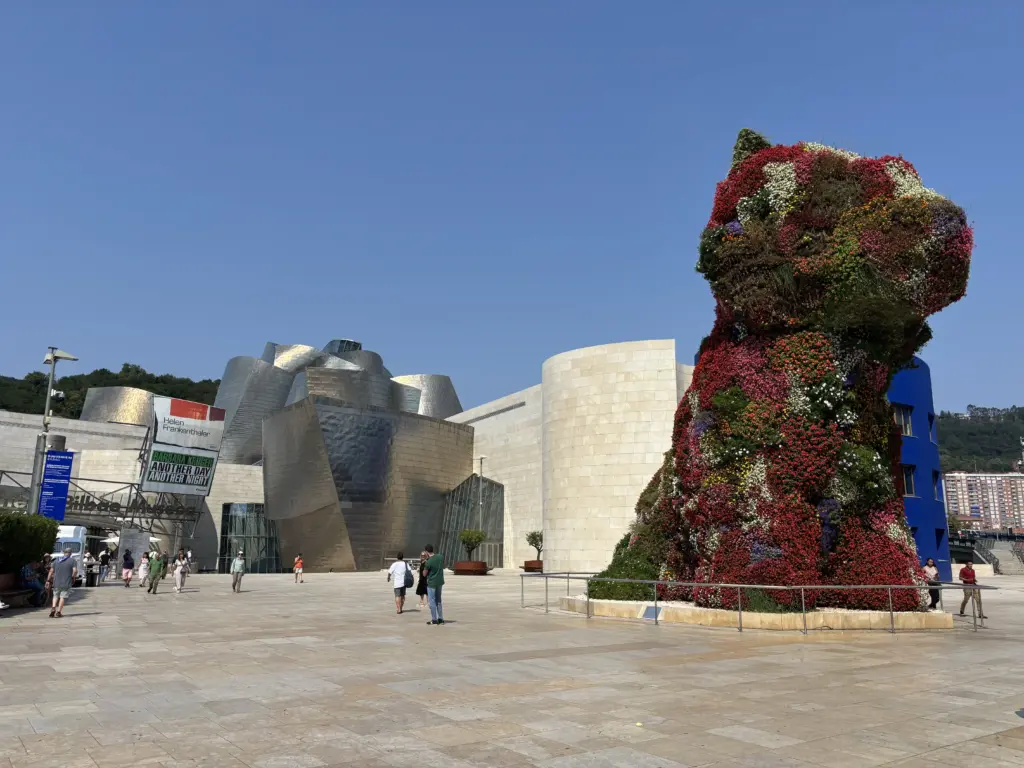
Our first stop, therefore, can only be the Guggenheim. But don’t rush inside just yet. There’s a real show outside as well. The building is made of titanium plates that from afar appear grey, but up close shimmer in pink, gold and blue, depending on how the often-filtered Basque light hits them. It’s pure magic.
Standing guard at the entrance is the gigantic Puppy, Jeff Koons’ flower-covered dog—you’ll inevitably stop for a photo. It’s impossible to resist. But then you’ll notice the other guardian: “Maman”, Louise Bourgeois’ spider as tall as a building. Rather than being frightening, here—set against the museum—it feels almost protective, almost maternal. Visiting the Guggenheim is a must if you come to Bilbao. The temporary exhibitions are just as worthwhile as the permanent collection. In short, you haven’t truly been to Bilbao if you haven’t experienced the Guggenheim and its modern art.
Even today, people in Bilbao still talk about before 2000 and after 2000. The Guggenheim isn’t just a unique museum; it’s a true temporal marker.
But Bilbao isn’t only about avant-garde architecture. If we walk along the Ría and slip into the Casco Viejo, it’s like stepping into another century—without losing energy. Get lost in the seven main streets of the old town, known as Las Siete Calles: Somera (the highest and oldest, once flanked by city walls), Artecalle (the central street, home to artisans and historic shops), Tendería (traditionally associated with merchants), Belostikale (once the fishmongers’ area near the market), Carnicería Vieja (site of the first slaughterhouse), Barrenkale (home to the historic Arana Palace) and Barrenkale Barrena (the lowest street, often flooded by the river). You’ll find a colorful, timeworn world. Once streets of trades, today they form a continuous corridor of pintxos bars, small shops, Euskera signs and real, everyday life.
The meeting point for everyone is Plaza Nueva, a perfect square surrounded by arcades—once the most “in” square in the city. On Sunday mornings it buzzes with collectors selling all kinds of items. In one corner, a small doorway leads to the Cathedral of Santiago of Bilbao, a key stop on the Northern Way of the Camino de Santiago.
Then comes the temple of food: the Mercado de la Ribera. You walk in and are instantly struck by it—a vast Art Deco building overlooking the water. On the upper floor, the stalls are an explosion of color: silvery fish that look just caught, hanging Iberian hams, wheels of Idiazabal cheese. On the lower level, the pintxos area: dozens of counters where you can order a drink and a delicious bite while watching the Ría flow by. This is where Bilbao locals have breakfast like kings.
Leaving the market, we follow the course of the Ría toward the sea. On the right, the old façades of the Casco Viejo; on the left, the new Bilbao.
We cross the Zubizuri, Santiago Calatrava’s white, undulating bridge, and arrive in the Abandoibarra district. Where cranes and shipyards once stood, there’s now a park, a university library inspired by a ship, and elegant skyscrapers. It’s the tangible proof of the urban miracle. Turn the corner, and the Guggenheim reappears from a new perspective, framed by the red arch of the Puente de La Salve, offering a breathtaking view.
But to truly understand it all, we need to go higher. We take the Artxanda funicular from Plaza del Funicular. In just three steep minutes, we move from city houses to greenery. At the top, the viewpoint gives you exactly the panorama you’re looking for: the entire city spread out in the valley, the Ría slicing through it like a ribbon, the Guggenheim gleaming, and mountains all around. This is the moment when everything clicks—geography, history and transformation finally make sense.
Back down in the city, it’s time for the true evening ritual: pintxos hopping. The rules are simple: walk into a crowded bar, squeeze your way to the counter, choose with your eyes among hundreds of edible works of art on display (the Gilda, the olive with anchovy; txangurro, spider crab; jamón croquettes), order with a gesture and eat standing up, chatting amid the lively buzz. Then move on to the next bar. It’s a social, vibrant, authentic gastronomic tour.
If you want to explore what to see in more depth, I recommend reading my article Bilbao beyond the Guggenheim: Aste Nagusia, history and Basque tradition, with itineraries and practical tips that will make you want to come back soon.
Because Bilbao is a city that embraces you and, at the same time, surprises you. And trust me: once you’ve experienced it through culture, art, history and pintxos, you’ll feel an irresistible urge to come back.
From Bilbao to San Sebastián
To reach San Sebastián from Bilbao, my heartfelt advice is to take your time and drive along the main coastal road between the two cities, the N-634 (with parallel stretches such as the BI-10). Known as the Basque Coast route, this panoramic itinerary of about 100 km is a sure bet: winding roads overlooking the ocean, fishing villages and breathtaking views.
It’s a journey into the soul of the Basque Country, shaped by the power of the Atlantic Ocean, the green landscapes of the Basque Natural Park, a deep maritime tradition and a gastronomy that feels like a celebration. You’ll also pass through dense forests and still-untouched nature. Take two or three days, drive slowly and let yourself be surprised.
I split the trip in two main routes. I hope you will enjoy them!
🚗 Basque Country on the road: from Bilbao to San Juan de Gaztelugatxe
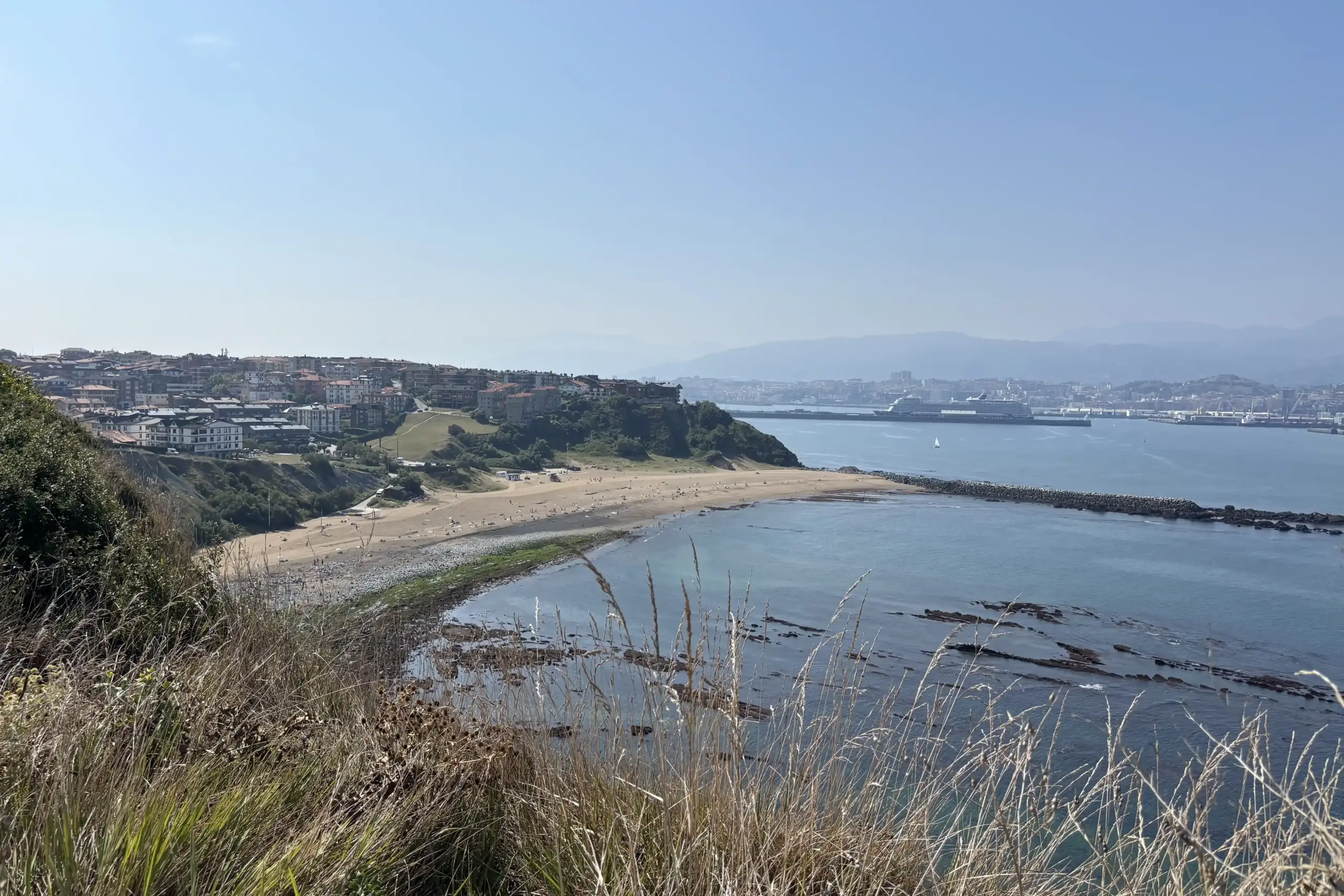
Portugalete & Getxo: the Transporter Bridge and the Cliffs
The journey begins as you leave Bilbao heading toward Portugalete. Here, the first stop is iconic: the Vizcaya Bridge, the suspended transporter bridge built in 1893 and declared a UNESCO World Heritage Site. This iron giant connects the two banks of the Nervión Estuary and is a fascinating feat of engineering. Ride the suspended gondola: the view over the Cantabrian Sea and the river mouth is the perfect start to the adventure.
We made the mistake of wanting to cross it on foot. Unfortunately, the panoramic walkway (50 meters high) is open only in good weather (wind under 50 km/h and light rain), and that day the weather was truly awful, so we had to give up. We were told, however, that the car crossing always operates, so you shouldn’t have any issues if you choose to cross by car—but from experience, check the weather first… it’s better!
On the other side of the bridge, Getxo awaits. We loved it for its tranquility and the magnificent coastal path that starts from the Molino de Aixerrota (there’s convenient parking nearby). Wander on foot among dramatic cliffs and an endless sea.
We would have loved to stay here much longer. If you can and have the time, I’d spend a full day in Getxo, especially in the Galea lurmuturra area.
Continuing eastward, the coast reveals a series of wild and beautiful beaches, each with its own soul:
- Playa de Gorrondatxe (Azkorri): A beach of dark sand nestled between dunes and jagged rocky outcrops. A paradise for experienced surfers (the infamous Akanti wave) with a free-spirited vibe. Fine black sand, sea caves and fiery sunsets: descend the steep steps from the parking area (free but almost always full), swim with caution if you can handle the cold, and feel the roar of the Atlantic—pure Basque adrenaline.
- Playa de Sopelana: Two kilometers of wind-swept golden sand. Surf reigns supreme here, and the green hills above the beach are launch points for paragliding. You’ll find lively chiringuitos, showers and services.
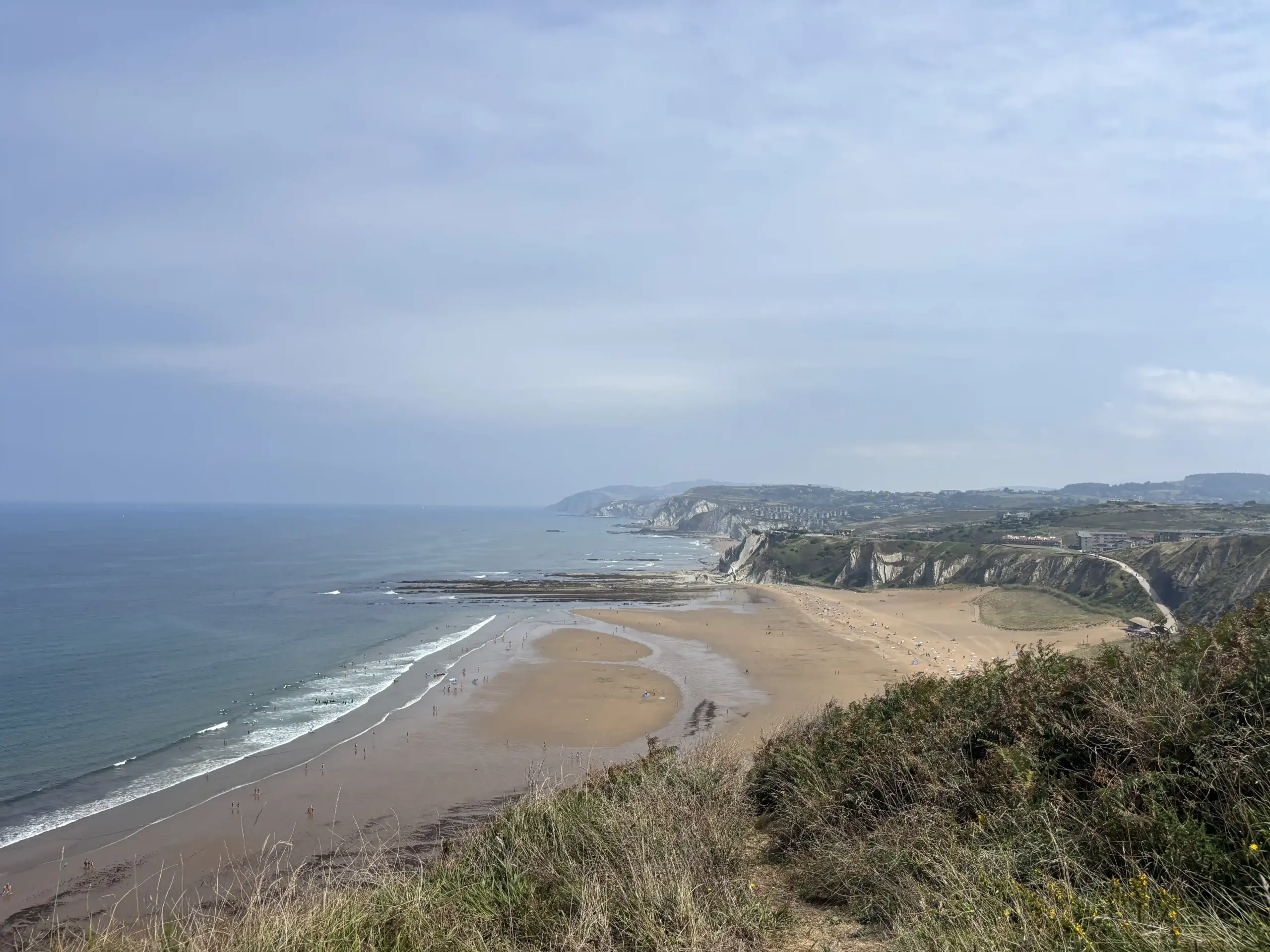
- Playa de Arrietara-Atxabiribil: An 826-meter golden shoreline famous for its ancient cliffs with horizontal faults unique in the world—a true open-air geology lesson. Excellent for surfing and certified for cleanliness. Park nearby, walk the trail and immerse yourself in a breathtaking natural scene.
- Playa de Barrika & Playa de Muriola (La Cantera): Two hidden gems. Barrika is wild and dramatic at high tide. Just ahead, Muriola is a secret cove between vertical cliffs, east-facing for spectacular sunrises. No services for an authentic vibe—explore coastal paths and feel the untamed ocean. A true treasure for those seeking pure isolation.
- At the mouth of the Butrón estuary, you’ll find Plentziako Hondartza, a sandy beach shared with Gorliz that’s accessible and family-friendly. Endless walks, calm waters and lighthouse views: easy parking, enjoy local pintxos, and cycle along the bike path.
Bakio and San Juan de Gaztelugatxe
Bakio is a lively village with Playa de Bakio, a wide beach framed by postcard-perfect cliffs—ideal for mellow surfing and coastal walks. Try the bakalao and soak up the local vibe. From here, you can also enjoy sweeping views from the Bakioko Begiratokia (Parque Mirador de Bakio).
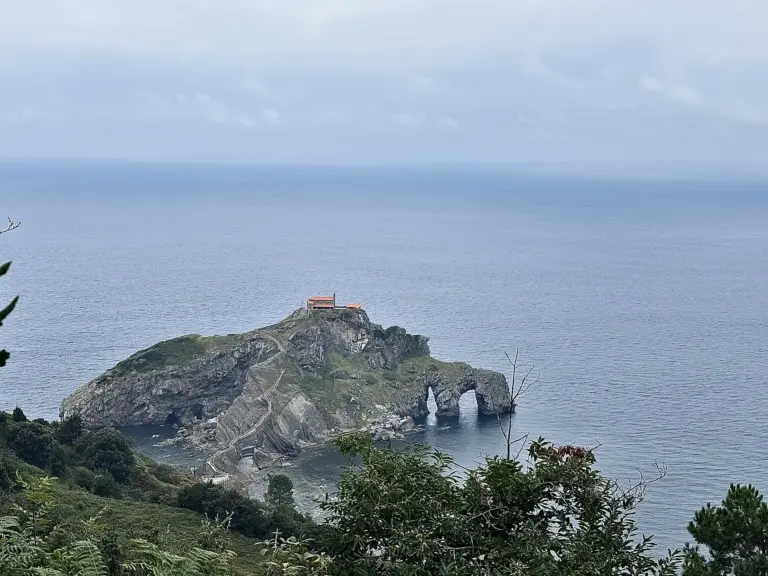
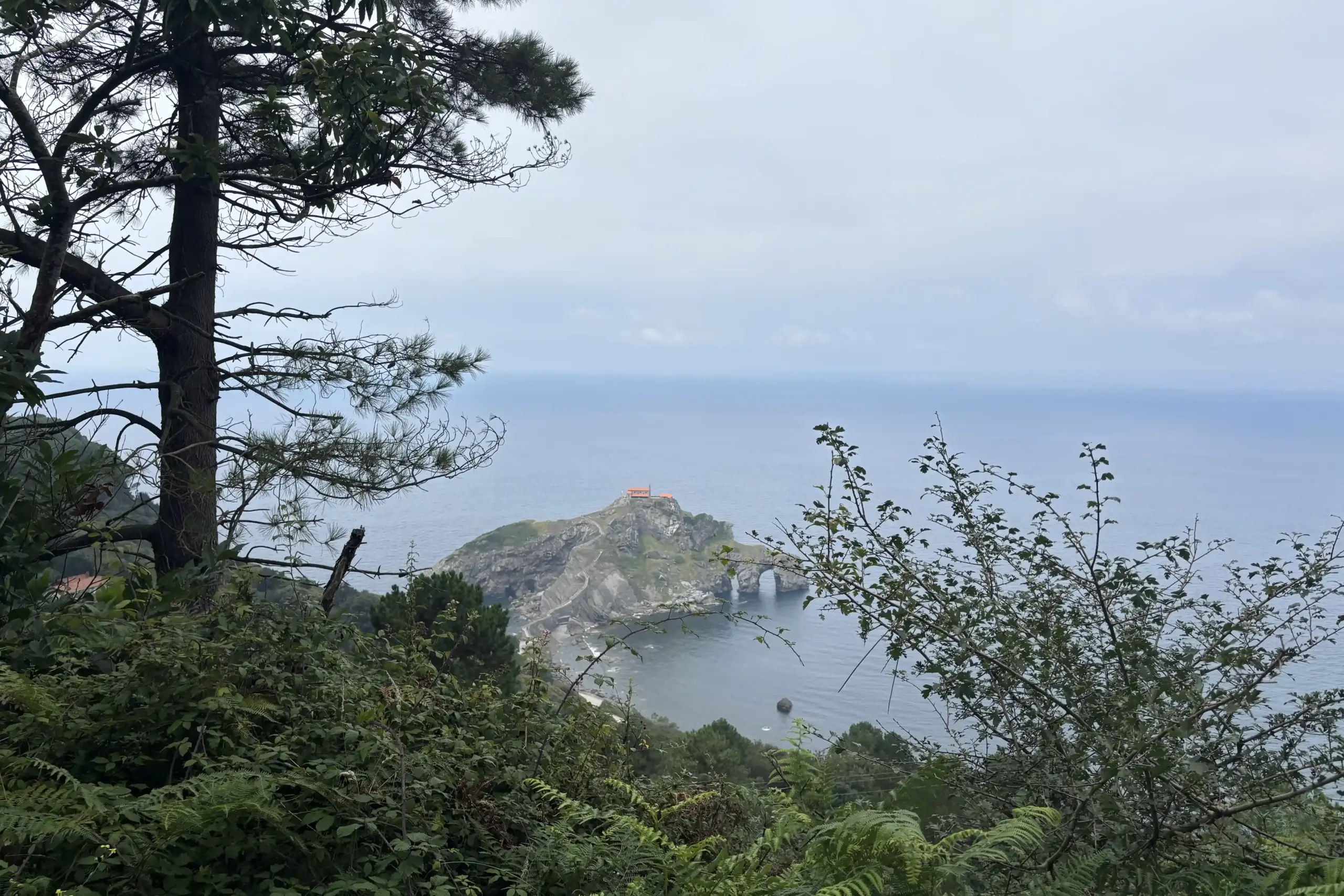
From Bakio, it’s very easy to reach one of the must-see attractions of the Basque Country: San Juan de Gaztelugatxe. 241 steps carved into the ocean rock lead up to the 12th-century hermitage (the original dates back to the 9th century and was rebuilt when it became a convent). Don’t forget to ring the bell three times—legend says it can grant your wishes (it was once an anti-storm ritual!). There’s also a small footprint carved into the steps: place your foot there and you’ll be healed of all ailments (or almost…).
In recent years, visitor numbers have surged because the site was used as Dragonstone Castle in Game of Thrones. Booking is therefore essential, especially in summer, as access is limited. In theory, a small number of tickets are released on-site at the top of each hour (for example, at 2:00 pm), but getting one is far from easy.
Honestly, the most memorable part for me was the climb itself. You’ll work up a sweat on the staircase, but you’re rewarded with incredible views—deep blue water and powerful waves. Pure emotion.
If you can’t get in, there’s a cliffside path that still lets you enjoy spectacular views of San Juan de Gaztelugatxe.
If you want to turn a simple trip into an experience that truly stays with you, forget city hotels. The true soul of the Basque Country is felt, breathed and lived in its rural houses. These are ancient caseríos—stone and wood farmhouses lovingly restored, hidden among oak forests or with a window framing the ocean in the distance. Choosing one of these places means choosing a different rhythm.
The magic lies in the double life they offer. You have breakfast in a private garden, with the only sound being bees among the flowers. Half an hour later, you’re parking by the cliffs for a hike along the **Flysch of Zumaia**, or sipping a **txakoli** in a fishermen’s bar in **Getaria**. That’s the genius of this land: wild coast and pastoral hinterland are not separate worlds, but two sides of the same beautiful coin.
Basque rural houses are almost always family-run. This isn’t a detail—it’s everything. The owners welcome you with the pride of opening their own home and often become your most valuable guides. It’s a kind of genuine hospitality that has no price.
The main reference point to find them is Nekatur, the official portal for Basque rural tourism. You’ll also find many options on Booking.com if that’s more convenient. In summer and during long weekends, book at least 2–3 months in advance. The most beautiful houses—especially those with sea views or panoramic locations—sell out fast. In the off-season, you’ll benefit from better rates and an even deeper sense of peace.
Expect simple yet well-kept furnishings, often a fireplace or wood-burning stove, and home-style cooking. Wi-Fi can be a bit unreliable at times, but that’s part of the charm: this is where you truly disconnect.
We stayed in two places: Hotel Rural Natxiondo (Andres was absolutely wonderful) and Casa Rural Errota-Barri (unforgettable!).
Choosing a rural house is a philosophical choice. It means preferring to wake up to birdsong, enjoy breakfast with a basket of cherries offered by your host, and embrace a rustic, simple setting. Trust us—if you can, opt for a rural house: an authentic choice you’ll carry with you as a lasting memory.
🚗 Basque Country on the road: from Bermeo to San Sebastián
Bermeo
And so we arrive in Bermeo, the authentic heart of Basque fishing tradition. Get lost in its medieval casco viejo, with labyrinthine alleys, visit the Fishermen’s Museum and the morning market overflowing with fresh cod, and above all, go pintxos hopping through its historic taverns. Try a txakoli pintxo and breathe in the city’s seafaring soul.
If you’re craving even more 360° views over cliffs, harbor and an endless coastline, head up to Punta Erleko (Begiratokia). Golden sunsets, no crowds—perfect for a romantic picnic or epic photos. A true insider’s secret.
Mundaka
Continuing westward, Mundaka welcomes you with its legendary left-hand wave, considered one of the best in Europe: when the sea roars, surfers from all over the world come here to challenge the Atlantic along its 4 km-long wave.
But if you’re without a board, head up to the Ermita de Santa Catalina viewpoint: a natural balcony over the ocean with spectacular views of the estuary and cliffs. Fine sand, an alternative vibe, and dreamy sunsets—what more could you ask for?
Guernica
After the emotions of Bakio’s beaches and the energy of Mundaka, we decided to make a detour and visit Gernika-Lumo—a place that immerses you in the cultural and historical depth of this land. It will help you appreciate even more the resilience, pride and warm humanity you’ll encounter in the villages that follow.
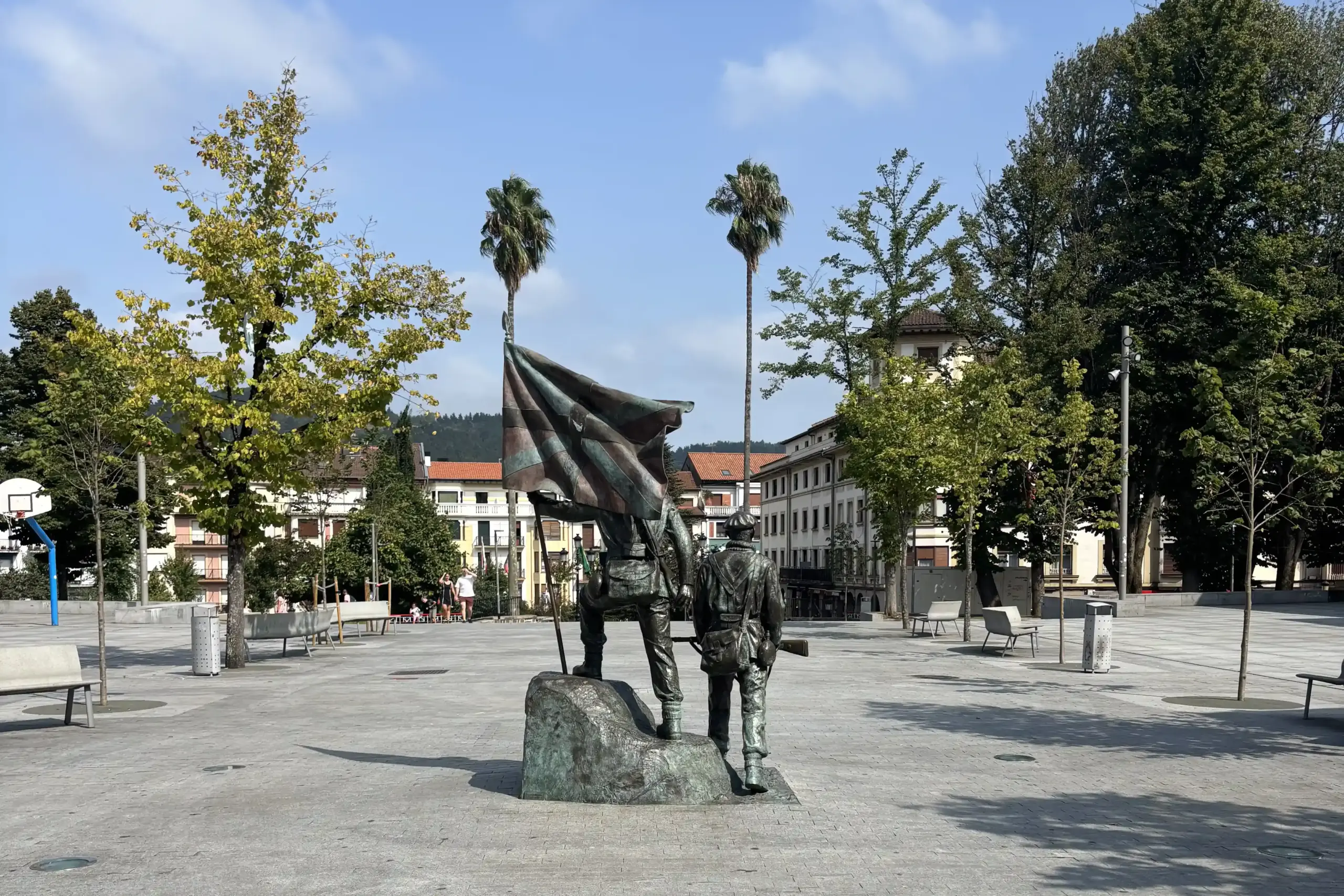
Far from wild beaches and picturesque harbors, Guernica is the beating heart of Basque identity. A city the world knows for the tragic bombing of 1937, immortalized in Pablo Picasso’s masterpiece, but which for the Basques has represented for centuries the living symbol of their freedoms.
If you’re only looking for beach postcards, you might pass it by. But if you truly want to understand the culture you’re visiting, a stop here is essential.
At the center of it all stands the Oak of Gernika (Roble de Gernika)—not just a tree, but the sacred symbol of Basque liberties. For centuries, the lords of Biscay swore allegiance to the fueros (local laws) beneath its branches.
Today you can visit the Casa de Juntas of Gernika, the historic parliament of Biscay, with the majestic Sala de la Vidriera, a vast mosaic that tells the story of the Basque people.
The Gernika Peace Museum is also well worth a visit. Its approach is deeply personal and invites you to reflect on how you would react in the face of injustice. It’s a moving and necessary experience.
In the market square you’ll find a large ceramic reproduction of Picasso’s famous Guernica, now housed at the Museo Nacional Centro de Arte Reina Sofía. Throughout the city, statues and murals echo details from the painting, creating a continuous dialogue between the place and the artwork.
Life in Guernica today is lively and peaceful. The rebuilt Plaza del Mercado—where the bombing took place—is the center of social life, home to the Monday Market and numerous bars serving excellent pintxos.
After visiting these places of memory, it feels almost like a moral duty to sit down, order a sidra or a txakoli, and savor the life that has been reborn. It’s the city’s greatest tribute.
Lekeitio
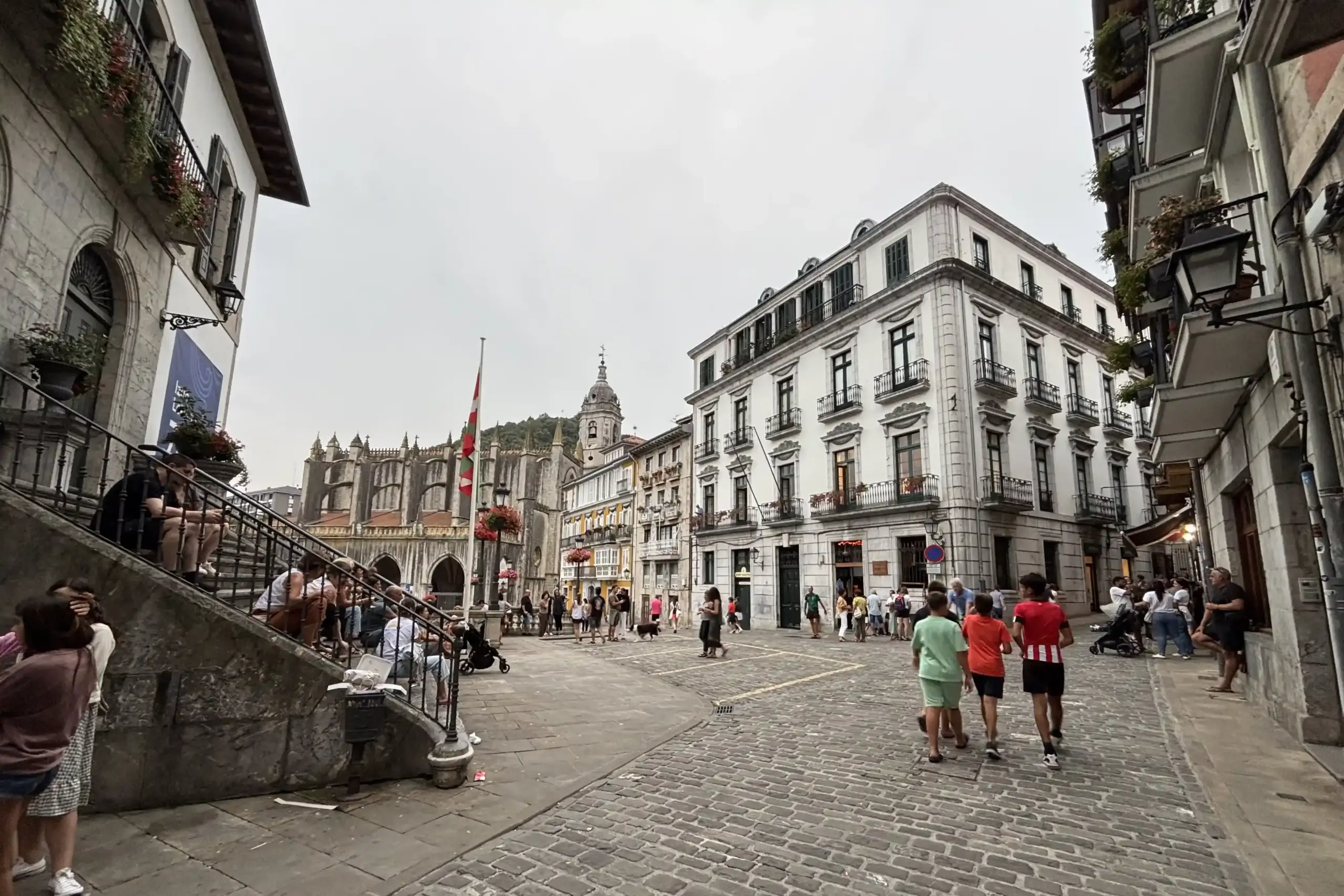
Lekeitio feels like a village straight out of a postcard, with colorful houses reflected in the water. Playa de Isuntza and the soaring Gothic Basilica of the Assumption are already great reasons to visit—but want to know its real magic? It’s the island of San Nicolás, which you can reach on foot at low tide (check tide apps or ask locals—you have a maximum of about 3 hours).
It’s a truly unique experience. Collect mussels (whales were once hunted here…), snap epic photos among the waves, and taste fresh bakalao at the chiringuitos. Dramatic tides, mermaid legends, and summer nightlife—pure coastal magic.
In the 17th century, the Basques were among Europe’s greatest masters of whaling. They sailed far—very far—regularly reaching the waters of Iceland, where they hunted whales and shared coastal stations with the local population.
At first, relations were peaceful and commercial: exchanges, coexistence imposed by climate and hardship, a collaboration driven more by necessity than by trust.
Many towns along the Basque coast—such as Lekeitio—owe their prosperity as ports to that era. The whale was not just prey, but a true source of wealth.
Then, in November 1615, three Basque ships from Gipuzkoa were wrecked along the coasts of the Vestfirðir, Iceland’s remote Westfjords, during a violent storm. Of their crews, 32 sailors survived. Isolated, without resources and in a hostile environment, they began to steal livestock in order not to starve.
The local Danish governor, Ari Magnússon, took advantage of the chaos and tension and issued a decree authorizing Icelanders to kill, rob or imprison the “Spaniards”—the term used at the time to refer indiscriminately to Basques—without any legal consequences.
Officially, it was to maintain order. In reality, it also served to defend the Danish monopoly over whaling and trade.
That 1615 decree was never formally repealed and technically remained in force for four centuries, even though it was never applied again.
Only in 2015, 400 years later, did Icelandic authorities officially repeal it as a symbolic gesture of historical reconciliation. Since then—and we can say it with a half-smile—in Iceland it is no longer permitted to kill a Basque. And yes, Basques probably travel a little more peacefully today.
Zumaia
Zumaia will leave you speechless with its Flysch coast: vertical rock layers 60 million years old, sculpted by the sea (guided tours are also available). If you park by the harbor, you can walk the coastal path among sea stacks and hidden coves like Sakoneta for wild swims. You’ll see—you’ll photograph the impossible. Don’t forget the Hermitage of San Elmo as well!
Getaria
Finally, Getaria, a tiny fishing village best known as the birthplace of fashion designer Cristóbal Balenciaga. Beyond the museum dedicated to him, it offers a charming harbor, txakoli vineyards, and a viewpoint (the “Mouse of Getaria” or the hilltop Christ) with 360° views over the rugged coastline. The must-try dish here is grilled fish, especially sea bream, along with the traditional bacalao al pil-pil in historic restaurants.
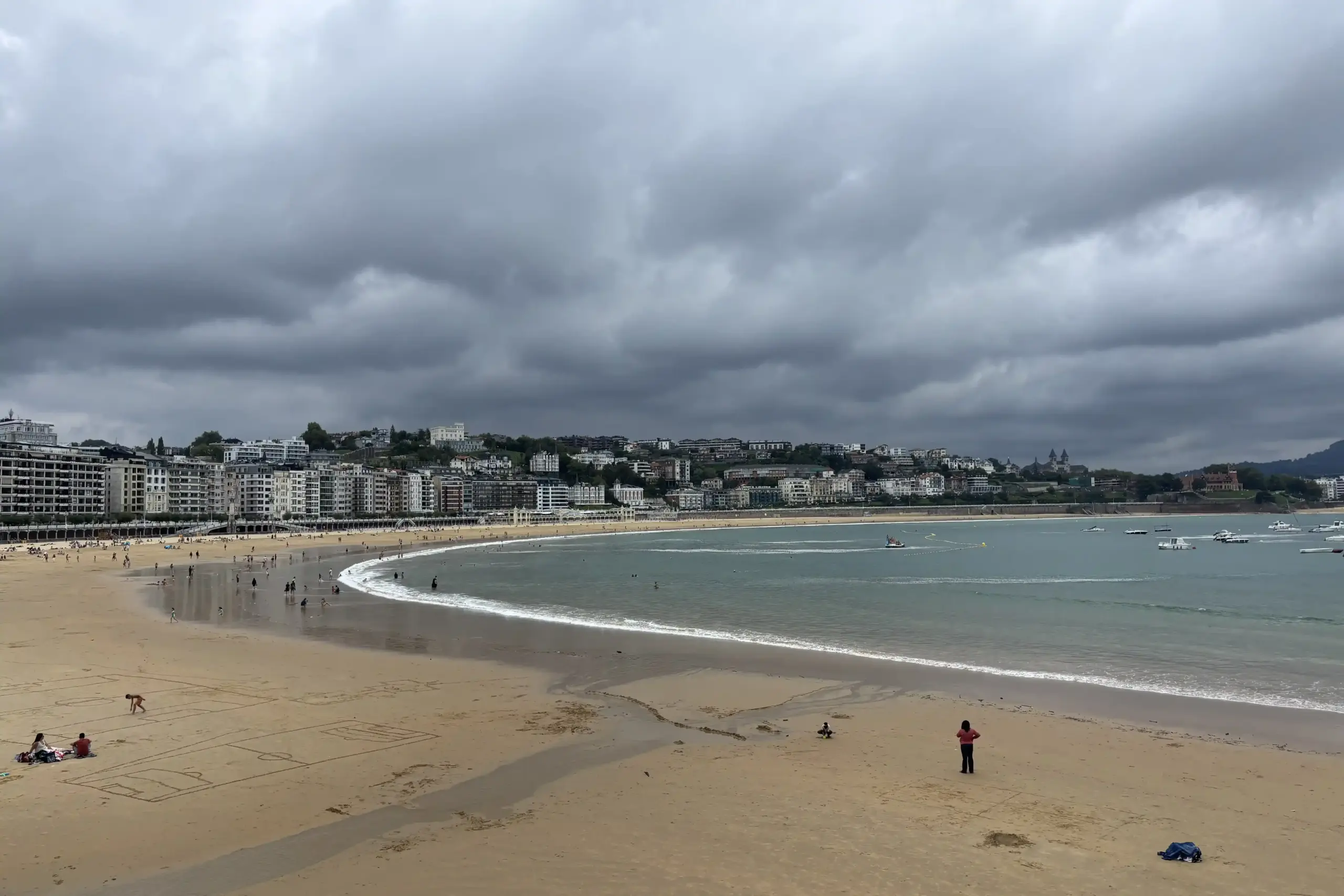
San Sebastián (Donostia): Where Elegance Meets the Ocean
San Sebastián is not just a city in the Basque Country. It’s a feeling. It’s Belle Époque elegance living side by side with surf culture, the salty sea air blending with the aroma of pintxos and gourmet cuisine, the sound of waves on La Concha meeting the sunset. It’s considered one of Europe’s gastronomic capitals and is often said to boast one of the most beautiful urban beaches in the world.
If you’re only looking for a checklist of monuments, it might disappoint you. But if you want to experience a total blend of elegance, great food and a unique atmosphere, get ready to fall in love.
Parking in San Sebastián is difficult and expensive. Luckily, the city is fairly flat, so my suggestion is to park outside the center (we parked here) and use the bike-sharing system (electric bikes included, if you like) to explore the city via the Dbizi app (registration and account activation through the PBSC app are required). The extensive bike lanes let you reach the city’s most beautiful spots with ease.
The first place you’ll encounter is Playa de Ondarreta, the western extension of La Concha. It’s a more family-friendly area, with a playground right on the sand. From here you can admire one of the absolute highlights of the city’s coastline: the Peine del Viento. Walking to the very end, you’ll find three steel sculptures by Eduardo Chillida embedded in the rocks, where waves crash violently on stormy days. They say that when the wind blows through these works, it creates new sounds—almost like voices.
Continuing toward the city center, you’ll walk along the Paseo de La Concha, with its iconic white balustrade, running alongside Playa de la Concha: a shell-shaped bay you’ve probably seen in every photo of the city. Ultra-fine sand, calm waters, and views of Santa Clara Island. During the day it’s perfect for swimming; at dawn, you can see it empty and wrapped in mist—pure magic. In the beautiful park rising above the bay stands the San Sebastián City Hall, an elegant and well-maintained building.
From Playa de la Concha we head toward the Parte Vieja, the historic heart of the city, pulsing beneath flower-filled balconies—where Basque history blends with the scent of the sea and the buzz of bars.
It’s easy to dismiss it as just a “pintxos district,” but that would be a mistake.
The Parte Vieja is a network of narrow streets organized around three main arteries, all meant to be explored slowly. The first is Calle Mayor (Nagusia) together with Calle 31 de Agosto. They form the central axis, the city’s “good living room”: wide streets lined with traditional shops (pastries, quality souvenirs, wine bars).
Another street you shouldn’t miss is Calle Fermín Calbetón, the pintxos artery. The constant flow of people, the deafening chatter, the overflowing bar counters—it’s here that you’ll feel the city’s gastronomic adrenaline.
Calle San Jerónimo, on the other hand, represents the more “resilient” side of the neighborhood, with alternative shops, bookstores, artisan workshops and a calmer, more authentic atmosphere.
In the casco antiguo, there are several places you absolutely must visit, which I’ll list below:
- Basilica di Santa María del Coro: The Baroque church of the Parte Vieja, dedicated to the patron saint of sailors. The façade is a sculptural masterpiece. Stop to admire the portal: it narrates the life of San Sebastián. Inside, the atmosphere is intimate and solemn.
- Iglesia de San Vicente: The oldest in the city (16th century), Gothic and austere. The contrast with Santa María is striking. Step in for a moment of silence.
- Plaza de la Constitución: Called “La Consti” by everyone. The numbers on the balconies are no coincidence: bullfights used to take place here, and they marked the viewing boxes. Today it’s the open-air living room, full of terraces. The bar Atari Gastroleku here has one of the best corners for people-watching.
- Museo San Telmo: Don’t skip it! This museum is a surprise. It’s a former convent with a cutting-edge modern extension. It tells the story and culture of the Basque Country in an engaging way. A perfect free cultural break between one pintxo and another.
Also visit Mercado de la Bretxa. It looks modern in style but keeps its authentic soul, where the donostiarras do their shopping. Aromas, colors, and incredibly fresh fish.
Before leaving the city, you absolutely must visit Playa de la Zurriola and the Gros neighborhood, the hipster soul of San Sebastián. The atmosphere is relaxed, urban, cool. Here you’ll find the Kursaal (the cutting-edge congress hall), but above all renovated working-class houses, design shops, tattoo studios, and bars with carefully curated interiors.
If you want to make the most of the area with some easy walks, head up Monte Urgull. It’s an easy, shaded walk (30–40 min) starting from the Parte Vieja. At the top, the Castillo de la Mota and the Cristo statue give you the most beautiful 360° view over the city. You’ll see the entire Concha from above. On sunny days, it’s simply unmissable.
Another fascinating walk is up Monte Igueldo. Here you can take the old rack railway of the Funicular de Igueldo (an attraction in itself). At the top, a vintage amusement park and, above all, the mirador offering the iconic photo of the entire bay. Tickets can only be purchased in person at the ticket office and include park access.
San Sebastián is not complete without experiencing its beaches, the Parte Vieja for the classic and culinary experience, Gros to understand where and how today’s donostiarras live, and its hills to reframe everything and see it from above.
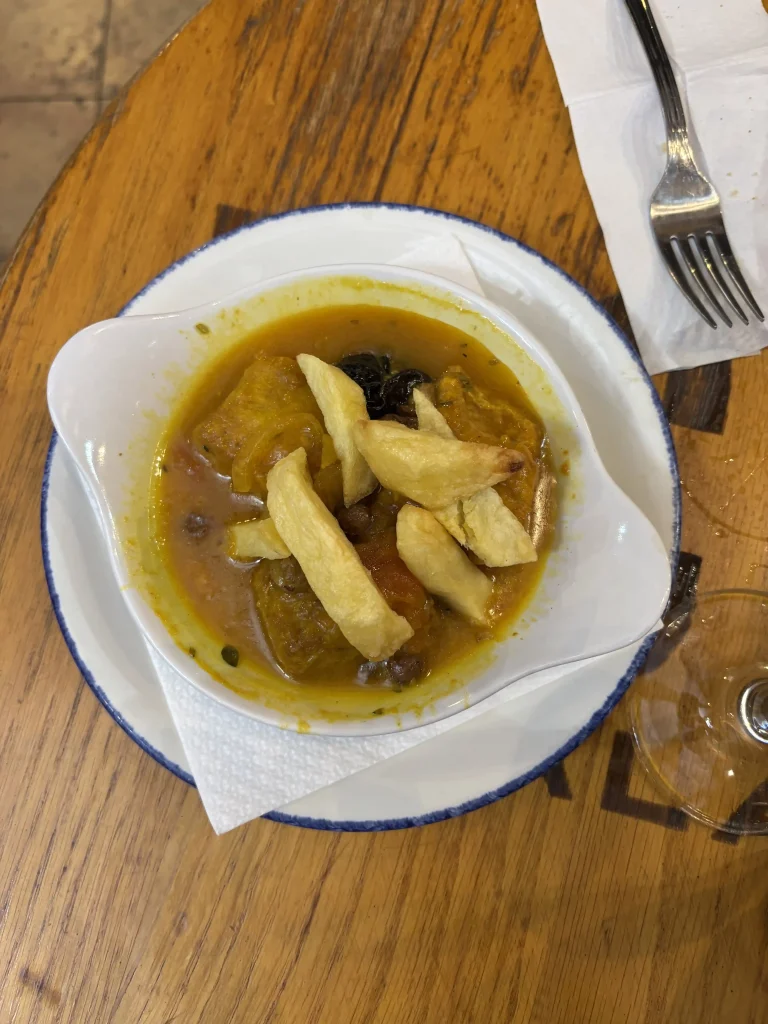
You’ll find counters with ready-made dishes, and you’ll have to “fight” to grab them among the many customers. They will write the prices of each dish you eat on the paper tablecloth and, at the end, add everything up to give you the cuenta.
Traveling in the Basque Country means accepting a small truth: the weather here is part of the adventure. Sun, wind, and rain can take turns within a few hours, and your suitcase needs to be ready for anything.
The winning strategy is layers. Over a t-shirt, always carry a sweatshirt and, above all, a waterproof and windproof jacket — it will be your most useful item. Even in summer, the Atlantic wind can be sharp, so a light scarf or a neck warmer is never too much.
Choose practical shoes: you’ll need comfortable hiking boots for coastal trails, but also a pair of rock shoes for the trickier rocky beaches. And pack your swimsuit and a light towel (I bought this one to always have it with me when I travel to a seaside city): the Atlantic is cold, but the temptation of a heroic dip or a walk with your feet in the water is always lurking — muy tentador.
Don’t be fooled by the cool breeze: the sun can burn. A hat and high-protection sunscreen are essential.
For the evening, just one slightly more refined outfit is enough to match the discreet elegance of San Sebastián.
Almost forgot: a wind-resistant umbrella. I have this one from Samsonite and it survived 2 days of rain, but a girl from Bilbao recommended one from Lendoo , which she had and looked very sturdy — a prueba de viento.
Complete everything with a bit of useful tech — offline maps and a weather app to check often — they can really help. As always, I brought my power bank. It may seem like a small detail, but it makes your days much easier, especially if you keep navigation on to find your way along the trails and want to capture in photos all the best corners and moments of the trip. I was gifted this one and I love it. There are thousands of different types, but regardless of the model, I highly recommend bringing one — imprescindible.
And with this suitcase, you’ll be ready to enjoy the Basque Country without stress, adapting to the rhythm of this unique world.
And so, between the bends of the coastline, the scent of the sea, and the inviting smell of pintxos, our journey through the Basque Country comes to an end. But a trip here — you realize it quickly — doesn’t truly finish when you board the plane home.
What you bring back is something more than photos and souvenirs. It’s the vivid feeling of having discovered a corner of Europe that plays by its own rules. A place that doesn’t need to shout to be noticed, porque its strength lies in its history, in a language that sounds like an ancient song, in food that is a daily art, and in nature that is never just a backdrop, but the absolute protagonista.
Traveling here wasn’t just a simple vacation. It was an encounter. With a proud culture that has chosen to open itself to the world without betraying who it is. With a gastronomy that tells you about the land in every bite. With people whose pride is not ostentation, but a quiet and profound certainty of belonging — muy auténtico.
After all, the true richness of a journey often lies precisely in those destinations that, at first glance, don’t seem “easy” and then end up revealing an entirely new world.
So, if this story made you dream, take it as an invitation to step off the rails and look for what is real, everywhere, sin prejuicios.
Euskal Herria, eskerrik asko. We will return.