Flavour of Bilbao: where to eat in Bilbao, between Txikiteo and the flavors of one of the capitals of the Basque Country
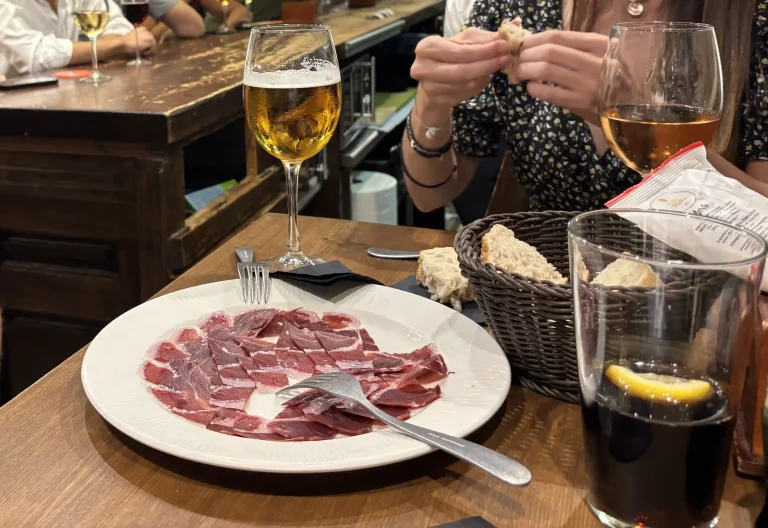
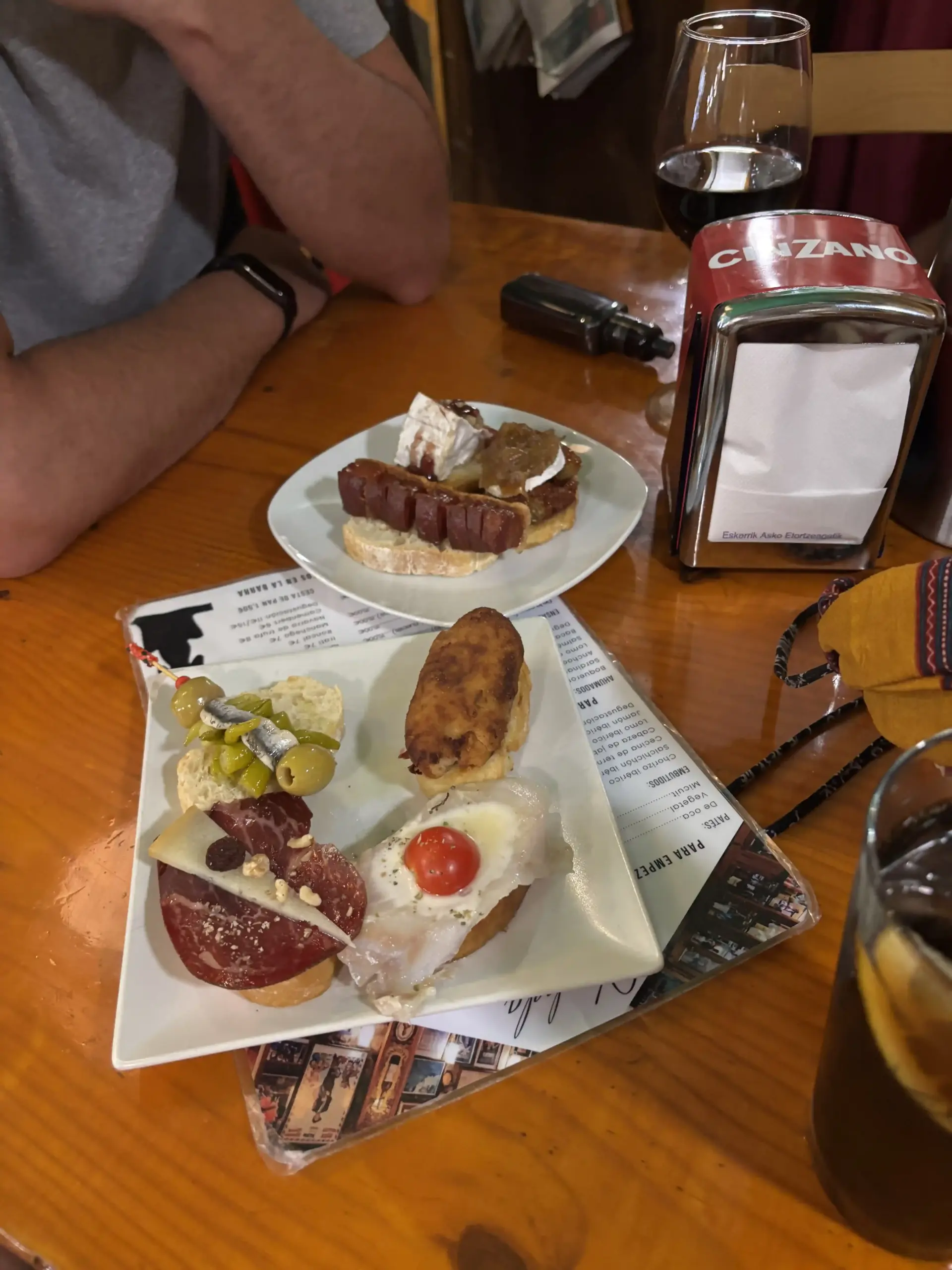
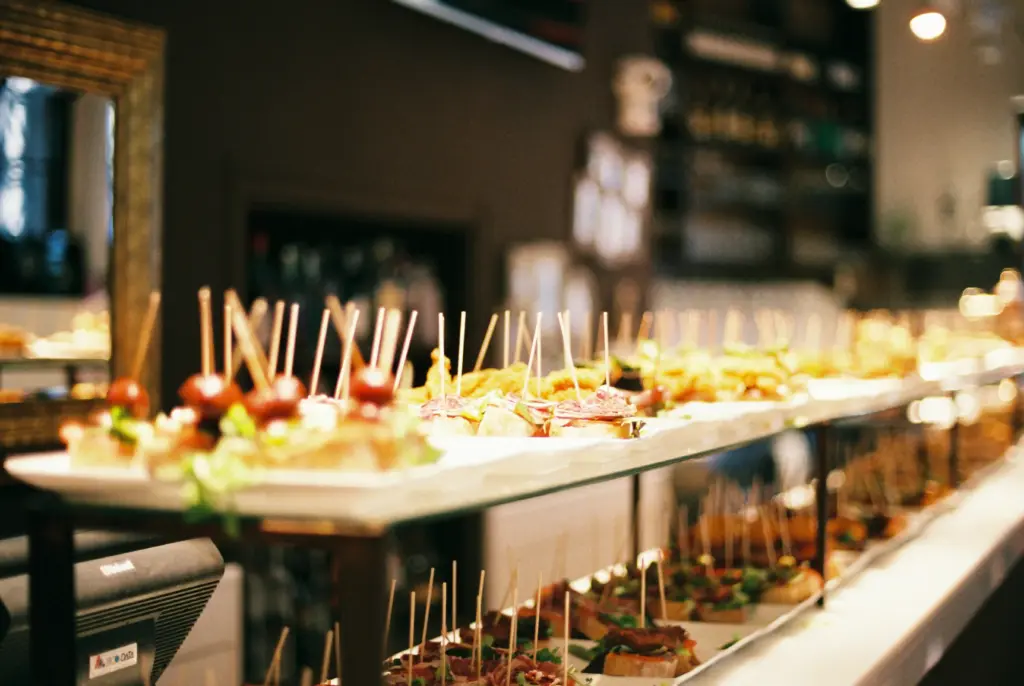
Visiting Bilbao and thinking only about the Guggenheim is the first traveler’s mistake. The second is believing you come here for a simple city tour and to enjoy an ordinary “dinner” with friends. In Bilbao, you do none of that. In Bilbao, you do txikiteo (pronounced cheek-ee-TEH-oh), a social ritual that is at once a gastronomic pilgrimage, urban exploration, and continuous conversation. It is the art of moving from one bar to another, pairing each small culinary masterpiece—the pintxo—with a zurito (a small glass of beer) or a glass of wine.
Yes, I know… you’re probably wondering what the difference is between pintxos and tapas. But I assure you, confusing pintxos with “tapas” is one of the biggest gastronomic mistakes you can make.
Pintxos are often bold compositions, balanced on a slice of bread or served in elegant small dishes, where ancient tradition meets creative innovation. It’s a cuisine that tells the story of a city of sea and mountains, of workers and merchants. It is avant-garde and history at the same time. In short… it’s an experience.
Here are a few practical tips to enjoy the cuisine of Bilbao without hesitation. They’re simple, but they can help you save time, money, and a bit of frustration. So remember that:
- Lunch and dinner start late: respectively from 2:00 PM and 9:00 PM onwards; many places therefore open a little later compared to Italian standards.
- Breakfast is either very early (7:30 AM) or around 10:30 AM, so choose your timing carefully if you want to enjoy breakfast like a local.
- In Bilbao, there’s a simple rule: walk in and order. You can’t go wrong. The rest will be taken care of by the city.
The Pillars of the Basque Table
To find your way among the pintxo bars, it helps to know the main players. These are not just dishes, but essential pieces of Basque culture.
Start with La Gilda. It is the essence of the pintxo and a lesson in gastronomic philosophy: three perfect ingredients—a green olive, a salted anchovy, and a pickled hot pepper—skewered together. One bite gives you the full spectrum of Basque flavors: acidic, salty, and spicy, all in a flash. Not by chance is it named after the famous heroine played by Rita Hayworth, bold and seductive. It is the first rite of initiation.
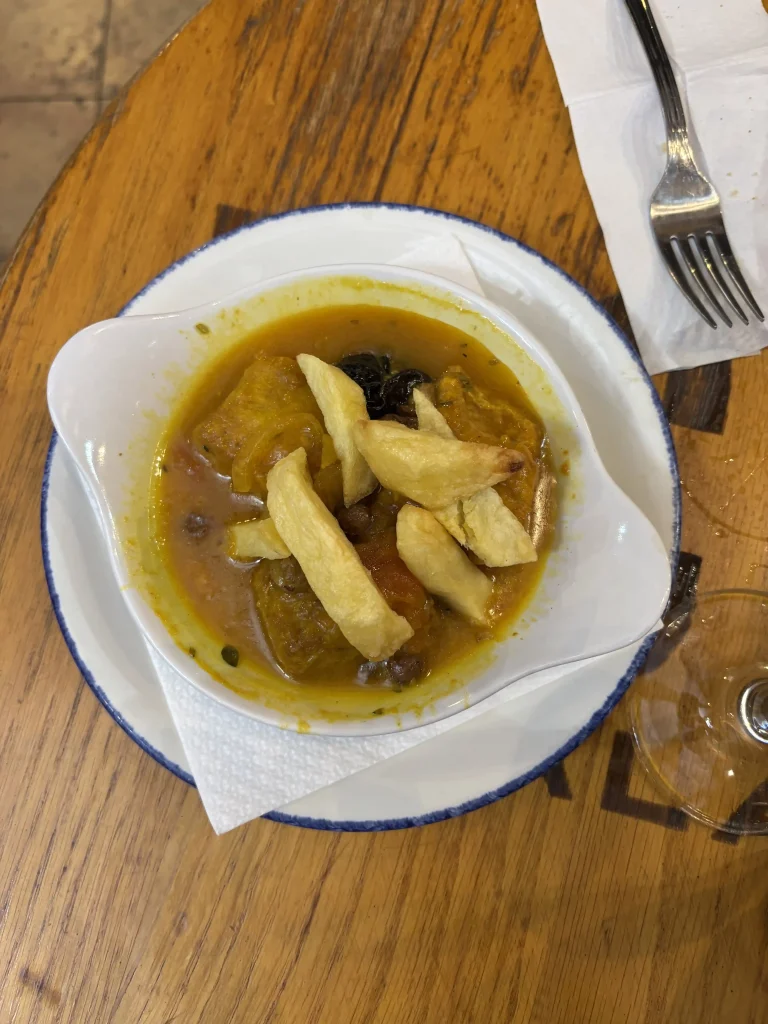
Then you will meet the king: Bacalao. Cod here is an art form. You might try the miracle of Bacalao al Pil-Pil, where the secret lies in an extremely slow cooking process that makes the fish “sing” in the oil until it forms a creamy sauce using only its own gelatin. Or the comforting Bacalao a la Vizcaína, wrapped in a deep, slightly sweet sauce made from dried red peppers. In every form, it is a tribute to the sea.
But Bilbao is not only about fish. If you want an almost sacred carnivorous experience, prepare for the Txuleta. It is a thick-cut steak from local cattle, often vaca vieja (mature beef), grilled over charcoal and served rare. It is ordered by weight, meant to be shared, and needs no sauces: the flavor is pure, intense, a hymn to the quality of Basque meat.
To accompany it, look for Pimientos de Gernika. Don’t be fooled: they are those small green peppers, tender and not spicy, gently fried in olive oil until they become almost sweet. A simple and irresistible delight.
Between one pintxo and the next, you may come across a slice of Tortilla de Bacalao. Forget the classic potato tortilla: here, shredded cod blends with egg, creating a soft texture and a deeply maritime flavor. Often served warm, it is high-level comfort food.
And to finish, a taste of the land: Idiazábal cheese. Smoked and made from sheep’s milk, it has a strong, decisive character. You can enjoy it as a dessert or find it melted into many modern dishes, where its smoky note takes center stage.
Bilbao also offers sweet surprises. Forget refined and delicate pastries. Bilbao’s pastry tradition is robust, buttery, and satisfying, rooted in home kitchens and neighborhood bakeries. There are two names you must learn—two institutions you will find in almost every historic pastry shop and café.
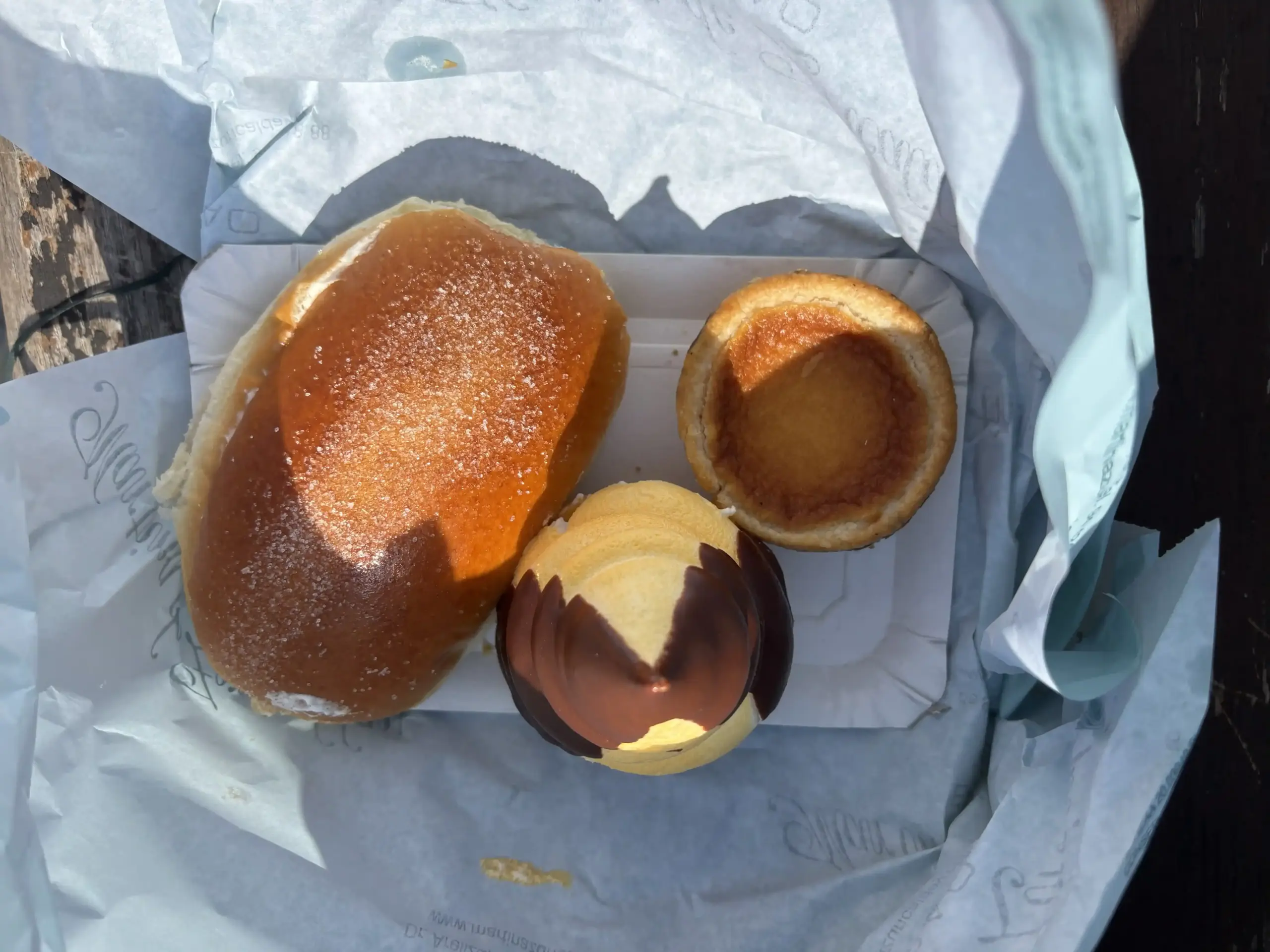
The undisputed queen is the Carolina. To taste the real one, look for its signature detail: a swirl of colored meringue, often lightly toasted, rising above a shortcrust base and a layer of custard cream. This is the original, born in the elegant cafés of Belle Époque Bilbao. Today, in some pastry shops, you may find a more “popular” version covered in chocolate and coconut, but its elegant and indulgent spirit remains unchanged. Tasting it is a true journey through time.
It consists of a slice of very soft sponge cake soaked in a liqueur syrup (usually rum or another sweet liquor), filled with thick custard and coated in dark chocolate glaze topped with a veil of shredded coconut. In the mouth, it is a triumph of moistness, butter, sweetness, and a subtle alcoholic note. It is the opposite of delicate pastry: it is a sugary embrace that calls for a strong black coffee.
The Bollo de Mantequilla (or “Panecillo de Mantequilla”) is the essence of perfect simplicity. A small, extremely soft and buttery sweet roll with a thin, glossy crust. Its magic lies in its airy texture and the intense flavor of high-quality butter. No filling, no glaze. It is the perfect grandmother-style snack, meant to be dipped into milk or café con leche at breakfast. Finding it still warm is a small blessing.
Another institution is the Pastel de Arroz. Do not expect a pudding: it is a small, dense, moist cake made with rice cooked in milk, sugar, and cinnamon, with a texture somewhat similar to French gâteau de riz. Simple, comforting, and perfect with coffee.
In many pastry shops, such as the historic Martina de Zuricalday in the Ensanche district, you will also find “Carlos” or Tocinos de Cielo (literally “heaven’s lard”), soft sweets made with egg yolks and syrup, inherited from the Spanish convent tradition.
And what to drink? The symbolic beverage is Txakoli, a young white wine, slightly sparkling and pleasantly acidic. The real magic lies in the service. It is poured from high above (about a meter!), using a technique known as “a txotx” or “el salto.” This is not a showy gesture, but a way to oxygenate the wine and break its slight carbonation, enhancing its aroma and softening the acidity. Watching a txakoli server pour is a spectacle in itself. The best come from D.O. Getariako Txakolina (the most famous, from the coast of Gipuzkoa) and Bizkaiko Txakolina (produced in the province of Bilbao, rarer and highly appreciated).
Let us not forget that Bilbao is also the gateway to La Rioja, one of Spain’s most famous wine regions. In particular, the subregion of Rioja Alavesa (within Basque territory) produces outstanding wines.
Whites: Rioja is not only about reds. Modern white wines, often made from Viura (sometimes blended with a touch of Malvasía or Garnacha Blanca), are fresh, fruity, and mineral—an excellent alternative to Txakoli with more structured fish dishes.
Reds: Here, you will find top-quality Tempranillo wines. Look for labels marked “Crianza,” “Reserva,” or “Gran Reserva.” These are structured wines with notes of ripe red fruit, vanilla (from oak aging), and spices—perfect to pair with the iconic Txuleta or roasted meats.
And then there is cider—sidra. It is not wine, but it is the other sacred fermented drink of the Basque Country, especially in Gipuzkoa. In Bilbao, it is very popular. It is natural cider: sour, dry, cloudy, and without added carbonation—very different from sweet Anglo-Saxon ciders.
Stepping into a real sidrería in Bilbao feels like witnessing a strange and wonderful ritual. The first thing you notice isn’t the barrels, but the floor: it’s completely covered in sawdust. The second thing you notice is that no one drinks slowly. People constantly stand up, walk over to a large wooden barrel, and with a confident gesture release a golden stream of cider from above… pouring exactly one finger into the glass.
Natural Basque cider is “alive” and contains no artificial bubbles. To awaken it, it is poured from a certain height in a stream called “txotx”. The impact against the glass instantly oxygenates it, releasing aromas of green apple and a very light, fleeting effervescence that lasts about 15 seconds.
That’s why it is drunk immediately, in a single sip, standing up, before the magic fades. Then the last drop is flicked onto the floor. That’s what the sawdust is for!
As you’ve probably understood, in Bilbao, the real challenge isn’t finding a place to eat well—it’s deciding what to eat!
To make things easier, I’ve divided my recommendations (of course based on conversations and confirmations from real bilbaínos) by neighborhood, so you can better orient yourself depending on where you are when hunger strikes, with a few tips on what you absolutely must order.
Where to eat in the Casco Viejo
Plaza Nueva is the heart of pintxos. Its arcades keep this ritual alive even when Bilbao turns grey and drizzly. But beyond this square, the entire historic center is filled with the right places to eat, drink, and chat.
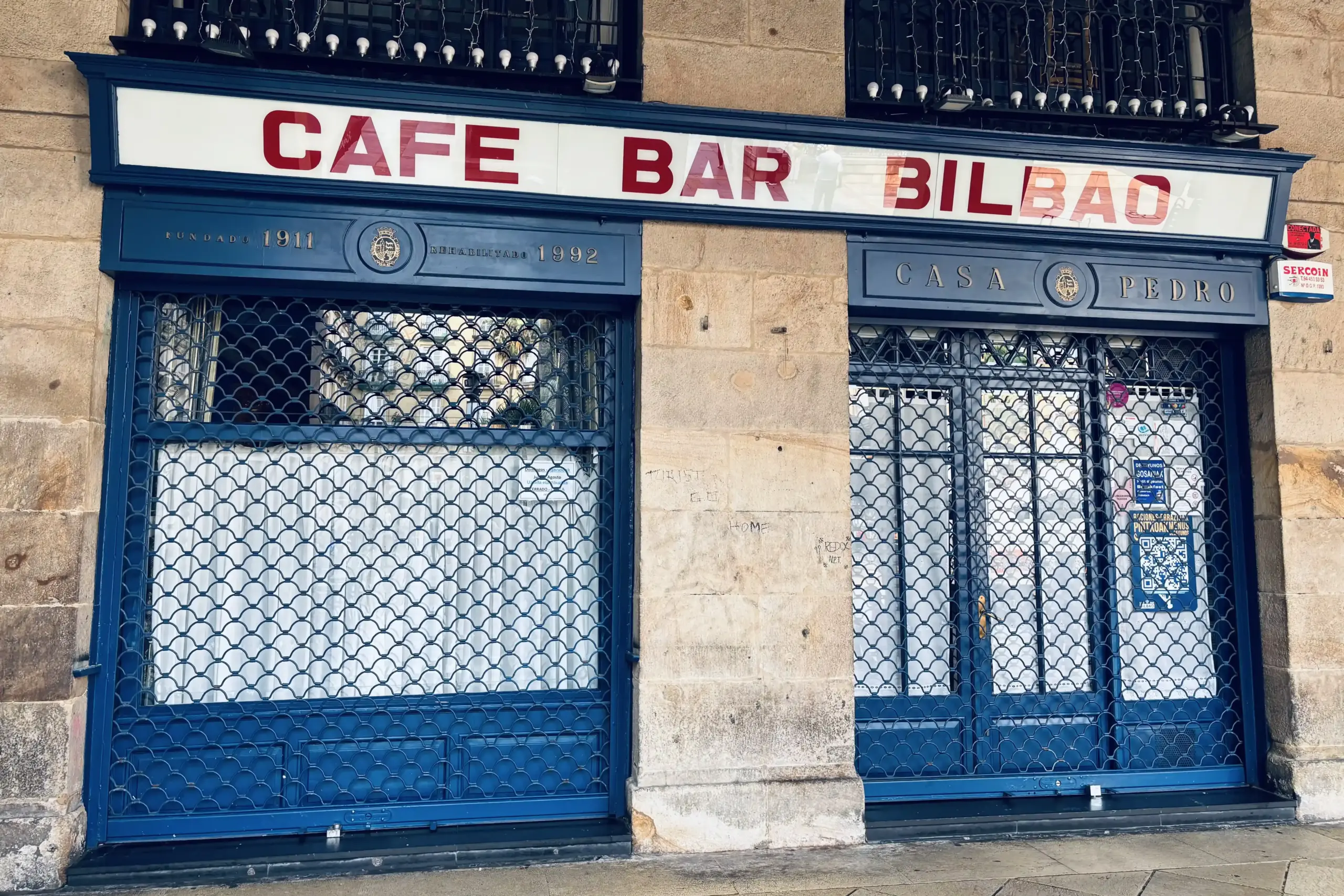
Café Bar Bilbao: the beating heart of the neighborhood. Authentic atmosphere, a packed counter, and perfect classic pintxos. Come here for your initiation ritual. Try the original Gilda (olive, anchovy, and chili pepper) and their champiñones rellenos (stuffed mushrooms), paired with a txakoli poured from above.
Con B de Bilbao: a spot that combines tradition and creativity with elegance. Ideal if you’re looking for something more than just a quick bite at the bar. Their gourmet pintxos with foie and their octopus toast with purple potato are absolutely outstanding.
Sorginzulo: the lively, popular soul of the Casco Viejo. Small, chaotic, with a counter that’s a triumph of hearty pintxos. Here, try the very spicy bravas, the homemade croquettes, and one of their enormous bocadillos (sandwiches). The atmosphere is guaranteed!
Bar Rio-Oja: an institution since 1959, as its historic awning proudly reminds you. The atmosphere is the authentic, timeless one of a true Bilbao bar. It’s a must-stop for food lovers. It’s famous for its tortilla de patatas, known for its perfectly creamy interior and lightly crisp edge. But in my opinion, you should come here for another reason. This is where I tasted my first Bacalao al Pil-Pil… pure bliss! I honestly believe it’s the best in the Basque Country.
Where to eat in Abando
El Globo: just a few steps from the Gran Vía, it’s a modern temple of the pintxo. The counter is a triumph of creativity and color, where tradition meets innovation in bold, vibrant compositions. Explore their inventive creations, often featuring raw fish, daring sauces, and contemporary presentations. Their innovative pintxos—especially those with raw fish or the famous Idiazábal cream—are true works of art. Seriously!
Ledesma N°5: this is where the heart of Bilbao’s nightlife beats, inside a renovated former garage. Industrial atmosphere, young crowd, and always packed. The specialty of Ledesma N°5 isn’t a single dish but a concept: top-quality ingredients transformed into modern, shareable proposals, perfect for the venue’s informal vibe. Explore their creative dishes, often with raw fish, bold sauces, and modern plating. Try the croquettes, the “must” fried calamari, their bacalao pintxo in any variation, and even their burgers. I haven’t tried them myself, but they say they’re among the best in the city!
El Mercado de la Ribera
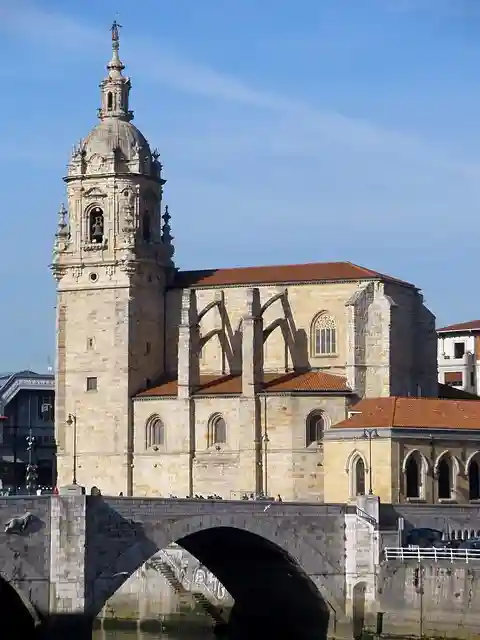
The Mercado de la Ribera deserves a paragraph of its own. With its 10,000 m², it is the largest covered market in Europe—a title it proudly holds. It stands on the right bank of the Ría (not by chance, La Ribera literally means “the riverbank”), exactly where, in 1300, the first market of the newly founded Bilbao was born.
Today, although it is a modern market, beneath its bright, spacious halls you will find not only an extraordinary selection of fresh fish from the Bay of Biscay, but also stalls selling local products, seasonal vegetables, and ready-to-eat pintxos.
Come at lunchtime, explore the lower floors for a visit, then head up to the Pintxopote area. Take a plate, walk around the stalls, build your own lunch, and sit at one of the shared tables overlooking the Ría. Choose a bacalao pintxo in one of its many versions (fried or in pil-pil sauce), a grilled prawn skewer, a slice of classic tortilla, a tasting of Idiazábal in different aging stages—and you’re all set!
At lunchtime, some stands offer excellent fixed-price menus (12–18€) based on market produce: a starter, a main course (fish or meat), dessert, and a drink.
It’s the most authentic and democratic experience that Bilbao can offer a true food lover.
The Mercado de la Ribera stands on the right bank of the Ría (not by chance, La Ribera literally means “the riverbank”), exactly where, in 1300, the first market of the newly founded Bilbao was born.
Here, for centuries, fishermen practiced the “venta a la boatada”, selling fish directly from their boats, while farmers arrived from the surrounding countryside.
The current building, inaugurated in 1929, is a masterpiece of industrial Art Déco. Its majestic glass-and-steel façade, crowned by a large clock and geometric decorations, was a true manifesto of modernity and hygiene. And hygiene here relied on a brilliant system.
Look at the fish stalls: each one has a trapdoor in the floor. During cleaning, the waste is dropped through it and ends up on an underground conveyor belt that carries it directly to a collection center. A visionary system for the 1930s that still guarantees impeccable cleanliness today, without waste ever crossing the market.
Two gems you absolutely must look for if you visit the market are:
- The 1930 ceramic mural: on the north wall of the ground floor, admire the enormous mural depicting fishing scenes with traditional traineras, allegories of the seasons, and typical products. Hidden for decades, it was brought back to light during the 2010 restoration. It is a true fresco of Basque life.
- The tide clock: on the east wall, look for the original clock that indicated not only the time but also the cycles of high and low tide. For fishmongers, it was essential: it allowed them to know exactly when the boats would arrive at the dock with fresh fish. A detail that reveals a city whose rhythm was dictated by the river.
Where to have breakfast in Bilbao
In Bilbao, breakfast is simple. No elaborate brunches or lavish spreads: it’s taken at a bar or in a pastry shop, often standing up, with a few solid certainties—café con leche, a baked pastry (almost always local), and sometimes a toast or a savory pintxo.
Besides Ledesma N°5, which I’ve already mentioned, you absolutely must visit one of the following pastry shops:
- Pastelería Bizkarra (Casco Viejo): one of the historic pastry shops of Bilbao, deeply loved by the bilbaínos. You come here for traditional sweets like the bollo de mantequilla (a must) and a simple café con leche.
- Martina de Zuricalday (Abando): a historic and elegant pastry shop, a true landmark of the Bilbao breakfast scene. The atmosphere feels more like a refined sitting room, ideal if you want to relax and step back into early 20th-century Bilbao. Here you absolutely have to try the Carolina (Bilbao’s iconic pastry) or the pastel de arroz, best enjoyed with coffee or hot chocolate during the colder months. A breakfast with a distinctly retro charm, yet a uniquely unforgettable flavor.
- Don Manuel (Abando – Doña Casilda Park): a modern, clean, and functional bakery–pastry shop where locals stop every morning for breakfast or to grab something delicious before heading to work. Their motto is “30 years sweetening Bilbao”—and they’re right! Everything here is excellent. There are also savory options available.
- Pastelería Arrese (various locations): considered by many the most traditional and austere, it has opened several branches across the city. Its reputation rests on mastering the fundamentals: the bollo de mantequilla fragrant with quality butter, the classic Carolina, and timeless pastries. Its loyal supporters say, “Here they don’t change a single comma—it’s our grandmother’s pastry shop. The others have gone commercial.”
Who is the other one? The other one is Don Manuel.
It is whispered that, decades ago, a very promising apprentice pastry chef left one of the two bakeries to start out on his own—or perhaps to cross “to the other side”—taking a secret with him: the exact oven temperature for the bollos? the precise consistency of the cream for the Carolina?
According to this story, that episode permanently strained the relationship between Pastelería Arrese and Don Manuel, turning an ordinary rivalry into a matter of pride… and (alleged) betrayal.
And even today, when talking about pastry shops, if you ask a bilbaíno: “And what about the other one?” you immediately understand which side they are on.
And here we are, with full stomachs and slightly intoxicated minds! In Bilbao, food is never just food: it’s an art.
A pintxo at the bar, a txakoli drunk standing up, a pastry chosen almost absentmindedly in a historic bakery. Bilbao shows its best side when you begin to trust the city and discover its many faces through your palate.
And when your days in the city come to an end and you’re forced to leave, you’ll realize how hard it is to find another place where you can eat so well. Of course… unless you decide to continue the journey with us, exploring other corners of the Basque Country! There, a new challenge awaits you: a land that still has so much to offer—at the table and beyond.
For now, buen provecho… and on egin (as they say in Basque).