What to do in Bilbao when it rains
Anyone arriving in Bilbao quickly realizes one thing: here, the weather isn’t just a detail — it’s part of the city’s character. You might get a heavy downpour that comes and goes within a few hours, or the Basque txirimiri, that fine, persistent drizzle that sometimes stays with you for days.
But it’s never really a problem. At most, it’s an invitation to step inside somewhere and discover what Bilbao has to offer under cover. And when it comes to that, the city is more than prepared.
So, if you’re wondering what to do in Bilbao when it rains, in this travel diary we’ll take you to some of the best indoor places in Bilbao, where you can enjoy a wonderful day without worrying about the weather outside.
And trust us: once again, Bilbao won’t disappoint you!
Here are some practical tips for organising your visit to Bilbao: how to get there, where to park, how to get around, how to plan your visit and when to go. A few useful things to know when choosing your transport, exploring the city and organising your days around local rhythms, food, events and the weather.
Show all tips ↓ Hide tips ↑
How to get to Bilbao
- By plane: Bilbao Airport is located in Loiu, around 12 kilometres from the city centre, and is the main airport serving the Basque Country. To check flights, services and up-to-date information, visit the official Bilbao Airport website. To compare airlines, dates and prices, I also use Google Flights. The Bizkaibus A3247 connects the airport with Bilbao and makes several stops in the city centre, including Alameda Recalde and Gran Vía, before reaching Bilbao Intermodal. The journey takes approximately twenty minutes, although it may take longer when traffic is heavy. For up-to-date information about stops and connections, you can also consult the Bilbao Tourism page dedicated to the airport connection.
- By train: the main railway station is Bilbao-Abando Indalecio Prieto, which is centrally located and convenient for walking to the Ensanche and the Old Town. Bilbao is connected mainly with Madrid and Barcelona by the long-distance services operated by Renfe. To compare the different railway options, I also use Trainline and TrainPal.
- By long-distance coach: coaches connect Bilbao with Madrid, Barcelona, San Sebastián, Vitoria-Gasteiz and many other Spanish cities. Many services are operated by ALSA and arrive at Bilbao Intermodal, near San Mamés. The station is connected with the rest of the city by metro, tram, Cercanías trains and city buses.
- By car: Bilbao is well connected with the rest of Spain and the other Basque cities, but you do not need a car to visit the centre. Traffic, paid car parks and regulated access areas can make it more of a problem than an advantage. When arriving by car, consider using the park-and-ride facilities near Leioa, Etxebarri and Ansio-BEC metro stations. You can leave your vehicle outside the centre and continue by public transport. Information and conditions are available on the official page dedicated to parking in Bilbao. As I visited during the Aste Nagusia, I ended up parking, whether I liked it or not, in the car park at Zubiarte Shopping Centre, close to the Guggenheim. We paid approximately €45 for three nights.
How to get around Bilbao
- On foot: Bilbao is a very pleasant city to explore on foot. The Old Town, Mercado de la Ribera, Arriaga Theatre, the Ensanche, the Guggenheim Museum and the Abandoibarra area can all be linked by a long walk beside the river. The centre is not enormous, but bear in mind that some attractions are located on opposite sides of the river and the city also has several hilly neighbourhoods.
- By metro: the Bilbao Metro is particularly useful for longer journeys and for reaching places in the metropolitan area such as Getxo, Portugalete and Santurtzi.
- By tram: the tram passes through some of the city’s most interesting areas and can be useful for reaching the Guggenheim, Abandoibarra, San Mamés, Mercado de la Ribera and the edge of the Old Town. You can check maps, stops and timetables on the official Bilbao tram website.
- By city bus: the Bilbobus network serves the city’s different neighbourhoods and is particularly useful for areas not directly reached by metro or tram.
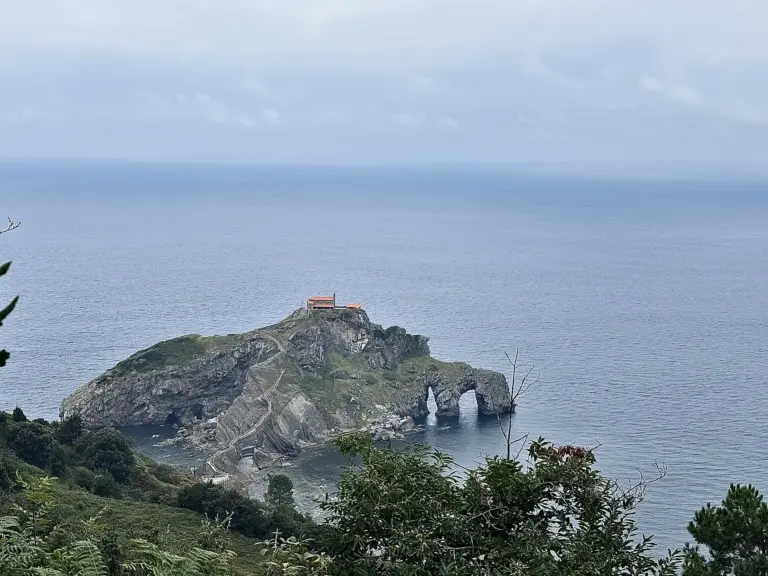
- By bus around Bizkaia: to reach places outside the city, such as the airport, San Juan de Gaztelugatxe, Gernika, Bermeo or other destinations in the province, consult the Bizkaibus routes. Always check the exact stop, route number and timetable for the day, as services may be less frequent on Sundays and public holidays.
- By local train: Euskotren and Renfe Cercanías trains make it possible to reach several destinations in the metropolitan area and throughout Bizkaia. You can check routes and timetables on the official Euskotren and Bilbao Cercanías websites. Euskotren also connects Bilbao with San Sebastián-Donostia, but the journey is quite long. For a direct journey between the two cities, the bus is generally faster.
- By the Artxanda funicular: to see Bilbao from above, take the Artxanda Funicular. The lower station is in Plaza del Funicular, a few minutes’ walk from the Zubizuri bridge. The journey takes only a few minutes, and services normally depart every fifteen minutes.
- With the Barik card: when planning to use public transport frequently, it may be worth buying a Barik card. It is a rechargeable card accepted on the main forms of public transport in Bizkaia, including the metro, tram, Euskotren, Bilbobus and Bizkaibus. It generally offers lower fares than repeatedly purchasing single tickets. One little-known advantage is that the anonymous Barik card can be used by several people travelling together. Simply validate the card once for each passenger. With the official Barik NFC app, you can check the balance and top up the physical card with a compatible phone.
- By bicycle: in good weather, you can combine walking with a few bicycle journeys, particularly along the river and in the flatter areas. Some neighbourhoods are built on hills and can be quite demanding. The municipal electric bike-sharing service is Bilbaobizi. You can register in person at the Bilbaobizi Office, on the ground floor of Bilbao Intermodal station, or, more simply, download the Bilbaobizi app. Create an account, enter your personal details and payment method, and then choose the most suitable subscription. The occasional subscription, costing €10, is normally the most suitable option for visitors staying in Bilbao for only a few days. The service is normally available every day, although some docking stations may be temporarily suspended during major festivities. This happened to me during the Aste Nagusia.
- By sightseeing bus: the Bilbao City View service can be useful for getting an initial overview of the city. Honestly, Bilbao is fairly compact, so I do not think it is essential, except perhaps when travelling with children.
How to plan a trip to Bilbao
- Two or three days are enough for a first visit. In two days, you can explore the Old Town, Mercado de la Ribera, the Ensanche, the Guggenheim Museum and the area beside the river. With a third day, you can go up to Artxanda or organise an excursion to Getxo, Portugalete or another nearby destination. When using Bilbao as a base for exploring Bizkaia, allow at least four or five days.
- The day begins later than in many other European cities. Early in the morning, the streets can still feel quiet and many shops do not open before 10:00 am. You can use the early hours to walk beside the river, photograph the Guggenheim from outside or enjoy a relaxed breakfast, leaving museums, markets and shops for later in the morning.
- Lunch is generally served from 1:30-2:00 pm, while dinner often begins from 8:30-9:00 pm onwards. Pintxo bars tend to have more flexible opening hours than restaurants and often allow you to eat something at other times of day.
- In Bilbao, you eat pintxos, not simply tapas. One of the best ways to discover the local cuisine is to create a small route through the bars of the Old Town, Plaza Nueva, Ledesma and other areas popular with local people. You do not need to order everything in the same establishment: people normally have one or two pintxos with a drink and then continue to another bar.
- It is better to book the best-known restaurants. Bilbao has an important gastronomic tradition, and some establishments fill up quickly, especially at weekends, during public holidays and around major events. Traditional pintxo bars do not normally take reservations, while it is advisable to book restaurants, tasting menus and particularly popular venues in advance.
- Some cultural venues may offer free admission days, discounts or promotions, but the conditions vary. Always check opening times and admission prices on the official websites.
- Bilbao and Bilbo refer to the same city. Bilbao is the Spanish name, while Bilbo is the Basque name. Stops and signs may also appear in both languages. The Old Town may also be shown as Alde Zaharra, while Casco Viejo metro station often appears as Casco Viejo/Zazpikaleak.
- To explore the surrounding area, you can also consider an organised tour. I always check the activities available on GetYourGuide or Civitatis, particularly when I want to visit several places in the same day without using a car.
- During the Aste Nagusia, book well in advance and perhaps stay outside the Old Town, or you may not sleep until five in the morning. The festival normally takes place during the second half of August and fills the city with concerts, performances, fireworks, food-related events and traditional txosnas. Check for updates and the programme on the official Bilbao website by searching for “Aste Nagusia”. During the festival, an app is normally released for visitors to download.
- Make use of the public Wi-Fi network. Free access points are available in several squares, tourist areas and municipal buildings. Simply look for Bilbao WiFi among the networks available on your phone.
- Consider buying the Bilbao Bizkaia Card, which should not be confused with the Barik card, as the latter is primarily a rechargeable transport card. The Bilbao Bizkaia Card is a personal tourist card that includes transport and other cultural or tourist benefits. Before buying it, compare the price of the card with the actual cost of the journeys and activities you have planned.
When to visit Bilbao
- Spring is a good time to visit Bilbao. Temperatures are generally mild, the vegetation is very green and the city is less crowded than during the main summer months. Rain remains possible and the weather can change quickly, so always carry something waterproof.
- Summer offers long days, generally pleasant temperatures and numerous events. July and August are, however, the busiest and most expensive months. Rain cannot be ruled out even in summer. August is particularly lively during the Aste Nagusia, but travellers looking for peace and quiet may prefer another time.
- Autumn can be particularly atmospheric. September often still offers pleasant temperatures, while October brings fewer visitors and intense colours to the parks and surrounding green areas. It is an excellent time to combine culture, food and nature, provided you are prepared for the possibility of rain.
- Winter is generally wetter and windier, although temperatures in the city are not normally extreme. It is an interesting period for visiting museums, markets and gastronomic venues with fewer tourists, although the days are shorter and the damp cold can feel quite biting.
- In my opinion, the best times to visit Bilbao are May to June and September to early October. The days are fairly long, temperatures are pleasant and visitor numbers are generally lower than in August.
- The Christmas period can also be a good opportunity to discover Bilbao. The city is illuminated and decorated, markets and events are organised, and food becomes even more important in local life. Bring warm clothes, a waterproof jacket and footwear suitable for the rain.
Bilbao’s Museums: An Unmissable Cultural Refuge
When the rain turns the waters of the Nervión grey, Bilbao has the perfect answer: one of the richest museum scenes in Europe. More than twenty temples of culture are waiting for you somewhere warm and dry, with tickets that are almost always reasonably priced — with the possible exception of the Guggenheim.
Here is my list of must-see museums, plus 2 slightly different options that, I promise, won’t disappoint:
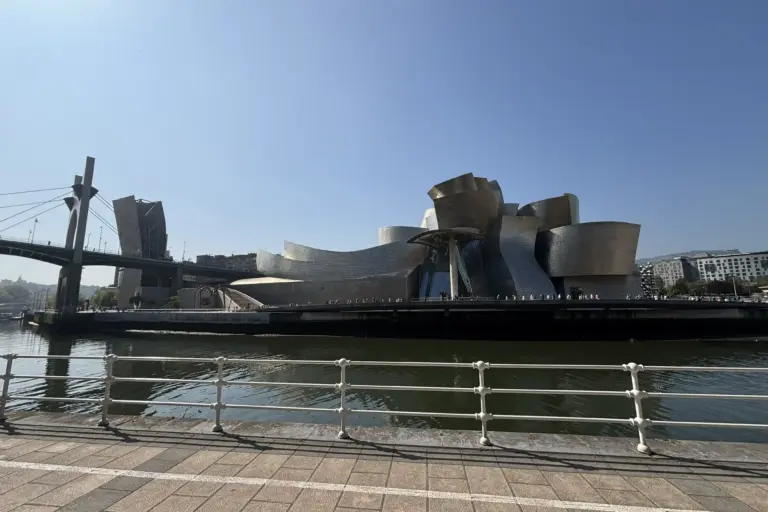
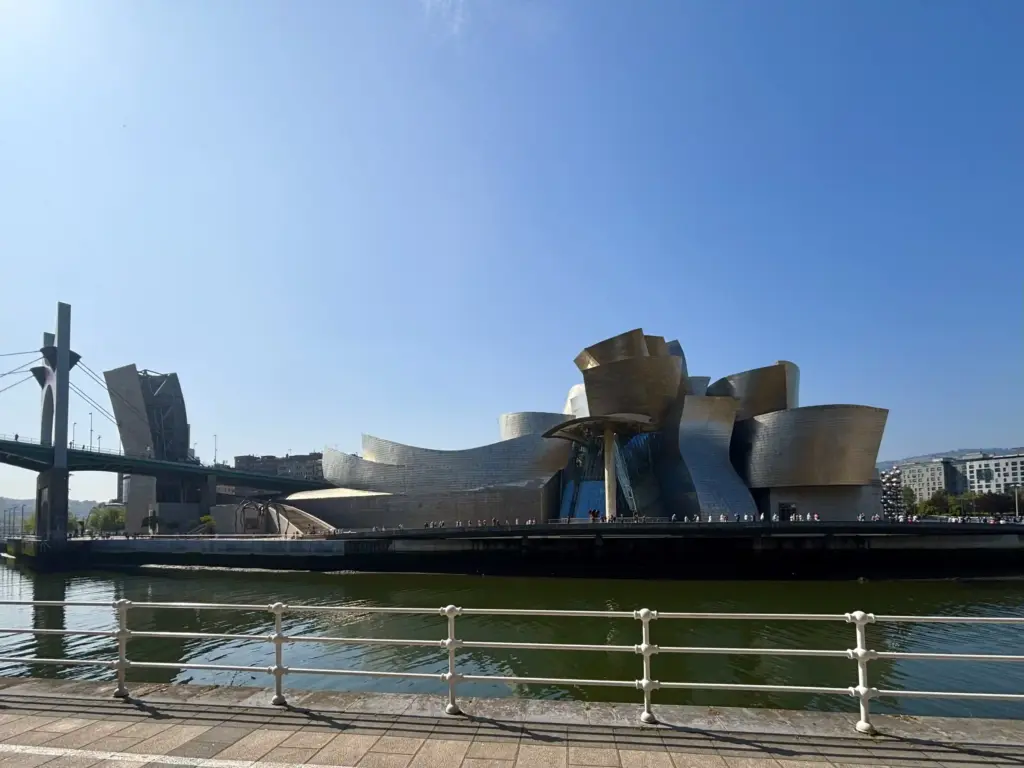
- Guggenheim Museum: Frank Gehry’s steel giant, with its contemporary art exhibitions, can easily keep you busy for hours. With around 1.2 million visitors a year, it is one of Bilbao’s absolute must-sees.
- Museo de Bellas Artes: The perfect contrast: 10,000 works ranging from the Middle Ages to Chillida, displayed in a much more intimate setting. In 2026, admission is free due to ongoing renovation work, although this currently limits access to part of the collection.
- Itsasmuseum: This is not just another maritime museum. Here you can climb aboard real vessels and discover the history of Bilbao’s port firsthand. When I visited, part of the museum was closed for renovation; at the moment, however, the museum is operating normally and the official website does not report any restrictions to the visitor route due to restoration work.
- Euskal Museoa: If you want to understand the Basque soul, this is the place to come, right in the heart of the Casco Viejo. Reopened in June 2026 after a major renovation, it now features completely redesigned spaces and exhibitions devoted to the culture and history of the Basque people.
- Museo Arqueológico: A journey into the prehistory of the Basque Country that is both fascinating and accessible.
And, as promised, I’m adding two more. They may initially sound like slightly unusual choices, but trust me: there’s a good reason they made the list.
- Museum of Sacred Art: A small gem offering a journey through Basque religious iconography. Admission is free on Tuesdays.
- San Mamés Tour: Museum + Athletic Club stadium tour. Even if you’re not a football fan, it is extremely well done.
Few people know this, but there is a red thread — or rather, an iron thread — linking the industrial history of Bilbao to its football myth.
It’s no coincidence that San Mamés Stadium, or the bars during match days, resound with the powerful chant “¡Alirón, alirón, el Athletic campeón!” every time the Athletic Club wins.
This word has a unique origin, rooted in the region’s iron mines and its close commercial ties with England. In the late 19th century, British engineers working in the mines marked the purest and richest veins with the words “All iron”.
Basque miners adopted that lucky sign, pronouncing it exactly as it was written: “A-li-rón”. From an expression of joy in the tunnels that received this mark, it became the victory cry of the working-class city’s team: a true sound bridge between the industrial past and the sporting present.
Another curiosity about the Athletic Club: it is the only team in the world that fields only players born or raised in the Basque Country. It’s a choice of identity, an unwritten pact with its people.
So the next time you hear “¡Alirón!”, remember that the chant doesn’t just celebrate a goal. It tells a story of mines, community, and pride: it is the true sound of Bilbao.
Teatro Arriaga
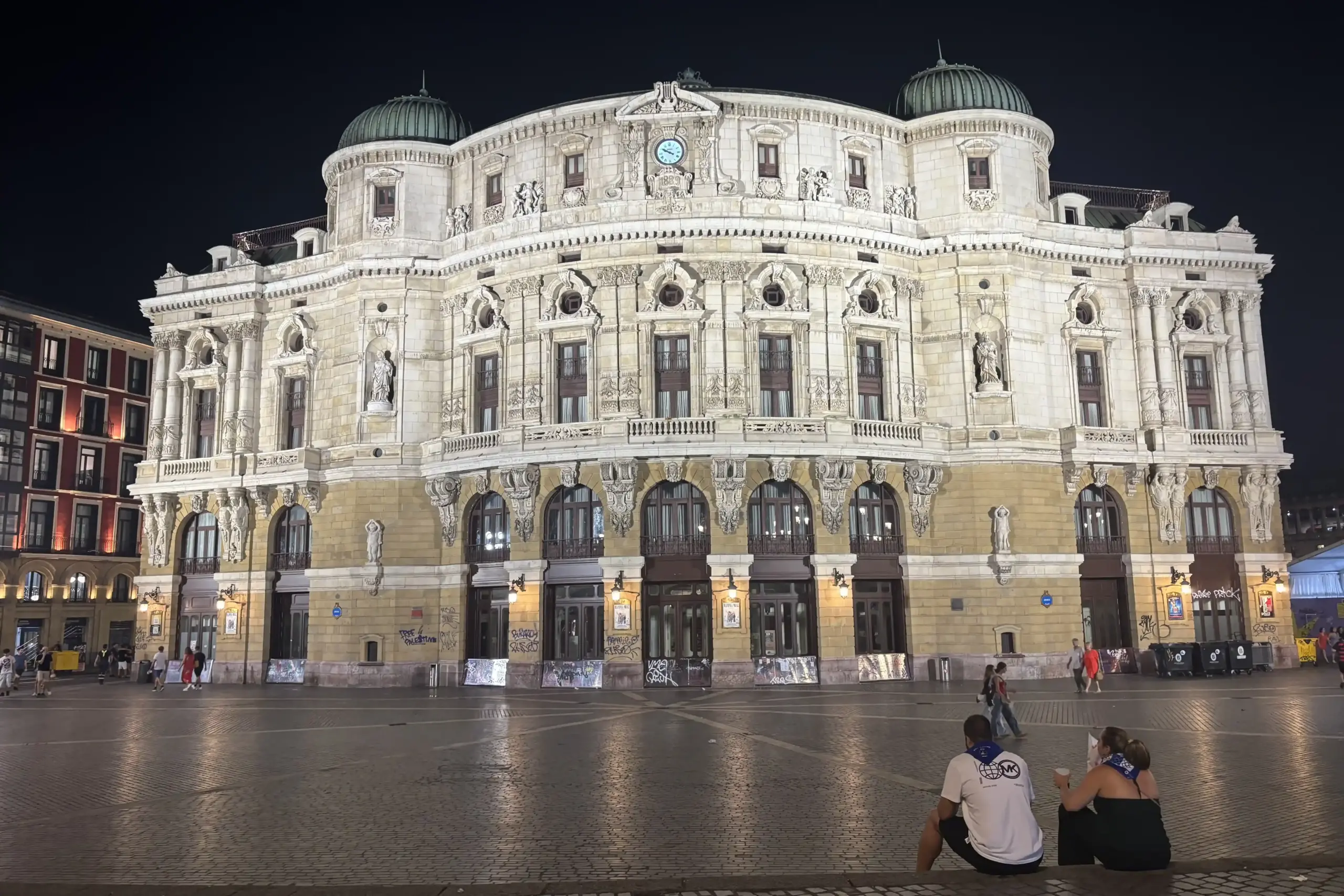
Even visiting it during the day is worthwhile — and that’s without even getting into its fascinating history, which we’ve already explored in our complete guide to Bilbao. But if you manage to fit in an evening performance, a rainy day suddenly becomes a much more elegant affair!
The Teatro Arriaga has a prestigious programme and does not specialise in just one genre: it alternates between theatre, dance, concerts, zarzuela and musicals, making it a great option for almost any taste if you are looking for an evening indoors.
To give you an idea, the 2025–2026 season (August 2025 to June 2026) was led by artistic director Calixto Bieito, with a particular emphasis on the theatre’s own productions rather than simply hosting shows created by other companies. These included Gesualdo WC Station in April 2026 and Shostakóvich 14, which brought the season to a close in June.
There were also important musical tributes, such as the concert marking the 200th anniversary of the death of Juan Crisóstomo de Arriaga — the Bilbao-born composer after whom the theatre is named, often nicknamed “the Spanish Mozart” — as well as regular series such as Lied, dedicated to the chamber song repertoire and held in a more intimate space known as the Espacio Foyer.
There is also a space devoted to experimentation, “Escenario Abierto”, which hosts smaller-scale performances, often contemporary theatre or more alternative, less mainstream productions.
And if you cannot make it to a performance, the theatre also offers guided tours that reveal some of its hidden corners. The tour lasts around one hour and takes you into spaces that are normally closed to the public, such as the Sala Orient Express and the Sala Isabelina, as well as an exhibition of opera costumes and the atmospheric auditorium.
The main hall is designed with performances like these in mind: it has 1,200 seats spread across the stalls and boxes, plus an orchestra pit that can accommodate up to 60 musicians. Guided tours are available in Basque, Spanish and English.
For exact days and times, I recommend checking directly with the theatre by phone before planning your visit, as the website is not especially clear on this point.
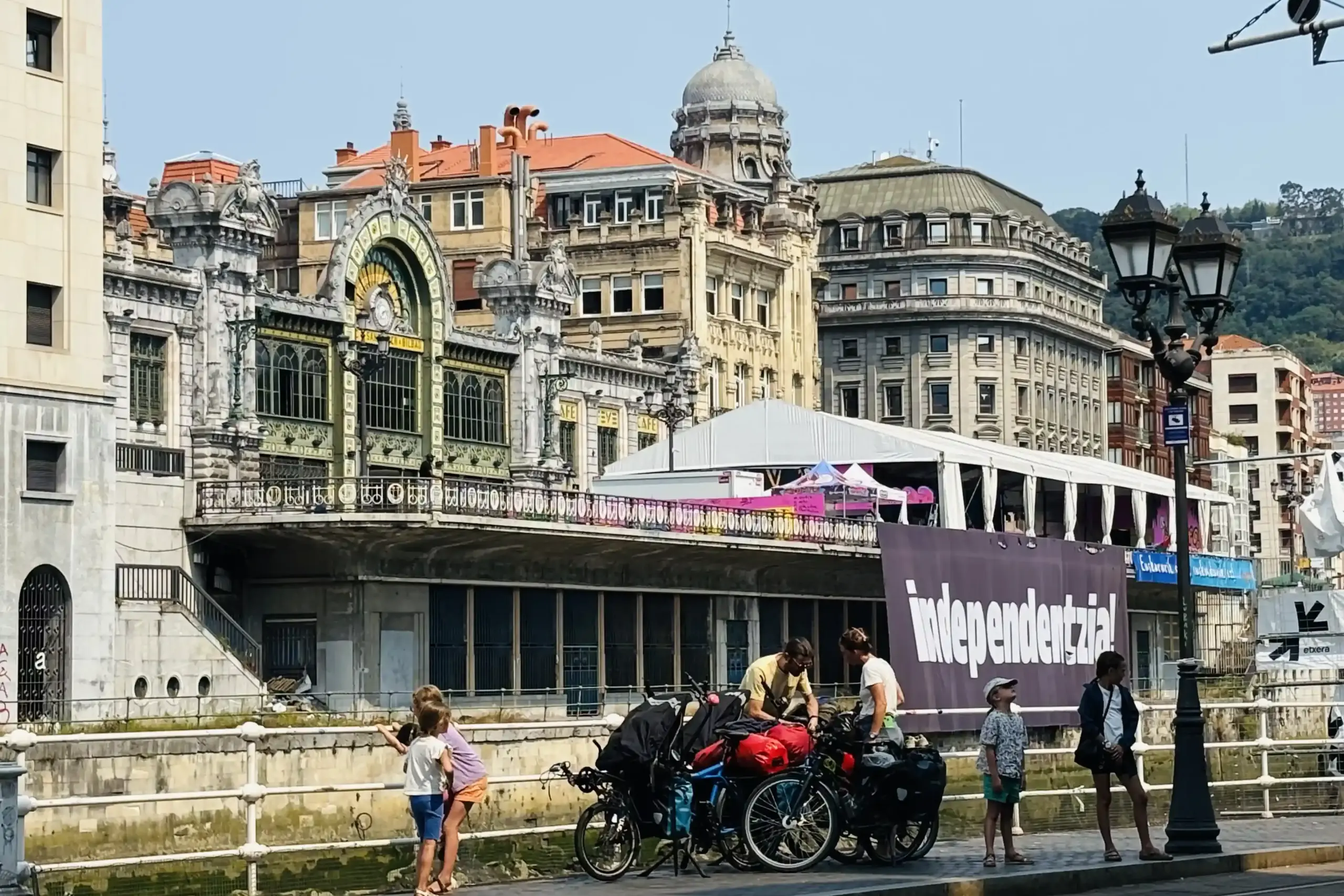
Old Concordia Station
The Old Concordia Station (now part of Abando) overlooks the Ría and once welcomed its travelers with the Teatro Arriaga standing proudly opposite. The station is built in English railway style, and its iron-and-glass façade is one of the earliest examples of this architecture in Spain.
But that’s not what fascinates travelers like us. Beneath it once stood the baraja, the old informal sardine market, whose arches leaning against the river can still be seen today. There’s a famous folk song, “Desde Santurce a Bilbao,” which tells the story of a sardineira walking “por toda la orilla” (along the Ría), with her skirt rolled up, corset tight, basket on her head, selling sardines from Santurtzi door to door.
But the truth is, I’ve brought you here for another reason. You don’t need to rush in to catch a train, I promise. Step inside and head toward the ticket area of the new station. Look up. Above you stretches an enormous stained-glass window celebrating the Basque industries: the sea, mining, and steel. It’s a monumental artwork that greets thousands of travelers every day—yet very few truly notice it.
For those looking for something unusual, visit a “ghost” station: get off at Euskalduna (Line 1). Without spending a single euro, you can admire the spectacular underground architecture by Norman Foster, a true everyday work of art.
Although prehistoric and Roman traces (remains from 300 BC on Monte Malmasín) dot the area, the city’s real urban story begins in 1300, when it emerged as a strategic port.
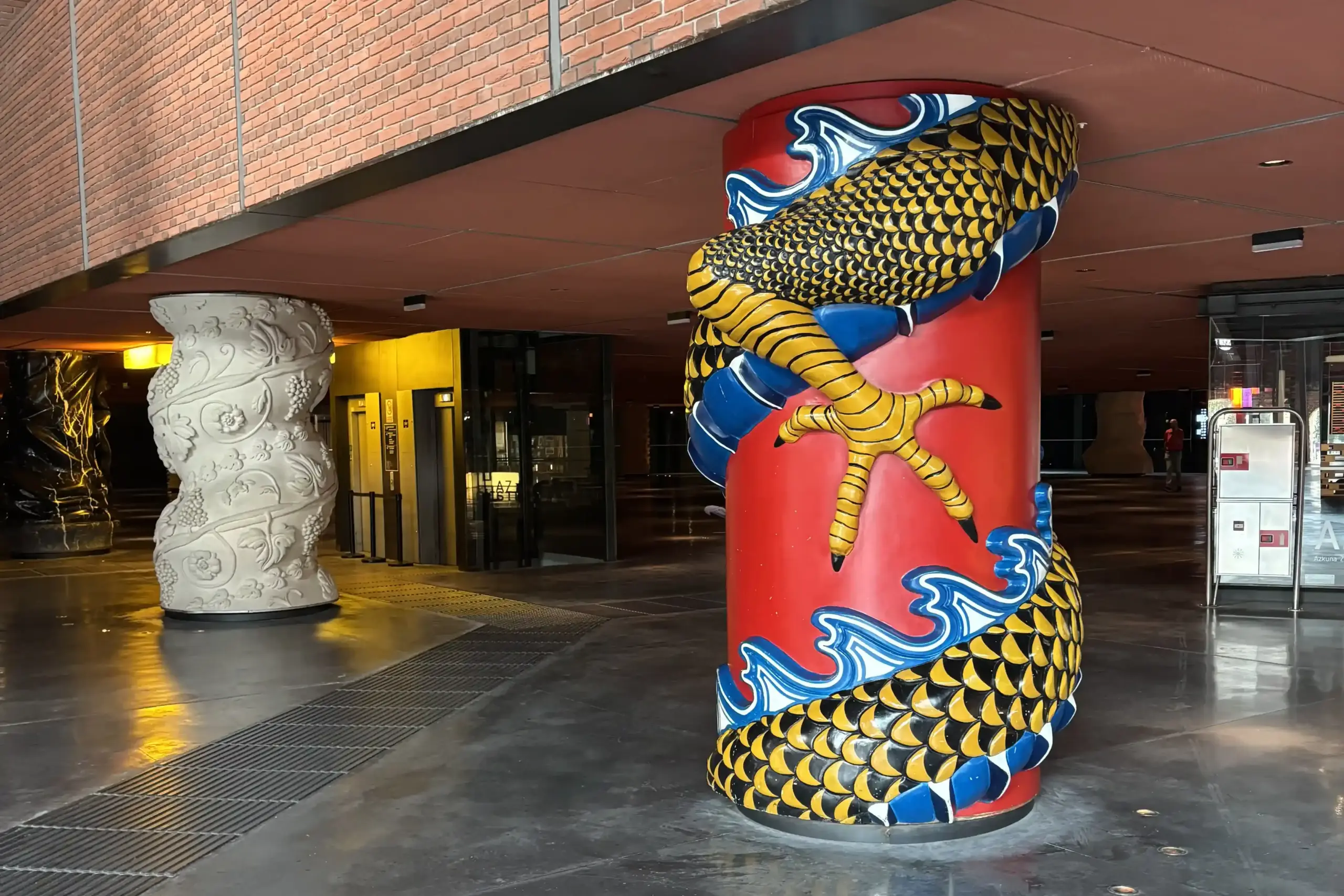
Azkuna Zentroa
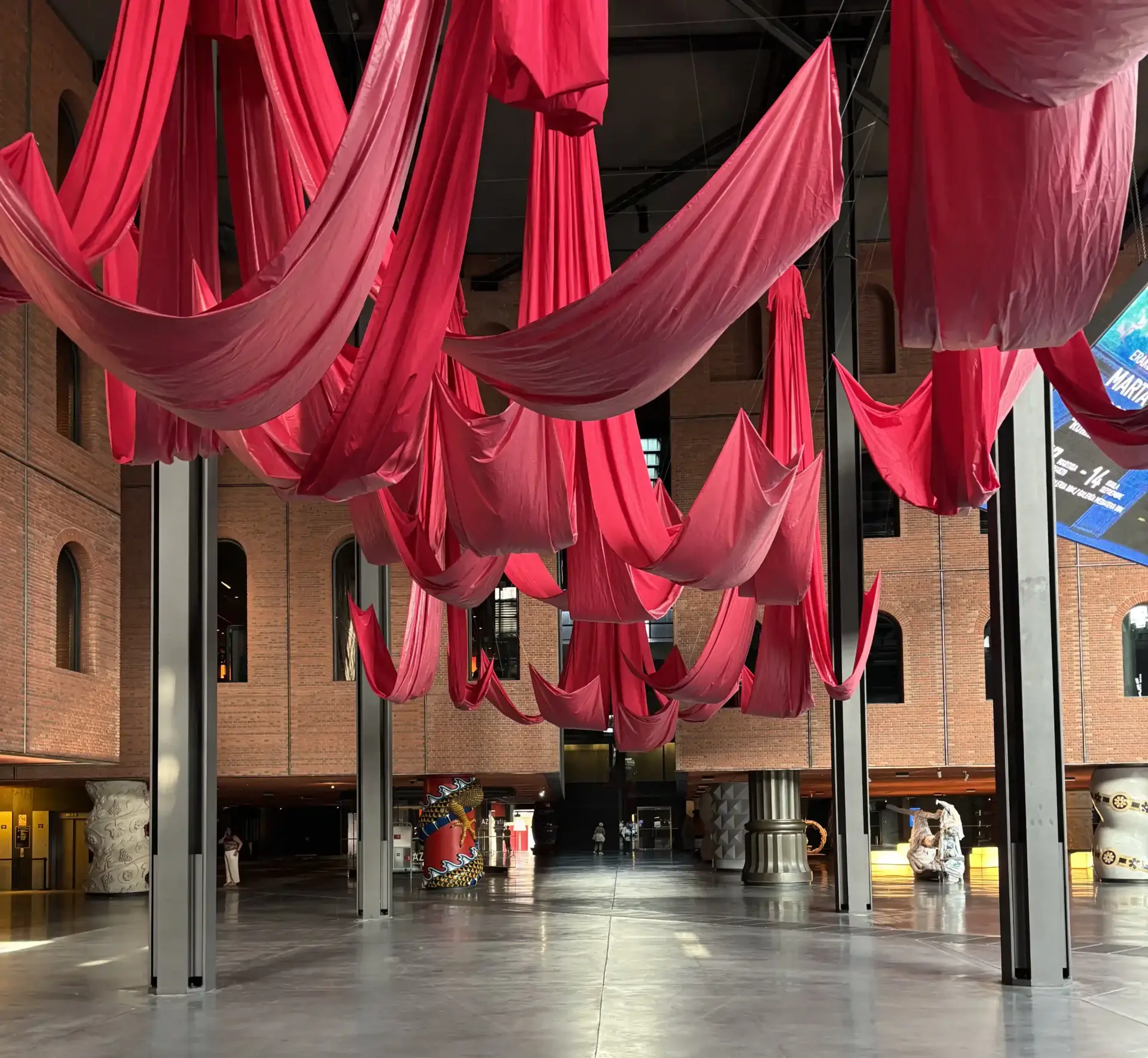
Azkuna Zentroa is much more than just a museum or cultural centre. It is one of those places where you can step inside to escape the rain and end up spending half a day there almost without noticing: exhibitions, cinema, places to sit and relax, restaurants and even a suspended swimming pool all coexist inside Bilbao’s former Alhóndiga.
The Design. The building is worth visiting in its own right. The former wine warehouse, transformed with the intervention of Philippe Starck, hides a vast atrium behind its historic façade, supported by the famous 43 columns, each one different from the others. They are one of Azkuna Zentroa’s most distinctive features and one of the main reasons it is worth stepping inside even if you have not planned to see an exhibition.
If you really want to understand Azkuna Zentroa, free guided tours are also available. Check the website to book your visit. If you prefer to explore independently, you will also find a downloadable QR code at the entrance, allowing you to discover the building and its curiosities with your own personal audio guide.
Art and culture. The centre hosts temporary exhibitions of modern and contemporary art, photography and design, as well as performances, concerts and other cultural events. In short, it acts as a stage for both the Basque and international creative scene.
There is also a cinema with a high-quality programme that includes films in their original language, themed cycles, festivals and independent productions. The programme changes constantly, so it is worth checking it on the official website before your visit.
Wellness Centre. Look up towards the ceiling of the atrium and you will probably notice silhouettes moving above you: this is the suspended swimming pool, famous for its transparent floor, located on the third floor of the Physical Activity Centre. From below, you can actually watch people swimming above your head.
If you want to use the pool, you will of course need paid access to the centre; otherwise, you can simply admire it from below. The facility also includes a gym, a functional training room and a second swimming pool.
Eating and drinking. If the rain shows no sign of letting up, you can easily stay here for lunch, dinner or simply a drink. Inside Azkuna Zentroa you will find several options, including Yandiola, the centre’s more gastronomic restaurant, Hola Bar and The Boar for something more casual, and La Terraza, perfect when the weather is good enough to make use of the outdoor spaces too.
A place to simply spend time. One of the things I like most about Azkuna is that it does not force you to “visit” anything. You can simply walk in, wander through the atrium, sit down or spend some time in the communal areas. Locals come here to read, chat, work on their laptops or simply spend time together. It is a cultural centre, but also a genuine part of Bilbao’s everyday life.

Jappy Gallery, Bilbao’s First Sensory Gallery
I’ll say it straight away: I don’t usually recommend this kind of place. “Sensory galleries” and Instagrammable museums are popping up in almost every city these days, and quite often they are little more than elaborate sets designed for taking photos, with very little behind them.
But I decided to make an exception for Jappy Gallery, because behind all the lights and colours there is a genuinely lovely story. It is an entirely female-led project, born from the dream of a group of women who turned an idea into a small space dedicated to happiness in Bilbao’s industrial heart.
The aim is not simply to impress you with special effects, but to help you reconnect with your “inner child”, with that sense of lightness and wonder we so often lose along the way. You can really feel the love, dedication and intention behind the project — and in 2024 it also won the Coca-Cola Award for Female Entrepreneurship.
That said, it is also a very practical option on a rainy day: everything is indoors, and the self-guided experience takes around one hour, leading you through a series of rooms filled with light and colour.
It is not right in the city centre, so you will need to make a short detour, but there is absolutely no need for a car: it is very easy to reach by public transport. Take the Metro to San Mamés (about a 10-minute walk, Sabino Arana exit), the Renfe train to Autonomía (around 5 minutes on foot), or the tram to Basurto or La Casilla.
One tip if you want to save a little: book online in advance through the official website, as tickets are cheaper than buying them on site. I actually discovered Jappy Gallery through GetYourGuide, which was offering a discount on the visit. I’ve included it below in case the offer happens to be available while you are in Bilbao:
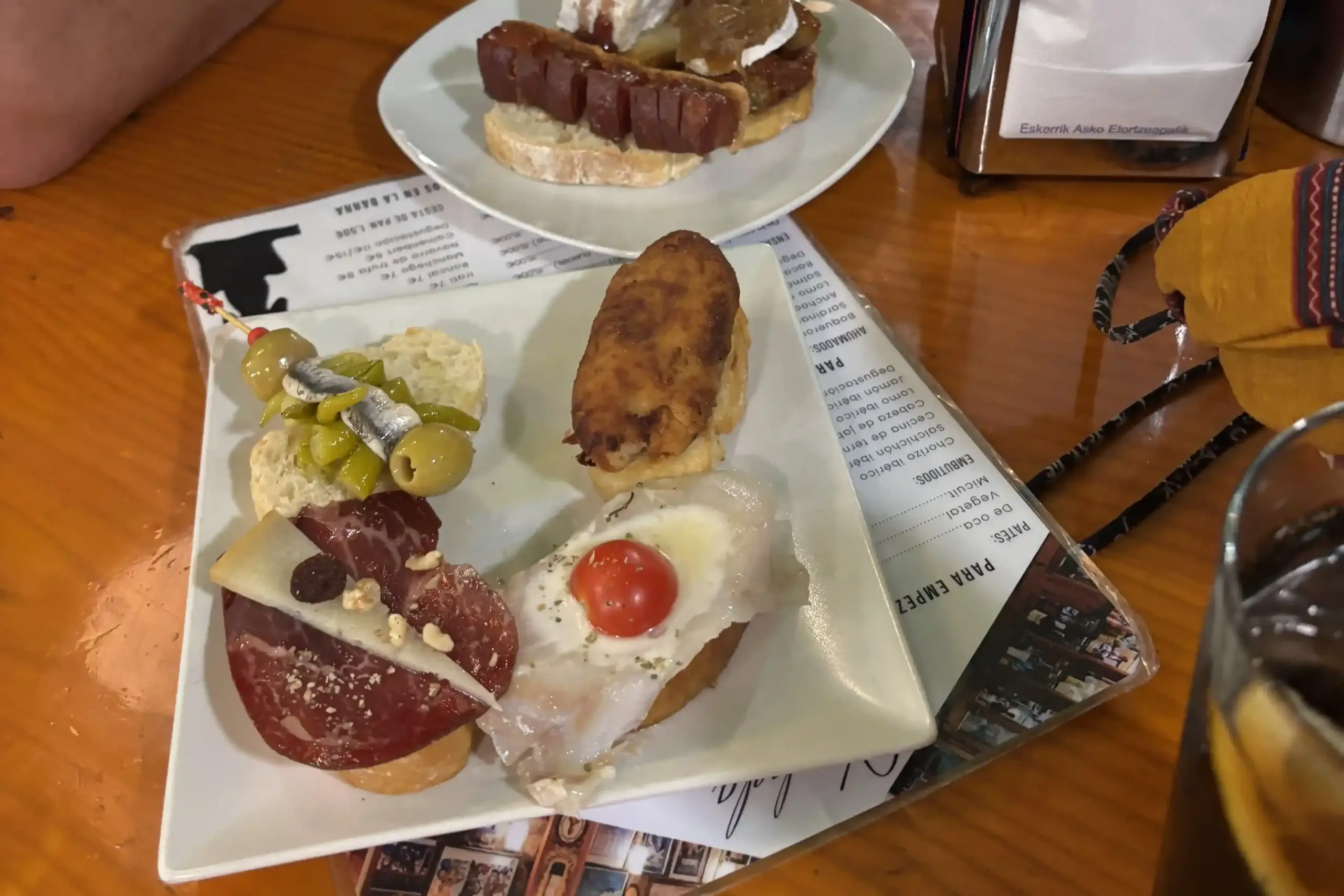
Pintxos Bars
If it rains in Bilbao, thank your lucky stars! You have the perfect excuse for a txikiteo (pronounced roughly chee-kee-teh-oh), the bar-hopping food ritual that locals enjoy all year round, rain or shine.
The best part is that most of it happens indoors: a small beer (zurito) or a glass of wine in hand, a different pintxo at every stop, and only a few steps between one bar and the next to stay out of the rain. A good time to start is around 1:00 pm or 8:30 pm, then simply follow the flow.
In the Casco Viejo, you have the easiest option of all: the arcades of Plaza Nueva. Every arch hides a different bar, and you can hop from one to the next without ever opening your umbrella. My favourites are:
- Café Bar Bilbao (Plaza Nueva, 6)
This is traditional Bilbao at its best. Authentic atmosphere, a counter packed with pintxos and perfectly executed classics — ideal if it is pouring outside and all you want to do is step inside, warm up and eat well. Their quintessential Bilbao pintxo is the Gilda (olive, anchovy and pickled chilli pepper, often considered the first pintxo in history). Try it alongside a plate of champiñones rellenos (stuffed mushrooms) and a chilled glass of Txakoli, the light, slightly acidic white wine of the Basque Country. - Victor Montes (Plaza Nueva, 8)
Just opposite the previous bar, under the same arcade — perfect for moving between the two without getting wet. It is a historic and refined venue, with a wooden bar and shelves lined with old bottles, where the pintxos are a little more elaborate. Try the foie a la plancha (grilled foie gras) or the prawn pintxos: perfect for a more elegant aperitif while staying dry. If you want to linger a little longer, head to the restaurant section for a full dinner based on exceptionally fresh fish.
But really, do the whole circuit around the arcades and try as many as you can!lf to the pintxos from the counter (for the cold ones), or ask the waiter for the hot ones. Keep the toothpicks, as the staff will use them to count what you’ve consumed when it’s time to pay.
And if you still haven’t had enough, read Flavour of Bilbao: where to eat in Bilbao, between txikiteo and the flavors of one of the capitals of the Basque Country.
Travelling through the Basque Country means accepting one simple truth: the weather here is part of the adventure. Sunshine, wind and rain can alternate within just a few hours, so your suitcase needs to be ready for anything.
The best strategy is to dress in layers. Always carry a sweatshirt to wear over your T-shirt. I bought this waterproof and windproof jacket, and it was one of the most useful things I packed. Even in summer, the Atlantic wind can feel surprisingly sharp, so a lightweight scarf or a neck warmer never goes amiss.
Choose practical footwear. When leaving Bilbao to explore the coast, you will need comfortable walking boots for the coastal trails, as well as a pair of water shoes for the rockier beaches. Pack your swimming costume and a lightweight beach towel too. I bought this one so that I could always carry it with me when visiting seaside cities. The Atlantic may be cold, but the temptation to take a brave dip or walk with your feet in the water is always there.
Do not be deceived by the cool breeze: the sun can still burn your skin. A hat and high-protection sunscreen are essential. I always carry this sunscreen with me: it is small but very effective.
I almost forgot: pack a wind-resistant umbrella. I had a Samsonite umbrella with me, which survived two full days of rain, but a woman from Bilbao recommended one by Lendoo. She had it with her, and it looked very sturdy. You can find a similar umbrella with the same features here.
Complete your packing with a little useful technology: offline maps and a reliable weather app that you check regularly can make a real difference. As always, I also packed my power bank. It may seem like a minor detail, but it makes long days much easier, especially when you are using your phone’s navigation system to find your way and want to photograph all the most beautiful corners and moments of the trip. I was given this one and I am very happy with it. There are countless different models, but whichever one you choose, I strongly recommend taking one with you.
With these items in your suitcase, you will be ready to enjoy the Basque Country without too much stress, adapting easily to the changing weather and the rhythm of this distinctive region.
So don’t let bad weather put you off: Bilbao knows how to surprise you even when the skies are grey. Museums, theatres, cultural centres, pintxos and unusual places can turn a rainy day into the perfect opportunity to discover a different side of the city — perhaps less obvious at first, but no less fascinating.
After all, in the Basque Country, the weather is simply part of the journey. And in Bilbao, very often, it is the rain that makes you step inside places you might otherwise have simply walked past.
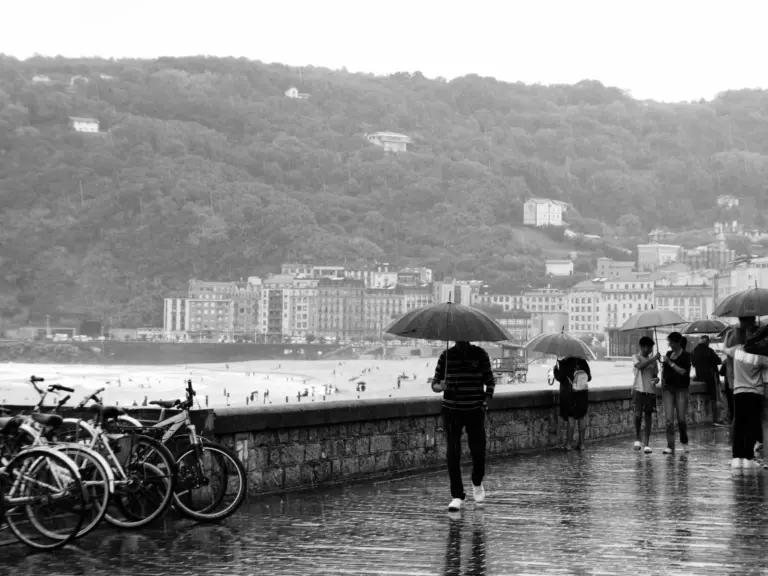
And if your trip continues along the coast, don’t worry: in San Sebastián, too, the rain has a few surprises in store. Unusual museums, cider, stormy waves and even a warm bath overlooking La Concha: I tell you about all of them in things to do in San Sebastián when it rains.