Flavour a Málaga: where to eat in Málaga and discover the authentic local flavor
Málaga is a city full of flavor and character. Eating in Málaga isn’t just about sitting down at a table—it’s a way of living, of slowing down, of sharing a dish even when there’s no rush at all. It’s rightly famous for its espetos de sardinas, sardines skewered on a cane and grilled on boat-shaped barbecues along the beach; for fritura malagueña, a crispy mountain of mixed fried fish; for conchas finas and boquerones, stars of the local aperitivo; but also for countless sweet treats and flavors that come from the inland areas.
Restaurants are located just steps away from Málaga’s main attractions, so between one tapa and the next—or while waiting for your reservation to be confirmed—you can take the opportunity to discover a corner of the city you didn’t know yet. Or, as I mention in my article about Málaga, if at some point during your walk you start to feel a bit hungry, don’t worry: within a five-minute walk you’ll already find a place where you can enjoy the true local flavor.
Now let me take you on a little tour through the dishes you absolutely have to try—and, most importantly, where to eat them—without falling into the usual tourist traps.
If you really want to taste Málaga, this is where you need to start…
Here are a few practical tips to enjoy Málaga’s food scene without any hassle. They’re simple, but they can help you save time, money, and a bit of frustration. So remember that:
- Lunch and dinner start late: usually from 2:00 pm and 9:00 pm onwards; many places open later than you might expect.
- Markets close around 2:00 pm, so if you want to eat there, plan your visit in advance.
- Breakfast is either very early (around 7:30 am) or closer to 10:30 am, so choose your timing wisely if you want to eat like a local.
- In Málaga there’s also a simple rule: if you see menus in seven languages, huge photos of the dishes, and someone aggressively inviting you inside… it’s probably better to keep walking.
Traditional Málaga cuisine
Málaga’s cuisine is a story that constantly moves between the sea and the inland, between simplicity and character.
The iconic dish—the one you hear mentioned everywhere as soon as you set foot in the city—is espetos de sardinas: sardines skewered on a cane and slowly grilled over open embers, often on boat-shaped grills filled with sand and charcoal right on the beach. It’s an ancient, almost ritual gesture, and the smoky aroma that fills the seafront is one of those memories that stays with you. It’s also one of the city’s symbols—you’ll find it on just about every fridge magnet sold in Málaga!
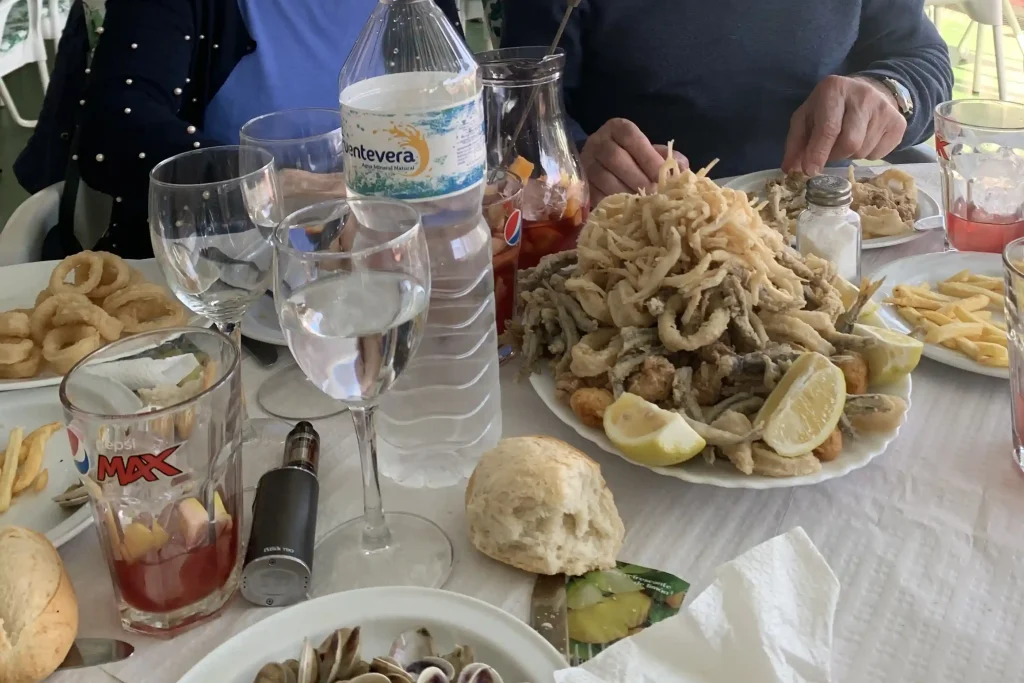
Alongside espetos you’ll find fritura malagueña, a golden mountain of fried fish: boquerones, calamari, tiny shrimp—crispy, yet surprisingly light. It’s the perfect dish to share, perhaps with a cold beer in hand and sand still clinging to your feet.
In the warmer months, cold dishes take center stage, such as porra antequerana, a thicker, richer cousin of salmorejo, or ajoblanco, a wonderfully unexpected cream made with almonds, bread, garlic, and olive oil, often served with grapes or melon to create a sweet, refreshing contrast. At this point, make peace with it: you might easily finish an entire loaf of bread, mopping it up straight from the rustic clay bowl it’s served in.
From the sea, the journey then moves inland, where the cuisine becomes heartier and draws inspiration from nearby towns and villages. Here you’ll find dishes like rabo de toro, typical of Córdoba but prepared Málaga-style—oxtail slowly cooked until meltingly tender—or the so-called plato de los montes, a rich “farmers’ dish” made with eggs, potatoes, meat, and chorizo, created to restore energy after a long day working in the fields.
And when it’s time for dessert, Málaga can be just as surprising. Those with a sweet tooth fall in love with bienmesabe, an almond cream with sugar and cinnamon that tastes like home, or with roscos de vino, small fragrant doughnuts in which the wine is truly part of the dough. Then there are the delicate tortas de aceite, thin, crispy and light, flavored with anise and sesame—perfect for nibbling alongside a coffee. And of course, churros are a must, best enjoyed with hot chocolate or a café con leche.
The Malagueño churro is the tejeringo, not porras or Madrid-style churros. It’s a round-shaped churro, made in an artisanal way by letting the dough fall directly into the pan through a kind of tube or syringe—this is where the name comes from. When they’re done properly, you’ll notice they’re firmer and crunchier. They’re also more filling, so be careful not to overorder.
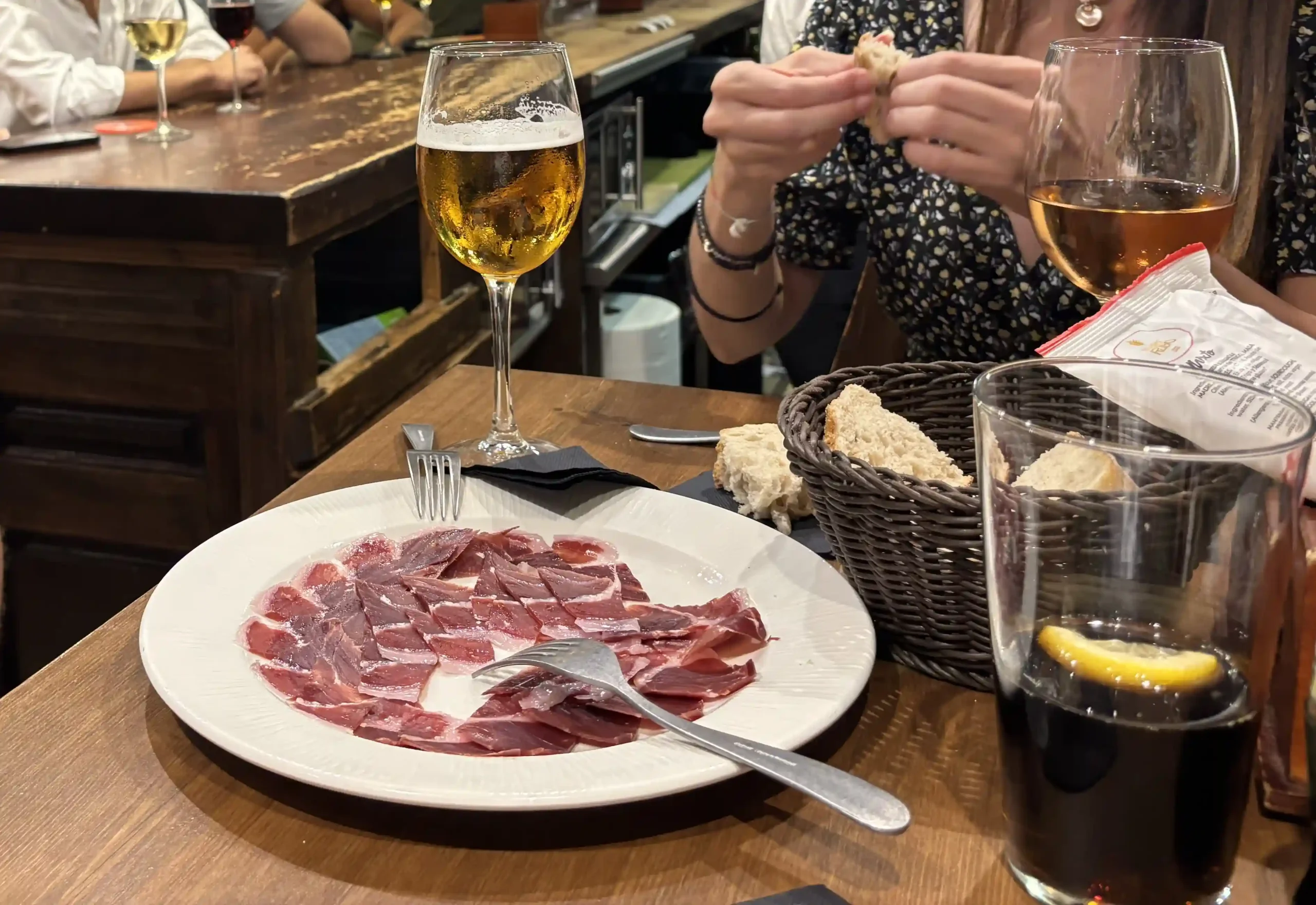
Alongside all this, you’ll always find the great Spanish tapas that are everywhere in Málaga: creamy croquetas, a tall and juicy tortilla de patatas, ensaladilla rusa, patatas bravas with spicy sauce, jamón ibérico freshly sliced to order, and aged cheeses from Andalusia. For a quick bite, Málaga is also famous for the campero, an iconic local sandwich made with a soft, round bread called mollete, traditionally filled with cooked ham, cheese, lettuce, tomato, and mayonnaise, then grilled or pressed on a hot plate until flattened and crispy on the outside. It’s a popular, affordable, and versatile dish found all over the Costa del Sol, often enjoyed late at night after an evening out.
All of this is often paired with one of the great local prides: Málaga wines. The province of Málaga isn’t just about espetos and chiringuitos—it’s one of the oldest wine-growing regions in Spain… and probably one of the most underrated. Here you’ll find structured reds made from Tempranillo, Syrah, and Petit Verdot, as well as fresh, mineral whites you’d never expect from this latitude.
The most famous classic is Moscatel, sweet, aromatic, and enveloping, perfect at the end of a meal or with dessert. Alongside it is Pedro Ximénez, dark and intense, and an increasingly interesting production of whites and reds from the hilly areas surrounding the city. I can honestly say there are wineries and wines here that could rival many Italian ones. I’m especially fond of Seis + Seis from Ronda and La Raspa from the Axarquía.
In the end, eating in Málaga is simply about falling into a rhythm—letting yourself be guided by aromas, timeworn wooden bars, and dishes that arrive without haste. It’s a continuous journey through simple flavors and ancient memory, one that tells the story of the city better than any guidebook ever could.
Pedro Ximénez, for those arriving in Málaga without knowing it, is always a small surprise. You order it as a “wine” and what arrives in your glass looks more like a dark, dense, almost velvety liqueur. In reality, it is a proper wine—just one with such an intense character that it feels almost like a dessert.
It comes from a very particular grape, the Pedro Ximénez, which after harvest is left to dry in the sun for several days. The grape clusters are laid out on straw mats, and the Andalusian heat causes the water to evaporate, concentrating sugars and aromas. This is where the magic happens: the grapes turn almost into raisins, and when pressed, they release an extremely dense, very dark must, packed with natural sweetness.
The result is a wine with aromas of raisins, dried figs, caramel, honey, cocoa, and coffee, with an almost syrupy texture. It’s not a wine to drink absentmindedly: it’s meant to be sipped slowly, in small amounts, as if you were tasting a liquid dessert.
In Málaga and throughout Andalusia, Pedro Ximénez is often enjoyed on its own at the end of a meal, but it’s also wonderful paired with traditional local desserts—or even drizzled over vanilla ice cream. It’s one of those flavors that speaks of sun, time, and patience, and it’s impossible not to take the memory with you… or a bottle in your suitcase.
In Málaga, you eat well everywhere. That’s why it’s a city that’s easy to enjoy slowly: a glass of Moscatel, two tapas, a walk, then another bar. And so on, all day long.
To make things easier, I’ve divided my recommendations by neighborhood, so it’s simpler to find your way depending on where you are when hunger starts to creep in.
The best restaurants in the Old Town (Casco Antiguo)
If, after soaking up the history of Málaga, you feel the need for some flavors that truly satisfy your appetite, the Old Town offers no shortage of options.
By stepping away from the most touristy streets—or sometimes simply by choosing some of the city’s most well-known restaurants—you’ll discover dishes you didn’t even know you were going to love. Here are a few carefully selected places that, I can assure you, you won’t easily forget once you’ve tried them.
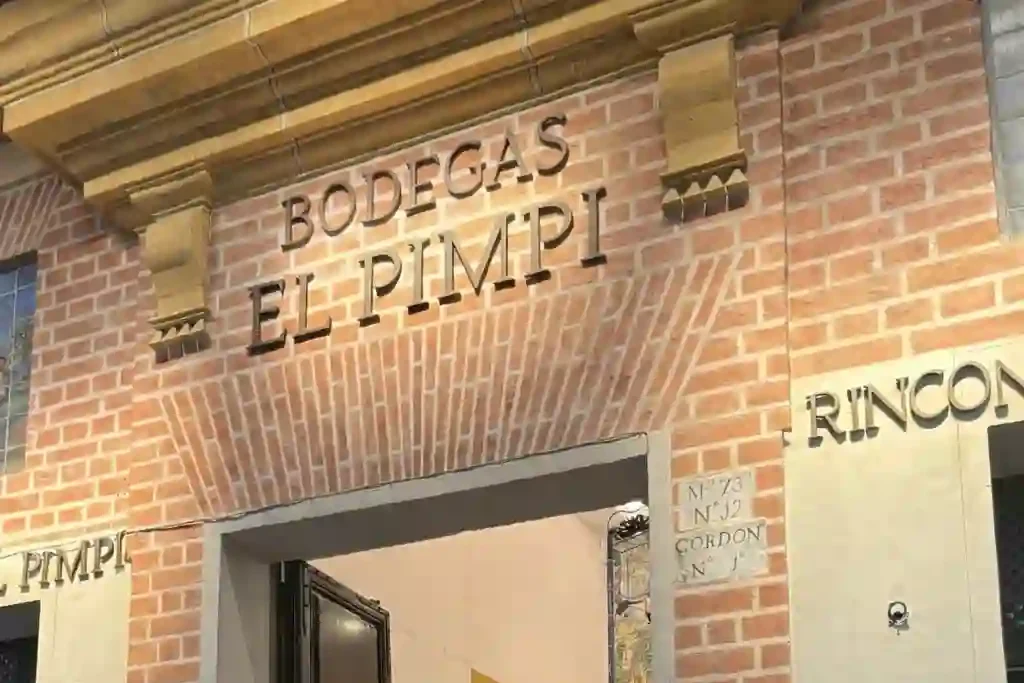
As a first stop, here’s a true institution: El Pimpi.
Touristy? Yes. Iconic? Absolutely—and a must-stop. It’s part of Málaga’s history. Since Antonio Banderas bought a stake, it’s gained international fame, and booking ahead is a good idea. There’s also a branch in Marbella. You don’t come here just to eat—you come to experience a piece of history. The interiors are still the same as they’ve always been, and walking through the rooms feels like stepping back into the city’s past. Please—don’t miss it. Order everything you can! Honestly, I wouldn’t know what to recommend other than this: leave nothing untried.
Another restaurant that earns a five out of five is El Tapeo de Cervantes. It’s a bit less central, just beyond Plaza de la Merced. Here you can choose to enjoy your stop perched on stools in the most Spanish way, or seated at regular tables like in a classic restaurant. The menu is excellent: they’ve reinterpreted some traditional Spanish and Andalusian ingredients with real finesse. I highly recommend the tuna with cauliflower cream—it was a genuine surprise!
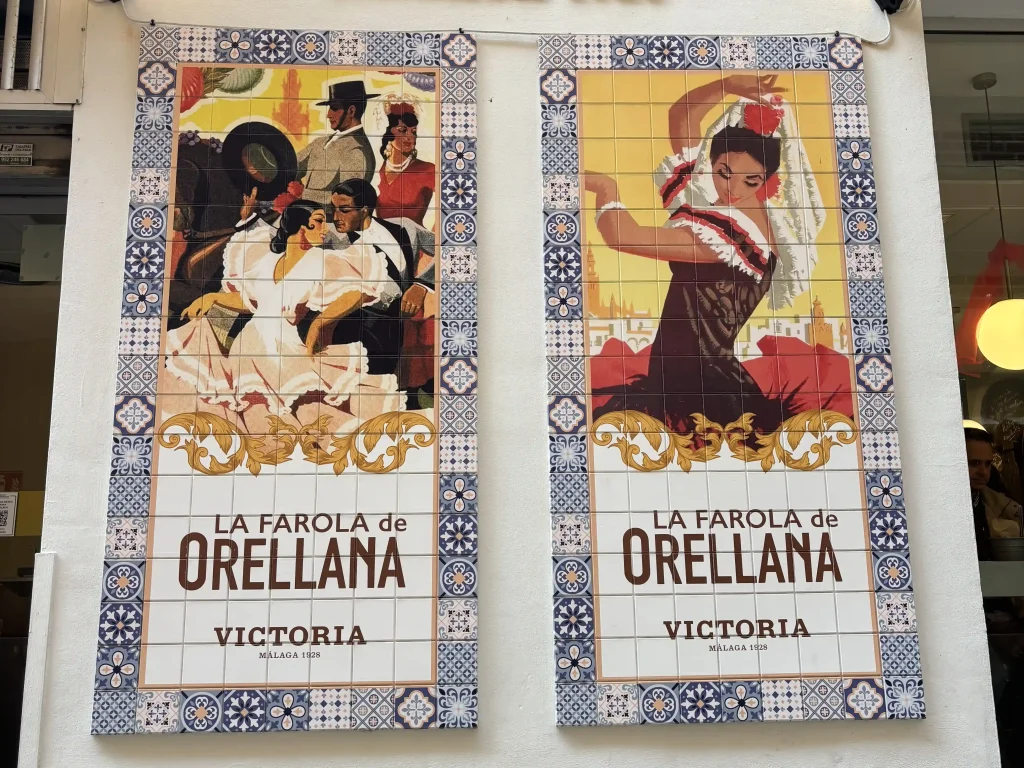
And then there’s La Farola de Orellana. Much loved by locals and often recommended by experts in traditional cuisine, it’s a place you go to enjoy dishes that truly represent Andalusian tradition, with a touch of elegance and a strong focus on quality ingredients.
The name “Farola” refers to the historic lamppost that’s a symbol of the city, while Orellana is the surname of the family that brought prestige to the restaurant. Here it’s best to head straight for their land-and-sea classics: homemade croquetas, creamy and delicate, or red tuna from the coast of Cádiz. In the warmer months, the Andalusian gazpacho is excellent—fresh and well balanced—as is the porra antequerana done properly: thick, aromatic, topped with jamón and hard-boiled egg.
But we’re not done yet. There’s still Taberna Uvedoble. It continues to stand out on Málaga’s food scene by blending Spanish tradition with contemporary touches. The menu is varied and designed for sharing: you can order dishes as tapas, half portions, or full portions, making it easy to try lots of different preparations. I recommend the ensaladilla rusa with prawns (a classic with a clever twist) and the ajoblanco. Even though I’m not usually a fan of ensaladilla rusa, I found it delicious. I was also advised to try the black noodles with baby squid. I didn’t get the chance, but just seeing them was enough to make my mouth water.
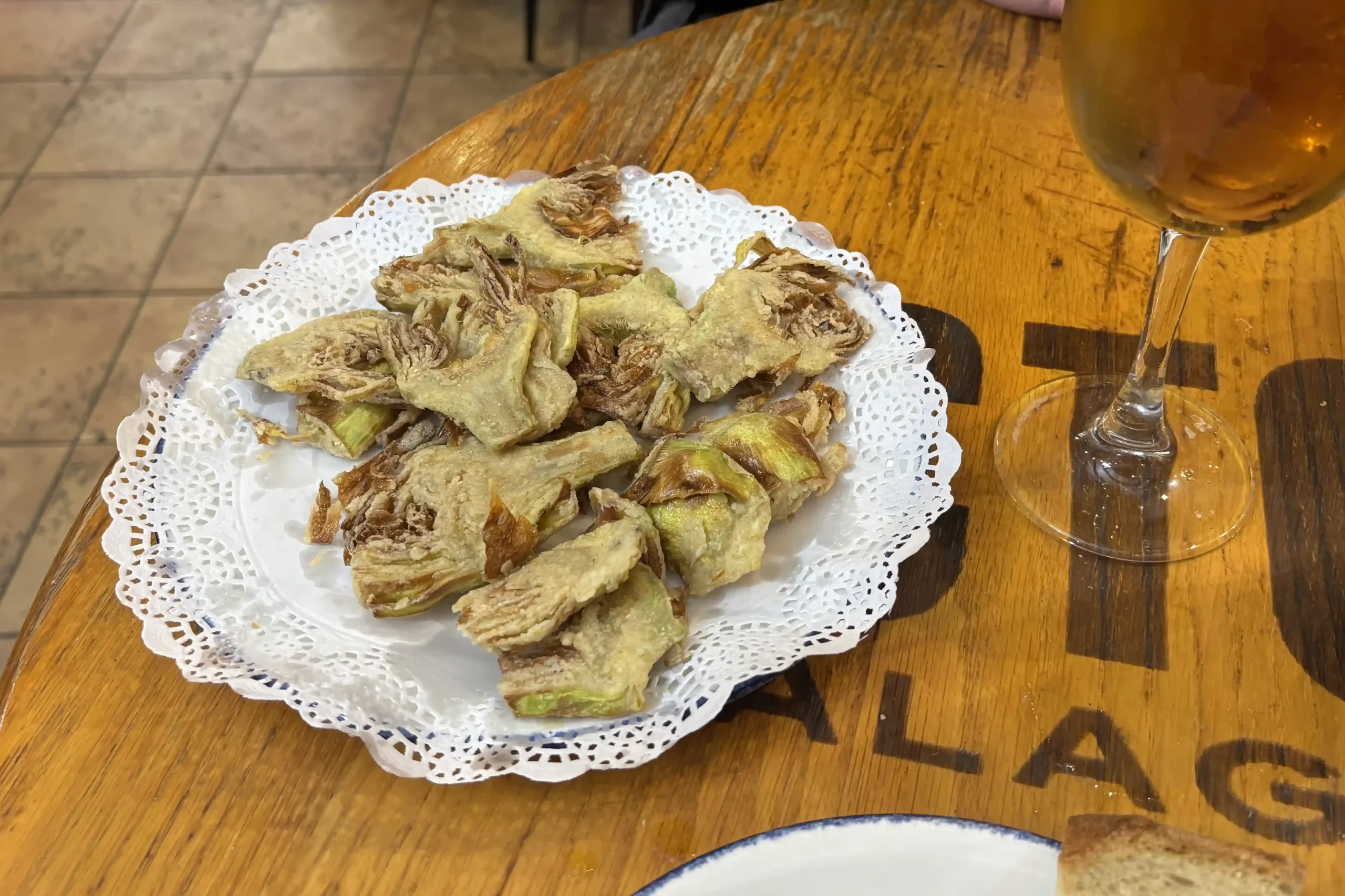
I’d like to stop, but I just can’t help making a stop at Mesón Mariano. As a true artichoke lover, this place is my kingdom. Artichokes (alcachofas) are, in fact, the restaurant’s signature dish and are served with jamón, grilled, or in the “Montillana” style (typical of Córdoba). This isn’t a “touristy façade” kind of place: it has a warm, authentic atmosphere, frequented by locals and visitors who are looking for real flavors rather than Instagram dishes. The philosophy here is all about quality ingredients, treated with care and respect for tradition, without unnecessary gimmicks.
If you’re looking for something quicker, I recommend Casa Lola (there are several locations in the city center, but the original one is at Calle Granada, 46). It’s simple and fast. This is how they describe themselves:
“A perfectly poured caña, a waiter who smiles at you, the pleasant buzz of people enjoying the place, air that smells of Málaga… and then generous dishes arrive, with that perfect mix of tradition and creativity. I look around and can’t stop taking in every detail—it’s a kind of madness, but one that makes sense. I haven’t even left yet… and I already know I want to come back.”
And I don’t think any more words are needed. The grilled Iberian pork (presa ibérica) and the broken egg with Iberian ham are excellent. You won’t be disappointed.
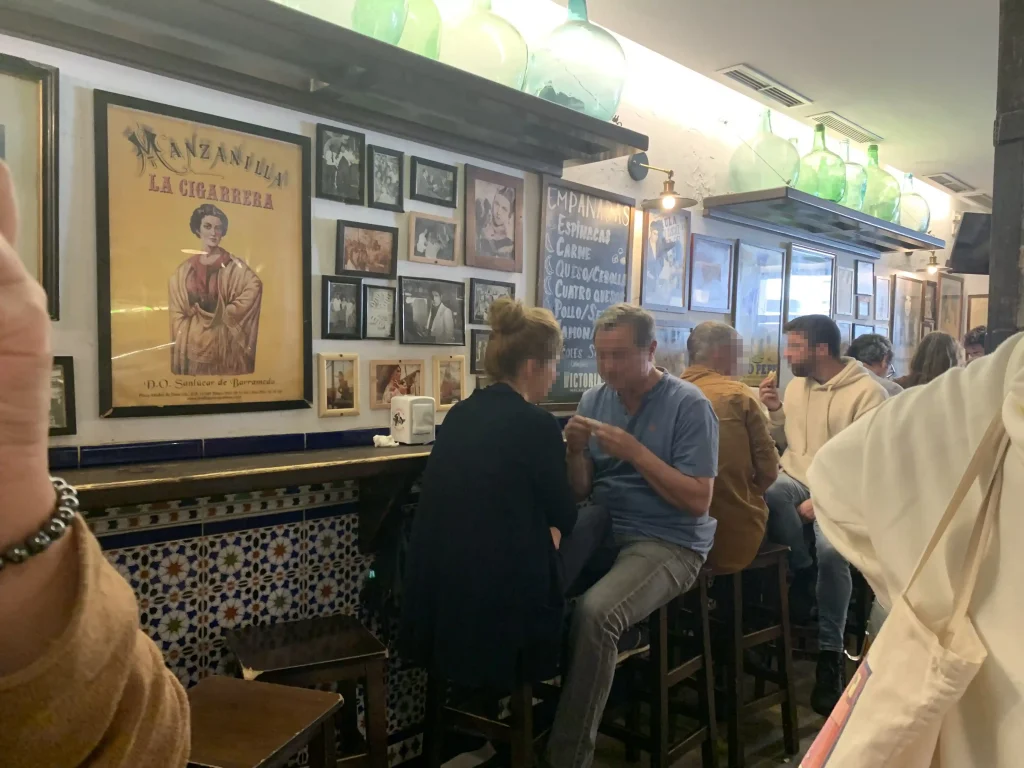
And finally, La Tranca — my favorite! Pure Andalusian style. This is the kind of place where you instantly feel at home. The waiters sing Spanish songs, and you can enjoy your tapas and a beer while singing at the top of your lungs. Classic tapas, generous portions, honest prices, a loud and cheerful atmosphere… in short, this is Andalusia. No picture-perfect dishes here—just things done right: ensaladilla rusa, croquetas, albóndigas, lomo en manteca, tortilla de patatas. The place is tiny and always packed, so arm yourself with patience and embrace the true Andalusian mindset… “tranquilo.”
For those who’ve walked up to the Castillo de Gibralfaro, here’s a perfect stop to recharge: the Se desideri svegliarti con una vista spettacolare sulla città e sul porto, puoi verificare disponibilità e prezzi del Parador de Málaga Gibralfaro . I’ve always seen it as a small reward Málaga offers to anyone willing to climb a little higher, away from the noise of the city center, to look down on it and truly breathe it in. The Parador is elegant, but without the cold feel of a luxury hotel. What dominates here is a subtle Andalusian elegance—bright rooms, large windows, and a terrace that alone is worth the climb.
I recommend coming at least for an aperitif or dinner at the restaurant: it’s one of the most beautiful ways to experience Málaga “from above.” The kitchen offers a thoughtful mix of Málaga tradition (such as Malagueño ajoblanco with grapes or melon, lamb, or Iberian pork tenderloin) and refined Mediterranean cuisine (like the seafood rice, which I assure you is not your typical paella). The stars are fresh fish, rice dishes, expertly prepared meats, and—of course—Andalusian wines. This isn’t the place to look for cheap tapas, but it’s perfect for a special evening, an anniversary, or simply to treat yourself to something outside the usual tourist circuit. As with all Paradores, you can also If you would like to wake up to a spectacular view over the city and the harbour, you can check availability and prices for the stay overnight.
.
Paradores aren’t just hotels or restaurants—they’re the most poetic way Spain has found to preserve its history. They were founded in 1928 with an idea as simple as it was brilliant: instead of letting castles, monasteries, and noble palaces fade away with time, the state restores them and transforms them into high-end hotels, keeping their soul intact.
Today, this means you can sleep or dine in places once inhabited by monks, nobles, soldiers, and kings. Paradores aren’t about flashy luxury, but about emotional luxury: breathtaking locations that make you feel far from everything, carefully preserved original architecture, excellent regional cuisine, and a refined, quiet atmosphere—far from noisy mass tourism.
In Andalusia, for example, there are four true gems:
- Parador de Granada – inside the Alhambra
- Parador de Ronda – perched above the Tajo Gorge
- Parador de Carmona – set in an ancient alcázar
- and, of course, Parador de Málaga Gibralfaro – above the city, with the Mediterranean at your feet
Where to eat in El Palo: where food culture meets the sea
El Palo is one of the neighborhoods that true malagueños love for fresh fish, local cuisine, and authentic flavors. An old fishing district to the east of Málaga (about 25 minutes by bus), here the food is simple, honest, and filled with the scent of the sea.
Below you’ll find some of the best culinary experiences for eating in El Palo—and I can assure you it’s well worth the trip. If you have the time, don’t miss it.
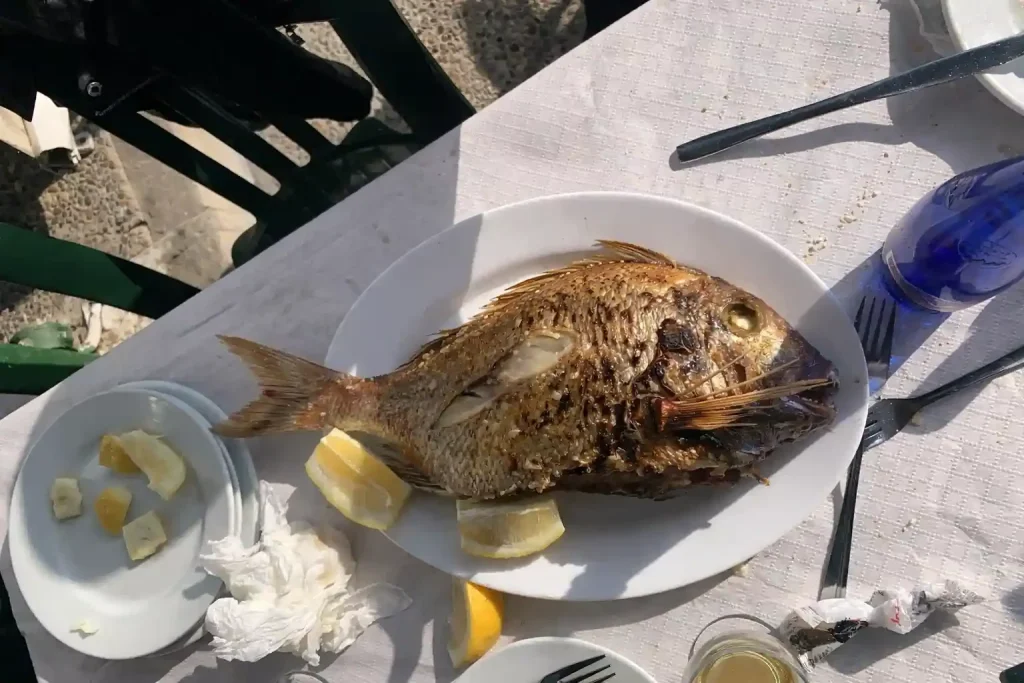
Of course, we can only start with El Tintero. This is the legend of El Palo: a spectacular experience. Instead of ordering from a menu, waiters constantly walk around with plates piled high with fish and specialties, freshly prepared in the kitchen but not yet assigned to any table. They shout out the name of the dish, you raise your glass or call them over (the fastest wins!), choose what you want, and at the end they simply count the plates you’ve eaten and write the bill directly on the tablecloth.
A fun anecdote: it used to be right on the beach, but some customers would hide plates under the sand to avoid paying—so they eventually created a nice, solid, “anti-cheapskate” floor! Jokes aside, it remains a lively, indulgent experience, completely different from a classic restaurant. And the food is fantastic. Choose whatever you like—fried fish, gambas, boquerones, grilled fish. There’s honestly nothing I wouldn’t recommend.
And then there was Miguelito El Cariñoso. A must for anyone who loves traditional seaside cuisine. Here, the grilled fish was perfect—simply seasoned with olive oil, lemon, and that unmistakable Mediterranean flavor that makes it unforgettable. It closed in October 2025 following the owner’s retirement, but I wanted to give it an honorable mention, because it’s one of the reasons I kept coming back to Málaga time and time again.
But don’t be discouraged: El Palo is a guarantee no matter which restaurant or chiringuito you choose. Just prepare your stomach and let the neighborhood do the rest. As you can imagine, these places are always busy. If you can, I recommend booking ahead, though it’s not always possible—especially during high season.
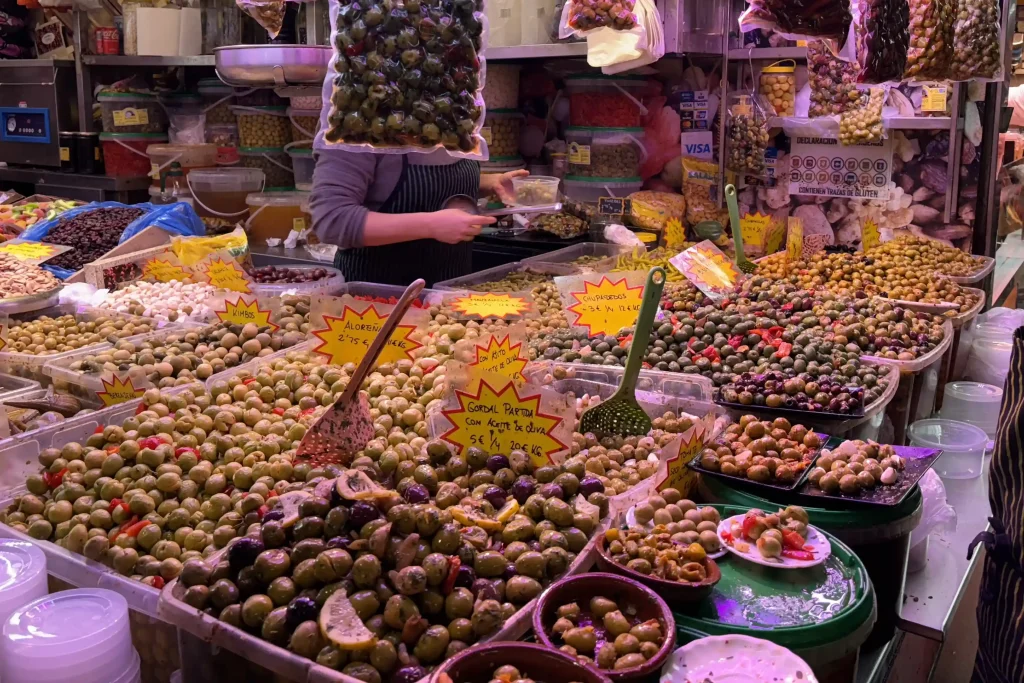
And of course, the Mercado Central de Atarazanas
If you walk into the Mercado Central de Atarazanas thinking you’ll just take a quick stroll among the stalls… you’re already doomed. Because this isn’t just a market—it’s a kind of gastronomic amusement park, where every scent makes you change direction and every counter seems to whisper, “taste me too.”
It’s also the perfect place to buy food souvenirs or edible memories, in case what you’ve already purchased isn’t enough to bring your trip home with you. Though I know myself well: I enter these markets planning to buy local products and end up sitting down eating tapas of every kind 😄.
Here, the secret is tapear—moving from stall to stall, one tapa at a time, always with a beer on the side. Follow the flow of the market and let it guide you through your own food journey.
The first heart-stopping moment comes in the fish section. Shiny displays, ice crunching underfoot, prawns that look as if they’ve just come out of the water. Boquerones, grilled gambas, octopus (often served warm), clams and razor clams, pescaito frito.
After the fish comes the phase of “I’m already full, but I’ll keep going.” Jamón ibérico sliced by hand to order, Andalusian cheeses, marinated olives, and classic tapas from the inland areas.
Then there’s the most colorful side of all: fruit, sweets, and aromas. From one stall to the next, you find yourself surrounded by artisan pastries, tropical fruit, freshly squeezed juices, and on-the-spot smoothies.
And to finish, you grab a glass of sweet Málaga wine or a local vermouth, lean against a small table near the entrance, watch the market buzzing around you, and think:
“I was only supposed to buy two things… and instead, I ended up eating Málaga.”
Of course, there are other markets scattered around the city, where you can find local km-0 products, ultra-fresh fish, and juicy fruit. If you’re interested, you’ll find a few suggestions in my article What to buy in Málaga.
Keep in mind that the market opens early in the morning and closes in the early afternoon (usually around 2:00 pm). Arriving early gives you the best selection of ultra-fresh products—especially fish and seafood—before the stalls get crowded and the best items sell out. Most fish stalls are closed on Mondays, as many fishermen don’t go out to sea that day. If fresh fish is what you’re after, it’s best to choose another day of the week.
Where to have breakfast in Málaga: starting the day with the right rhythm and energy
Breakfast in Málaga is taken seriously—but at the right pace. There’s no rushing here: you sit down, order a café con leche, watch the street slowly come to life, and only then decide how to start your day. It’s one of those small daily rituals that immediately lets you know you’re in the south of Spain.
In this article, I’ll take you to breakfast the way malagueños do—between historic cafés, traditional bakeries, and more modern spots—without chasing pointless trends and focusing instead on places that truly work.
If you want to have breakfast like a local, there’s no need to look for anything unusual. In Málaga, breakfast is made up of just a few elements, but perfectly combined:
- Mollete or toast with olive oil and tomato
- Café con leche
- Sometimes churros with hot chocolate, especially on weekends
It’s a breakfast that fills you up without weighing you down, ideal if you’re planning to spend the whole day walking.
One of the city’s iconic spots is Café Central, also famous for its curious way of ordering coffee (nube, sombra, corto…). It’s one of those cafés where you’ll see students, elderly locals, tourists, and workers all sharing the same tables.
When it comes to churros, the classic reference is Casa Aranda: no frills, just churros made the right way and hot chocolate thick enough to be taken seriously. Another good option is Tejeringos Coffee. It’s a chain, but one that has managed to maintain very high quality—you’ll find locations almost everywhere.
And for those who like to start the day on a sweet note, Málaga is the perfect place. Its historic pastry shops are just as much a part of the urban landscape as churches and markets.
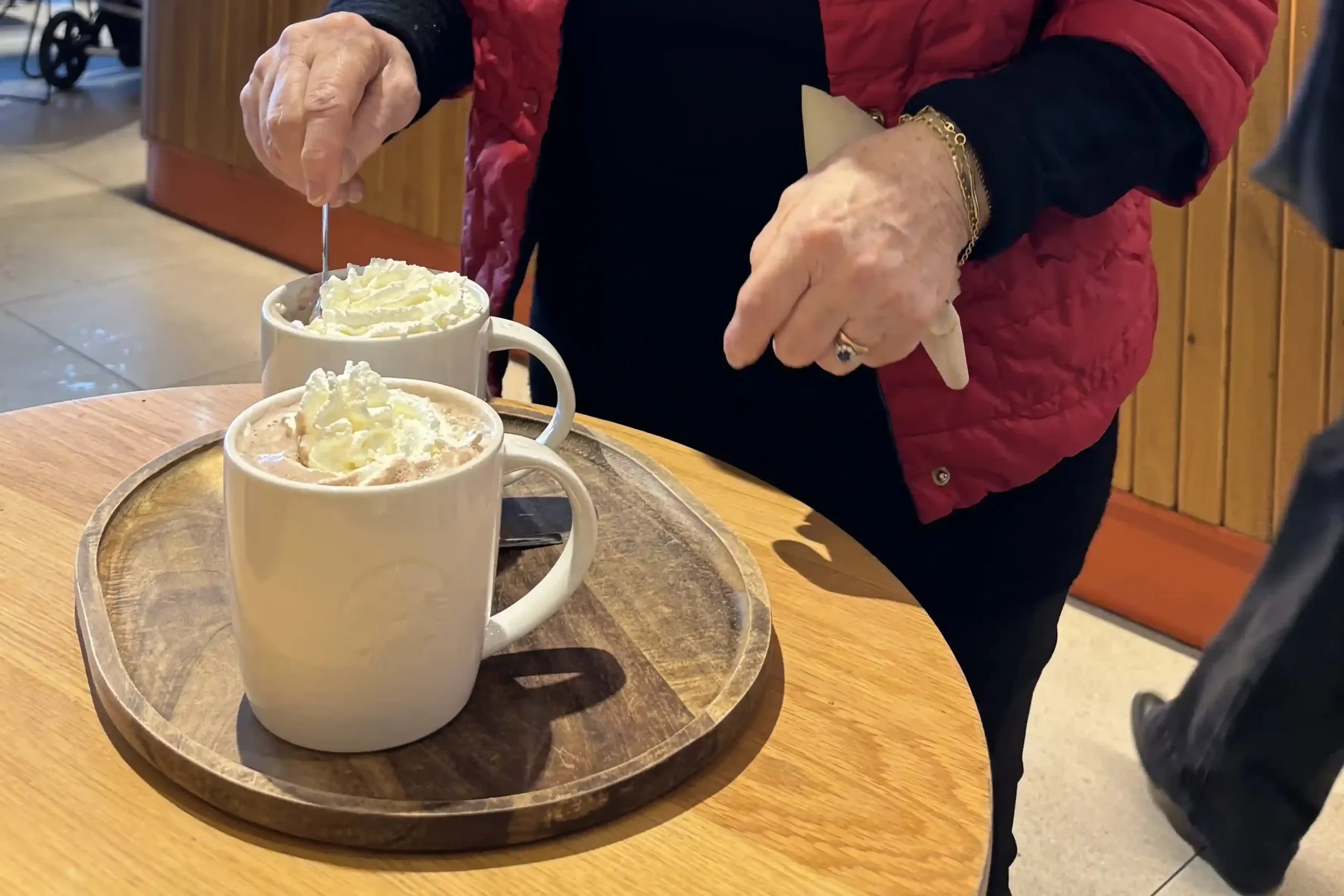
La Canasta is a safe bet: croissants, traditional pastries, excellent bread, and plenty of savory options too. It’s the classic place where you walk in “just for a coffee” and end up ordering something extra.
More traditional is Tejeros Dulces, perfect if you want to taste authentic Andalusian sweets—the kind that feel like home and Sunday mornings.
But the place you absolutely have to visit is La Recova. As soon as you arrive, you realize you’re not just in a bar or a simple café. Step inside and you’re surrounded by handicrafts, vintage objects, and small antiques. Breakfast here is simple, clever, and made the old-fashioned way. Later in the day it also turns into a tapas bar, so if you can’t find a spot for breakfast, make sure to come back at least for lunch.
In recent years, Málaga has changed its look—and that shows at breakfast too. More international spots have appeared, ideal if you’re looking for something different from the classic toast with tomato.
Brunchit is probably the best known: avocado toast, pancakes, eggs in every possible version. Always busy, but for good reason.
If you prefer a more relaxed atmosphere, Recyclo Bike Café is perfect: healthy breakfasts, good coffee, and an informal setting that invites you to linger.
And for lovers of French pastry, you should try Pastelería Sueño. The quality is outstanding—and if you’re in the mood for something special, this is the place.
In recent months, a pastry trend that has taken the world by storm has also arrived on the Costa del Sol: desserts that look like real fruit, but are actually intricate and highly crafted sweets—like those made famous by the renowned French pastry chef Cédric Grolet.
These creations, born in Paris and made viral on social media thanks to their astonishing realism, are now reinterpreted with a local twist at La Coquetteria — a café-pastry shop with several locations along the Málaga coast (in Torre del Mar, at the El Ingenio Shopping Center, and also in Vélez-Málaga).
But the most surprising detail is the price: Grolet-inspired desserts cost around €6 each, a figure many consider a great deal when compared to the roughly €20 you’d pay in Paris!
For lovers of truly good coffee, Next Level Specialty Coffee is an almost mandatory stop.
And here we are once again, at the end of our meal! Eating in Málaga is easy: just follow the city’s rhythm, choose places filled with locals, and it’s hard to go wrong. Between espetos on the beach, tapas in the historic center, and traditional dishes from the inland areas, every plate becomes an opportunity to get to know the city a little better.