Costa de la Luz: the brightest (and most authentic) coast in Spain
When people talk about Andalusia, the mind and the heart immediately go to Granada, Seville, Córdoba, or the Costa del Sol in Málaga.
But there is a corner — or rather a stretch of coastline — that many people don’t even know exists, and that doesn’t resemble any other Spanish coast: it’s the Costa de la Luz.
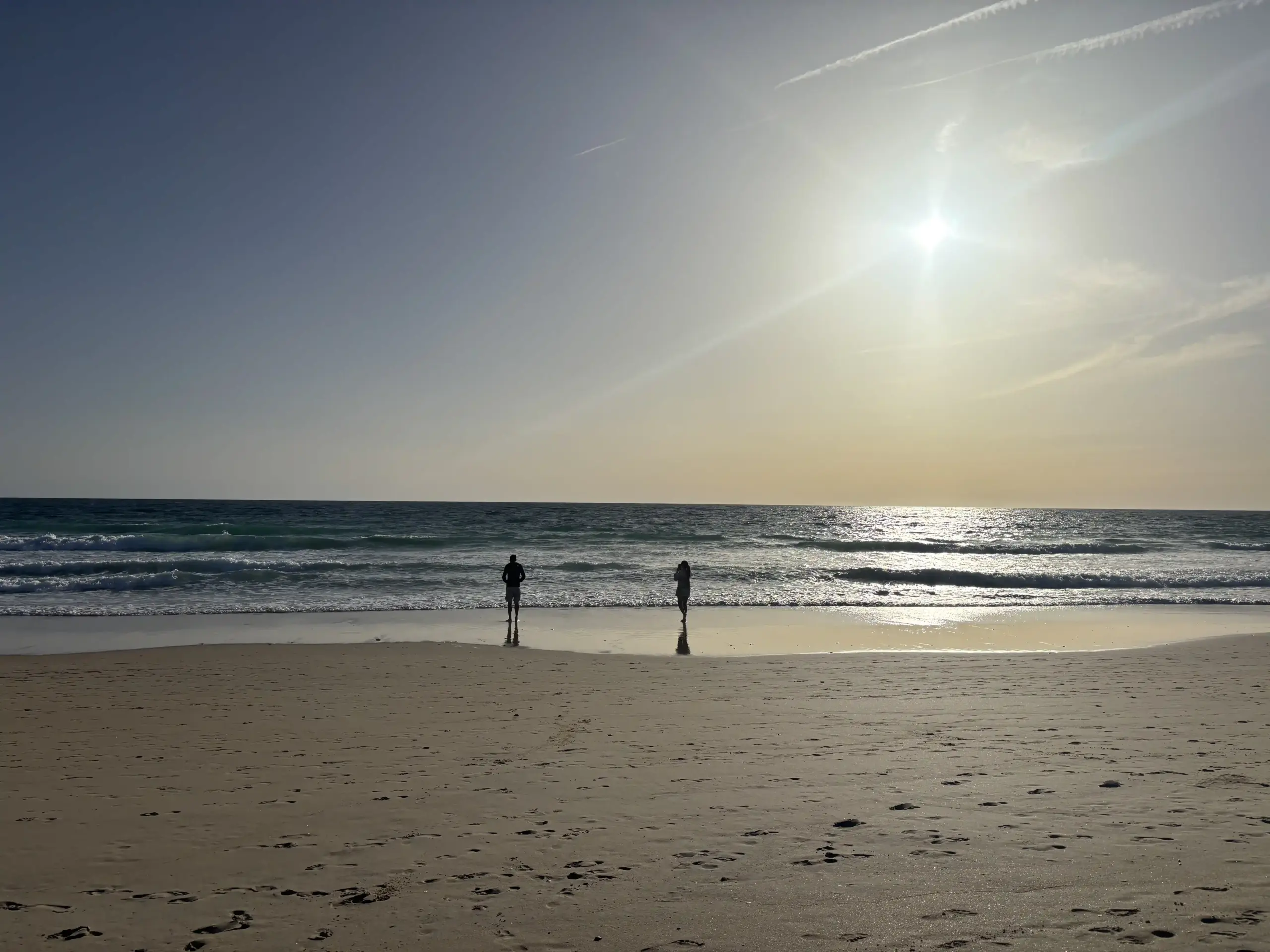
I discovered it through a friend who moved here, and it instantly became my favorite Spanish coast: white beaches with golden reflections, still largely untouched by mass tourism, a crystal-clear sea — or rather, the ocean — white villages almost suspended between inland and coast, thousand-year-old history, tranquility, and fantastic food. All in perfect harmony.
Here, the wind is not just a weather element, but a constant presence in the landscape — sometimes the absolute protagonist, always there, capable of transforming a day, reshaping the dunes, and changing the character of a place from one hour to the next.
It’s a coast where three thousand years of history overlap so densely that you only need to lift your eyes from the sea to encounter the Phoenicians, the Romans, the Moors, and the routes of Christopher Columbus.
Where red tuna is still caught using ancient fixed-net techniques.
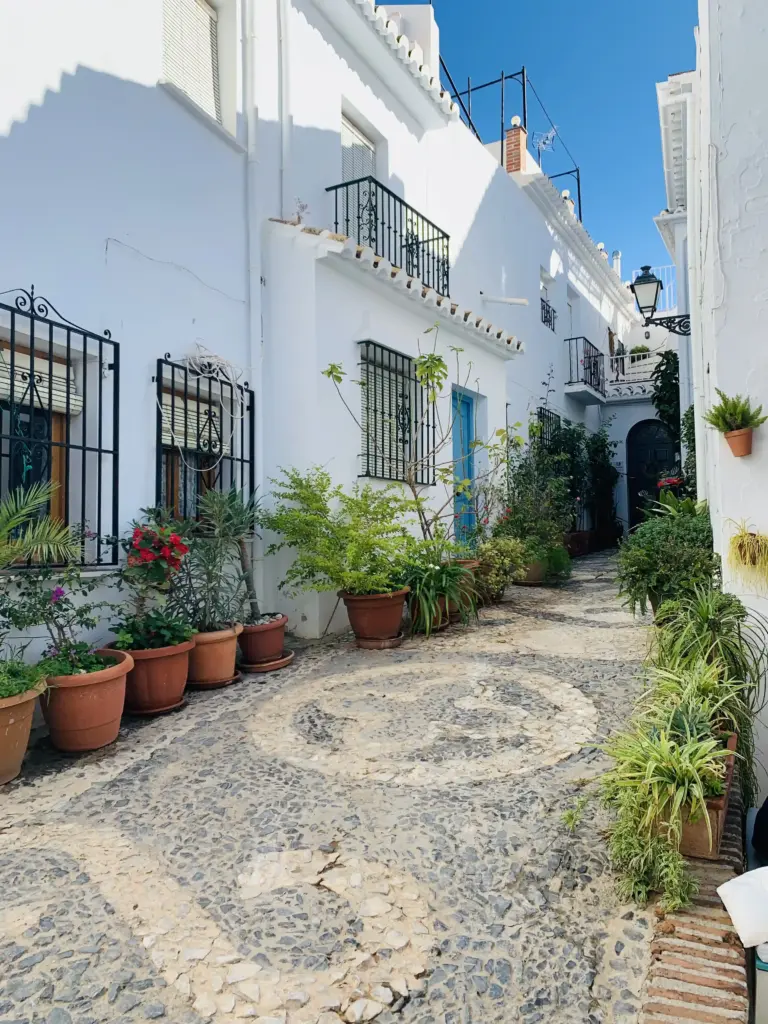
Where some white pueblos seem more placed than built, as if someone had painted them onto the hills.
The name is not a poetic metaphor. Costa de la Luz comes from the unique quality of the Atlantic light: golden and silvery reflections that change throughout the day, sunsets that set the sky on fire beyond normal time, a brightness that has inspired poets, navigators, and travelers for centuries.
If you’ve already read our guide on Cádiz, you’ve already caught a glimpse of this light.
But the Costa de la Luz is much more than Cádiz: it’s a territory that stretches between ocean, river parks, and inland landscapes — a universe of history, tradition, and wild nature just waiting to be discovered.
It’s not the easiest coast to describe. But it’s the one that, in my opinion, once you truly understand it, will become something you simply can’t live without.
Here are some practical tips for organising a trip along the Costa de la Luz: how to get there, how to get around, how to plan your trip and when to go. A few useful things to know when choosing the most convenient airport, planning your journeys and deciding which beach to visit according to the wind and sea conditions.
Show all tips ↓ Hide tips ↑
How to reach the Costa de la Luz
The Costa de la Luz stretches over a very large area and there is no single ideal gateway. The best option depends mainly on which part of the coast you want to visit.
Cádiz is the most convenient starting point for exploring the bay and the north-western section, including Chiclana, Conil and Vejer de la Frontera.
- The nearest airport is Jerez de la Frontera Airport, although it has a relatively limited number of international connections. The Cercanías C1 suburban railway connects the airport directly with Jerez de la Frontera, El Puerto de Santa María, Puerto Real, San Fernando and Cádiz. There are also a few bus services, but departures are not particularly frequent, so always check the timetables on the official Aena and Renfe Cercanías websites before booking your flight.
- A good alternative is Seville Airport, which generally offers a wider range of domestic and international connections. From the airport, take the EA bus to Santa Justa railway station or Plaza de Armas bus station and continue from there to Cádiz.
- For more information on reaching Cádiz by train, bus or car, take a look at our complete Cádiz guide.
Málaga is another possible gateway to the south-eastern end of the Costa de la Luz, especially if you want to begin your journey in Tarifa and then continue towards Bolonia, Zahara de los Atunes and Cádiz. It is particularly convenient if you find a cheaper flight or want to combine this itinerary with a few days on the Costa del Sol.
- From Málaga Airport, you can reach the city’s bus station using the Cercanías C1 suburban train or the airport bus. Coaches leave Málaga for Algeciras, Tarifa and Cádiz, but the journey can be long and the timetables do not always provide convenient connections. If you want to explore several beaches and towns, renting a car directly at the airport is therefore the most practical option.
- For more information on reaching Málaga by train, bus or car, take a look at our complete Málaga guide.
I usually search for flights on Google Flights, which makes it easy to compare airports, dates and fares. Before booking, check not only the price of the flight but also the cost and duration of the transfer to your chosen destination.
Getting around the Costa de la Luz
- Public transport can work well for reaching the main towns, but it becomes much less practical when you want to visit isolated beaches, small coves, lighthouses, coastal trails or natural parks. Even after reaching a town, you may still have to travel several kilometres to get to the sea.
- Intercity buses leave Cádiz for destinations such as Chiclana, Conil, Vejer de la Frontera, Barbate, Zahara de los Atunes and Tarifa. Some direct connections to El Palmar, Los Caños de Meca and Atlanterra are seasonal or run very infrequently. Before planning a day trip, always check the Consorcio de Transportes de la Bahía de Cádiz and Transportes Generales Comes websites.
- A public catamaran service also leaves from the maritime terminal in Cádiz and connects the city with El Puerto de Santa María and Rota. It is not useful for exploring the southern section of the Costa de la Luz, but it is a pleasant option for a day trip and offers beautiful views of Cádiz from the sea. Services may be changed or suspended in strong winds or poor sea conditions, so always check the latest information on the official service website.
- Renting a car is almost essential if you want to discover the Costa de la Luz without limiting yourself to the main towns. Many of the most beautiful beaches, archaeological sites, natural parks and white villages are not connected frequently enough to make a public-transport itinerary straightforward. The A-48 is the main road linking the Bay of Cádiz with Chiclana, Conil and Vejer; from there, the N-340 continues towards Zahara de los Atunes, Bolonia and Tarifa. Following the coast is slower, but much more rewarding. From Cádiz to Tarifa, allow at least an hour and a half of driving without stops, and a little longer if you choose the coastal roads, pass through the villages or travel during the high season. In return, you will be able to stop at viewpoints, change beach according to the wind and discover places that would be difficult to include in the same day by bus.
- Cádiz is particularly convenient for exploring the bay and the northern part of the coast. If you want to focus mainly on Bolonia, Zahara de los Atunes and Tarifa, it may be more practical to spend a few nights farther south.
- In July and August, the car parks near the best-known beaches can fill up early in the morning. This is especially common in Bolonia, El Palmar, Los Caños de Meca, Zahara de los Atunes and the beaches around Tarifa. Arriving early helps, but always check the signs, as some parking areas are private, seasonal or subject to a fee.
- Do not leave valuables or other belongings visible inside your car, even during a short stop. At more isolated beaches, you may have to park far from the busiest areas, where your vehicle will not always be in sight.
- If you would rather enjoy your trip without worrying too much about transport and logistics, you can check the guided tours and excursions available on GetYourGuide and Civitatis. You may find an interesting experience that makes it easier to reach places that are difficult to visit independently or allows you to discover the Costa de la Luz with a local guide.
How to plan a trip along the Costa de la Luz
In this part of Andalusia, it is important to choose your beach according to the wind, the tide, the time of day and the kind of experience you are looking for.
- The wind: it is not a minor detail, but an essential part of any trip to this coast. The Levante generally blows from the east and is often warm, dry and very strong, especially between Zahara de los Atunes and the beaches near Tarifa. It can lift the sand, make it difficult to keep a beach umbrella open and create particularly strong gusts on exposed beaches. In these conditions, it is better to look for a more sheltered spot, choose Tarifa’s urban beach rather than the more exposed beaches outside the town, or spend the day visiting villages such as Vejer de la Frontera and Medina Sidonia. The Poniente comes from the Atlantic and is generally cooler and more humid. It can lower the perceived temperature and make the sea rougher on exposed beaches, but in summer it often makes hot days more comfortable.
- The sea: waves, currents and tides can change quickly. A beach that looks calm in the morning may have very different conditions in the afternoon. Always check the lifeguard flags, follow local instructions and take particular care on unsupervised beaches. The tide can significantly change the appearance of beaches and small coves. At high tide, the available space may shrink considerably, while at low tide large stretches of sand, rocks and natural pools may appear. The Atlantic is also cooler than the Mediterranean, and this is clearly noticeable on the Costa de la Luz. In midsummer, the water is usually pleasant but still refreshing; in May and June, the difference is even more noticeable.
- The dunes and coastal ecosystems around Bolonia, Punta Paloma and the Parque Natural de la Breña are extremely fragile. Always use the designated paths and boardwalks, respect fences and never cross the vegetation to shorten the route to the beach. Trampling dune plants encourages erosion and damages the balance of the entire ecosystem.
- Urban and easily accessible beaches, such as those in Cádiz, La Barrosa, Conil, Zahara de los Atunes and Tarifa, generally offer more services. Bolonia, Punta Paloma, Trafalgar and the Parque Natural de la Breña have a wilder character, but access can be slower, parking more limited and services less extensive.
- Lunch and dinner are served later than in many other European countries. Lunch normally begins at around 1:30-2:00 pm, while many kitchens do not open for dinner before 8:30-9:00 pm.
- In the villages and seaside resorts, the day generally begins at a relaxed pace. There is no need to get up very early to find shops open or life in the streets, but the morning is still the best time to reach the most popular beaches, find parking and enjoy the ocean before the crowds arrive.
- During the summer months and at weekends, it is advisable to book the best-known restaurants in advance, especially in Conil, Vejer, Barbate, Zahara de los Atunes and Tarifa.
When to visit the Costa de la Luz
- May and June are, in my opinion, the best months of all. The weather is warm but usually not oppressive, the days are very long and the beaches have not yet reached their peak summer crowds. This is also when the almadraba season is in full swing, and restaurants in Barbate, Zahara de los Atunes, Conil and Tarifa serve bluefin tuna at one of the most interesting times of the year.
- July and August are the busiest months, mainly because of Spanish domestic tourism. They should not necessarily be ruled out, but they require advance bookings, early starts and realistic expectations regarding crowds, traffic and parking availability.
- Early September is an excellent alternative: the sea has retained some of its summer warmth, the towns are still lively and the crowds gradually begin to thin out.
- From October to April, the coast becomes much quieter. The weather can be mild and sunny, but you should also be prepared for wind, rain and sudden changes in conditions. Many chiringuitos, seafront restaurants and seasonal businesses reduce their opening hours or close temporarily. In return, the beaches become almost completely deserted and the villages reveal a more everyday, authentic side.
A bit of history about the Costa de la Luz
The Costa de la Luz stretches along the Atlantic Ocean, in the southwestern corner of the Iberian Peninsula and all of continental Europe, from the border with Portugal to Punta de Tarifa, at the Strait of Gibraltar. It runs through the provinces of Huelva and Cádiz.
Walking through these lands quite literally means crossing three thousand years of civilization.
Everything, in fact, begins here.
And it begins much earlier than one might imagine.
Even before the Phoenicians and the Romans, around 3,000 years ago, the region was inhabited by Tartessos, one of the most important pre-Roman cultures of the Iberian Peninsula, often considered by scholars as one of the earliest politically organized societies in Europe. Its importance was such that it was even mentioned in the Bible (it is likely identifiable with the biblical Tarshish).
The immense wealth of Tartessos, particularly its precious metals, soon attracted the great emerging civilizations of the Mediterranean.
It was precisely to trade with Tartessos that, around 1100 BC, the Phoenicians founded Gadir, on what is now the peninsula of Cádiz. At the time, it was a small island — or almost: a strip of land stretching into the Atlantic that became one of the most important trading ports of the ancient Mediterranean. From here, routes departed toward Africa, the British Isles, and northern Europe.
The Phoenicians brought with them techniques for salting and preserving fish — techniques that would survive, evolving, all the way to the present day. Garum, the fermented fish sauce that would become the signature condiment of the Roman Empire, developed precisely along this Atlantic coast.
When the region came under Roman rule and was called Hispania Baetica, the already developed gastronomic tradition and the thriving fishing industry were further strengthened and expanded.
In 711 AD, Arab armies crossed the Strait of Gibraltar — right in the waters we now identify as the Costa de la Luz — and began the conquest of the Iberian Peninsula. They remained in this area for more than five centuries.
It was not an occupation that left only names and ruins behind. It is a legacy that is still deeply alive.
The white pueblos — Vejer de la Frontera, Arcos, Zahara, Benaocaz — still preserve the urban structure of the Arab medina: narrow streets that do not follow a Cartesian logic, but rather one of protection from the sun and the wind; small, irregular squares; houses turned inward.
In Vejer de la Frontera, there is the tradition of the cobijadas — women who wrapped their bodies in a black cloak, leaving only one eye uncovered. A tradition that survived until the 1970s, in which many scholars see a possible continuity with the Islamic veil.
Whether true or not, this persistence says something about the intensity with which five centuries of Islamic culture have been imprinted on this land.
There is one element that runs through all of this history — Phoenicians, Romans, Moors, Spaniards — without interruption: the hunting of Atlantic bluefin tuna.
The almadraba is a system of fixed nets that is set in the sea every spring, when schools of bluefin tuna cross the Strait of Gibraltar to reproduce in the Mediterranean. The fish enter the net following the current, find themselves in an increasingly confined space, and are finally lifted to the surface through a process that has remained essentially unchanged for three thousand years.
The almadraba is an ancient traditional fishing technique, still practiced today in Conil de la Frontera, Barbate, Zahara de los Atunes, and Tarifa, as well as in very few other places in the world.
The season runs from April to June. But it is not just a fishing method: it is a collective ritual involving the entire community, an event that marks the passing of the year much like religious festivals once did.
It produces one of the most prized — and often most expensive — fish in all of Spain. Japanese buyers come here to purchase it, and the best restaurants in Madrid feature it on their menus with the same respect reserved for a great cru.
This coast, however, is also deeply tied to the Reconquista.
The name “de la Frontera” that accompanies many towns in the area is not decorative: it recalls something extremely concrete — a shifting, often unstable and at times bloody frontier line between the Christian kingdom and Muslim territories during the Reconquista. These towns were, quite literally, borderlands.
Also linked to the Reconquista is one of the most important events in the history of Spain — and beyond — which directly involves the Costa de la Luz: the discovery of America led by Christopher Columbus.
On August 3, 1492, Columbus set sail from Palos de la Frontera, in the province of Huelva, with three caravels.
Just a few hours later, he definitively left the European coast, heading west — toward the unknown.
The journey that would change the world began precisely on this Atlantic coast.
This natural openness to the ocean made the Costa de la Luz the ideal place for the great maritime explorations of the time.
After Columbus came Ferdinand Magellan, who in 1519 departed from Sanlúcar de Barrameda for what would become the first circumnavigation in history. It took three years. When they returned, in September 1522, only one ship remained — the Victoria — and Magellan had died in the Philippines. But seventeen men made it back to the same port they had departed from, proving for the first time in a concrete way that the Earth could be circumnavigated and confirming its spherical shape.
This coast is also closely linked to England, in a deeper way than one might imagine.
Not far from Tarifa lies Gibraltar, a British Overseas Territory located on the Iberian Peninsula, whose sovereignty is still disputed today between the United Kingdom and Spain.
But the connection does not stop there. In 1805, off Cape Trafalgar, near Cádiz, the British admiral Horatio Nelson defeated the Franco-Spanish fleet in one of the most famous naval battles in history. A decisive clash that helped curb Napoleonic expansion and consolidate British maritime supremacy.
It is to this event that Trafalgar Square, the famous square in London, owes its name. When you visit the British capital, remember that a fragment of Andalusia is hidden there.
After 1945, moreover, many former members of the Nazi regime tried to flee Europe.
The main routes — the so-called ratlines— led to Argentina, Paraguay, and Chile. To reach them, however, discreet and less controlled exit routes were needed, and this is where Francisco Franco’s Spain comes into play.
The Costa de la Luz offered ports that were less monitored than major European hubs and, due to its position, provided direct access to maritime routes toward Africa and the Atlantic.
There is no solid evidence that this coast was a Nazi “stronghold,” but popular stories, local expressions, and even some place names suggest that several fugitives passed through here.
Most travelers are unaware of the historical anecdotes hidden beneath the apparent simplicity of this coast.
Often, people simply enjoy the sea, the towns with their Andalusian rhythm, the food capable of making your taste buds sing. But rarely do they ask themselves why, right on Playa de Bolonia, just a few kilometers from Tarifa, stands one of the best-preserved Roman sites on the Iberian Peninsula; or why Cádiz has more than a hundred watchtowers scattered throughout its urban fabric; or why there is a beach called Playa de los Alemanes.
The history of this region helps you understand that here you won’t find just the sea, but also a surprising web of cultural and historical encounters.
Now, with greater awareness, there’s only one thing left to do: let yourself go with the gaditano rhythm and set off to discover this luminous coast.
What to see in the Costa de la Luz
As I mentioned, the Costa de la Luz is a destination capable of bringing together, almost perfectly, history, nature, and gastronomic culture.
If you decide to spend some time in this land, you will hardly be disappointed.
Below you’ll find some of the most beautiful destinations in the area. I’ve focused mainly on the part around Cádiz, which is the one I’ve experienced most closely and that impressed me the most.
But you’ll also find a few ideas related to the province of Huelva, which hides lesser-known corners that are absolutely worth discovering.
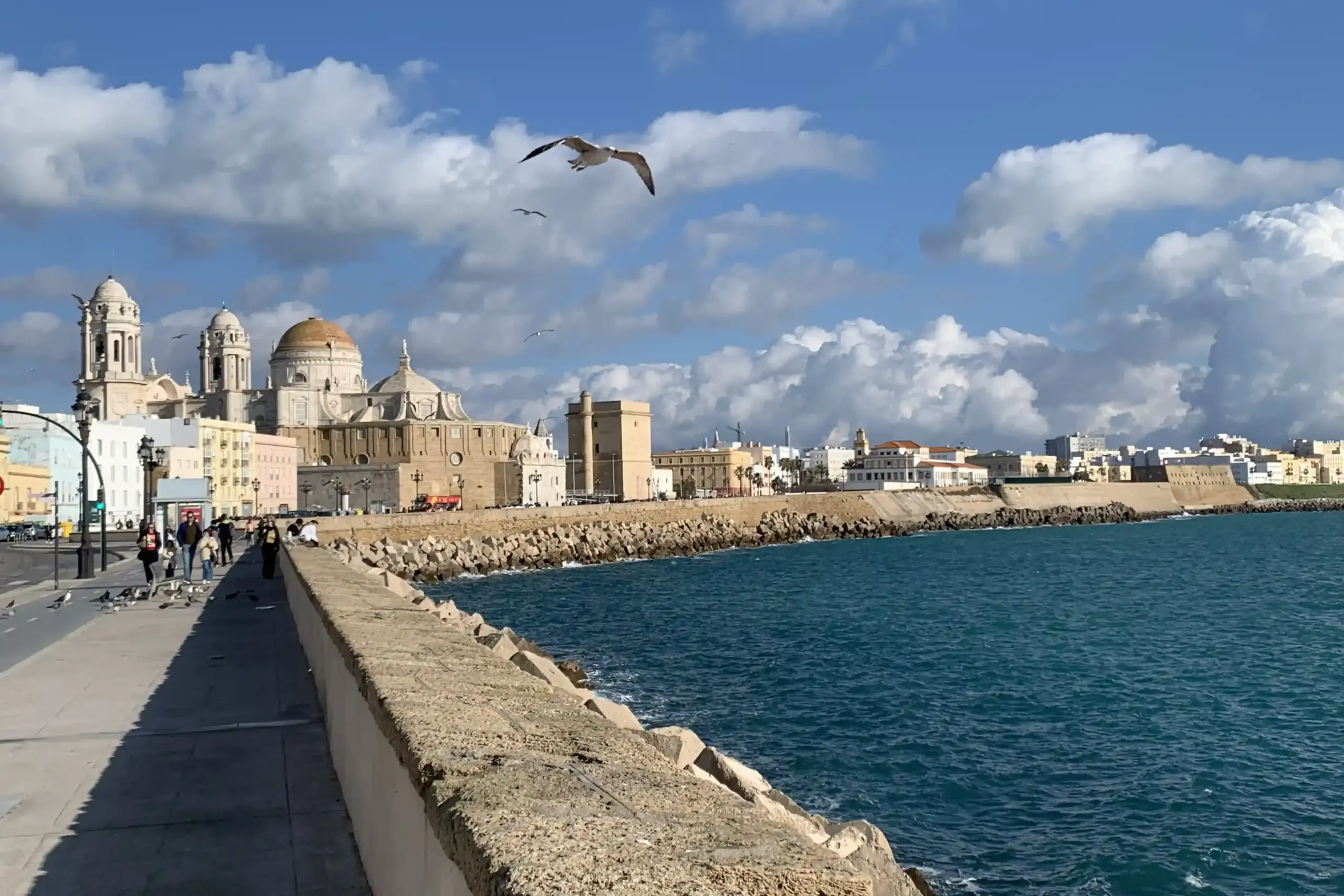
Cádiz: the oldest city in Europe
Cádiz is a peninsula stretching into the Atlantic Ocean. It embodies the very essence of this coast: for centuries, it was quite literally the edge of the known world, the point from which people set out to discover what was not yet known to exist.
The historic center — the Casco Antiguo — is compact and easy to explore on foot. Plaza de las Flores, the Mercado Central with its stalls of incredibly fresh fish, the Catedral Nueva, built in a Baroque-Neoclassical style, with its yellow glazed ceramic dome visible from afar. It’s worth climbing the Torre Tavira — the tallest of the roughly one hundred 18th-century watchtowers — which houses a camera obscura: a system of lenses and mirrors that projects the city’s panorama in real time onto a large white table. The result is almost hypnotic and one of the most fascinating experiences in Spain.
Walk along the Malecón, Cádiz’s seafront promenade, where, beyond the view of the city, you’ll have the chance to observe the ocean and truly sense what it represented for centuries: a promise, but also a risk.
But Cádiz is above all a city to be lived, not just observed. There are the chiclanas on Saturday mornings at the market, pescaíto frito eaten standing in the street, the aperitivo with manzanilla and chocos fritos. There is a palpable joy that surrounds you: the gaditanos are famous for their humor and their ability not to take themselves too seriously. It’s the kind of place where, without even realizing it, you start to feel at home.
For a deeper dive into Cádiz — where to eat and what not to miss — read our dedicated guide: Cádiz: a city of distant riches, of light, sea, and wind.
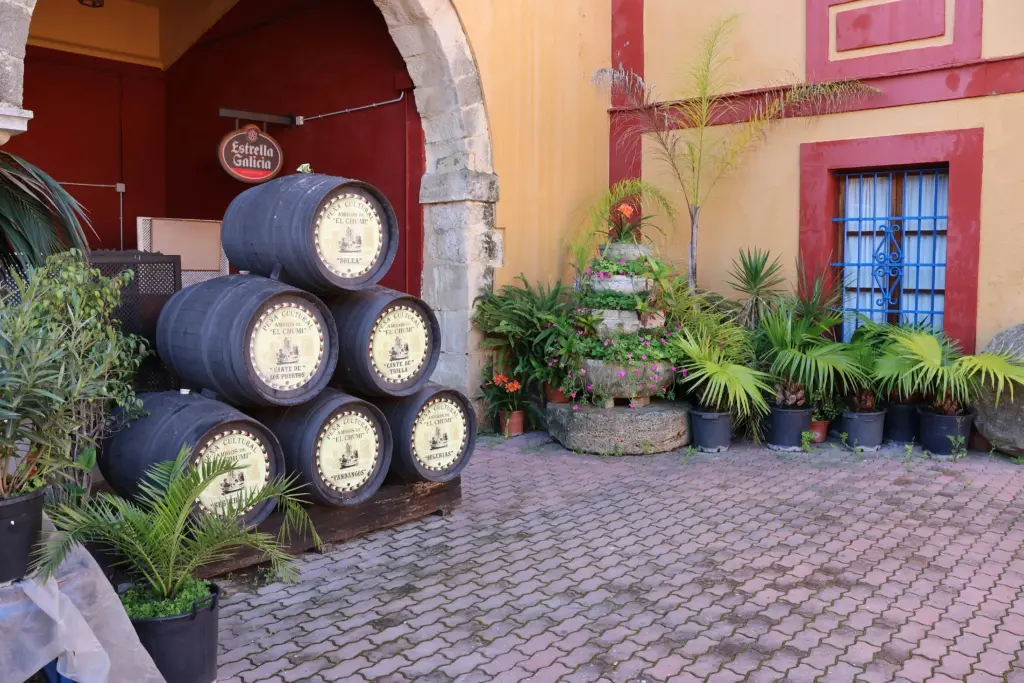
The Sherry Triangle
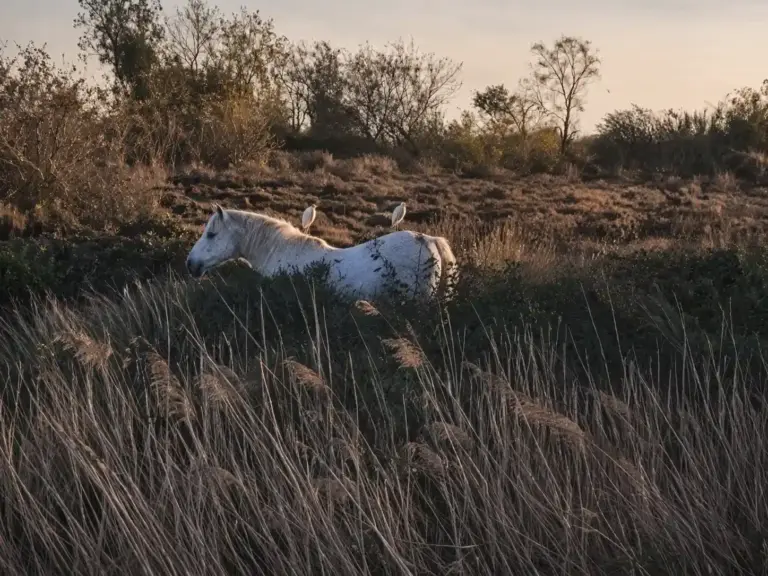
Talking about the Costa de la Luz without mentioning sherry would be like talking about Andalusia without mentioning flamenco. Just a few kilometers from the coast, inland in the province of Cádiz, lies a territory that feels like a world of its own — quiet, yet deeply rooted in identity — made of centuries-old wineries, oak barrels, Andalusian horses that seem to dance, and tabancos (traditional taverns) where sherry is still enjoyed as it once was.
This area is known as the Sherry Triangle, a wine region protected by a designation of origin, which includes three cities: Jerez de la Frontera, Sanlúcar de Barrameda, and El Puerto de Santa María.
Three different ways of inhabiting the same landscape of white vineyards that stretch all the way to the Atlantic.
I chose to stay in Jerez de la Frontera and used GetYourGuide to arrange the winery visits, while to discover the historic centre I joined a free guided tour with Civitatis. It was a very convenient way to explore the area without having to organise every journey and visit independently — especially after a few glasses of sherry.
Few people know this, but sherry is an Andalusian wine, not an English one. It originates here, in the so-called Sherry Triangle, between Jerez de la Frontera, Sanlúcar de Barrameda, and El Puerto de Santa María, in the province of Cádiz. One of the earliest sherry production sites, dating back to the Phoenician era, more than 3,000 years ago, was discovered here.
It is a fortified wine, mainly produced using Palomino, Pedro Ximénez, and Moscatel grapes. Limestone soil, constant sun, and Atlantic breezes have created the perfect combination to produce a wine with a unique character. Its profile depends more on the production process than on the grape variety.
After fermentation, the wine is fortified with alcohol and begins aging in oak barrels through the solera and criadera system. The barrels are arranged in several levels: the youngest wine is progressively blended with older wine, year after year, gaining increasingly complex aromas. In this way, there are no true vintages, but rather a continuity over time that makes each sherry the result of decades of history.
A fundamental element is the flor, a natural layer of yeast that forms on the surface of the wine in certain types, such as Fino and Manzanilla. This layer protects the wine from oxidation and gives it dry, saline, and highly distinctive aromas. Other sherries, such as Oloroso, instead age in contact with air, developing more intense and complex notes.
Between the 17th and 19th centuries, sherry became one of the most exported wines in Europe, especially to England, where it came to be known simply as “sherry.” The bodegas were designed like true cathedrals of wine, with very high ceilings and openings carefully planned to encourage ventilation. Even today, drinking sherry means stepping into a culture made of time, waiting, and patience, deeply connected to the identity of Cádiz and its inland areas.
Some bodegas can be visited and have preserved their historic structures, archives, and environments. One of the most famous is the Bodega Fundador, founded in 1730, considered one of the oldest wineries in Spain still in operation and among the first to export wines from Jerez across Europe. It is also thanks to places like this that sherry has become the wine we know today.
Because in Andalusia, it’s not just about what you eat… but also what you drink.
Sanlúcar de Barrameda
Sanlúcar is often overlooked — which, to me, is hard to understand. It is the city from which Ferdinand Magellan set sail. It is the place where the Guadalquivir — the river of Seville and Córdoba, one of the great rivers of the Iberian Peninsula — completes its long journey of over 600 kilometers and opens into the Atlantic Ocean. It is the homeland of manzanilla, the most delicate and maritime expression of sherry.
The historic center, which preserves its Muslim layout, has a discreet, almost decadent nobility: 16th- and 17th-century palaces, some restored, many with shuttered windows and plaster slowly crumbling away. An imperfect beauty that tells of centuries of mercantile history, then gradually forgotten.
In August, the beach of Sanlúcar hosts the Carreras de Caballos — horse races along the shoreline. A tradition dating back to 1845, a spectacle that blends sport, Andalusian spirit, and landscape in a truly unique way.
From Sanlúcar, you can also organize a visit to the Doñana National Park, whose marshlands lie just across from the city.
Jerez de la Frontera
If Sanlúcar is the sherry that looks toward the sea, Jerez is the sherry that looks inland, toward the land. Here, the wines are more powerful, more complex — amontillado, oloroso, Pedro Ximénez, sweet and dense like honey.
But Jerez is also the cradle of the purebred Andalusian horse, an elegant and almost theatrical presence, and the place where flamenco is not performed: it is lived, in old tabancos where music suddenly comes to life, between one copa and the next. Few people know this, but today’s Spanish horse actually owes its existence to Philip II, who in 1570 created the Royal Stables in Córdoba: they still represent the birthplace and cultural heart of the Andalusian horse today — I go into more detail in this article on Córdoba, if the topic interests you. If in Jerez the horse is mostly spectacle and elegance, in Córdoba it’s exactly where it all began.
Walking through Jerez means feeling centuries of history beneath your feet — Phoenician, Roman, Arab, Christian — and understanding that nothing here has been built for tourists.
I truly came to appreciate this place mostly thanks to a free guided tour with Civitatis, which I genuinely recommend: it’s the most vivid way to get under the skin of this little town. Everything here is authentic, lived-in, deeply slow — and if there’s a place worth slowing your pace for, it’s this one.
El Puerto de Santa María
El Puerto is the quietest of the three, the least showy, the most authentic. Perhaps that’s why slow travelers love it: there’s nothing here to prove.
Christopher Columbus set sail from this port for his second voyage to the Americas, and something of that old seafaring spirit still lingers in its callejuelas.
The Osborne wineries — the famous black bull seen along Spanish highways — are based here, and the historic center is a perfect maze to get lost in without a plan.
Then, suddenly, you arrive at Playa de Valdelagrana: an urban beach, yet surprisingly calm, as if El Puerto carefully protects its own rhythm.
Another genuinely interesting thing — one that makes El Puerto de Santa María an even more inviting destination — is that it’s beautifully connected to Cádiz by sea, which makes the outing even more enjoyable, especially if, like me, you love admiring a city from a different perspective too. You have two options: the Vaporcito, the historic ferry (“Adriano III”) that has been crossing the bay in about 40 minutes for over a century — a piece of local tradition, declared a Site of Cultural Interest in 1999, so beloved by the gaditanos that it’s the star of countless Carnival songs (it runs several times a day, resting on Mondays except holidays and summer; €3 one way / €5 round trip — schedule on the Town Hall website); or the catamaran on line B-042, run by the Consorcio Metropolitano de Transportes de la Bahía de Cádiz, more frequent (nearly one departure an hour from early morning to late at night) and just 30 minutes — official schedule here. Whichever you choose, timetables change with the season, so always check before you set off.
El Puerto de Santa María is not as famous as Jerez. It’s not as picturesque as Sanlúcar. And that’s exactly why it’s worth a visit.
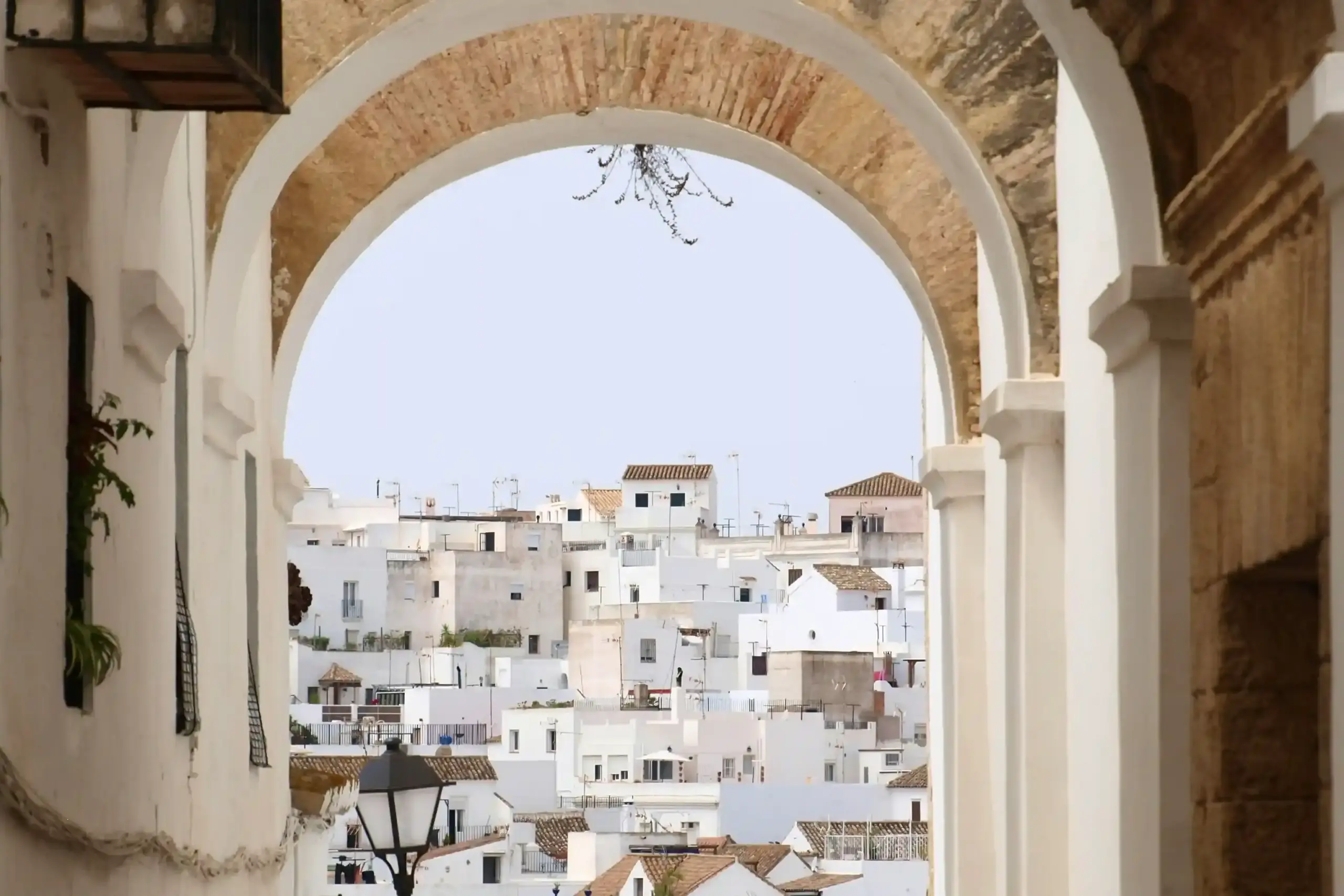
The pueblos blancos
The Costa de la Luz is above all dotted with pueblos blancos and fishing villages that preserve a rare authenticity.
Conil de la Frontera
Conil de la Frontera has found a rare balance: it embraces summer tourism — mainly Spanish — without losing its identity. Founded by the Phoenicians as a fishing enclave, Conil still preserves a soul deeply connected to the sea.
The Barrio de los Pescadores welcomes you with its narrow, steep callejuelas, telling a daily life that has remained surprisingly intact. The port still hosts fishermen’s boats. The morning market still offers fresh fish. The historic center — small, white, with streets opening into unexpected squares — maintains an authenticity that is hard to find elsewhere.
Here you’ll find the Torre de Guzmán (13th century), a watchtower of the medieval fortress, with narrow stairs leading to open views over the ocean and the town. If you have some extra time, visit La Chanca – Centro de Interpretación del Mar, el Atún y las Almadrabas: a place that concretely explains the deep connection between this coast and the sea.
From a gastronomic perspective, Conil is famous for bluefin tuna fishing using the almadraba technique — an ancient tradition renewed every spring. In May and early June, the Ruta del Atún takes place, with more than 28 participating restaurants. Here you’ll find all the Rutas from the various towns along the coast.
Around Conil, you’ll find some of the most beautiful coves on the Atlantic coast: La Fontanilla, El Roqueo, Roche. They can be reached by car or on foot, often hidden among the rocks, with turquoise waters that feel almost unexpected in an Atlantic setting.
The road from Conil to Los Caños de Meca — through pine forests, dunes, and Mediterranean scrub — is one of the most beautiful stretches to drive along the entire coast. Put on the right music and allow yourself the time to experience it without rushing.
Vejer de la Frontera
About 45 minutes from Cádiz, heading south along the coast, you’ll find Vejer de la Frontera. It’s not technically on the coast. It sits on a hill, about twenty kilometers from the Atlantic Ocean. But it’s impossible to understand the Costa de la Luz without understanding Vejer.
It is one of the best-preserved pueblos blancos in Andalusia, and probably the most fascinating in this area. Its historic center has been declared a Conjunto Histórico-Artístico since 1976. The Arab medina is almost perfectly preserved: narrow whitewashed streets, stairways, arches, and hidden squares that suddenly open up.
Get lost in the maze of white callejuelas — a direct legacy of its Muslim past, designed to protect from the sun and wind — and stop in Plaza de España, with its fountain and orange trees. Visit the Moorish castle and walk along the walls, with views that, on clear days, stretch all the way to Morocco. Then take some time for the Iglesia del Divino Salvador, built on the foundations of a mosque, where Islamic art blends with Gothic elements.
But Vejer is best experienced at sunset, when the light softens and the streets empty of day visitors. Sit at one of its miradores and let yourself be carried away by one of the most intense sunsets of this journey.
Vejer also has a small but authentic cultural scene: Annie B’s Spanish Kitchen organizes cooking classes focused on local products, the Saturday morning market brings local producers to Plaza de España, and in recent years, small studios of ceramists, artisans, and gallery owners have chosen Vejer as their creative base.
Negli ultimi anni Vejer de la Frontera è diventata una piccola capitale gastronomica.
Qui si trovano ristoranti seri — più attenti alla sostanza che all’apparenza — che lavorano con prodotti locali: tonno di almadraba, retinta (la carne bovina autoctona della zona), ortaggi della Janda.
La scuola di cucina Annie B’s Spanish Kitchen, gestita da un’australiana innamorata dell’Andalusia, è diventata un punto di riferimento per chi vuole entrare davvero nella cucina locale, non solo assaggiarla.
Se vi trovate qui, dovete fermarvi alla Casa del Califa — dove è anche possibile dormire — e, in particolare, provare il ristorante El Jardín del Califa.
Qui si serve una cucina nordafricana e mediorientale che riflette perfettamente le radici culturali di questo territorio: tajine, hummus, piatti siriani e libanesi, il tutto immerso in un patio tra palme e lanterne, dove l’atmosfera conta quanto il cibo.
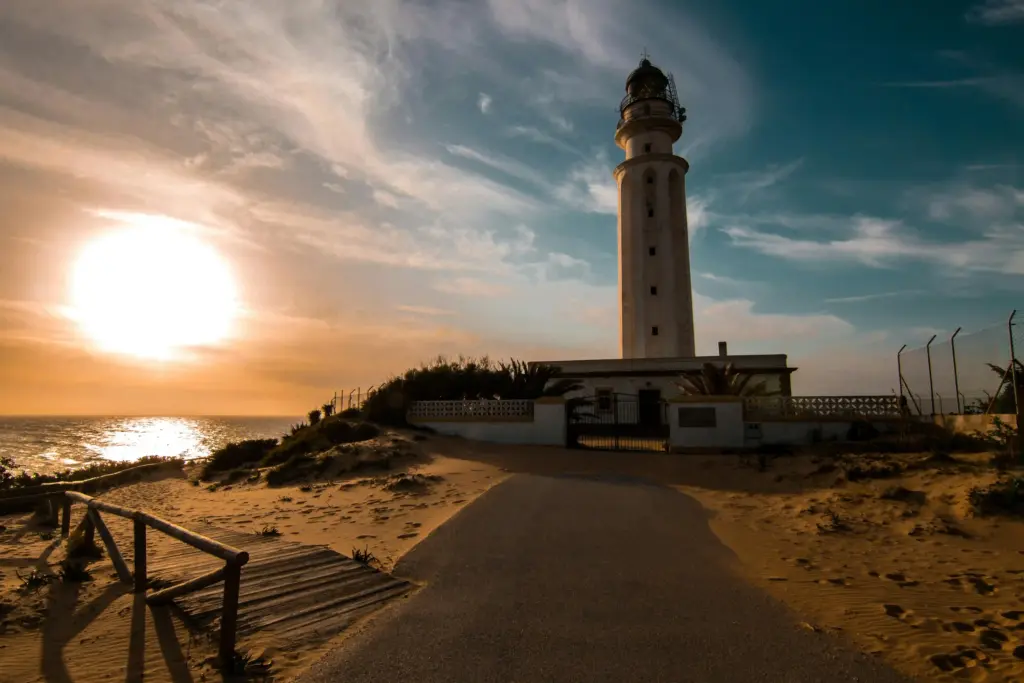
Los Caños de Meca and the Faro de Trafalgar
Los Caños de Meca is a small place, almost hippy-like — more an atmosphere than a real destination: a handful of houses, a few bars with hammocks, a long beach that feels deserted outside the high season.
In front of it lies Cabo de Trafalgar, with its white lighthouse. On October 21, 1805, these waters were the setting of the Battle of Trafalgar: the British fleet led by Horatio Nelson against the Franco-Spanish fleet of Villeneuve. Nelson died during the battle, struck by a French sniper. But his victory was decisive: it ended Napoleon’s naval ambitions and secured British dominance of the seas for much of the following century. The lighthouse can be visited.
The surrounding landscape — dunes, pine forests, and the Atlantic Ocean crashing against the rocks — has a quiet grandeur that perfectly matches the weight of its history.
Zahara de los Atunes
Zahara de los Atunes is one of those places that seem to resist the acceleration of the modern world. A small town, mostly low-rise, with a beach stretching over eight kilometers, which in the morning remains almost completely empty. The center doesn’t offer much, apart from many restaurants in August. There is a medieval castle and the Palacio de las Pilas (La Chanca), built in the 15th century by the Dukes of Medina-Sidonia to preserve and process tuna — but little else.
People come here for the beaches: Zahara, Atlanterra, Cañuelo, Búnker — among the most beautiful and least crowded along the entire coast. In August, the beach fills up, especially with Spanish tourists, but it is so vast that it never truly feels crowded.
But almadraba tuna is the true historical reason for Zahara’s existence — it is even embedded in the town’s name: Zahara of the tuna fisheries. Its Ruta del Atún (Tuna Route) is one of the most famous. Here, instead, you’ll find all the Rutas from the various towns along the coast.
Tarifa
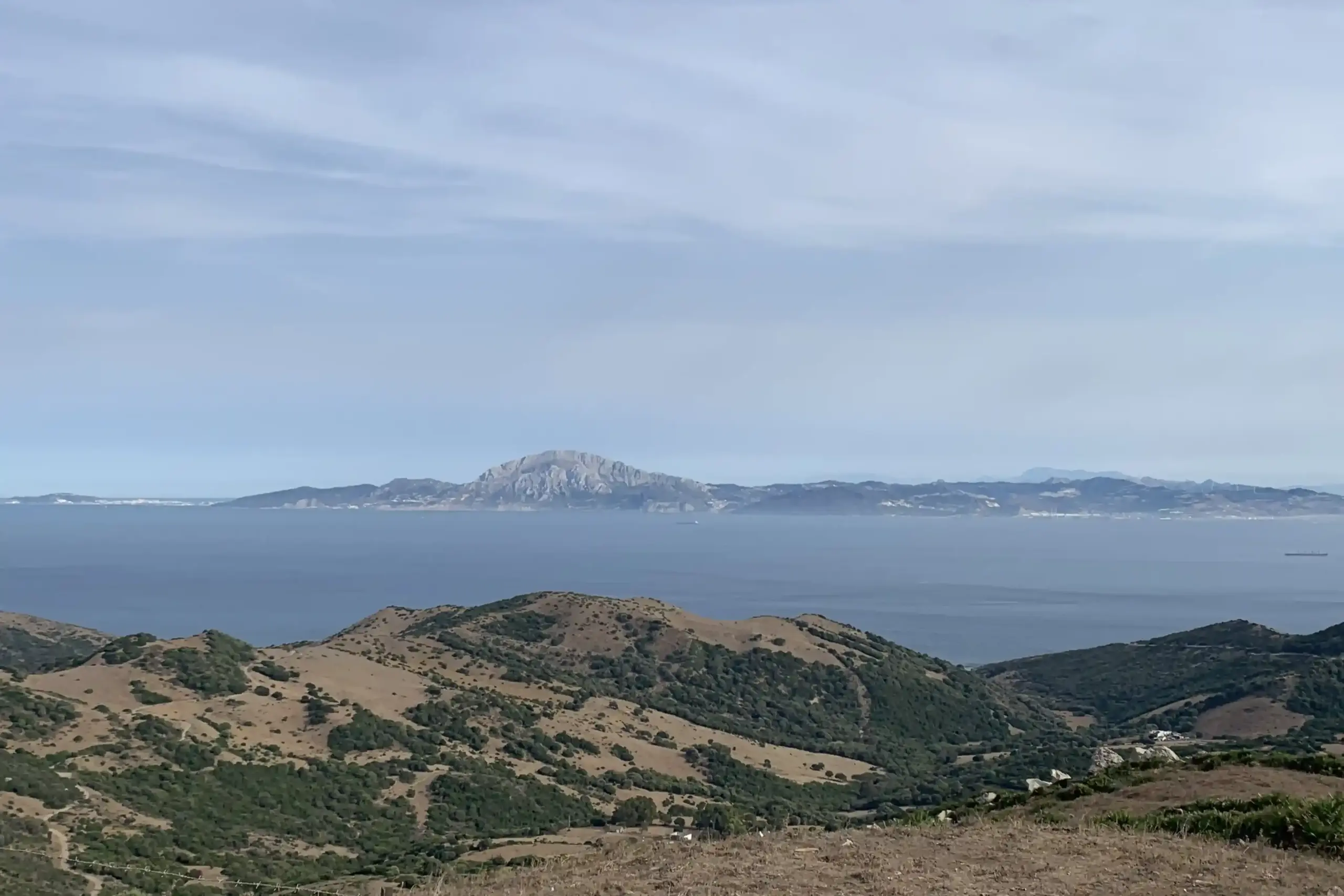
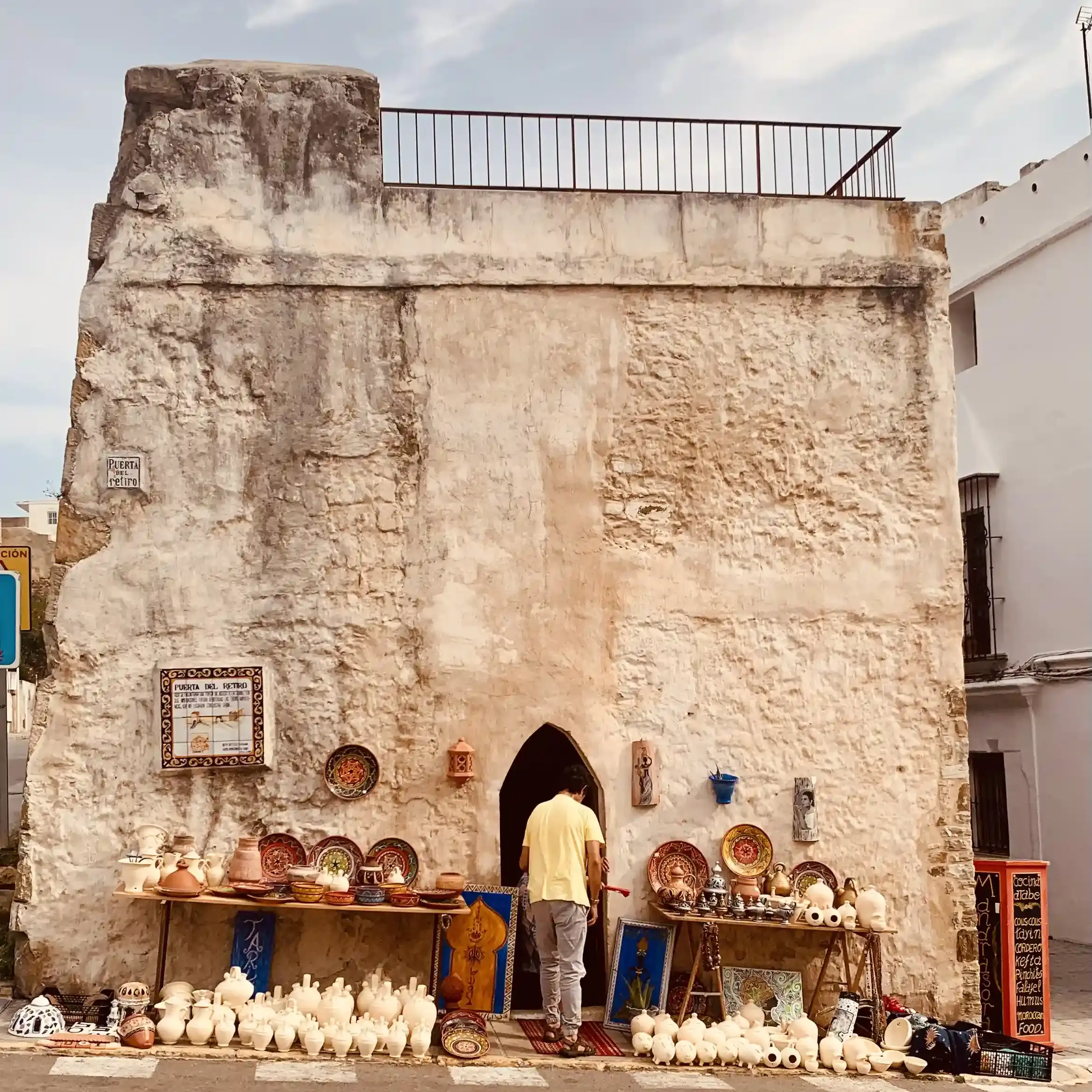
Tarifa is the southernmost city in continental Europe. From here, the Strait of Gibraltar is only about fourteen kilometers wide: Morocco is visible to the naked eye, the outlines of the mountains are clear, and on the clearest days, you can even glimpse the buildings of Ceuta. There is an unresolved and fascinating duality in Tarifa.
On one side, there is the city of the wind: Levante and Poniente alternate with a force that has turned Tarifa into the European capital — and one of the most important in the world — of kitesurfing and windsurfing. The beaches — Los Lances, Valdevaqueros, Punta Paloma — have become a true pilgrimage for water sports enthusiasts from all over the world.
On the other side, there is the medieval historic center, which survives almost intact within the Arab walls: white streets, the Iglesia de San Mateo, the Castillo de Guzmán el Bueno, and artisan shops. A city that, in its oldest part, seems to completely ignore the tourism driven by the wind.
From Tarifa, you can take a ferry to Tangier.
The crossing takes just 35 minutes (about 1 hour in total) and brings you into a completely different world: you move from **Andalusia** to **Africa**, from a European rhythm to something more chaotic, intense, almost disorienting.
Not all travelers do it. But those who choose to cross the strait immediately understand, almost physically, how much this coast is truly a boundary — not only geographical, but cultural.
If you’re considering it, you can check ferry schedules and prices from Tarifa to Tangier and decide whether to include it in your itinerary.
Baelo Claudia: Rome on the Atlantic
We’ve already mentioned it in the historical section, but it deserves a separate mention because it’s truly one of those places you simply can’t skip. The archaeological site of Baelo Claudia is located on the beach of Playa de Bolonia, between Zahara de los Atunes and Tarifa.
You enter through the museum — small, well curated, with artifacts from the area — and then, almost without transition, you find yourself walking inside a Roman city overlooking the Atlantic Ocean: the forum, the baths, the semicircular theater, the shops. But above all, the cetariae — the large stone vats, still visible today, where garum was produced. Atlantic bluefin tuna, local salt, slow fermentation under the sun. A production system that was highly sophisticated for its time, capable of supplying Rome and exporting in terracotta amphorae to the most remote corners of the Empire.
The beach of Bolonia is right there, immediate: beyond the site’s boundary, there is sand, the Atlantic, the dunes. The transition between history and nature is so direct that it feels almost unreal. It’s surreal. And it’s beautiful.
If you want to get an idea of what it must have looked like, I found a beautiful reconstruction on this Instagram page. Really well done!
About 45 minutes from Cádiz lies Arcos de la Frontera.
Arcos is not strictly on the Costa de la Luz, but it is less than an hour from places like Conil de la Frontera and Vejer de la Frontera, and it is the natural starting point for those who want to venture into the Ruta de los Pueblos Blancos toward **Grazalema** and the **Sierra**.
Arcos is the most scenic **pueblo blanco** of all — probably the most photographed and the most spectacular in terms of location. It stands on a rocky outcrop that rises dramatically above the Guadalete River, linked to the historic battle that marked the beginning of the Islamic presence in the Iberian Peninsula, and is known as the “gateway to the white villages”.
Here you can enjoy breathtaking views over the surrounding **sierra**, especially from the Balcón de la Peña Nueva. The historic center — declared a Bien de Interés Cultural — preserves traces of its **Roman** and **Muslim** past: walls, **Puerta Matrera**, **Torre del Segreto**, **Castillo de los Duques**.
The center is labyrinthine and physically demanding: the streets are so narrow that, at times, two people struggle to walk side by side.
The Parador de Arcos de la Frontera — one of the most beautiful in **Andalusia** — occupies a 15th-century palace overlooking the cliff: dining there in the evening, with the lights of the villages in the valley below and the **Guadalete** flowing beneath, is an experience that belongs to another way of traveling.
Here, as in other **pueblos blancos**, there is nothing to “check off” or absolutely not miss.
Here, you need to let go, lose yourself in its steep white callejuelas, and take a small journey into medieval Spain. Don’t rush. Just enjoy the rhythm.
A bit of nature and sea
The Costa de la Luz doesn’t have the beaches of the Costa del Sol: here you won’t find fully equipped beach clubs from dawn to dusk, neat rows of umbrellas, or that kind of organized chaos typical of the Mediterranean.
The beaches along this coast are often wide, with fine, light-colored sand, backed by dunes and pine forests. Some are easy and accessible, others require a path, more distant parking, a bit of walking.
The Costa de la Luz is a living ocean, constantly changing. It is wind — Levante and Poniente — shaping both the landscape and the experience of the sea itself. It is open space, where the horizon remains free, uninterrupted.
You can’t understand the beaches of this coast without first understanding the wind. The Levante blows from the east, from inland: it is hot and dry, carrying dust and an almost North African feeling in the air. The Poniente comes from the Atlantic: it is humid and cool, often sweeping away the Levante with a sudden but liberating force. They change the air temperature, the quality of the light, the height of the waves, even the mood of the locals. Before choosing the beach for the day, the gaditanos check the wind — not the sky.
This is also why the beaches along this coast are so different from each other, even just a few kilometers apart: some sheltered and almost still, others swept by winds that visibly move the sand within a few hours.
Below you’ll find my favorite beaches — and a small suggestion for those who have time and want to go beyond just the sea or history.
Playa de El Palmar
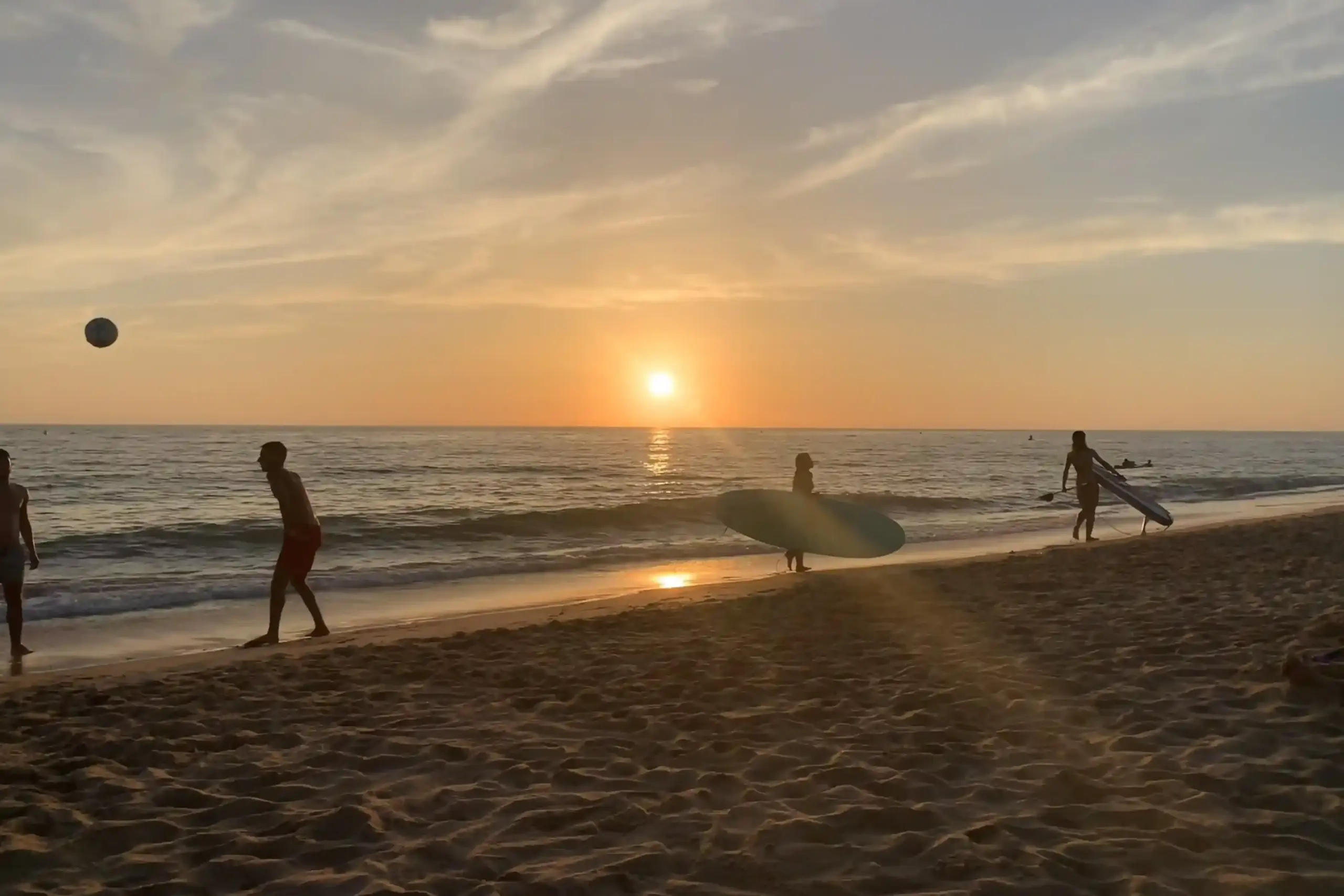
Just a few kilometers from Vejer de la Frontera, nestled between Cabo de Trafalgar and Punta de Roche, stretches one of the beaches that best captures the Atlantic essence of Andalusia.
Unlike many beaches on the Costa del Sol, here the landscape has not been swallowed by concrete. There are no large hotels right by the shoreline, only low houses, wooden chiringuitos, and walkways crossing the dunes to protect their natural balance.
Playa de El Palmar doesn’t resemble any other: it is long, wild, wind-swept, and frequented more by surfers than by quick, passing tourists. Here, you won’t find the polished luxury of Marbella, but a relaxed energy — free yet never careless, almost hippy but with style: people carrying surfboards under their arms and sunsets that look as if they came straight out of an oil painting.
Playa de los Alemanes
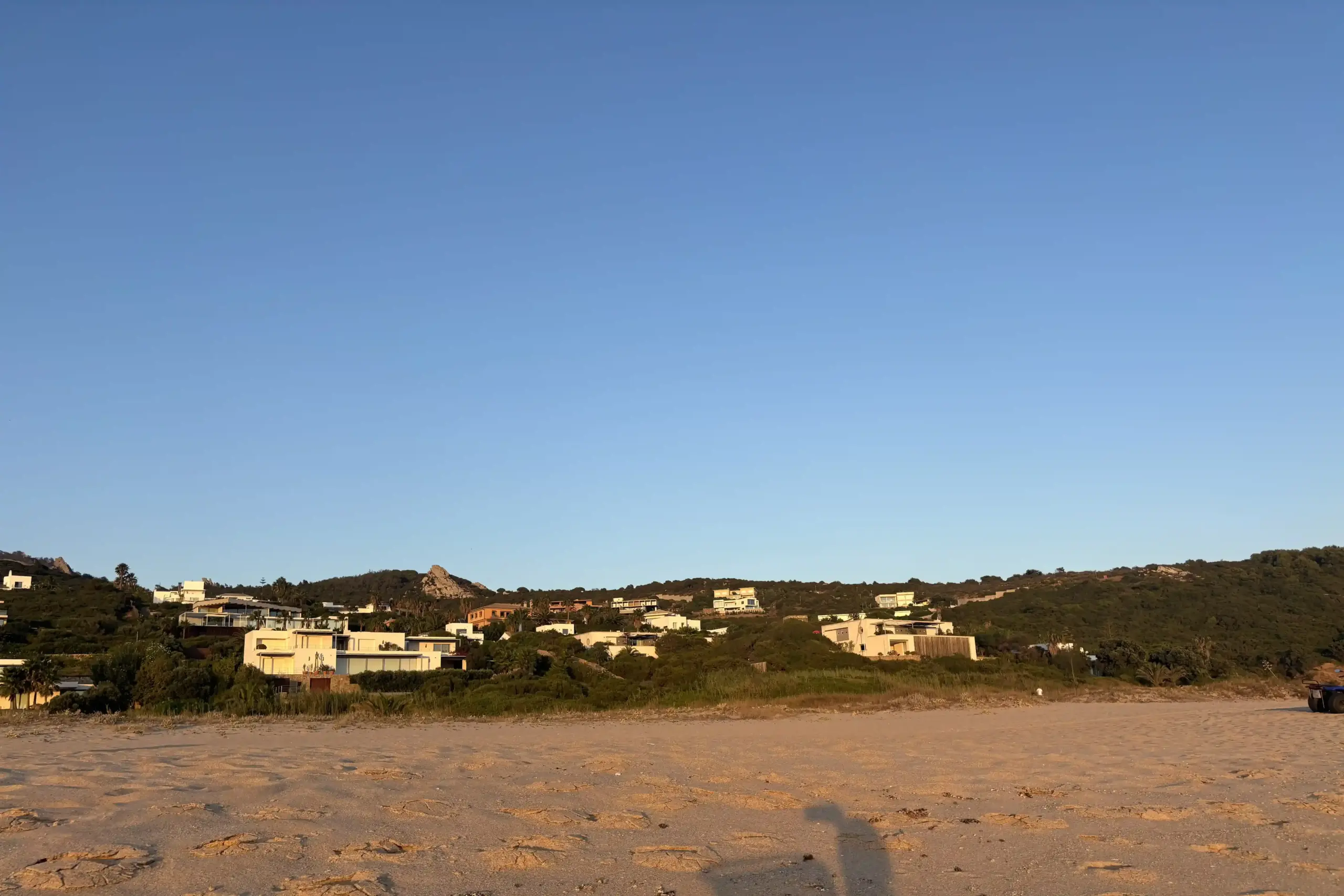
Between Cabo de Plata and Cabo de Gracia, nestled within the territory of Tarifa but geographically very close to Zahara de los Atunes, lies my absolute favorite beach. Playa de los Alemanes is one of those discoveries you’d almost want to keep to yourself — at least for as long as possible — but, out of honesty and trusting your respectful approach, I can’t help but share it.
It’s a sheltered beach, about 1,500 meters long and roughly fifty meters wide, backed by a hillside where a few villas of the Atlanterra development stand — built, it must be said, with a certain respect for the landscape. In front, a stretch of fine golden sand opens up, with turquoise waters that surprisingly recall the Caribbean (if not for the temperature).
Don’t expect the services of a fully equipped beach. There are no rental umbrellas or beach clubs: here, the beach remains completely natural. Bring everything you need with you.
Finding parking is probably the most challenging part: there is only a small area with around ten spaces. But if you arrive early, you’ll secure access to one of the most beautiful and unspoiled stretches of coastline in the area.
If instead you’re looking for a more equipped beach, with full services and easy access, head to Playa de Zahara de los Atunes or Playa de Atlanterra. Here you’ll find all the comforts, without giving up the quality of the sea, which remains beautiful, with wide and spectacular sunsets.
Why is it called “Playa de los Alemanes”?
The name has nothing to do with the German tourists who love this coast today.
The story is far more complex — and in some ways more unsettling — than one might imagine.
During World War II, this stretch of the Cádiz coastline — strategically close to the Strait of Gibraltar — was used for surveillance and supply operations for German submarines patrolling the Mediterranean and the Atlantic.
After the war, in the 1940s, some former Nazi officers and soldiers, fleeing defeat, returned to this remote corner of the Spanish coast. They were seeking peace, anonymity, and perhaps a way to disappear without leaving a trace.
Here they settled with their families, creating a discreet but significant presence.
Local legend says that the first buyers of villas in the nearby Atlanterra development — now an exclusive residential area — were precisely these Germans.
From there, the name gradually extended first to the development and then to the beach.
Playa del Cañuelo
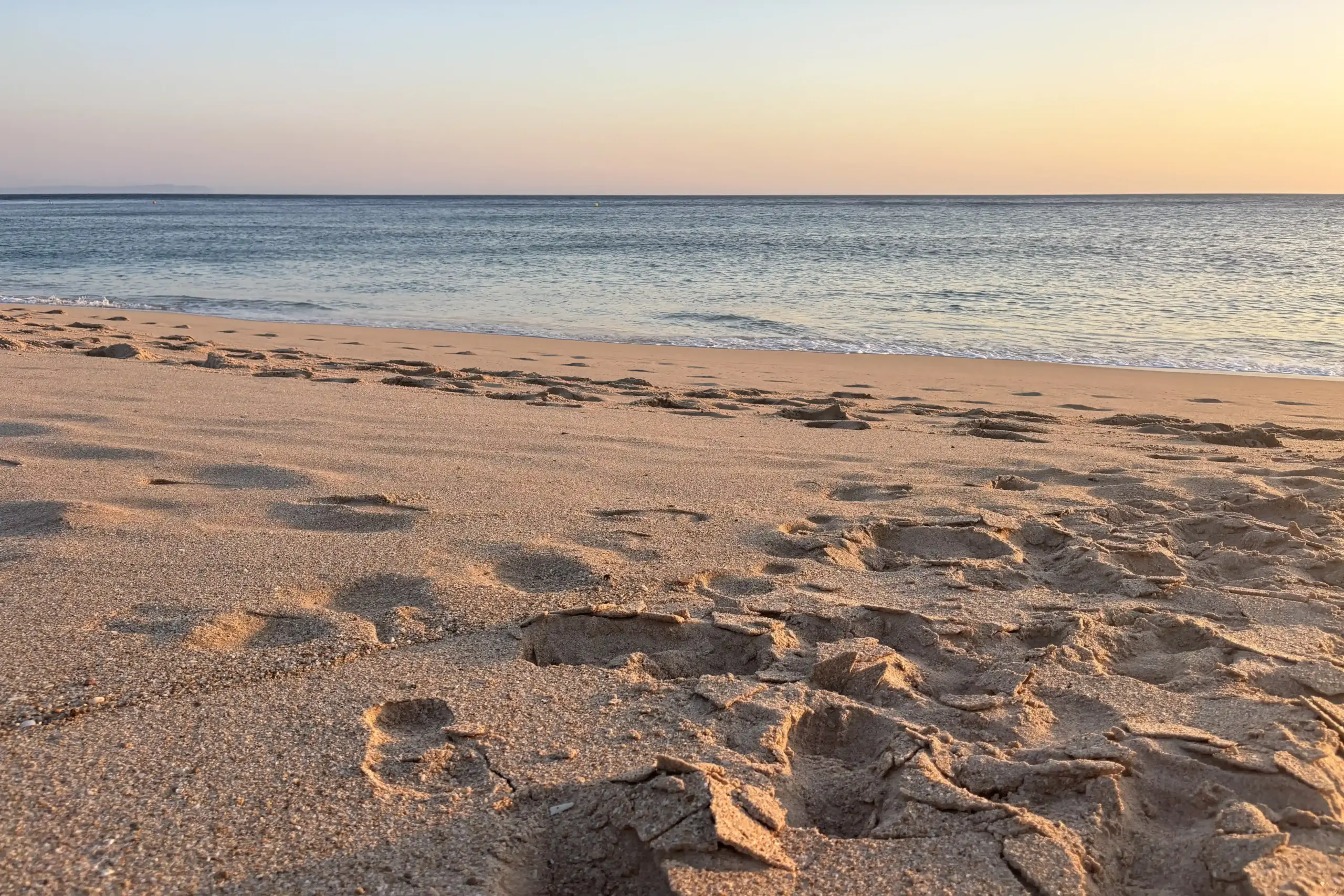
Playa del Cañuelo is a beach about 800 meters long, with fine golden sand and crystal-clear waters that resemble a natural pool. There are no umbrellas, no chiringuitos, no services. There is only nature, in its purest and most untouched form. And that is exactly why I love it.
The beach takes its name from the Arroyo del Cañuelo, a stream that is almost invisible in summer, but during the rainy season flows again and reaches the Atlantic Ocean. The beach is nestled between two headlands: to the right (facing the sea), the Faro de Camarinal dominates the coastline; to the left, Cabo de Gracia closes the horizon. Behind it stretches a dense forest of pine trees, coastal junipers, lentisk, sabina, and rockrose, protecting this stretch of coast from urban development.
Much of this area is a military zone — a paradox that, over time, has helped preserve the beach in its original state. In fact, almost hidden by the sand, at the western end of the beach, you can find the remains of a World War II bunker.
The waters of Cañuelo are surprisingly clear and bright, with emerald reflections rarely associated with the Atlantic. It is one of the best spots along the coast for snorkeling and diving: the richness of the seabed fascinates anyone who ventures out with a mask and snorkel. But be careful: the ocean is not the Mediterranean. It must always be respected.
All of this, however, comes at a cost: access is only possible on foot and requires about 30–45 minutes of walking from where you leave your car. My advice is to park near the Faro de Camarinal and continue on foot. Alternatively, you can access it from the south side, about 3 km from Baelo Claudia, where there is another entry point followed by a walking trail. Wear sneakers or hiking shoes — the path isn’t difficult, but it requires a bit of attention. And bring water. Plenty of water.
Cañuelo is not for everyone. And that is precisely its greatest strength.
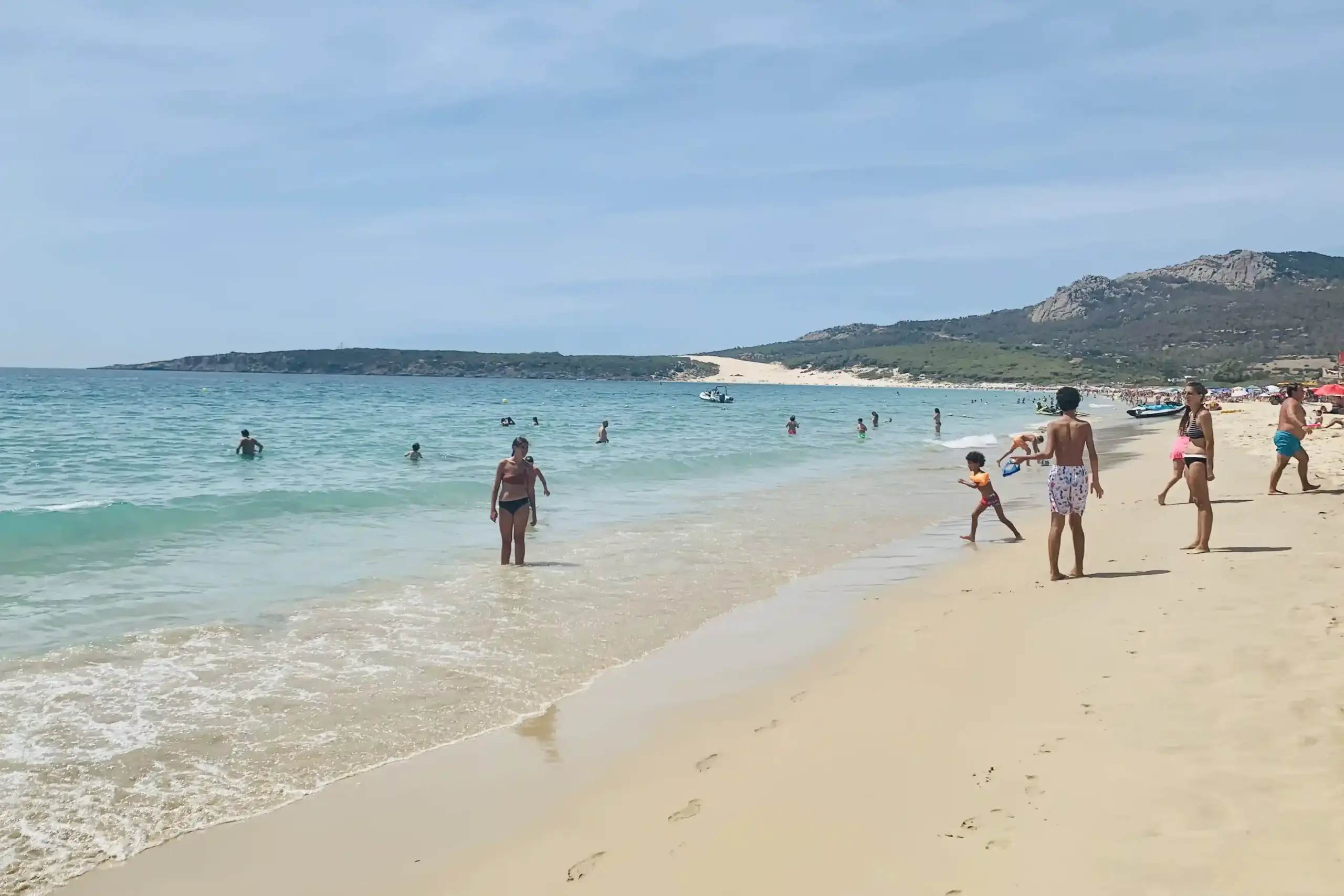
Playa de Bolonia
Playa de Bolonia stretches for almost 4 kilometres of fine golden sand, with an open sea that changes colour depending on the light: from pale turquoise to deep blue.
Here the Atlantic really makes itself felt. Don’t expect flat water like in the Mediterranean, but frequent wind and waves that can change from one moment to the next, especially when the Levante blows. The first time I came here the waves were incredible. And yet the sea is so clear that resisting the urge to get in is practically impossible.
Access to the beach is very easy: there are large parking areas, with a daily cost of about €5 during the high season. There are also a few chiringuitos before reaching the beach, perfect if you want to stop for a cold beer in the middle of the day.
Despite its fame, the beach is so long that you’ll always manage to find your own space, even on the busiest days.
Towering over one end of the beach, toward Punta Camarinal, is the Duna de Bolonia: a living dune roughly 30 metres high and 200 wide, declared a Natural Monument in 2001. The dune is the result of thousands of years of Levante wind, which lifts sand from the beach and pushes it inland, continuously shaping the landscape. The path to reach the top is about 1 km from the beach. It’s not difficult, but it does require some effort — walking on sand is never like walking on solid ground. The reward? Once you reach the top, the view over the Strait of Gibraltar and Africa is incredible.
I recommend going up early in the morning or in the late afternoon, when the light is softer and the sun less intense. Bring water and comfortable shoes. And get ready to slide down on the sand — it’s the easiest (and also the most fun) way back.
Don’t be surprised, either, if early in the morning during the off-season you spot a few retinta cows — the native Andalusian cattle breed — wandering calmly across the sand or sunbathing by the water’s edge: they come down from the nearby fields, and they’ve become such an iconic image of Bolonia that even Cádiz’s tourism board has featured them.
And right here, just behind the beach, you’ll find Baelo Claudia: one of the best-preserved Roman archaeological sites in Spain. Wandering through its ruins — the forum, the theatre, the temples, the old fish-salting factories — with the sea as a backdrop is an experience that alone makes the trip here worthwhile.
At the eastern end of the beach, toward Punta Paloma (another wonderful beach), natural pools form at low tide. These are small pockets of water trapped among the rocks, where the water warms in the sun and turns calm, almost still — a perfect contrast to the open ocean just a little further out.
A sincere tip: check the tide forecasts before you go.
Low tide is the best time to explore the natural pools and see the rocks emerge.
High tide, on the other hand, is perfect for swimming.
And always check the wind as well: the Levante (from the east) can make the sea rougher, lift the sand, and lower the perceived temperature, making the day less enjoyable.
The Poniente, on the other hand, brings calmer waters and generally more favorable conditions for enjoying the beach.
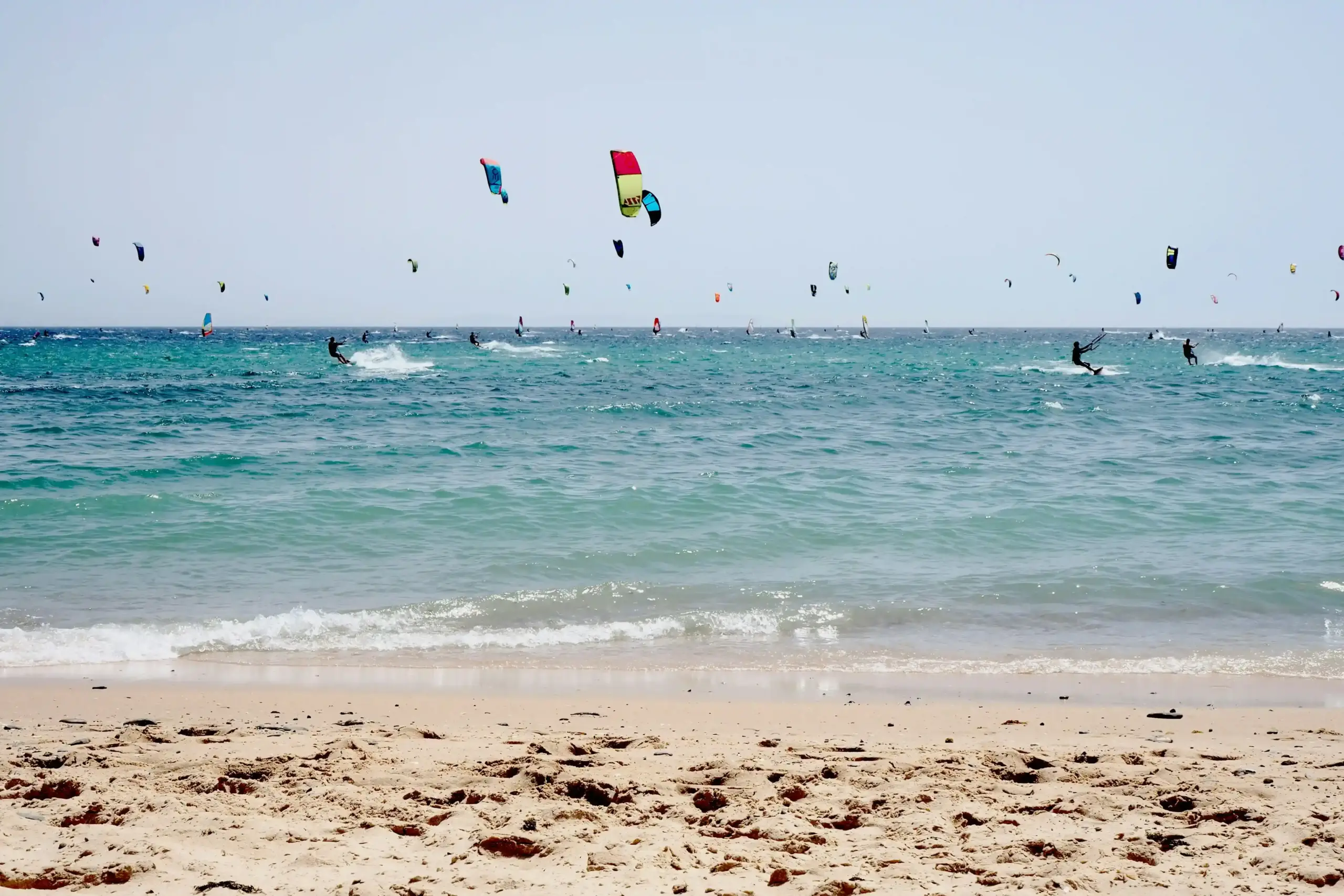
Playa de Valdevaqueros
Just a short distance from Playa de Bolonia, right outside Tarifa, you’ll also find Playa de Valdevaqueros.
It is the beach of the wind par excellence: here the Levante blows with such consistency and strength that it has made this one of the most famous kitesurfing spots in the world.
The dunes are enormous — among the highest along the coast — and visibly shift over the seasons: sometimes they cover the parking area, other times roads that had been buried for years reappear. Walking on the dunes at sunset, when the light turns golden and the wind softens slightly, is one of those moments that stays with you.
If you enjoy water sports, this is your place: kite and windsurf are not just activities here, but a constant presence. It’s not a beach where you sit under an umbrella reading a book. But even just watching the colors of the kites moving across the sky against the wind is something unique, even for those who simply lie down and take it all in.
Access is easy: you just need to cross the pine forest that runs along the main road.
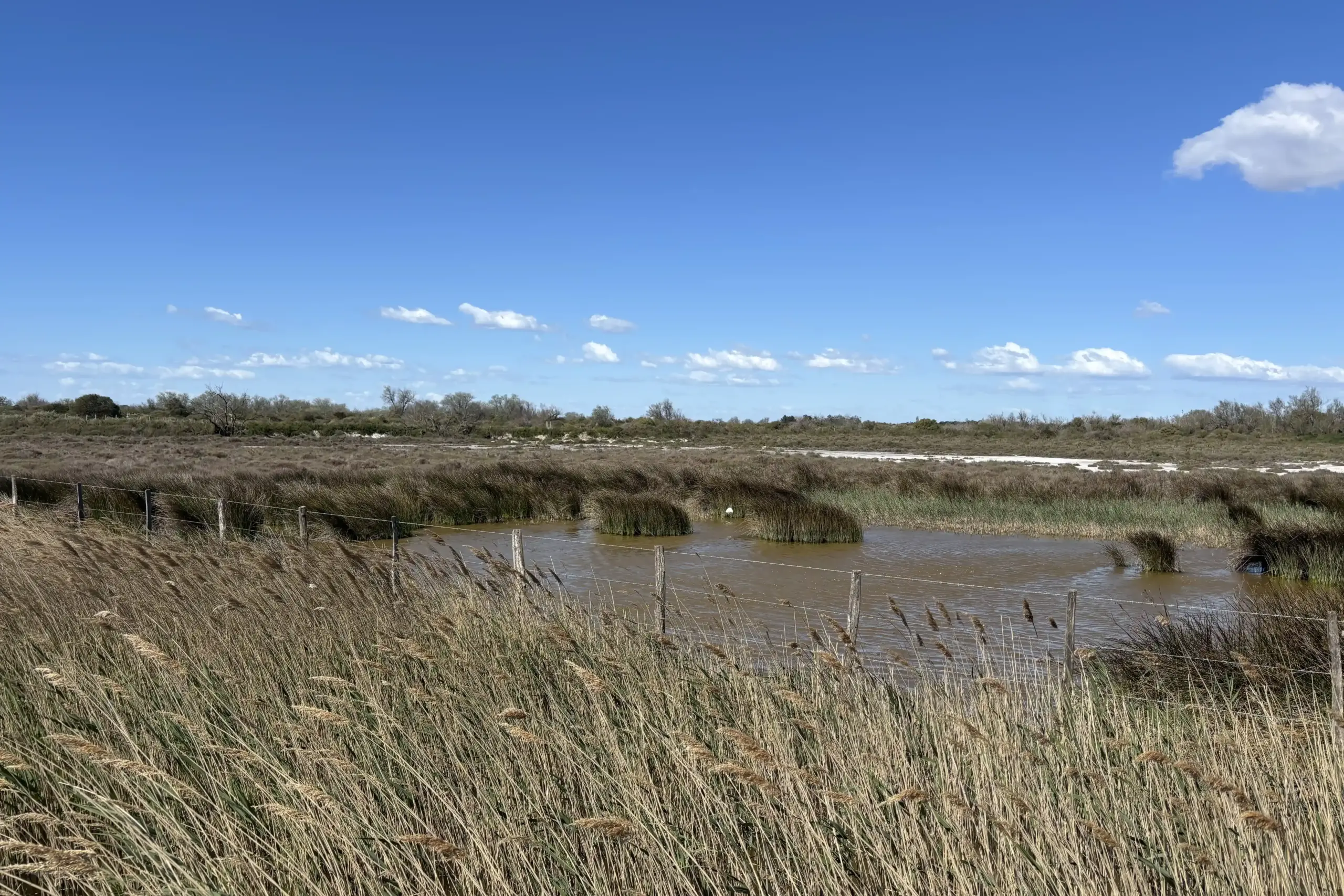
Doñana National Park
Beyond its beaches, the Costa de la Luz is home to one of the most important protected natural areas in Europe: the Parque Nacional de Doñana.
It stretches across the provinces of Huelva and Seville, at the mouth of the Guadalquivir estuary, and holds one of the richest ecosystems on the continent: marismas (salt marshes), shifting dunes, pine forests, lagoons. Doñana is the wintering ground for hundreds of thousands of migratory birds. It’s home to the Iberian lynx — one of the rarest cats on the planet, with fewer than a thousand individuals left — and the Iberian imperial eagle, another endangered species. There are flamingos, herons, avocets, and ducks of every kind.
The park can’t be visited freely: access requires authorised guides or the scenic boats that depart from Sanlúcar de Barrameda. That’s one of its defining features — this isn’t a park where you show up, park, and walk around. It’s a park you visit with respect, with time, aware that you’re a guest.
How to visit: the boats from Sanlúcar de Barrameda are the most accessible option. They depart twice a day in high season (morning and afternoon), travelling along the park’s coastline up the Guadalquivir estuary, letting you observe the wildlife without disturbing it. Booking ahead is essential in spring and summer. Alternatively, jeep excursions with the park’s official guides head inland and let you explore the interior ecosystems. They’re more expensive, but remarkably richer. As always, I’d recommend checking GetYourGuide and Civitatis to compare the options available and book in advance.
El Rocío is one of the strangest places in Europe. There are no paved roads. Only sand. Horses. Silence. At first, it feels like a movie set. Then you realize it’s real. It is the gateway to **Doñana National Park**, and perhaps that’s exactly why it feels so **primordial**.
Nothing happens here. And that is precisely what makes it unforgettable.
Province of Huelva
As I mentioned earlier, although the province of Cádiz is the one I prefer and know best, I also want to share some lesser-known corners of the province of Huelva.
I haven’t personally visited all of them yet, but they are places recommended to me by my friend who has become a true gaditana.
Below you’ll find her perspective. And if she says it… it’s definitely worth listening.
El Rompido (Cartaya)
El Rompido is a fishing settlement that resists urbanization, with casas encaladas, fishing nets, and the mouth of the Piedras River. This is where you’ll find La Flecha: a strip of sand over 12 kilometers long stretching between the beaches of El Rompido and El Portil, separating the river’s fresh waters from the salty waters of the Atlantic Ocean. It grows by an average of about 30 meters per year, thanks to the accumulation of sand.
To visit it, you can take a small ferry that connects the two shores year-round with hourly departures (ticket around €5). Once on the other side, you can follow a wooden walkway crossing the dunes until you reach a truly impressive untouched beach.
In El Rompido, I ate at El Rinconcito de Silvia, a very simple but authentic place.
Isla Cristina
Isla Cristina is the living essence of Huelva: fishermen, nets drying in the sun, boats gently rocking with the waves. It’s one of those places where life tastes of salt and freshly caught fish, where time is measured by the tides. Its beaches — Punta del Caimán, Islantilla — are stretches of golden sand that disappear into the horizon.
Punta Umbría
Punta Umbría carries a unique history: the British arrived here in the 19th century and turned it into an elite seaside retreat. Beyond the summer bustle, there is Los Enebrales, a natural area where dunes intertwine with pine trees and rosemary, and the sea meets a beach that remains wild.
Ayamonte
Ayamonte, on the border with Portugal, has two souls: a maritime one, made of colorful boats, and an artistic one, with galleries and flamenco. The sunsets reflected on the Guadiana River are its true treasure. Beaches like Punta del Moral and Isla Canela offer calmer waters and slightly milder temperatures compared to the rest of the coast.
Moguer, Palos de la Frontera and Mazagón
These three places are deeply connected to the history of exploration:
- Palos de la Frontera: port of departure of Christopher Columbus
- Moguer: town linked to the preparation of the voyage
- Mazagón: a long beach shared between the two municipalities, with cliffs overlooking stretches of fine sand
Matalascañas (Almonte)
Matalascañas is the seaside resort that serves as the gateway to Doñana National Park. On the beach stands the solitary Torre La Higuera, a silent witness to sunsets that set the sky ablaze.
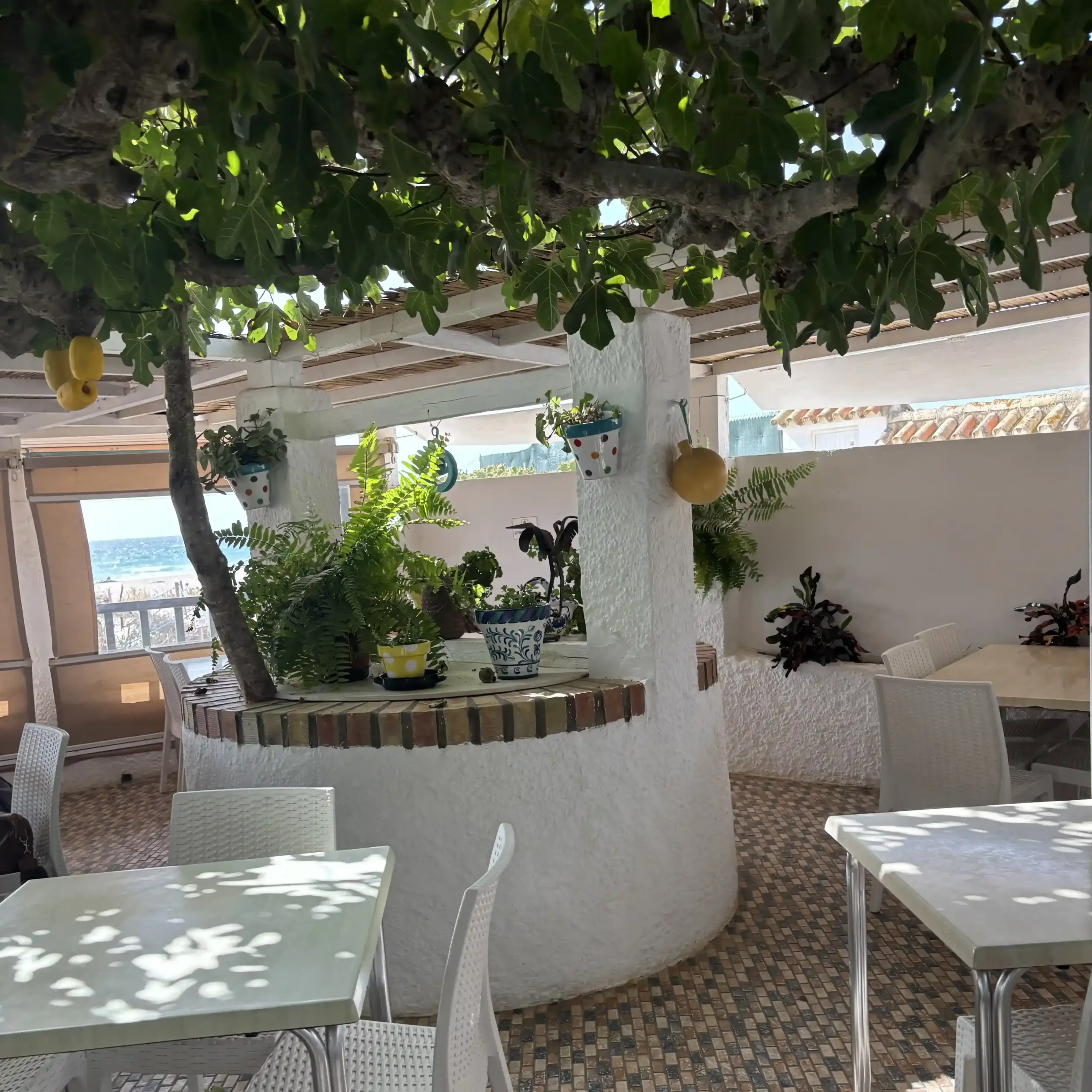
Where to taste the flavors of the Costa de la Luz
On the Costa de la Luz, food is not experienced like elsewhere. It’s not just about recipes, but about ingredients, tradition, and a relationship with the sea that here feels deeper and more ancestral. Every dish tells a story that comes from afar — Phoenician, Roman, Arab.
It’s a cuisine without pretension, built on the sea, seasonality, and simplicity.
Less visited than **Vejer**, more understated on the surface, Medina Sidonia holds a history few expect. Its name already says it all: Medina in Arabic means “city,” and Sidonia refers to **Sidon**, the Phoenician city in Lebanon. It’s a name that spans three thousand years.
It sits on a hill — like most **pueblos blancos**, for defensive reasons — and its silhouette can be seen from afar across the countryside of **La Janda**. Arriving early in the morning, before the bars open and the shops come to life, the historic center has a quality of silence that is hard to find elsewhere.
The **castle** dominates the town. The original walls date back to the Islamic period, though they have been expanded and modified over the centuries. The viewpoint from the main tower is among the best in the province: you can see as far as the **Bay of Cádiz**, the marshlands, and once again, the **Atlantic coast**.
But **Medina Sidonia** is especially famous for its pastry tradition. The convents of the town have been producing for centuries Arab sweets transformed over time into Andalusian desserts: alfajores — cylinders of spiced marzipan coated in chocolate — and tortas pardas, pastries made with almonds and honey, found in the confectioneries around the main square. This is not a tourist curiosity: it is a living tradition, often maintained by the same families for generations. Buying a box of **alfajores** in **Medina Sidonia** is one of those simple gestures you’ll remember years later.
If you decide to stop in **Medina Sidonia**, don’t miss the restaurant Venta La Duquesa. A rustic yet refined setting, with a cuisine more connected to the inland than the sea. Considered a reference point in **gaditano gastronomy**, it offers traditional dishes with a few modern touches. Perfect if you’re traveling and want to take a special break for lunch.
Along the coast, don’t look for the “most famous” restaurant. Look for the chiringuito where fishermen eat at midday. Look for the market where tuna is still sold without plastic packaging.
Look for the bar where manzanilla is drunk at the counter, standing, with a plate of coquinas or pescaíto frito and the sun coming in through the door. Or the restaurant that truly turns dinner into an experience.
To give you an idea, here are some of the places I’ve tried and that are worth a stop.
Casa Balbino — Sanlúcar de Barrameda: One of the city’s most iconic spots. You drink manzanilla alongside simple dishes: fried food, classic tapas, and Sanlúcar prawns (famous throughout Spain for their sweetness and freshness). A perfect combination to experience an Andalusian afternoon in its most authentic form.
El Jardín del Califa — Vejer de la Frontera: The restaurant of the hotel La Casa del Califa is one of the most unique gastronomic experiences on the coast. North African and Middle Eastern cuisine in a patio with palm trees and lanterns: tagine, hummus, Syrian dishes, lamb kebabs, Lebanese desserts. It’s not the place to eat almadraba tuna, but it’s where you understand how much this land owes to the five centuries of Islamic culture that shaped it. It’s a restaurant for a special occasion — booking is essential.
La Venta El Toro — near Vejer: A venta in the classic sense: a simple roadside place where locals have been going for generations. Grilled meat, retinta (the local cattle breed), sausages. No frills, honest prices, real quality. Here I had their huevos con un poco de todo… truly unforgettable.
Restaurante El Campero — Barbate: If you’re traveling between Zahara and Vejer, stop at this temple of almadraba tuna. It has a tapas bar and a more elegant dining room inside. Its well-deserved reputation comes from the tuna: every part is used — ventresca, tarantello, mormo, corazón — with a cuisine that respects the product without overpowering it. Ask for the tasting menu El Susurro de los Atunes: you’ll discover true tuna cuisine, with no comparison. It’s more expensive than the others, but it’s a truly authentic gastronomic experience. Book in advance during the season.
Restaurante Tía Tijuana — Zahara de los Atunes: Simpler than El Campero, closer to a traditional restaurant than a gourmet one. Fresh tuna in season, fish of the day, fried dishes. Prices are reasonable and the fish comes straight from the port. If you’re looking for a setting that feels almost on the beach, I recommend El Refugio: not the best for fried food, but the atmosphere is truly charming and the tuna is excellent.
Mercado Central de Abastos — Cádiz: Not a restaurant, but a gastronomic experience in its own right. Cádiz’s covered market has some of the most beautiful fish stalls on the coast. Some freidurías inside prepare pescaíto frito on the spot. Buying it, stepping outside, sitting on the steps, and eating standing while watching the market come alive is a simple but perfect experience.
If you really want to dive deeper into the cuisine of Cádiz — between tapas, markets, and restaurants — I recommend reading our full guide dedicated to the city, where you’ll find many more ideas and selected addresses: Cádiz: a city of distant riches, of light, sea, and wind.
Where to stay in the Costa de la Luz
Sleeping on the Costa de la Luz is something that stays with you — if you do it right. I’m not talking about anonymous resorts or large chains you could find anywhere. I’m talking about places where hospitality is local, authenticity is a deep concept, and the architecture tells the story of this land.
I’ve selected a few options that, in my opinion, truly make a difference in the journey. They are old cortijos and rural houses, or beautifully restored palaces that will offer a unique experience: away from mass tourism, immersed in the real atmosphere of the Costa de la Luz, and with that kind of calm that allows you to hear the sound of nature without filters.
Vejer de la Frontera – among hills and callejuelas
Casa La Siesta is a dream! Hidden in the countryside, surrounded by olive trees and gardens. It’s the perfect place if you’re looking for absolute silence and that rural lifestyle that is hard to find elsewhere. The infinity pool seems to blend into the surrounding landscape, and the products served at the table are grown on their own finca — perhaps the closest example to the Italian idea of an agriturismo. It’s not a budget option, but if you travel in the off-season, you can find deals that make the experience more accessible. That’s what I did, and I didn’t regret it at all!
If instead you want to stay within the historic walls of Vejer, Casa Las Cuadras (managed by Califa Casas) wraps you in history: once a stable, today it’s a restored home with exposed beams, a fireplace, and terraces overlooking the distant sea. It’s one of those places where you can feel the past without giving up comfort.
Casa Bodega Triana is another gem in the heart of the historic center. It preserves the ancient soul of the town — thick walls, ceramic floors, an inner patio where you can sit with a book — while offering all the comforts to make you feel at home.
And then there’s Casa de la Cruz Vejer, a residence overlooking the white rooftops of the village from its privileged position. From its windows, you can see the castle, and the sunset light sliding over the callejuelas is one of those things you don’t forget.
Conil de la Frontera – the sea just steps away
In Conil, the sea is everywhere, but you can also stay in the greener inland areas. Suites Cortijo Fontanilla is an old cortijo converted into independent apartments, set among well-kept gardens and two swimming pools. The units have names instead of numbers — “La Cuadra”, “El Mesón Bandolero”, “La Morada del Olivo” — and within a few minutes’ walk you can reach La Fontanilla Beach. It’s the perfect balance between countryside and sea.
The apartments are spacious, so considering the price, they are better suited for a family or a group of friends. It’s almost always fully booked, so make sure to reserve in advance.
Zahara de los Atunes – wild beach within reach
In Zahara, one of the most exclusive yet authentic options is the Apartments in Exclusive Beachvilla, set right on the hill overlooking Playa de los Alemanes. Staying here means waking up to the sound of the Atlantic Ocean coming through the window, looking out over one of the most beautiful beaches on the coast, and having the sand just a few steps away before you’ve even finished your coffee.
It’s not luxurious in a polished, glossy sense. It’s luxurious because it gives you the sea in its purest form.
Tarifa – between countryside, historic center, and waves
Tarifa is a world of its own, and its accommodation options reflect that.
Mesón de Sancho is for those seeking privacy and tranquility, away from the bustle of the center but close enough to reach it in just a few minutes. It’s one of those places where you feel protected, like in an Andalusian countryside home with an attention to detail that truly makes the difference.
Kook Hotel Tarifa is the exact opposite: it’s in the heart of the historic center, among white streets and surf shops. Perfect for those who want to experience the energy of Tarifa without giving up refined design and a young but not chaotic atmosphere.
And then there’s Cortijo El Pozuelo, which has a rare advantage: it’s just a few steps from the beach. No car needed, no long walks. You step outside and you’re already on the sand. It’s the right choice for those who want to spend their days between surf and relaxation, without wasting time moving around.
Always book well in advance during the summer. If you can, don’t look for the hotel with the most stars. On the Costa de la Luz, true luxury is waking up in a place that has a soul, and feeling — for a few days — not like a tourist, but like a temporary inhabitant of this Atlantic corner of Andalusia.
Visiting the Costa de la Luz means spending much of the day outdoors, walking through white villages, along endless Atlantic beaches, across dunes and coastal trails, and through historic town centres. For this reason, when packing your suitcase, it is better to prioritise comfort and practicality rather than quantity.
The sun is one of the main features of this coast at any time of year. A hat, sunglasses and good sunscreen are essential even in winter: the light reflected by the ocean and the pale sand is intense, especially during long walks along the beach and in areas where there is almost no shade. I always carry this sunscreen with me: it is small, but very effective. Do not underestimate the sun: even when the wind makes the air feel cooler, sunburn is never far away.
You will walk quite a lot, often along cobbled streets, sandy paths, wooden boardwalks and uphill lanes in the white villages. A pair of comfortable shoes that you have already worn in is therefore essential, especially if you plan to visit places such as Vejer de la Frontera, explore the dunes of Bolonia or follow one of the trails in the Parque Natural de la Breña or the Parque Nacional de Doñana.
A reusable water bottle is extremely useful, especially during walks along the long beaches and through natural areas, where shade and places to buy refreshments are not always available. I bought a collapsible silicone bottle from Natura, although it is often sold out. Alternatively, here you can find a similar one, which takes up very little space in your bag once it is empty.
When you go to the beach, there is no need to take half the house with you: a lightweight towel — I bought this one specifically so that I could always carry it with me when travelling to a seaside destination —, a pair of sandals and a practical bag are more than enough. The beaches of the Costa de la Luz are informal and beautiful, but some require you to walk across the sand, follow wooden boardwalks or leave your car some distance away. Before setting off in the morning, remember to take your shoes with you and not just your flip-flops.
A lightweight foldable bag can also be useful, especially if you want to combine a visit to a village, a walk and a few hours on the beach during the same day. Avoid taking anything too bulky: in strong winds, lightweight beach umbrellas, inflatable mattresses and flimsy beach tents can become difficult to manage.
The most important item, however, is probably a waterproof and windproof jacket . The climate is generally mild, but the Costa de la Luz is completely exposed to the Atlantic and the wind can become very strong even on a warm, sunny day. The jacket will be particularly useful on the more exposed beaches, around Tarifa, Bolonia and Zahara de los Atunes, during walks along the cliffs and on evenings spent near the sea.
When travelling in autumn or winter, also pack a light scarf or neck warmer and a woolly hat. The Atlantic wind can be surprisingly biting and make the temperature feel much lower than the weather forecast suggests. Even in spring and summer, a lightweight sweatshirt can be useful in the evening.
Finally, small items such as a power bank may seem like minor details, but they make your days much easier, especially when you are constantly using navigation to reach beaches and villages, checking the wind forecast and taking photographs of every beautiful corner of the journey. I was given this one and I am very happy with it. There are, of course, many different models available, but whichever one you choose, I strongly recommend taking one with you.
The Costa de la Luz was a discovery, and like all true discoveries, now I wonder how I could have not known it before.
It’s not an easy coast. You have to learn to read the wind, to respect the ocean, to wait for the towns to reveal themselves slowly. But perhaps that is precisely its gift: it reminds you that traveling is not about collecting places, but about letting each place enter you in its own time.
Here I ate the best tuna of my life, walked on dunes that shift year after year, and saw Africa from Europe with my own eyes. I slept in a cortijo that smelled of history and woke up to the sound of the Atlantic. I learned that manzanilla should be drunk cold, that the sea can be beautiful even with the force of the wind, and that the light of Cádiz at sunset can stop time.
If you’re looking for postcard Andalusia, the one of resorts and structured schedules, this is not the coast for you. But if you’re searching for a more authentic, slower, deeper Andalusia — made of history, of pueblos blancos perched above the sea, of fishermen still using ancient nets — then get in the car, take the coastal road, and don’t rush.
The Costa de la Luz is waiting for you. And it won’t let you leave the same as before.
If you want to continue your journey through more classic Andalusia, don’t miss our articles on its highlights and the various insights on Granada, Málaga, and much more.